


 EN
EN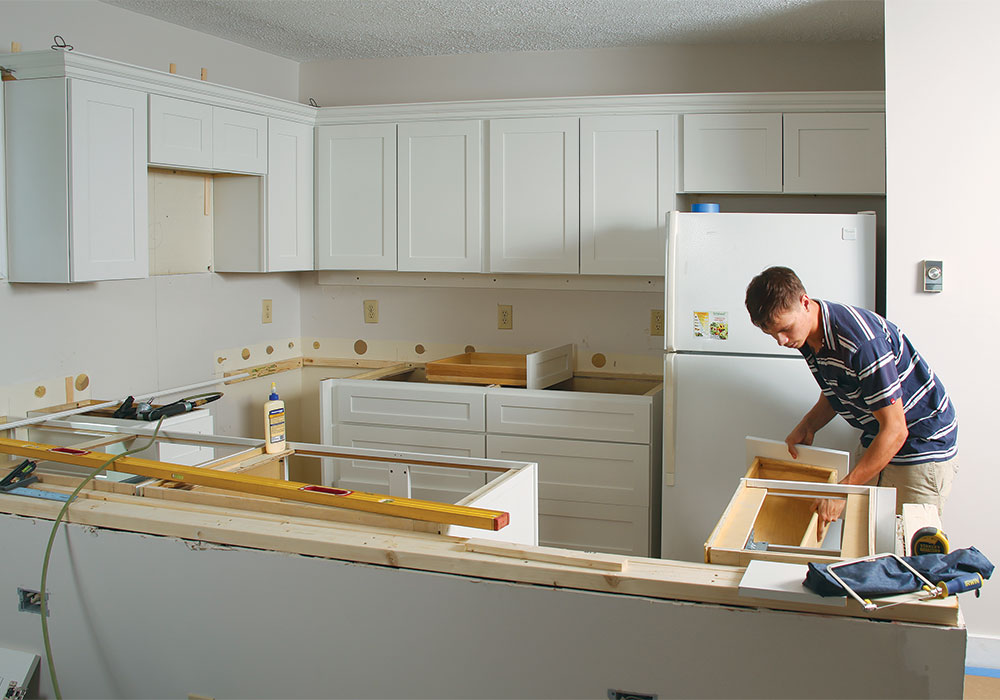
OEM kitchen cabinets have become a key solution for large-scale residential and commercial projects due to their flexibility, cost efficiency, and consistent quality. As demand grows across multi-family housing, hospitality, and branded developments, more contractors and manufacturers rely on OEM production models. These solutions allow for greater control over design, materials, and scalability.
This guide explains how OEM kitchen cabinets work, how to evaluate manufacturers, and why they are increasingly preferred for large projects.
Table of Contents
1. What Is an OEM Kitchen Cabinet?
OEM kitchen cabinets refer to cabinetry products manufactured by a specialized factory according to the specifications, branding, and technical requirements of another company.
In this model, the manufacturer focuses on production, while the client—such as a cabinet brand, developer, or contractor—controls the design, positioning, and final market use of the product.
OEM manufacturing allows businesses to scale efficiently without owning or operating their own production facilities.
1.1 Definition of OEM Kitchen Cabinets
In an OEM (Original Equipment Manufacturer) arrangement, the factory produces kitchen cabinets based on detailed specifications provided by the client.
These specifications typically include cabinet structure, materials, finishes, hardware, packaging, and branding.
The finished products are delivered under the client’s brand name rather than the manufacturer’s.
This model differs from other common approaches:
- OEM (Original Equipment Manufacturer): The client owns the product design and brand, while the manufacturer handles production only.
- ODM (Original Design Manufacturer): The factory designs and produces cabinets that can be branded or lightly customized by the buyer.
- Private-label manufacturing: Pre-designed products are sold under a buyer’s label with minimal modification.
OEM provides the highest level of control over quality, design, and product differentiation.
1.2 Common OEM Kitchen Cabinet Categories
OEM manufacturing supports a wide range of cabinet types to suit different market needs and project scales:
- OEM RTA kitchen cabinets: Flat-packed cabinets designed for efficient shipping and cost control, commonly used in large-scale residential developments.
- OEM ready-made kitchen cabinets: Fully assembled cabinets ideal for projects requiring faster installation and consistent factory quality.
- OEM modular kitchen cabinets: Standardized cabinet systems that allow flexible layouts while maintaining manufacturing efficiency.
- OEM acrylic kitchen cabinets: High-gloss or matte acrylic finishes produced under controlled conditions for a premium, contemporary appearance.
Each category serves different functional, budget, and design requirements while benefiting from the scalability of OEM production.
1.3 When OEM Is the Right Choice
OEM kitchen cabinets are the preferred solution when consistency, scalability, and cost efficiency are critical. They are especially suitable for:
- Cabinet brands seeking to expand product lines without investing in their own manufacturing facilities
- Contractors and developers managing multi-unit residential or mixed-use projects
- Hospitality and commercial projects requiring standardized quality across multiple locations
By centralizing production and standardizing processes, OEM manufacturing enables reliable quality control, predictable pricing, and long-term supply stability—key advantages for large-scale and repeat projects.
2. OEM Manufacturing Models and Production Structures
Understanding the different OEM manufacturing models helps contractors and developers choose the right solution based on project scale, budget, and installation requirements. Each model offers distinct advantages in terms of production efficiency, logistics, and design flexibility.
2.1 OEM RTA Kitchen Cabinets Factory Model
OEM RTA (Ready-to-Assemble) kitchen cabinets are produced as flat-packed components and assembled on-site. This model is widely used for large-volume projects where shipping efficiency and cost control are priorities.
Key characteristics include:
- Flat-pack design reduces shipping volume and transportation costs
- Pre-drilled components ensure consistent assembly quality
- Ideal for projects with warehouse assembly or on-site installation teams
RTA cabinets are commonly used in multi-family developments and large residential programs where logistics efficiency directly impacts project margins.
Learn more: What are RTA Cabinets?
2.2 OEM Ready-Made Kitchen Cabinets Model
OEM ready-made cabinets are fully assembled in the factory and delivered ready for installation. This approach minimizes on-site labor and shortens installation timelines.
Key advantages include:
- Factory-controlled assembly ensures consistent quality
- Reduced on-site labor and installation time
- Suitable for projects with tight schedules or limited on-site resources
However, ready-made cabinets require careful handling during transport and may involve higher shipping costs due to their assembled size.
2.3 OEM Modular Kitchen Cabinet Systems
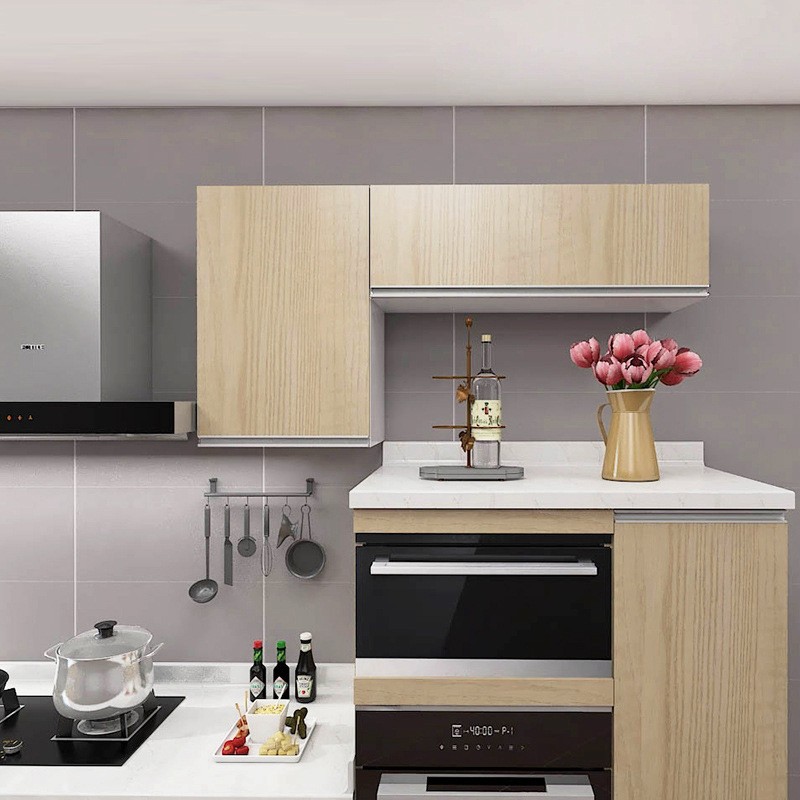
Modular cabinet systems are built around standardized cabinet sizes and components, allowing flexible layout configurations while maintaining production efficiency.
Key benefits include:
- Scalable designs suitable for multi-unit developments
- Faster design approvals and production cycles
- Easy replacement or modification of individual modules
This model is particularly effective for residential complexes, hotels, and mixed-use projects requiring consistent yet adaptable layouts.
Learn more: What are Modular Cabinets?
2.4 OEM Acrylic Kitchen Cabinets
OEM acrylic kitchen cabinets feature high-gloss or matte acrylic finishes applied under controlled factory conditions. These finishes provide a premium look and high surface durability.
Key considerations include:
- Strict surface preparation and finishing standards
- Higher sensitivity to handling during production and transport
- Superior visual consistency when produced in controlled environments
Acrylic cabinets are often selected for contemporary interiors where visual impact and finish quality are top priorities.
Learn more: Acrylic Finish Cabinets Pros/Cons
3. Evaluating OEM Kitchen Cabinet Manufacturers
Selecting the right OEM kitchen cabinet manufacturer requires more than price comparison. A structured evaluation framework helps ensure long-term quality, scalability, and risk control—especially for large or repeat projects.
The following factors should be carefully assessed before committing to an OEM partner.
3.1 Manufacturing Technology Analysis
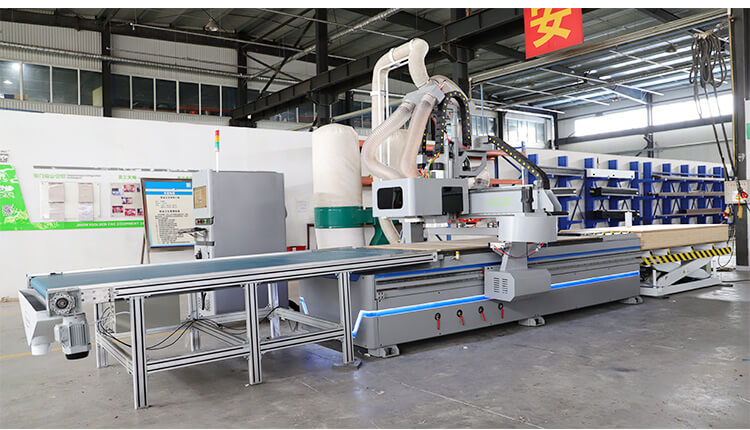
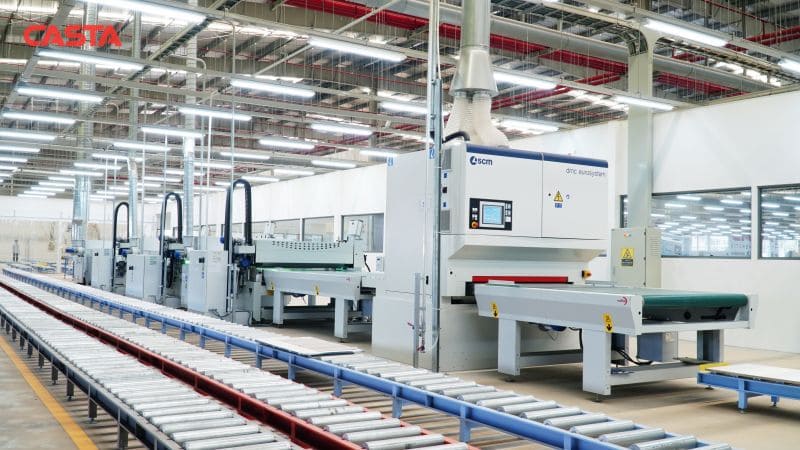
The foundation of reliable OEM production lies in manufacturing technology. High-performing factories invest in advanced CNC machinery, automated cutting, edge-banding, and finishing systems to ensure consistency and precision.
Key evaluation points include:
- Level of CNC automation and digital production control
- Accuracy in panel cutting, drilling, and edge finishing
- Consistency of output across multiple production batches
Factories using modern European or equivalent machinery typically achieve tighter tolerances, smoother finishes, and lower defect rates.
Learn more: Automated Cabinet Manufacturing
3.2 Capacity & Scalability Analysis
Production capacity determines whether a manufacturer can support growing or multi-phase projects without compromising quality or timelines.
Important considerations include:
- Monthly output capability and peak production limits
- Ability to scale production for large or simultaneous projects
- Workforce stability and shift flexibility during high-demand periods
A scalable OEM partner should demonstrate the ability to ramp production up or down while maintaining quality standards.
Learn more: Best Multifamily Cabinet Manufacturers
3.3 Quality Consistency Analysis
Consistent quality is essential for maintaining brand reputation and avoiding costly rework. Evaluating quality control systems helps identify long-term reliability.
Key indicators include:
- Standardized inspection procedures at each production stage
- Consistency in panel flatness, edge sealing, and finish uniformity
- Documented quality checkpoints and traceability systems
Manufacturers with structured quality control processes deliver more predictable outcomes across large volumes.
3.4 Material & Health Compliance Analysis
Material selection directly impacts durability, safety, and regulatory compliance. OEM manufacturers should demonstrate clear adherence to international material standards.
Evaluation criteria include:
- Use of certified wood panels (CARB, EPA, or equivalent)
- Compliance with indoor air quality and emission standards
- Transparency in material sourcing and testing documentation
These factors are especially critical for projects in residential, hospitality, and healthcare sectors.
Learn more: Cabinet Certification
3.5 Customization & OEM Branding Analysis
Effective OEM partners support customization while maintaining production efficiency. This includes the ability to adapt cabinet dimensions, finishes, and branding elements without disrupting workflows.
Key considerations include:
- Flexibility in design modifications and finish options
- Capability to produce private-label or branded product lines
- Structured sampling and approval processes before mass production
3.6 Cost Stability & Risk Analysis
Long-term project success depends on predictable pricing and controlled risk exposure. OEM manufacturers should demonstrate cost transparency and resilience against market fluctuations.
Key factors to assess include:
- Stability of material and labor costs over contract periods
- Risk mitigation strategies for supply chain disruptions
- Clear pricing structures and long-term cost planning
A well-evaluated OEM partner provides not only competitive pricing but also reliability, consistency, and long-term value.
4. Where OEM Kitchen Cabinets Are Commonly Sourced
Understanding where OEM kitchen cabinets are manufactured helps buyers evaluate cost structures, lead times, and long-term scalability. Each sourcing region offers distinct advantages and limitations depending on project size, quality expectations, and budget constraints.
4.1 Domestic OEM Kitchen Cabinet Manufacturers
Domestic manufacturers—primarily based in North America—are often chosen for projects that prioritize proximity, communication speed, and regulatory familiarity.
Strengths include:
- Shorter lead times due to domestic production and logistics
- Easier communication, site visits, and coordination
- Familiarity with local building codes and standards
Limitations to consider:
- Higher labor and operational costs that impact overall pricing
- Limited scalability for large or multi-phase developments
- Less flexibility in customization due to standardized production models
Domestic OEM partners are best suited for smaller projects, time-sensitive installations, or clients prioritizing proximity over cost efficiency.
4.2 European OEM Cabinet Manufacturers
European manufacturers are known for engineering precision, refined craftsmanship, and advanced design capabilities. Many focus on high-end residential and architectural projects.
Key advantages include:
- Strong reputation for design quality and innovation
- Advanced machinery and refined finishing processes
- Established quality assurance standards
Challenges include:
- Higher minimum order quantities and premium pricing
- Longer production and shipping lead times
- Less flexibility for cost-sensitive or large-scale developments
European OEMs are often selected for luxury or design-forward projects where aesthetics outweigh budget constraints.
4.3 Vietnam-Based OEM Kitchen Cabinet Manufacturers
Vietnam has emerged as a preferred global sourcing hub for OEM kitchen cabinets due to its balance of cost efficiency, skilled labor, and modern manufacturing infrastructure.
Key advantages include:
- Widespread use of European CNC machinery and automated finishing lines
- Competitive labor costs combined with skilled workmanship
- Strong capacity for large-scale and repeat production
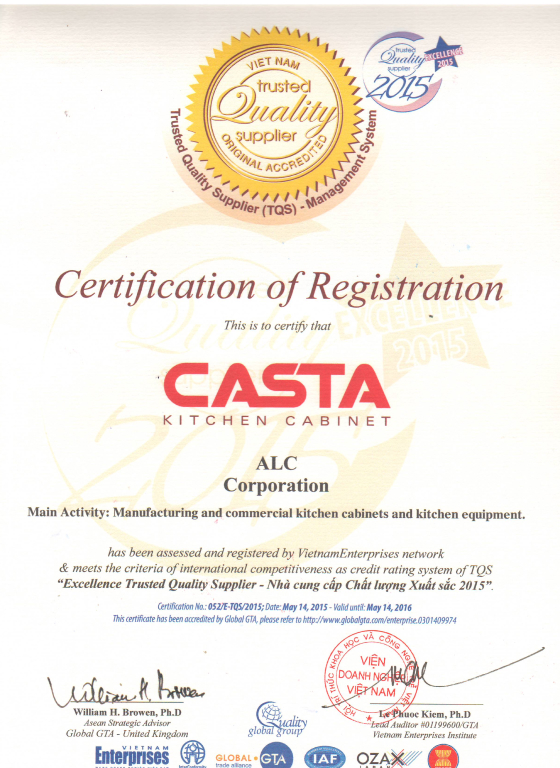
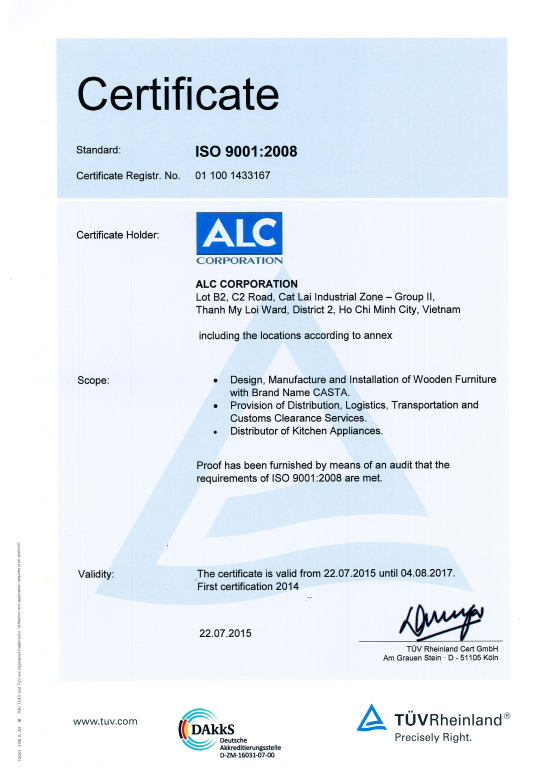
- Growing compliance with international quality and sustainability standards
Why North American buyers choose Vietnam:
- Reliable export experience and logistics expertise
- Flexible production models suited for both custom and high-volume orders
- Ability to meet quality expectations while maintaining cost control
Vietnam-based OEM manufacturers now play a critical role in supporting global cabinet brands, large developers, and commercial projects seeking scalable, cost-effective production without compromising quality.
Learn more: Kitchen Cabinet Manufacturers in Vietnam
5. Casta: OEM Kitchen Cabinet Manufacturing at Scale
Casta has positioned itself as a reliable OEM kitchen cabinet manufacturer by combining advanced production technology, strict quality control, and flexible customization capabilities.
Designed to support large-scale and long-term projects, Casta’s manufacturing model addresses the key challenges faced by contractors, developers, and cabinet brands sourcing OEM solutions.
5.1 Advanced Manufacturing Infrastructure
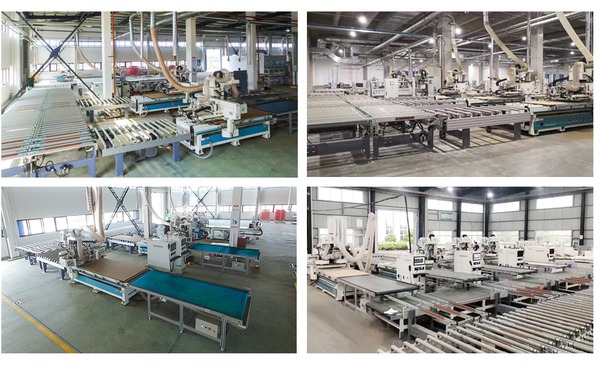
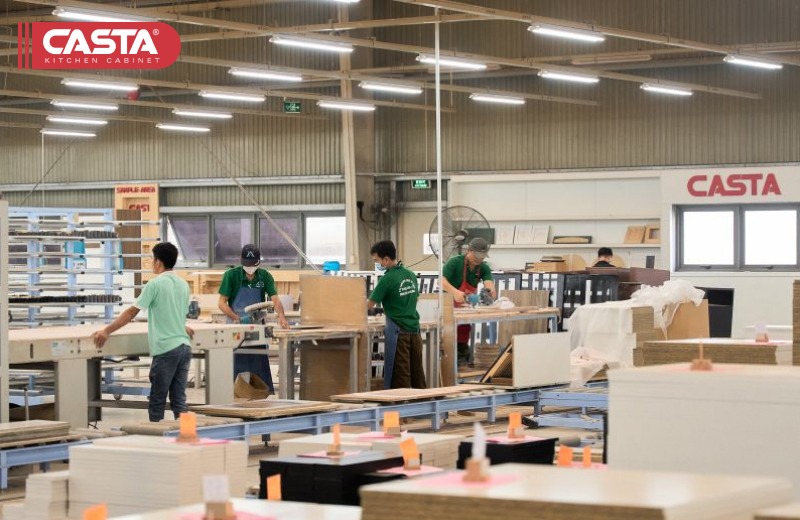
Casta operates modern production facilities equipped with European CNC machinery, automated cutting systems, and precision finishing lines.
This advanced infrastructure ensures consistent accuracy across cabinet components, tight tolerances, and uniform finishes—even at high production volumes.
Controlled factory environments help minimize human error while maintaining stable output for long-term projects.
5.2 High-Quality, Health-Safe Materials
Material selection is a core focus of Casta’s manufacturing process. All panels, finishes, and components are sourced to meet international safety and environmental standards.
Key material features include:
- Certified wood-based panels compliant with formaldehyde emission regulations
- Durable surface finishes designed to resist moisture, wear, and discoloration
- Consistent material sourcing to ensure uniform performance across production batches
These standards help ensure long-term durability, indoor air safety, and consistent appearance across large installations.
5.3 OEM Customization Without Compromising Scale
Casta supports a wide range of OEM cabinet programs, including:
- OEM RTA kitchen cabinets for cost-efficient shipping and installation
- OEM modular kitchen cabinet systems for flexible layouts and scalability
- OEM acrylic kitchen cabinets for premium, high-gloss or matte finishes
Each project is supported by design refinement, material sampling, and approval processes that allow clients to maintain full control over aesthetics while benefiting from standardized production workflows.
Learn more: Casta’s OEM Cabinet Manufacturer
5.4 End-to-End OEM Support
Beyond manufacturing, Casta provides comprehensive project support throughout the entire production cycle. This includes prototype development, packaging optimization for export, and coordinated logistics for North American delivery.
By integrating engineering, quality control, and logistics into a single workflow, Casta enables clients to scale production efficiently while maintaining consistent quality across all shipments.
Learn more: Casta’s outstanding international projects
6. OEM Kitchen Cabinet Use Cases
OEM kitchen cabinet manufacturing supports a wide range of business models, from brand expansion to large-scale development. Below are the most common application scenarios where OEM solutions deliver measurable value.
6.1 OEM for Cabinet & Furniture Brands
For cabinet and furniture brands, OEM manufacturing enables rapid product line expansion without the need for in-house production facilities.
Key advantages include:
- Brand scalability: Brands can launch new collections or enter new markets without investing in manufacturing infrastructure.
- Consistent product quality: Standardized production ensures uniform finishes, materials, and performance across all SKUs.
- Design flexibility: Brands can customize door styles, finishes, and configurations while maintaining consistent manufacturing standards.
- Reduced operational risk: OEM partners manage production complexity, allowing brands to focus on sales, marketing, and distribution.
This model is particularly effective for brands looking to scale quickly while maintaining a strong and consistent brand identity.
6.2 OEM for Contractors & Developers
For contractors and developers managing large residential or mixed-use projects, OEM manufacturing provides cost predictability and operational efficiency.
Key benefits include:
- Scalable production capacity to support multi-phase developments
- Predictable pricing structures that help control project budgets
- Streamlined delivery schedules aligned with construction timelines
- Standardized product specifications that simplify installation and reduce on-site errors
OEM partnerships allow contractors to maintain consistent quality across units while minimizing supply chain disruptions.
6.3 OEM for Hospitality & Commercial Projects
Hospitality and commercial developments require a balance between aesthetics, durability, and repeatability. OEM kitchen cabinet manufacturing supports these requirements through controlled production and consistent quality standards.
Typical advantages include:
- Uniform design execution across hotels, serviced apartments, and mixed-use projects
- Custom finishes and materials aligned with brand standards
- Scalable production to support phased rollouts and multi-location deployments
By leveraging OEM manufacturing, hospitality operators can maintain brand consistency while meeting the operational demands of large-scale developments.
Learn more: Apartment Cabinet Manufacturers
7. Case Application: OEM Kitchen Cabinets at Scale
Large-scale residential and commercial developments require a structured, repeatable approach to cabinetry production. OEM kitchen cabinet manufacturing provides the control and consistency needed to manage complex projects efficiently while maintaining design quality across multiple units or locations.
Project overview:
In a typical large-scale application—such as a multi-unit residential complex or a branded housing development—the client requires standardized cabinet designs that can be produced in high volume without compromising quality or timelines.
OEM solution structure:
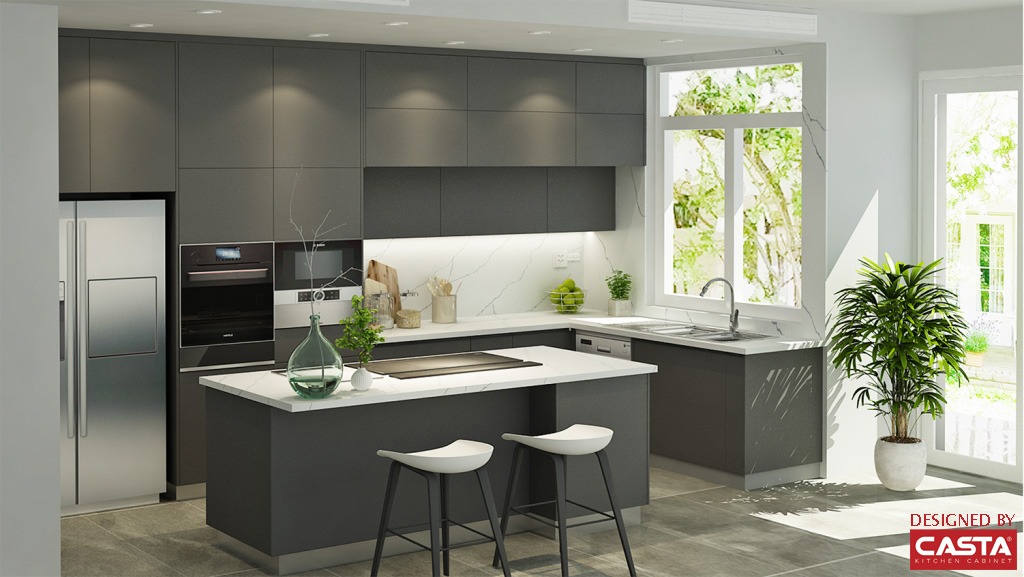
- Product type: A combination of OEM modular and RTA kitchen cabinets selected to balance installation speed and design flexibility.
- Customization level: Standardized cabinet dimensions with customizable finishes, door styles, and hardware to meet branding or design requirements.
Project outcomes:
- Quality consistency: Uniform materials, finishes, and construction across all units ensured a cohesive final result.
- Delivery performance: Phased production and shipment schedules aligned with construction timelines, reducing delays on site.
- Cost control: Optimized material sourcing and manufacturing efficiency helped maintain budget predictability throughout the project lifecycle.
This approach demonstrates how OEM kitchen cabinet solutions enable scalable, high-quality delivery for large developments while maintaining control over cost, quality, and timelines.
8. Decision Checklist for Choosing an OEM Kitchen Cabinet Partner
Choosing the right OEM partner is critical for ensuring product quality, consistency, and long-term reliability. Key factors to evaluate include:
- Scalability: The manufacturer should handle volume increases without compromising quality or timelines.
- Material certification: All materials should meet recognized safety and environmental standards.
- OEM branding support: The supplier must support private labeling, custom finishes, and brand-specific requirements.
- Cost stability: Pricing should remain predictable across different production phases.
- Logistics capability: Proven experience in international shipping and delivery to North American markets is essential.
A strong OEM partner provides not only manufacturing capacity but also operational reliability and long-term collaboration value.
Learn more: Kitchen Cabinet Buying Guide
9. Frequently Asked Questions
What is the difference between OEM RTA and OEM ready-made cabinets?
Are OEM kitchen cabinets durable?
Can OEM cabinets meet North American standards?
Why choose OEM manufacturing over domestic sourcing?
How do I ensure consistent quality across large OEM orders?






Top Cabinet Manufacturers in Florida: A Capability-Based Buy...
Cabinet manufacturers in Florida play a critical role in one of the fastest-growing construction markets in North Americ...
01/10/2026 | David Nguyen
Top North Carolina Cabinet Manufacturers | Best NC Kitchen ...
North Carolina cabinet manufacturers have long been trusted across the U.S. thanks to the state’s deep heritage in woodw...
01/08/2026 | David Nguyen
Top Cabinet Manufacturers in Arizona | Best Arizona Kitchen ...
Cabinet manufacturers in Arizona have gained increasing attention as construction activity accelerates across Phoenix, T...
01/06/2026 | David Nguyen

Top Cabinet Manufacturers Indiana | Best Indiana Kitchen Cab...
Cabinet manufacturers Indiana have become increasingly relevant as contractors and developers look for dependable Midwes...
01/04/2026 | David Nguyen
Top Cabinet Manufacturers in Florida: A Capability-Based Buy...
Cabinet manufacturers in Florida play a critical role in one of the fastest-growing construction markets in North Americ...
01/10/2026 | David Nguyen
Top North Carolina Cabinet Manufacturers | Best NC Kitchen ...
North Carolina cabinet manufacturers have long been trusted across the U.S. thanks to the state’s deep heritage in woodw...
01/08/2026 | David Nguyen
Top Cabinet Manufacturers in Arizona | Best Arizona Kitchen ...
Cabinet manufacturers in Arizona have gained increasing attention as construction activity accelerates across Phoenix, T...
01/06/2026 | David Nguyen
Top Cabinet Manufacturers Indiana | Best Indiana Kitchen Cab...
Cabinet manufacturers Indiana have become increasingly relevant as contractors and developers look for dependable Midwes...
01/04/2026 | David Nguyen
Contact us
Casta is always ready to listen and answer all customers' questions