


 EN
EN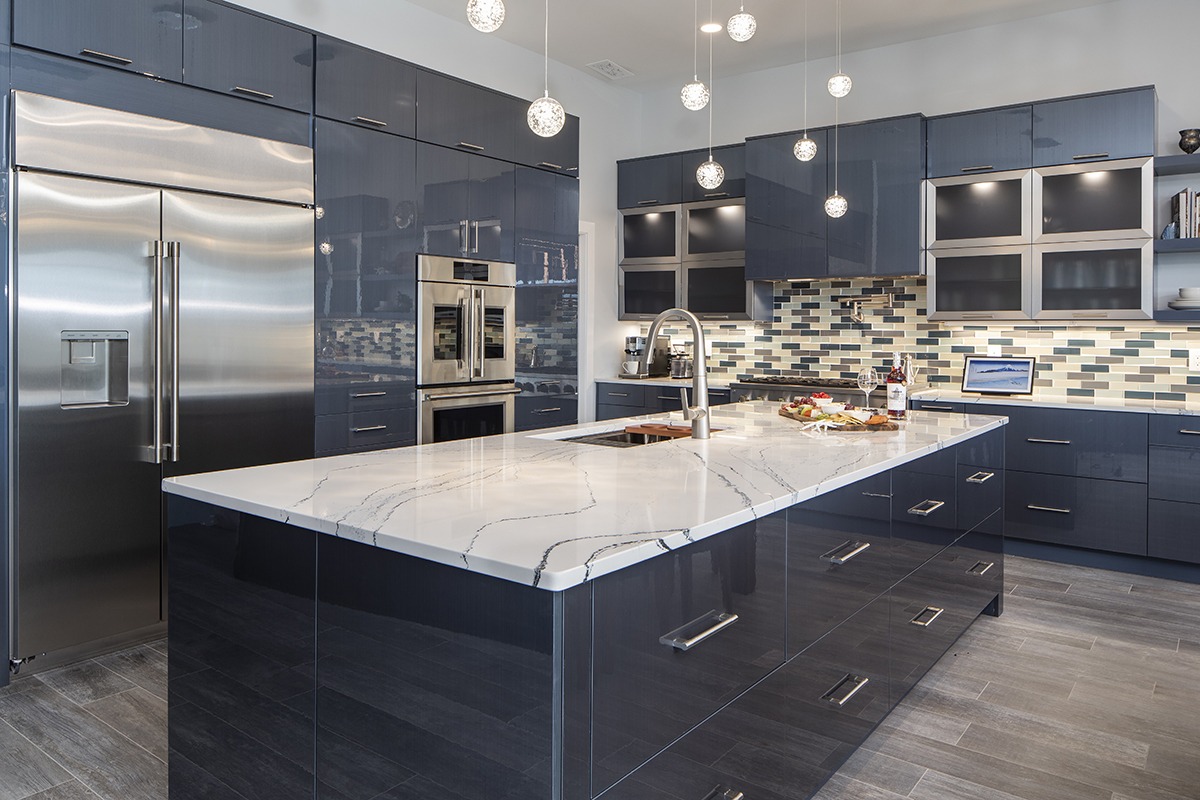
Compare kitchen cabinet manufacturers has become essential for contractors, developers, and cabinet brands as visually similar cabinets can deliver dramatically different long-term results. When builders and brands compare kitchen cabinet manufacturers, distinctions in construction, materials, and finishing quality become clear—directly affecting durability and maintenance. As project volume grows, choosing the right partner protects budgets and timelines.
This guide explores how to compare kitchen cabinet manufacturers and where Casta fits among leading global suppliers.
Table of Contents
1. Evaluation Framework for Kitchen Cabinet Manufacturer Comparison
When teams set out to compare kitchen cabinet manufacturers, the first step is understanding how different supplier models, materials, and technologies influence long-term performance, cost, and reliability. This structured framework helps professionals compare kitchen cabinet manufacturers, uncover hidden value, and avoid costly sourcing mistakes.
1.1 Manufacturing Model Classification
Professionals need to classify supplier types when they compare kitchen cabinet manufacturers, because each model impacts cost, scalability, and customization differently.
Manufacturer types include:
- Local custom cabinet workshops
Ideal for one-off designs, high customization, and hands-on collaboration
- Large-scale North American cabinet manufacturers
Provide standardized lines, brand familiarity, and controlled distribution
- Overseas OEM cabinet manufacturing partners
Offer private-label production, cost efficiency, and high-volume output
Key implications when you compare kitchen cabinet manufacturers:
- Unit cost and pricing stability
- Lead time reliability across project phases
- Production and finish consistency
- Customization flexibility for design-driven clients
Understanding these distinctions helps buyers compare kitchen cabinet manufacturers on quality price and value in, not just catalog photos.
1.2 Cabinet Construction and Material Standards
The material beneath the finish often determines lifespan, making this step critical when you compare kitchen cabinet manufacturers or engineered alternatives.
Common cabinet box substrates:
- Solid hardwood
- Plywood
- Medium-density fiberboard (MDF)
- Particle board
Factors to compare kitchen cabinet manufacturers by material performance:
- Structural integrity and load-bearing capacity
- Dimensional stability under heat, moisture, and daily use
- Resistance to warping, swelling, and delamination
- Suitability for laminates, paint, and acrylic finishes
Professionals comparing kitchen cabinets from different companies should prioritize certified engineered materials over low-cost cores that fail prematurely.
1.3 Production Technology and Machinery
One of the fastest ways to compare kitchen cabinet manufacturers on quality, price, and value is assessing manufacturing technology.
Key differentiators include:
- Manual fabrication — craftsmanship varies with skill level
- CNC-driven manufacturing — repeatable precision and faster throughput
- European machinery (Homag, Weeke, Biesse, SCM) — gold standard for accuracy and efficiency
Advanced production lines improve:
- Tight reveal alignment
- Precision drilling and cutting
- Hardware fitment and installation speed in the field
This explains why many brands, when they compare kitchen cabinet options, choose OEM suppliers operating fully automated equipment.
Learn more: Automated Cabinet Manufacturing
1.4 Finish Systems and Surface Performance
Durability is heavily influenced by finish systems, making this a priority when you compare kitchen cabinets different companies.
Popular finish types:
- Painted
- Laminated
- Veneer
- Acrylic
- UV-cured
- Matte soft-touch
Performance considerations:
- Coating uniformity (no ripples, streaks, or thin spots)
- Scratch and stain resistance
- Impact and abrasion performance
- UV stability and long-term color consistency
- Curing processes that affect hardness and chemical resistance
Project owners who carefully compare kitchen cabinet manufacturers quickly learn that finish failure—not wood failure—is the most common replacement driver.
2. Comparison of Kitchen Cabinet Options by Manufacturer Category
To effectively compare kitchen cabinet manufacturers, it’s important to understand how each supplier category impacts pricing, customization, reliability, and long-term performance.
2.1 Local Custom Cabinet Manufacturers
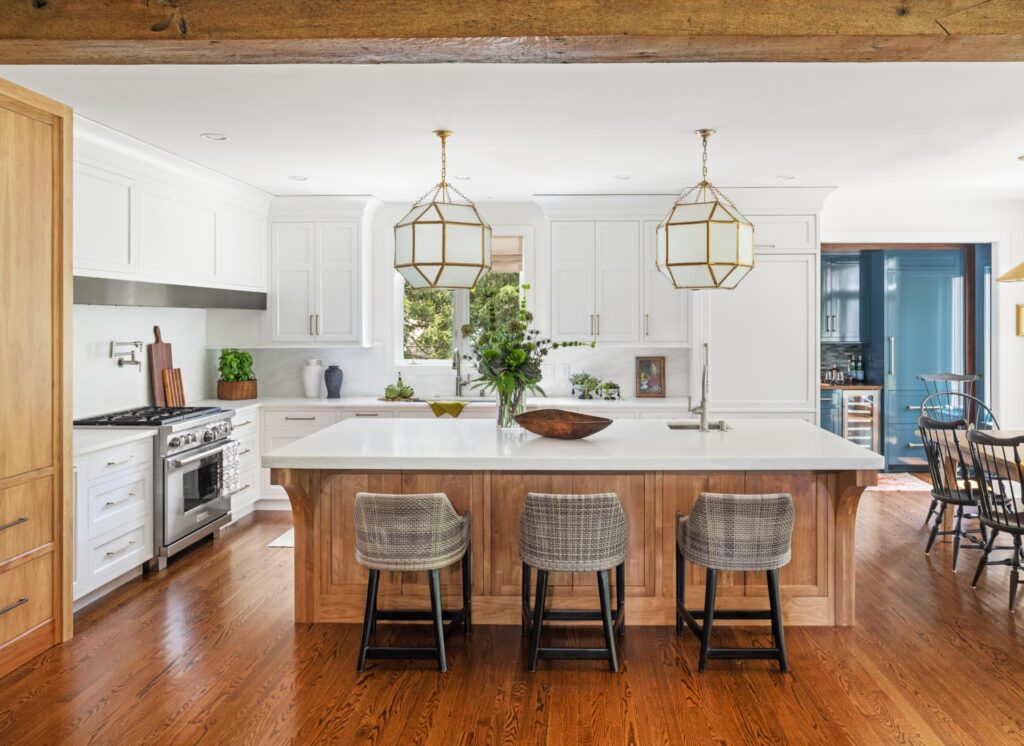
Local workshops are often chosen for flexibility and specialty detailing.
Strengths
- Bespoke sizing and unique materials for fully custom layouts
- Close collaboration with builders and designers during installation
- On-site problem solving, ideal for remodeling or irregular spaces
Limitations
- Higher per-unit pricing than mass-produced options
- Slower production timelines, unsuitable for multi-unit projects
- Quality variation, since results depend heavily on manual craftsmanship
This category works well for one-off builds, but becomes limiting when you compare kitchen cabinets across different companies for large-scale needs.
2.2 Large North American Cabinet Brands
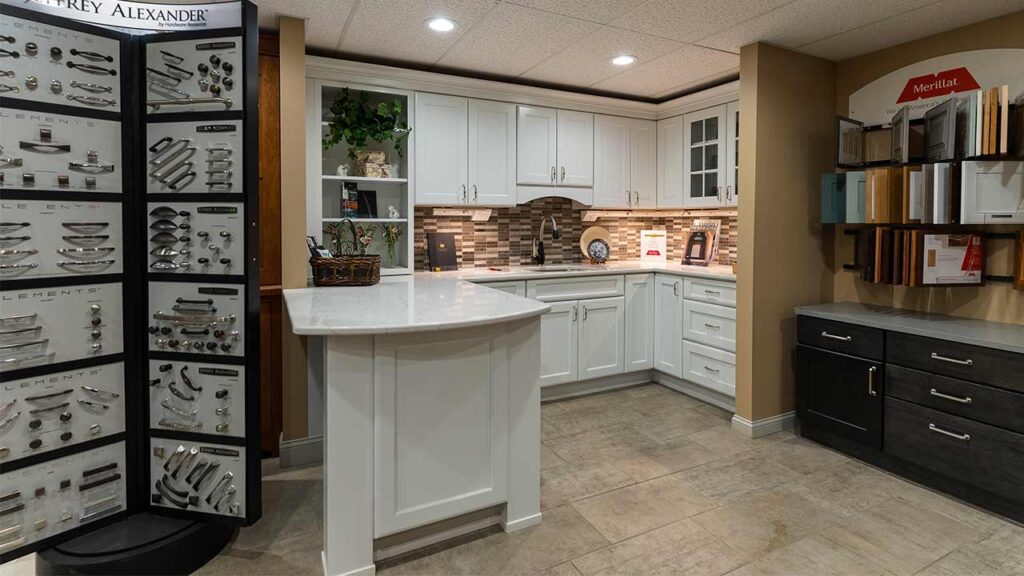
National manufacturers are a common benchmark when professionals compare kitchen cabinet manufacturers for consistency and support.
Strengths
- Professional warranty systems and established service structure
- Reliable distribution networks to reduce delivery delays
- Standardized construction quality across product lines
Limitations
- Restricted customization, especially outside standard SKUs
- Slower adoption of emerging styles and materials
- Higher costs for upgraded designs or premium finishes
Ideal for teams prioritizing predictability over flexibility when they compare quality price and value in kitchen cabinets.
Learn more: Top Cabinet Manufacturers California
2.3 Overseas OEM Kitchen Cabinet Manufacturers
OEM partners—especially Vietnamese facilities—have become major contenders as brands compare kitchen cabinet manufacturers globally.
Strengths
- Cost-efficient production at scale
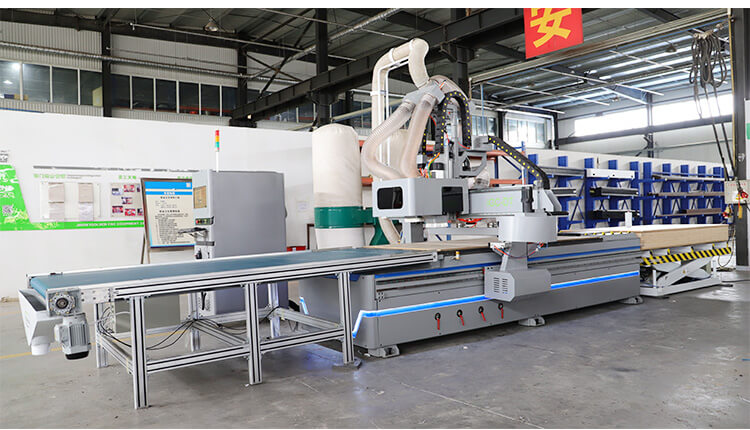
- Advanced CNC automation, ensuring consistency
- OEM and private-label options, enabling brand-specific designs
Considerations
- Factory-to-factory QC differences require careful vetting
- Communication and project alignment must be well structured
- Freight and compliance logistics must be accounted for
OEM manufacturing delivers compelling value when teams compare kitchen cabinet options, especially for multi-family, developer, and hospitality projects.
Learn more: Kitchen Manufacturers Vietnam
3. Comparative Quality Analysis Across Manufacturers
When professionals compare kitchen cabinet manufacturers, material quality, precision, and finish systems quickly reveal which suppliers can deliver long-term value. Cabinets that look similar at first glance often perform very differently once installed, making technical comparison essential.
3.1 Material Quality Assessment
A core step when you compare kitchen cabinet options is reviewing what’s inside the cabinet—not just the exterior finish.
To compare wood kitchen cabinets, look at:
- Substrate grade — E0/E1 MDF or CARB-compliant plywood
- Moisture resistance ratings for sink bases and humid environments
- Verified wood sourcing certifications proving legality and sustainability
Cheap cores reduce upfront cost but increase failure risk, impacting total lifecycle value when you compare quality price and value in kitchen cabinets.
3.2 Manufacturing Precision and Consistency
Precision separates premium manufacturing from entry-level production when you compare kitchen cabinet manufacturers.
Check for:
- Tight tolerance accuracy
- Even door and drawer reveals
- Correct hardware alignment
A 1–2 mm discrepancy, multiplied across hundreds of cabinets, causes costly installation delays—showing why machine precision matters when you compare kitchen cabinets from different companies.
3.3 Finish Quality and Performance
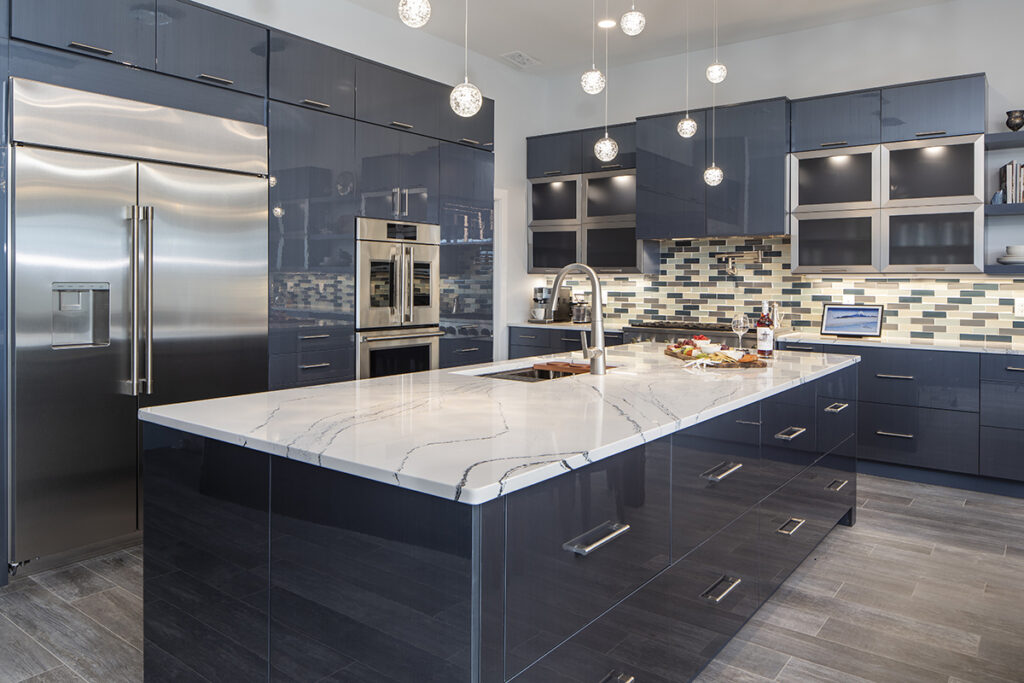
Finish durability determines how well cabinets age once in use.
Premium systems include:
- UV-cured coatings for hardness
- PUR edge-banding to prevent moisture damage
- Multi-step acrylic or painted processes built for high-touch areas
Poor finishing creates:
- Peeling and chipping
- Color mismatch over time
Finish failure is one of the most common issues uncovered when teams compare kitchen cabinet manufacturers across market tiers.
4. Pricing Analysis: Interpreting True Cost Structures
Cost assessment is essential when organizations compare kitchen cabinet manufacturers, but pricing must be interpreted through the lens of durability, quality control, and total lifecycle value—not merely quoted numbers.
4.1 Cost Component Breakdown
Primary cost drivers when teams compare kitchen cabinet options include:
- Material specifications (plywood, MDF, hardware grade)
- Labor intensity versus CNC automation efficiency
- Capital investment in advanced machinery
- Packaging protocols and freight logistics
These variables clarify why visually similar products may differ significantly in price.
4.2 Key Drivers Behind Price Variations
Pricing differences typically arise from:
- Automation and process optimization, reducing manual labor and defect rates
- Material yield efficiency, lowering waste and scrap
- Production scale and throughput, critical when stakeholders compare kitchen cabinet manufacturers for multi-unit contracts
Factories with higher efficiency generally deliver superior value against long-term project budgets.
4.3 Hidden Cost Risks in Cabinet Procurement
The lowest upfront cost often conceals downstream exposure:
- Rework, replacement, and installation correction requirements
- Construction schedule disruption due to inconsistent manufacturing quality
- Warranty liabilities shifting to builders when support systems are weak
Professionals who thoroughly compare quality price and value in kitchen cabinets understand that lifecycle cost—not purchase price—defines true financial impact.
5. Value-Based Comparison: Beyond Initial Pricing
When project teams compare kitchen cabinet manufacturers, long-term value depends on customization flexibility, production scalability, and professional support—not just initial cost. These factors directly influence design execution, installation efficiency, and lifecycle performance.
5.1 Customization and Specification Control
A key distinction when you compare kitchen cabinet options is how much control each supplier offers over design and specifications.
Assess the ability to support:
- Door profiles (shaker, slab, raised panel)
- Finish selections across paint, laminate, veneer, or acrylic
- Modular vs fully bespoke sizing
Restricted options can limit design intent and market differentiation.
5.2 Scalability and Repeatability
Scalability becomes essential as volume increases or projects repeat across locations—an important metric when you compare kitchen cabinet manufacturers.
Most relevant for:
- Multi-phase construction
- Multi-city brand rollouts
- Hotel, retail, or franchise programs
Reliable partners deliver consistent cabinets unit after unit, phase after phase.
Learn more: Multifamily Manufacturers
5.3 Technical Documentation and Project Support
Support systems impact installation efficiency and reduce field errors—often overlooked when teams compare quality price and value in kitchen cabinets.
Professionals rely on:
- Shop drawings
- Cut sheets
- Submittals
- Assembly/installation guides
Manufacturers without documentation increase job-site labor, delays, and risk.
6. Comparative Analysis of Wood Kitchen Cabinets
Material choice becomes a major differentiator when professionals compare kitchen cabinet manufacturers, as wood species and substrate types directly influence stability, longevity, and total cost of ownership.
6.1 Solid Wood Cabinet Construction
Solid wood appeals to high-end markets but carries performance and budget limitations.
Pros
- Warm, tactile character with authentic natural grain
- Premium aesthetic, valued in custom homes
Cons
- Higher material and production cost
- Greater risk of warping and expansion in changing humidity
- Color variability, making batch uniformity difficult
Solid wood often performs best in limited-use or design-focused spaces when teams compare wood kitchen cabinets.
6.2 Engineered Wood Cabinet Construction
Engineered substrates—typically MDF paired with plywood—are the dominant choice in modern cabinet manufacturing.
Provides:
- Dimensional stability and reduced warping
- Predictable finish quality for paint, laminate, and acrylic
- Lower cost variation, ideal for repeatable production
Preferred for:
- OEM manufacturing partners
- Multi-family and mixed-use projects
- Spec home development
When buyers compare kitchen cabinet options, engineered wood delivers the strongest durability-to-price ratio.
6.3 Material Selection by Project Type
Smart material strategy depends on the development model:
- Custom homes: Solid wood or veneer for premium impact
- Multi-family portfolios: Plywood/MDF blends for reliable scale
- Hospitality and commercial kitchens: Laminated or acrylic for durability under heavy use
This alignment ensures businesses compare quality price and value in kitchen cabinets effectively across market segments.
7. Casta’s Position Within the Manufacturer Comparison
When North American professionals compare kitchen cabinet manufacturers, Casta stands out as a strategic OEM partner by combining cost efficiency, scalable production, and strict quality discipline—without sacrificing finish accuracy or design flexibility.
Learn more: Vietnam vs China Manufacturers
7.1 Manufacturing Infrastructure and Capability
Casta operates as a Vietnam-based manufacturer engineered for volume performance and batch consistency.
- High-volume production facility optimized for repeatable output
- European CNC cutting, drilling, and finishing systems to maintain precise tolerances
- End-to-end moisture and climate control supporting dimensional stability
- Consistent performance across thousands of identical units, essential when teams compare kitchen cabinet options for multi-phase programs
7.2 Material and Quality Compliance
As developers and brands compare kitchen cabinet manufacturers based on compliance, Casta meets North American safety and environmental expectations.
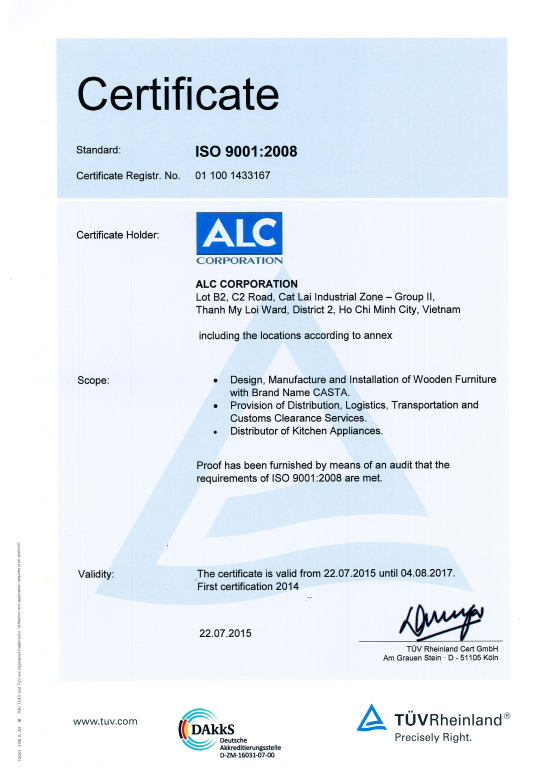
- CARB/EPA-compliant substrates protecting indoor air quality
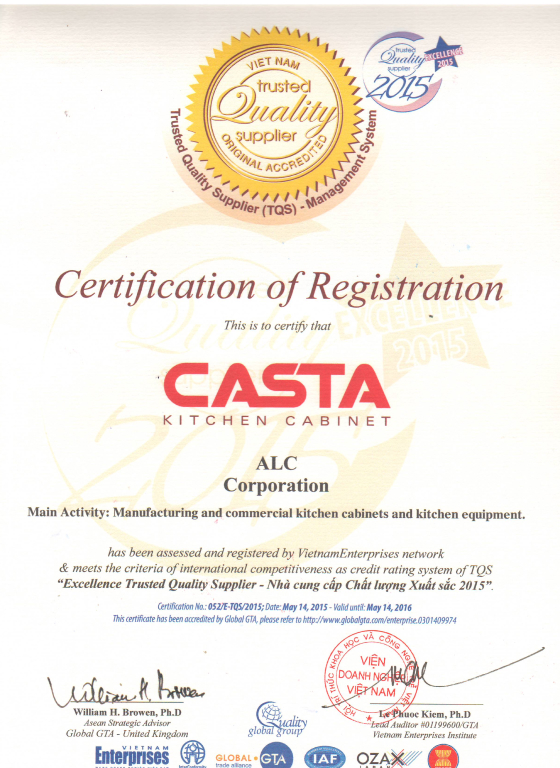
- FSC-verified sourcing available upon request for sustainability mandates
- Controlled QA/QC checkpoints across manufacturing stages
- Repeatable finishing accuracy, ensuring color and sheen consistency batch to batch
7.3 Customization and Client Alignment
Casta supports flexible project requirements—one of the deciding factors when buyers compare quality price and value in kitchen cabinets.
- OEM and private-label production programs
- Brand-aligned materials and configurations
- Sample iteration and refinement until final approval
- Assured continuity across multi-phase or multi-city deployments
This makes Casta a scalable partner for cabinet brands seeking growth without factory investment.
7.4 Logistics and North American Market Support
Strong logistics execution is a critical differentiator when organizations compare kitchen cabinets from different companies, especially overseas partners.
- Export-grade packaging engineered for long-distance transport
- Full documentation support, including commercial, regulatory, and installation files
- Coordinated delivery scheduling aligned with construction timelines
- Optional field-level coordination, minimizing risk for installers and GCs

Learn more: Casta’s outstanding international projects
8. Comparative Case Review: Identical Specifications Across Different Manufacturers
When professionals compare kitchen cabinet manufacturers, the clearest insights come from holding every design and specification constant. In this real-world review, three factories were asked to produce the same cabinet program using identical drawings, materials, finishes, and hardware selections.
Consistent design and material parameters included:
- Engineered wood cabinet boxes
- Painted shaker doors
- Soft-close drawers and hinges
- Matte topcoat finish requirements
Comparative evaluation focused on:
- Unit pricing – How price shifts across suppliers with identical specs
- Lead times – Predictability and ability to meet construction schedules
- Quality consistency – Door alignment, finish durability, batch-to-batch variation
- Risk and outcome analysis – Rework rates, delivery reliability, warranty exposure
The comparison revealed that:
- Custom local shops delivered flexibility but at a premium cost
- National brands provided stable service but limited customization
- OEM manufacturers—especially automation-led facilities—offered the strongest price-to-performance value, especially when sourcing for multi-unit or repeatable deployment
For developers, brands, and contractors looking to compare kitchen cabinets from different companies, this type of controlled benchmark remains the most reliable way to predict long-term cost and performance outcomes.
Learn more: Top Cabinet Manufacturers
9. Decision-Making Framework for Comparing Kitchen Cabinet Manufacturers
Professionals evaluating suppliers should apply a structured selection process to confidently compare kitchen cabinet manufacturers across cost, quality, and long-term risk:
- Define project scope, volume, and schedule
Align cabinet manufacturer capacity and lead time with real construction timelines, especially for multi-building or phased rollouts.
- Establish minimum material and performance criteria
Standardize substrate grade, finish durability, moisture resistance, hardware specs, and compliance requirements before requesting quotes — this ensures you truly compare kitchen cabinet options apples-to-apples.
- Evaluate manufacturing capability and technology
Determine whether each supplier uses manual fabrication or CNC automation, and whether they maintain batch consistency — critical when you compare kitchen cabinets from different companies.
- Compare total cost of ownership rather than unit price
Consider replacement risk, installation time, shipping constraints, and warranty coverage — the lowest bid often becomes the costliest over the project lifecycle.
- Assess long-term supplier reliability and support
Prioritize cabinet manufacturers with demonstrated supply chain stability, scalable output, and post-delivery service — essential for brands and developers managing repeat projects.
This framework helps teams compare quality, price, and value in kitchen cabinets—and select partners positioned for scalable, reliable delivery.
Learn more: Kitchen Cabinet Buying Guide
10. Frequently Asked Questions
What criteria should be prioritized when comparing cabinet manufacturers?
How does OEM manufacturing affect quality control?
Which cabinet materials offer the best long-term performance?
How can manufacturers support large-scale North American projects?
When is an overseas manufacturing partner strategically advantageous?





Top Cabinet Manufacturers in Florida: A Capability-Based Buy...
Cabinet manufacturers in Florida play a critical role in one of the fastest-growing construction markets in North Americ...
01/10/2026 | David Nguyen
Top North Carolina Cabinet Manufacturers | Best NC Kitchen ...
North Carolina cabinet manufacturers have long been trusted across the U.S. thanks to the state’s deep heritage in woodw...
01/08/2026 | David Nguyen
Top Cabinet Manufacturers in Arizona | Best Arizona Kitchen ...
Cabinet manufacturers in Arizona have gained increasing attention as construction activity accelerates across Phoenix, T...
01/06/2026 | David Nguyen

Top Cabinet Manufacturers Indiana | Best Indiana Kitchen Cab...
Cabinet manufacturers Indiana have become increasingly relevant as contractors and developers look for dependable Midwes...
01/04/2026 | David Nguyen
Top Cabinet Manufacturers in Florida: A Capability-Based Buy...
Cabinet manufacturers in Florida play a critical role in one of the fastest-growing construction markets in North Americ...
01/10/2026 | David Nguyen
Top North Carolina Cabinet Manufacturers | Best NC Kitchen ...
North Carolina cabinet manufacturers have long been trusted across the U.S. thanks to the state’s deep heritage in woodw...
01/08/2026 | David Nguyen
Top Cabinet Manufacturers in Arizona | Best Arizona Kitchen ...
Cabinet manufacturers in Arizona have gained increasing attention as construction activity accelerates across Phoenix, T...
01/06/2026 | David Nguyen
Top Cabinet Manufacturers Indiana | Best Indiana Kitchen Cab...
Cabinet manufacturers Indiana have become increasingly relevant as contractors and developers look for dependable Midwes...
01/04/2026 | David Nguyen
Contact us
Casta is always ready to listen and answer all customers' questions