


 EN
EN
Color plays a defining role in how modular kitchens function, feel, and perform over time. Beyond aesthetics, the right color selection influences perceived space, durability, maintenance requirements, and long-term value.
In large residential and commercial projects, consistent and well-chosen color systems help ensure visual continuity, cost efficiency, and product longevity. Selecting the right modular kitchen cabinet colors is therefore a strategic decision that directly impacts both design success and operational performance.
Table of Contents
1. How Color Works in Modular Kitchen Cabinets
Color plays a critical role in the performance and appearance of modular kitchen cabinets. It influences not only aesthetics but also how a space feels, how light behaves, and how well the kitchen ages over time. Understanding how color interacts with materials, finishes, and lighting is essential for achieving consistent, long-lasting results in modular kitchen design.
1.1 Color, Material, and Finish Interaction
The final appearance of a modular kitchen cabinet is shaped by the interaction of three key elements:
- Material type – such as MDF, plywood, or engineered board, which affects texture, stability, and surface behavior
- Surface finish – including laminate, acrylic, paint, or veneer, each influencing reflectivity and durability
- Lighting conditions – both natural and artificial light can significantly alter how a color is perceived
The same color may look warmer, cooler, lighter, or darker depending on the material and finish used. Glossy finishes reflect light and create a brighter visual effect, while matte surfaces absorb light and offer a softer, more muted appearance.
Learn more: Types of Kitchen Cabinet Materials
1.2 Color Behavior Under Lighting Conditions
Lighting plays a critical role in how modular kitchen cabinet colors appear in real environments.
- Natural light enhances depth and reveals undertones within the color
- Warm artificial lighting softens hues and creates a more inviting atmosphere
- Cool lighting sharpens contrast and highlights surface textures
Understanding how lighting interacts with cabinet colors helps designers and manufacturers maintain consistency across different spaces, especially in large-scale or multi-unit projects.
Learn more: Kitchen Cabinet Colors
2. Most Popular Modular Kitchen Cabinet Colors
Choosing the right modular kitchen cabinet colors is one of the most important design decisions in modern kitchen planning. Color impacts visual scale, perceived cleanliness, long-term appeal, and even property value.
Below are the most widely used and performance-proven color categories used in today’s modular kitchen projects.
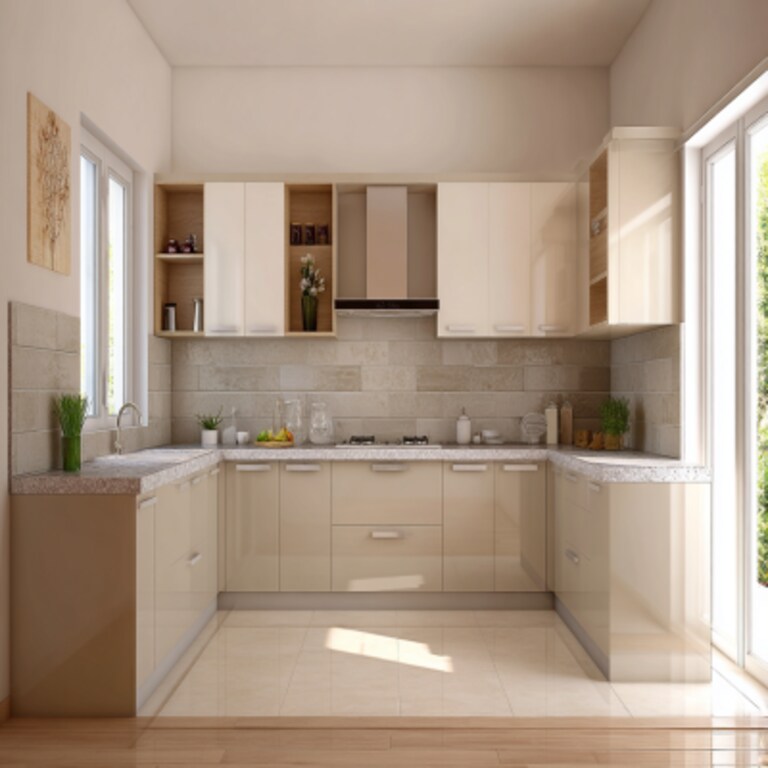
2.1 Neutral Color Palettes
Neutral tones remain the most popular choice for modular kitchen cabinet colors due to their versatility, longevity, and broad market appeal. These colors work well across residential, multi-family, and commercial developments.
Common neutral color options include:
- White and off-white tones for bright, clean interiors
- Light grey and warm beige for soft, modern aesthetics
- Soft taupe and stone-inspired hues for timeless appeal
Why they work:
- Reflect light effectively, making spaces feel larger
- Easily match with countertops, backsplashes, and flooring
- Reduce risk of style obsolescence in long-term projects
2.2 Dark and Bold Cabinet Colors
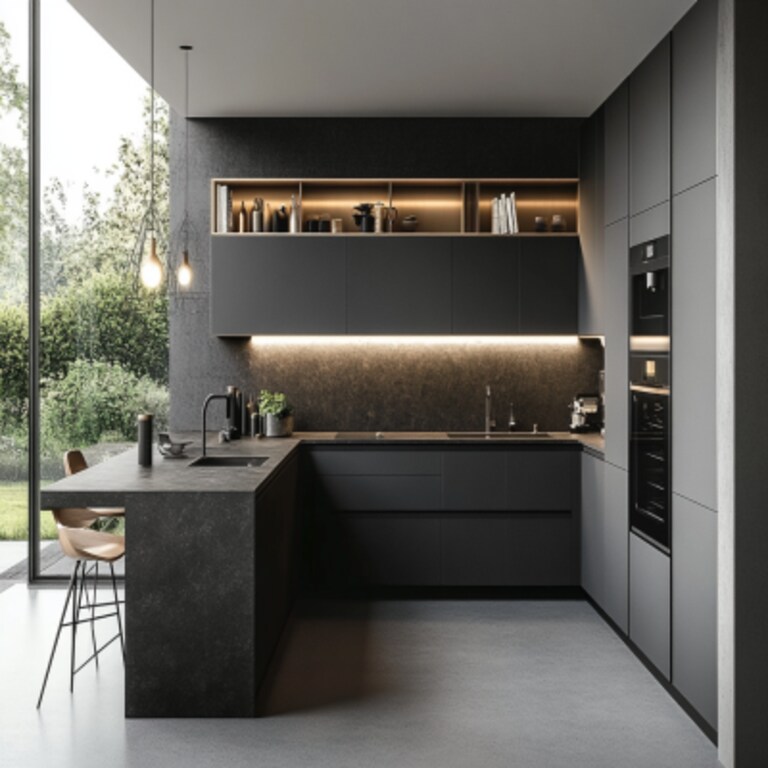
Dark cabinet colors add depth and sophistication, especially in high-end or design-forward spaces. These colors are increasingly popular in modern apartments and premium homes.
Common dark color choices include:
- Charcoal and graphite grey
- Matte black and deep espresso tones
- Dark navy and deep blue shades
Key advantages:
- Creates strong visual contrast and architectural definition
- Works well with metallic hardware and light countertops
- Elevates perceived value in luxury kitchen designs
2.3 Natural and Wood-Inspired Colors
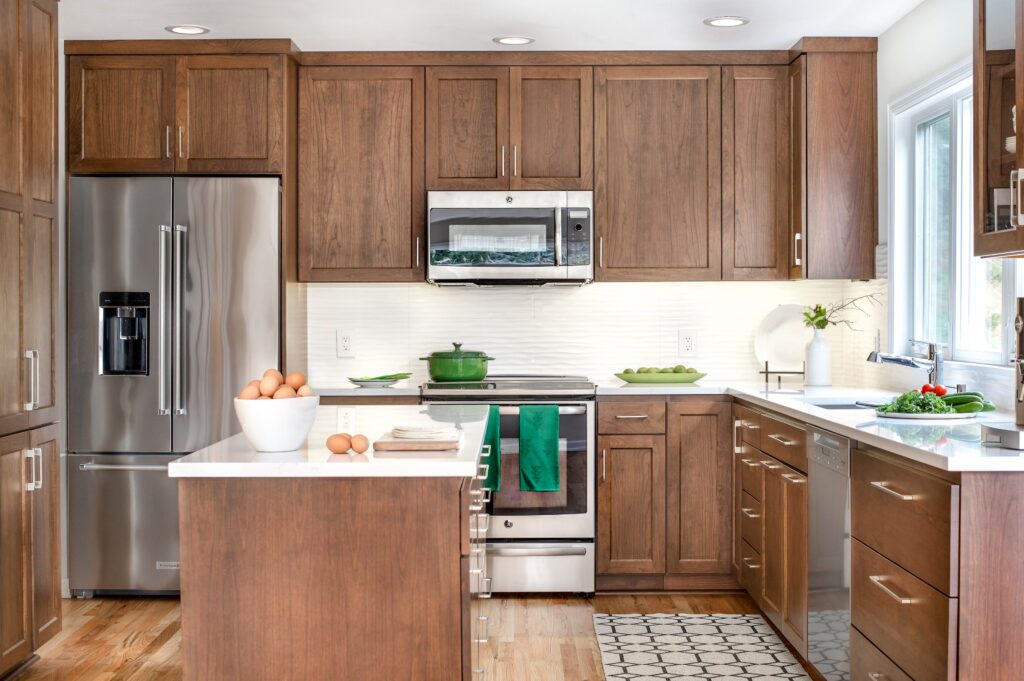
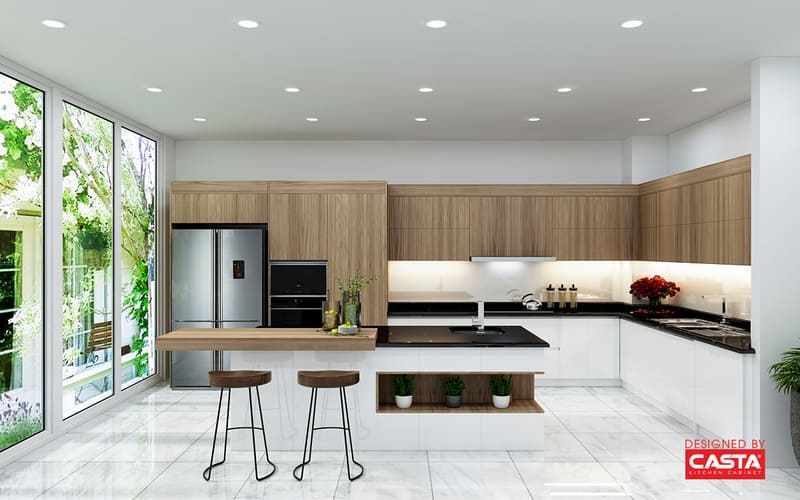
Wood-inspired finishes remain a staple in modular kitchen design due to their warmth and versatility. Advances in engineered materials allow consistent color and texture while maintaining a natural look.
Popular wood-tone options include:
- Oak and light oak finishes
- Walnut and smoked wood tones
- Ash-inspired neutral grains
Benefits:
- Adds warmth and visual comfort
- Pairs well with both modern and traditional interiors
- Provides a natural aesthetic with improved material stability
Learn more: Wood Finish Kitchen Cabinets
2.4 Accent and Contemporary Colors
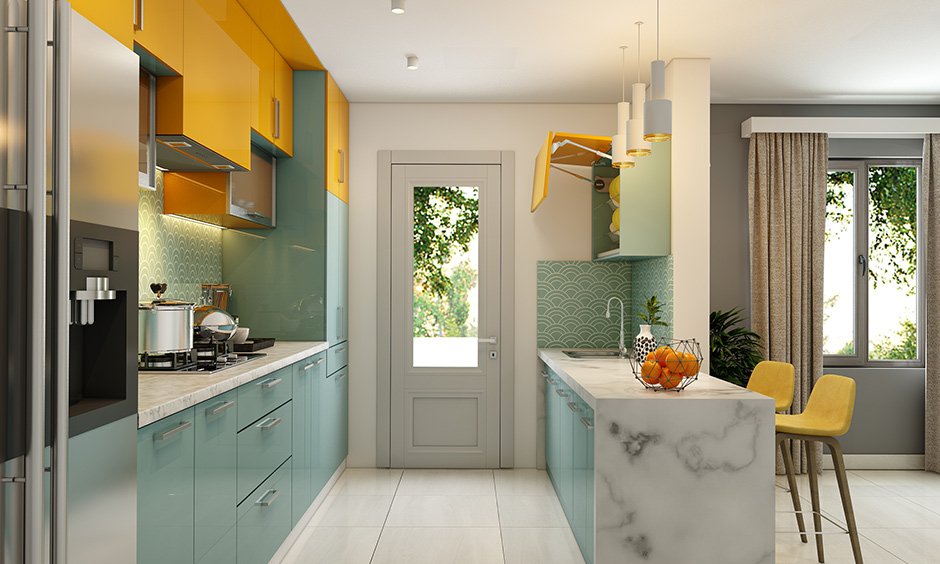
Accent colors are used strategically to add personality and visual interest without overwhelming the space. They are often applied to islands, tall cabinets, or feature walls.
Common accent color choices include:
- Muted greens and sage tones
- Navy and slate blue
- Earthy clay and warm grey hues
Why they work:
- Create focal points while maintaining balance
- Enhance modern and transitional kitchen designs
- Allow designers to personalize spaces without sacrificing cohesion
3. Modular Kitchen Cabinet Color Combinations That Perform Well
Choosing the right modular kitchen cabinet colors is essential for achieving visual balance, durability, and long-term design flexibility.
The following color combination strategies are widely used in both residential and large-scale commercial projects due to their proven performance and adaptability.
3.1 Two-Tone Color Combinations
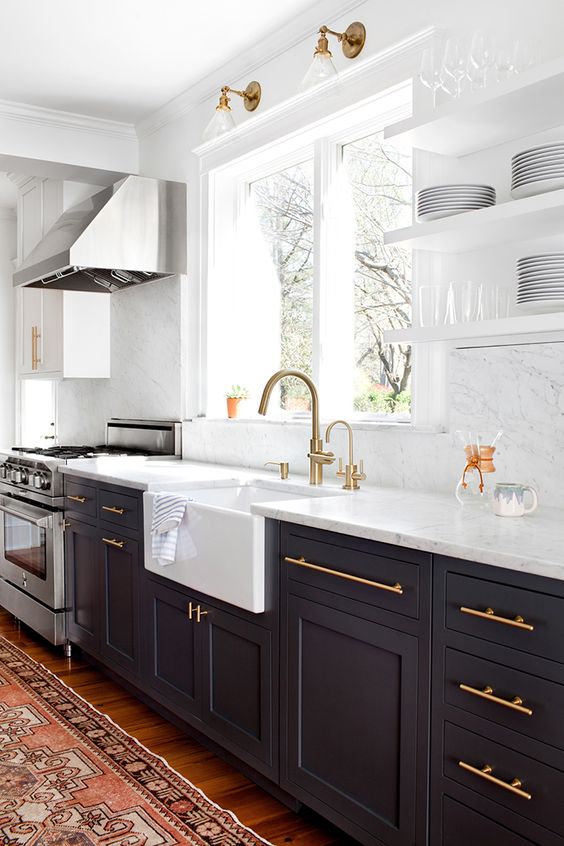
Two-tone color schemes remain one of the most effective approaches in modular kitchen design. By combining light and dark shades, designers can create contrast while maintaining visual harmony.
Key benefits:
- Light upper cabinets help brighten the space and make kitchens feel more open
- Dark lower cabinets conceal wear, scuffs, and daily use marks
- Ideal for high-traffic kitchens and multi-unit developments
Common combinations:
- White upper cabinets + charcoal or grey base units
- Light beige uppers + deep wood-tone lowers
Learn more: Mixed Color Kitchen Cabinets
3.2 Monochrome Color Schemes
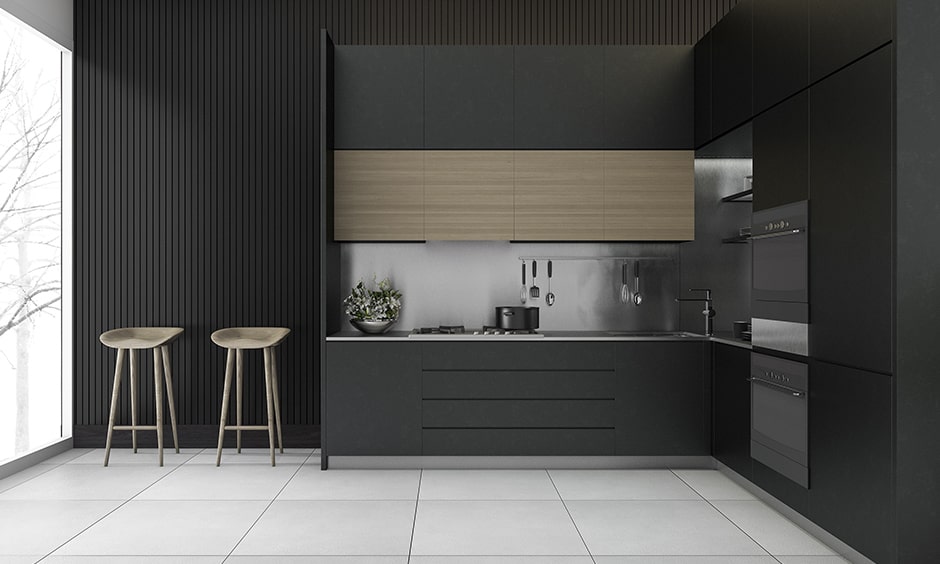
Monochrome designs use a single color family with variations in tone or finish. This approach delivers a sleek, contemporary look while maintaining consistency across large installations.
Advantages of monochrome modular kitchen cabinet colors:
- Clean and modern visual identity
- Easier coordination with appliances and countertops
- Suitable for minimalist and high-end interiors
Typical applications:
- Matte black or soft grey kitchens
- Uniform white kitchens with tonal texture variation
3.3 Neutral + Accent Color Strategies
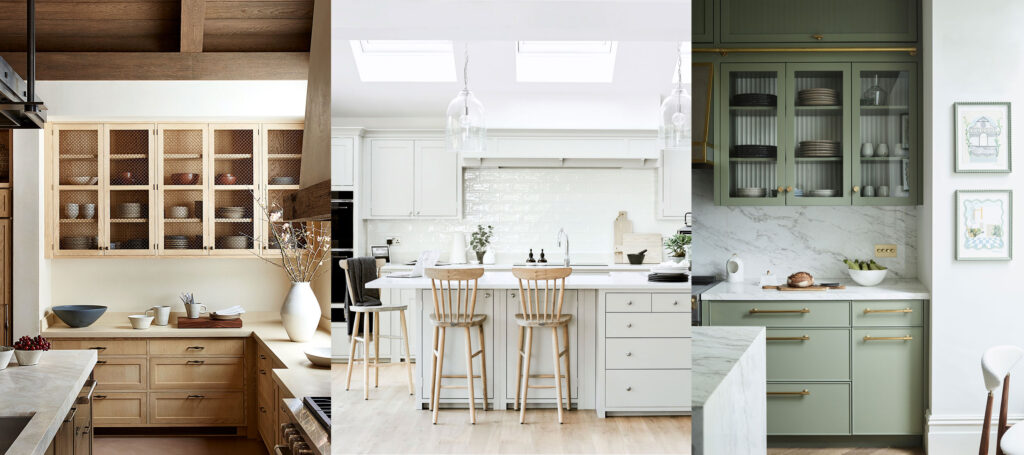
Combining neutral cabinet colors with accent elements allows designers to introduce personality without overwhelming the space. This strategy is widely used in both residential and hospitality projects.
Effective combinations include:
- Neutral base cabinets with colored kitchen islands
- Light cabinetry paired with deep blue, green, or earth-tone accents
- Subtle contrast between wall units and tall cabinets
Why this approach works:
- Maintains long-term design flexibility
- Allows easier future updates without full renovation
- Balances visual interest with timeless appeal
Using these well-planned modular kitchen cabinet color combinations helps ensure durability, aesthetic longevity, and strong market appeal across diverse project types.
4. Color Performance Analysis for Modular Kitchen Cabinets
Understanding how modular kitchen cabinet colors perform over time is essential for long-term durability, appearance, and maintenance efficiency.
Color performance is influenced by finish quality, material selection, and production consistency.
4.1 Durability and Wear Resistance
Different colors respond differently to daily use, friction, and environmental exposure.
- Darker modular kitchen cabinet colors may reveal scratches more easily, especially in high-touch areas
- Lighter shades tend to hide surface wear but may show stains if not properly sealed
- High-quality finishes and edge treatments significantly improve long-term durability
4.2 Maintenance and Cleaning Performance
Maintenance requirements vary depending on color tone and surface finish.
- Matte finishes reduce fingerprint visibility and glare
- Glossy finishes allow quick wipe-downs but may show smudges more clearly
- Textured surfaces help mask minor imperfections and fingerprints
Selecting the right finish helps maintain the appearance of modular kitchen cabinet colors with minimal upkeep.
4.3 Color Stability Over Time
Color stability is critical for large-scale projects where visual consistency matters.
- High-quality pigments prevent fading and discoloration
- Controlled manufacturing environments ensure uniform color batches
- Consistent curing and coating processes protect long-term appearance
5. Choosing Cabinet Colors by Project Type
Selecting the right modular kitchen cabinet colors depends heavily on the type of project and its long-term use. Different environments demand different levels of durability, visual impact, and maintenance performance.
Below is a breakdown of how color strategies vary by project type.
5.1 Residential Developments
Residential projects prioritize broad appeal, comfort, and long-term value.
- Neutral modular kitchen cabinet colors such as white, beige, and light grey remain the most popular choices
- These colors enhance brightness and make spaces feel larger
- Neutral palettes support higher resale value and easier future renovations
- Soft-toned finishes reduce visible wear and aging over time
5.2 Multi-Family and Apartment Projects
Multi-unit developments require consistency, durability, and low maintenance.
- Neutral and mid-tone colors help maintain uniformity across units
- Durable finishes reduce repair and replacement costs
- Consistent color programs simplify large-scale production and installation
- Modular kitchen cabinet colors must remain stable across multiple batches
Learn more: Multifamily Cabinet Manufacturers
5.3 Hospitality and Commercial Kitchens
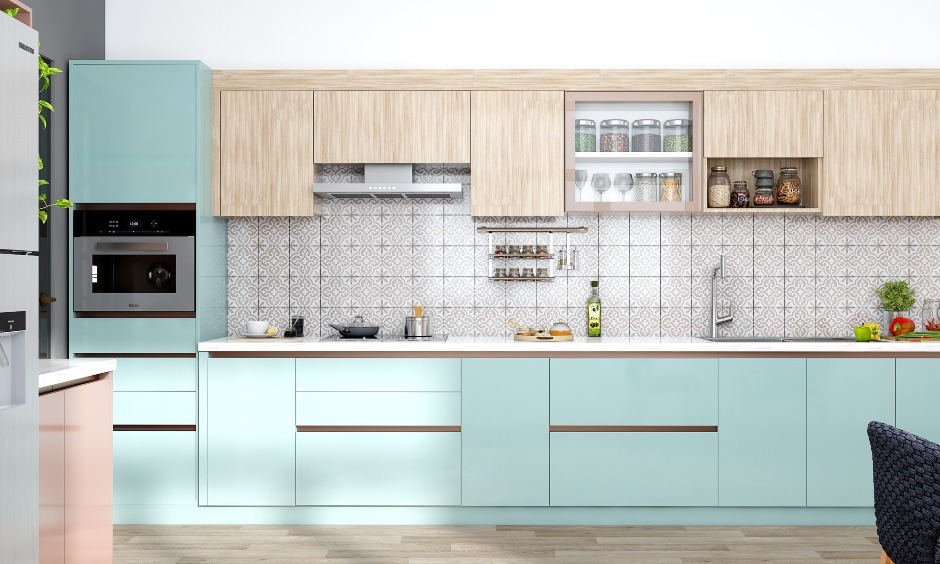
Hospitality projects often use color as a branding tool while maintaining performance standards.
- Darker or accent colors help define brand identity and visual impact
- Durable coatings are essential for high-traffic and high-use environments
- Color selections must balance aesthetics with long-term maintenance efficiency
By aligning color choices with project type, developers and designers can ensure that modular kitchen cabinet colors perform well, age gracefully, and support the intended use of the space.
6. Manufacturing Factors Affecting Cabinet Color Quality
The final appearance and durability of modular kitchen cabinet colors depend heavily on manufacturing precision. Even the best materials and finishes can underperform if production conditions are inconsistent or poorly controlled.
6.1 Precision Manufacturing
High-precision CNC machining is essential for producing uniform cabinet components. Accurate cutting and drilling ensure that color alignment, panel edges, and joints remain consistent across all units.
- Minimizes dimensional variation between cabinet parts
- Ensures uniform color appearance across large production runs
- Supports tight tolerances required for modular installations
Learn more: Cabinet Manufacturing Process
6.2 Controlled Finishing Environments
Color quality is directly affected by the conditions in which finishing takes place.
Controlled environments help prevent common surface defects.
- Dust-free spray booths reduce blemishes and uneven texture
- Stable temperature and humidity ensure consistent curing
- Controlled airflow improves finish adhesion and smoothness
These factors are especially important for achieving consistent modular kitchen cabinet colors in large-scale production.
6.3 Quality Control Systems
Reliable quality control ensures color consistency from batch to batch.
- Regular color calibration and sample matching
- In-process inspections to detect surface or tone variation
- Final quality checks before packaging and shipment
7. Vietnam-Based Manufacturing with European Technology: Color at Scale
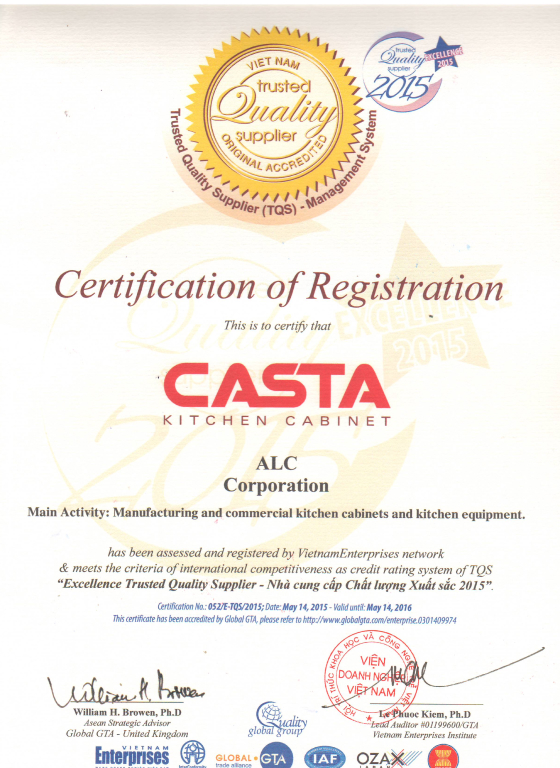
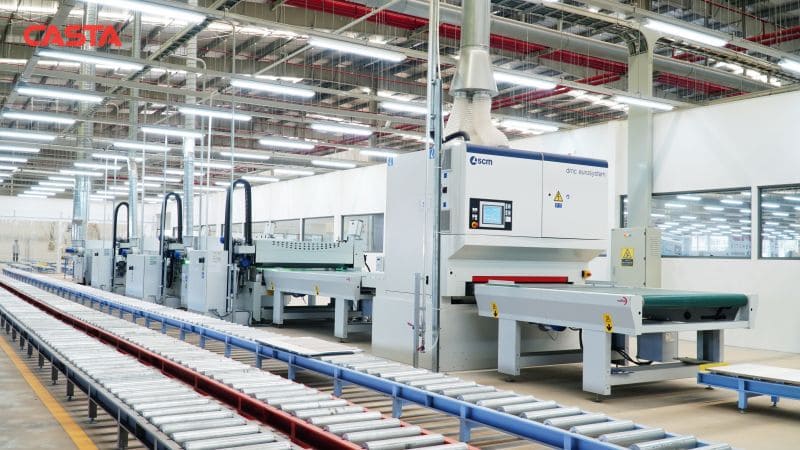
Vietnam has become a strategic hub for producing high-quality modular kitchen cabinet colors, and Casta stands out for its ability to deliver consistency, scale, and precision.
By combining European manufacturing technology with strict quality control systems, Casta ensures reliable color performance across large production volumes.
Key advantages of Casta’s manufacturing capability include:
- Stable color output across large orders
Advanced process control ensures consistent color tone and finish from the first cabinet to the last, even in high-volume projects.
- Advanced European finishing systems
State-of-the-art CNC and automated coating lines support:
- Matte and super-matte finishes
- High-gloss and acrylic surfaces
- Uniform color application across batches
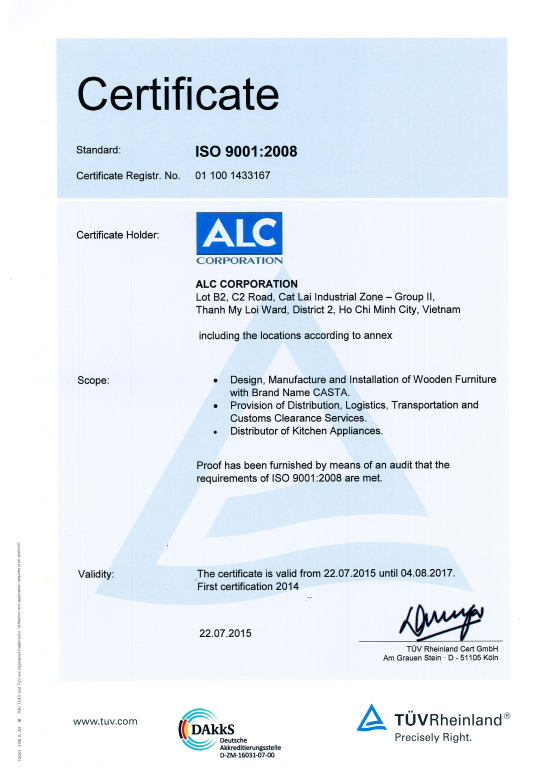
- Compliance with North American health and quality standards
All materials and coatings meet stringent safety and environmental requirements, ensuring suitability for residential and commercial projects.
- Custom color development and private-label support
Casta collaborates closely with partners to develop proprietary color palettes while maintaining production efficiency and repeatability.
Learn more: Casta’s outstanding international projects
8. Case Application: Modular Kitchen Cabinet Colors in a Large Project
Project type: Large-scale residential development with multiple buildings
Color approach:
- Neutral base palette using soft whites and warm greys
- Accent colors applied selectively to islands and feature cabinetry
Design benefits:
- Maintained visual consistency across all units
- Created a modern yet timeless aesthetic
Production advantages:
- Standardized finishes reduced material waste
- Simplified manufacturing and installation workflows
Performance outcome:
- Improved installation efficiency
- Consistent appearance across units
- Long-term durability and easier maintenance through optimized modular kitchen cabinet colors
9. Decision Framework: Choosing the Right Modular Kitchen Cabinet Colors
When selecting modular kitchen cabinet colors, decision-makers should evaluate both aesthetic and performance factors to ensure long-term success across projects.
- Does the color perform well under different lighting conditions?
Assess how the color appears under natural daylight, warm indoor lighting, and artificial illumination to avoid unexpected tone shifts after installation.
- Can the color be reproduced consistently at scale?
Ensure the selected color can be accurately replicated across multiple production batches without visible variation—critical for large or phased projects.
- Is the finish durable and easy to maintain?
Choose finishes that resist stains, scratches, and fading while remaining easy to clean in daily use.
- Does the color support the project’s design and market goals?
The chosen palette should align with the target market, brand positioning, and long-term resale or rental value of the property.
Using this framework helps developers and designers select modular kitchen cabinet colors that balance aesthetics, performance, and long-term reliability.
Learn more: Kitchen Cabinet Buying Guide
10. Frequently Asked Questions
What are the most popular modular kitchen cabinet colors?
Are dark cabinet colors suitable for large projects?
How important is finish quality in color performance?
Can cabinet colors be customized for large projects?
Do modular kitchen cabinet colors impact long-term maintenance?






Top 10 Cabinet Door Manufacturers in 2025: Compare Quality, ...
In today’s competitive cabinetry market, contractors and cabinet/furniture brands need reliable partners for their door ...
06/04/2025 | David Nguyen
A customised SCM factory for the success of “Casta” kitchens...
10/08/2024 | Casta

Experience the interior space of Casta at HAWA EXPO 2024...
At HAWA EXPO 2024, the luxurious interior space featuring modern kitchen cabinet designs, along with the latest trends o...
02/28/2024 | Casta
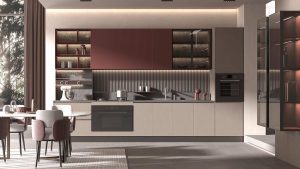
CASTA MODULE KITCHEN CABINET STRUCTURE
Are you thinking about renovating your bathroom to make it look more sparkling and neat? Casta will introduce to you 4 w...
12/04/2023 | Casta
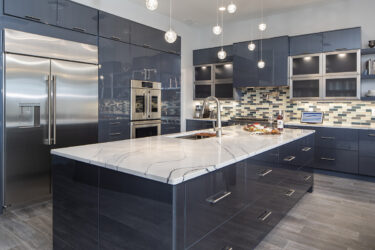
Compare Kitchen Cabinet Manufacturers: Quality, Pricing, and...
Compare kitchen cabinet manufacturers has become essential for contractors, developers, and cabinet brands as visually s...
12/23/2025 | David Nguyen
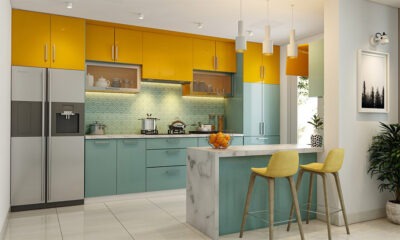
Best Materials for Modular Kitchen Cabinets: A Professional ...
The best materials for modular kitchen cabinets shape how well a kitchen performs over time—affecting durability, stabil...
12/19/2025 | David Nguyen
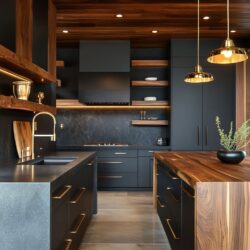
20 Black Kitchen Cabinets: Design Ideas & Where to Buy Q...
Black kitchen cabinets have become a defining choice in modern residential and commercial design, valued for their depth...
12/17/2025 | David Nguyen
20 White Kitchen Cabinets: Design Ideas & Where to Buy Q...
White kitchen cabinets remain one of the most specified solutions across residential, multifamily, and mixed-use develop...
12/15/2025 | David Nguyen
Contact us
Casta is always ready to listen and answer all customers' questions