


 EN
EN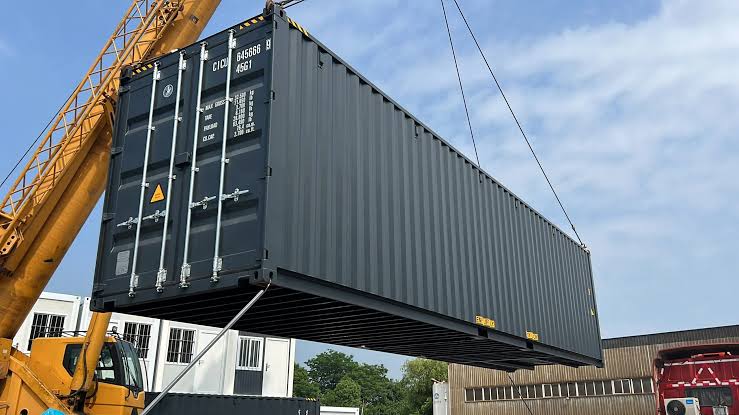
For a wholesaler pricing out a bulk order, cabinets per container is the number that turns a quote into an actual budget—before that, freight cost is just a guess. This is such a specific, practical question because the answer directly affects cost per unit, since freight gets spread across however many cabinets fit in a single shipment, and that number can vary far more than most first-time buyers expect.
This guide is written for wholesalers and distributors estimating shipping costs for a bulk order before requesting a formal quote. It covers how container capacity is actually calculated, roughly what fits in a 20ft vs. 40ft container, why RTA changes the math significantly, and how to figure out what you actually need before a supplier conversation begins.
The Two Standard Container Sizes Buyers Work With
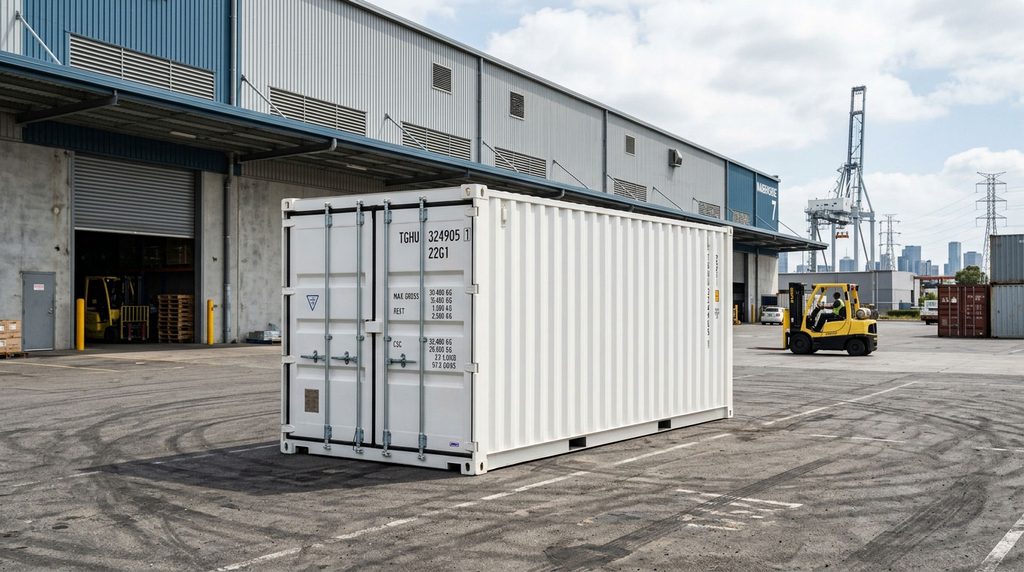
Most cabinet shipments move in one of two standard container sizes, and in practice the 40ft container is by far the more common choice for wholesale cabinet orders—the 20ft option still gets used, but it's the exception rather than the default for most bulk buyers.
20ft Container
A 20ft container has a smaller footprint, generally used for smaller bulk orders or when a buyer wants to keep an initial shipment more manageable. It carries a lower total freight cost per shipment, but a higher freight cost per unit compared to a fully loaded 40ft container, since the fixed costs of moving any container get spread across fewer cabinets per container.
40ft Container (Standard and High Cube)
The 40ft container is the more common choice for larger wholesale orders, and it's genuinely the workhorse size across the industry—offering meaningfully more usable volume than a 20ft container, though not simply double, since the extra length adds proportionally more loadable space than a straight linear comparison would suggest.
High Cube variants add extra height, which can matter significantly for cabinet loading depending on how units are stacked or crated. For most wholesalers planning cabinets per container at any real scale, the 40ft—and especially the 40ft High Cube—is generally the more cost-efficient option per unit when order volume supports filling it.
In practice, this is why the 40ft container dominates wholesale cabinet freight across the industry. A 20ft container still has a legitimate role for smaller trial orders, a first shipment from a new supplier where a buyer wants to limit exposure before scaling up, or a niche product line that doesn't yet justify a full 40ft commitment. But once an order reaches typical wholesale volume, the economics of cabinets per container shift firmly in favor of the larger box, and most experienced buyers default to 40ft unless there's a specific reason not to.
How Cabinet Packing Capacity Is Actually Calculated
Cabinets per container isn't a single fixed number—it depends on cabinet dimensions, packaging method, and how efficiently units can be stacked or nested inside the available space. A few key factors change the math meaningfully:
- Cabinet size and depth—base cabinets, wall cabinets, and tall or pantry units all pack differently.
- Whether cabinets are flat-packed (RTA) or fully assembled.
- Packaging protection—individual cartons versus palletized groupings.
- How much void space is left for cushioning versus how tightly units are nested.
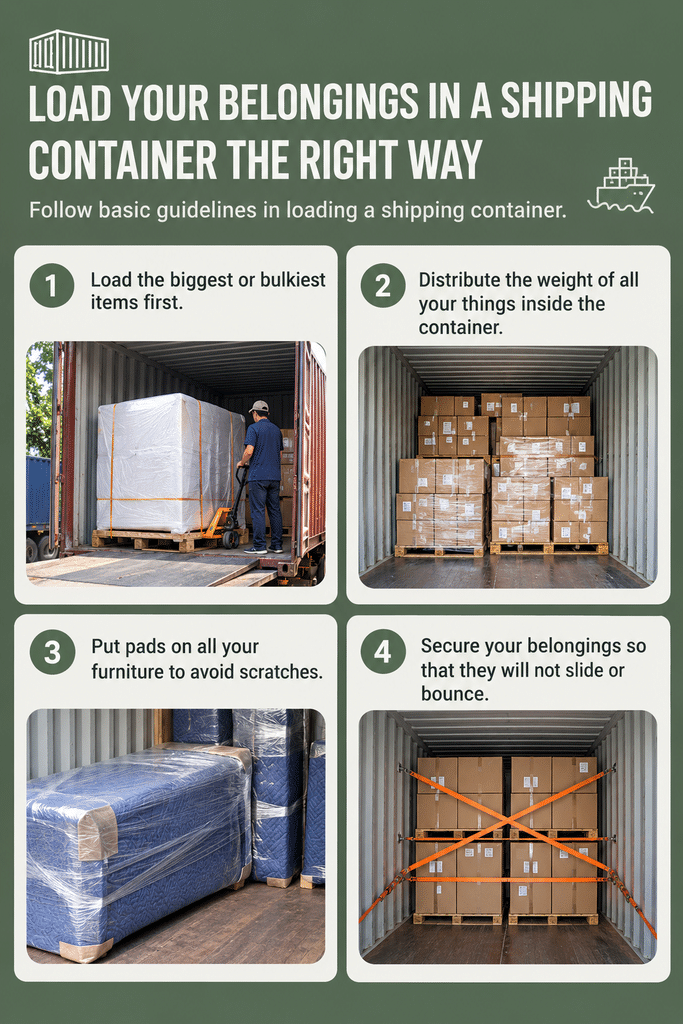
A manufacturer's real loading plan matters more than a generic online estimate for cabinets per container, since actual capacity is calculated per SKU mix, not as one flat number applied across all cabinet types and configurations.
Does Flat-Pack (RTA) Increase Container Capacity?
Yes, generally by a significant margin. Flat-packed cabinets remove the empty interior space that a fully assembled unit inevitably carries during transit, which directly increases how many RTA cabinets in a container fit compared to the same order shipped fully assembled.
Learn more: What are RTA cabinets?
More units per container directly lowers the freight cost allocated to each individual cabinet. The trade-off buyers take on in exchange is assembly labor and time on the receiving end, which needs to be factored into the buyer's own total cost and timeline, not just the shipping savings on paper.
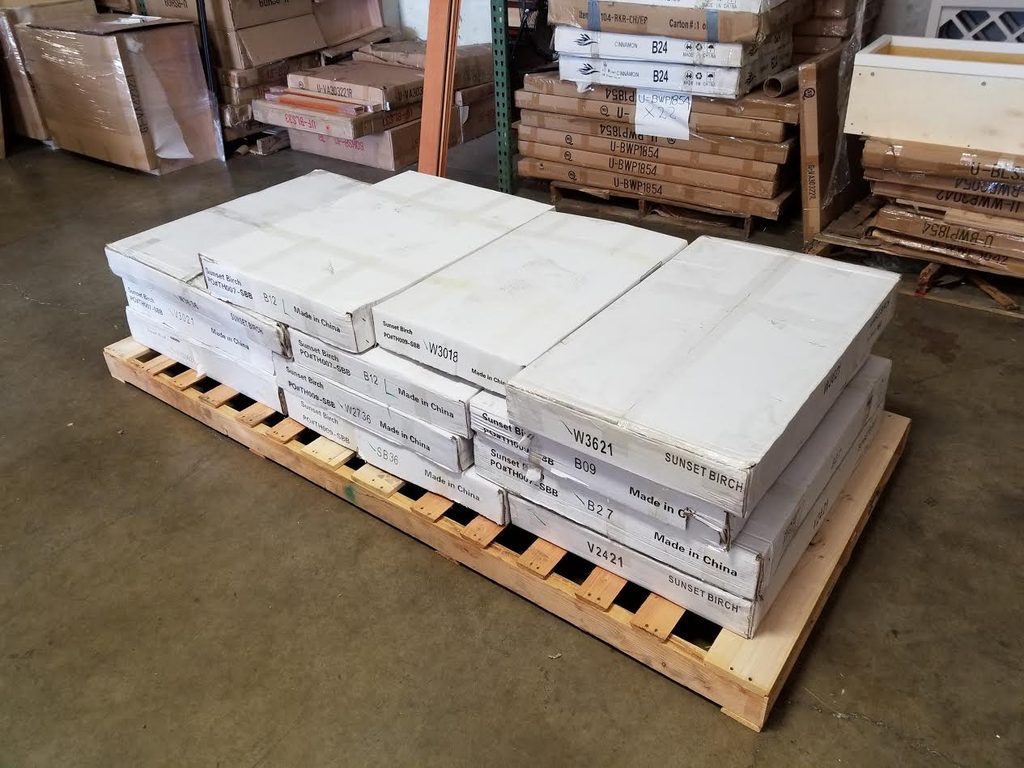
This is why many wholesalers default to RTA specifically for container-based bulk orders, reserving fully assembled for smaller or more localized orders where labor savings on receipt matter more than freight efficiency overall.
Learn more: Top 10 RTA cabinet supplier and manufacturers
Assembled vs. RTA: What Actually Changes in the Container
| Fully Assembled | RTA (Flat-Pack) | |
| Space efficiency | Lower—hollow cabinet boxes waste volume | Higher—flat panels nest tightly |
| Units per container | Fewer | Meaningfully more |
| Freight cost per unit | Higher | Lower |
| Labor required on arrival | Minimal | Assembly needed |
| Damage risk in transit | Can be higher for larger, awkward shapes | Generally lower with proper flat-pack protection |
Rough Capacity Ranges: What to Expect
Exact numbers vary by cabinet size, style mix, and packaging method, but as a general planning reference for cabinets per container: a 20ft container typically holds a noticeably smaller cabinet count than a 40ft, roughly in proportion to its reduced volume, not simply half.
A 40ft, or 40ft High Cube, container generally offers the best cost-per-unit efficiency for a full bulk order, especially with RTA packaging—which is part of why it's the far more common choice among wholesalers planning a serious bulk order rather than a small trial shipment. Mixed SKU orders, meaning different cabinet sizes and styles in one container, typically load less efficiently than a single, standardized product run.
These should be treated as planning ranges, not commitments. The only reliable number for a specific order is a loading plan calculated by the manufacturer or freight forwarder based on the actual cabinet dimensions and style mix being ordered.
How to Estimate What Container Size You Need
Start with a realistic order quantity and style or size breakdown, not a container size — the container should be sized to the order, not the other way around.
Ask the manufacturer for a loading calculation, sometimes called a container loading plan, based on your actual product mix. Factor in whether RTA or assembled makes more sense for the order, since that decision changes the cabinets per container math significantly before container size is even discussed.
It's also worth confirming which container sizes a manufacturer actually ships with regularly, since availability and familiarity can affect both pricing and loading efficiency. In practice, the 40ft container sees the most use for bulk cabinet orders, with 45ft and 20ft containers used at roughly similar, lower frequency depending on the specific order profile — a 45ft offers additional length over a standard 40ft, which can be a useful middle option when an order comfortably exceeds 40ft capacity but doesn't yet justify two separate containers.
For orders that don't fill a full container efficiently, ask about partial container load, or LCL-style, options or consolidating with a future order, rather than shipping a mostly empty container that wastes freight cost on unused space.
Why This Matters for Budgeting Before You Request a Quote
Freight cost is typically a per-container or per-shipment cost, which then gets divided across however many units actually fit—so capacity directly determines cost per cabinet, not just total shipping cost.
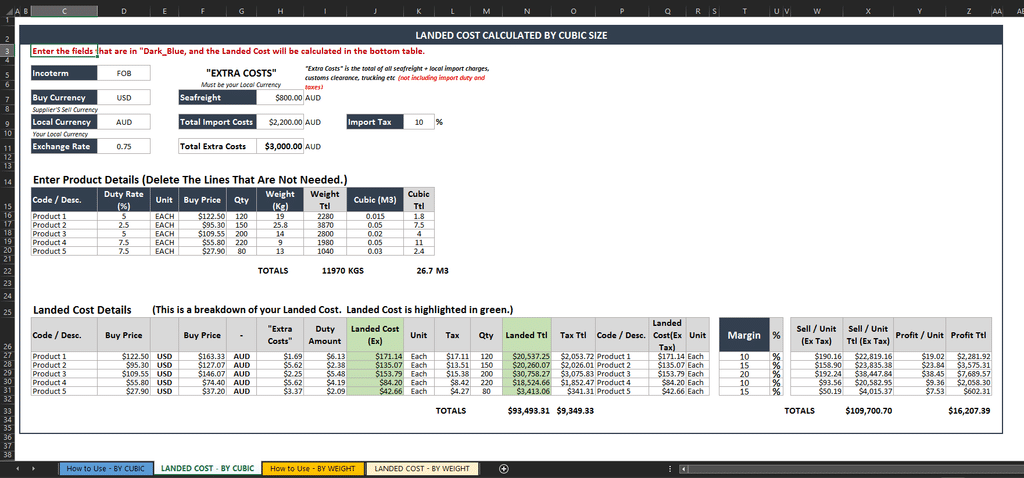
Getting a rough estimate of cabinets per container before requesting a formal quote lets a buyer sanity-check freight cost against unit price, rather than being surprised later in the process. This is especially useful for long-tail, budget-planning research, since buyers researching this question are usually trying to model total landed cost before ever contacting a supplier.
Questions to Ask a Manufacturer About Container Loading
Before finalizing an order, run through these questions with any potential supplier:
- Can you provide a loading plan showing how many units fit per container for my specific product mix?
- Do you offer RTA specifically to improve container efficiency for bulk orders?
- What's the cost difference between shipping RTA vs. assembled for the same order?
- Do you support partial container loads, or does every order need to fill a full container?
- Is container loading recalculated per order, or based on standard published capacity figures?
Supplier Spotlight: Casta Cabinetry
As a practical reference point for how cabinets per container actually gets calculated with a real manufacturer, it's worth looking at how Casta Cabinetry supports buyers planning a bulk shipment.
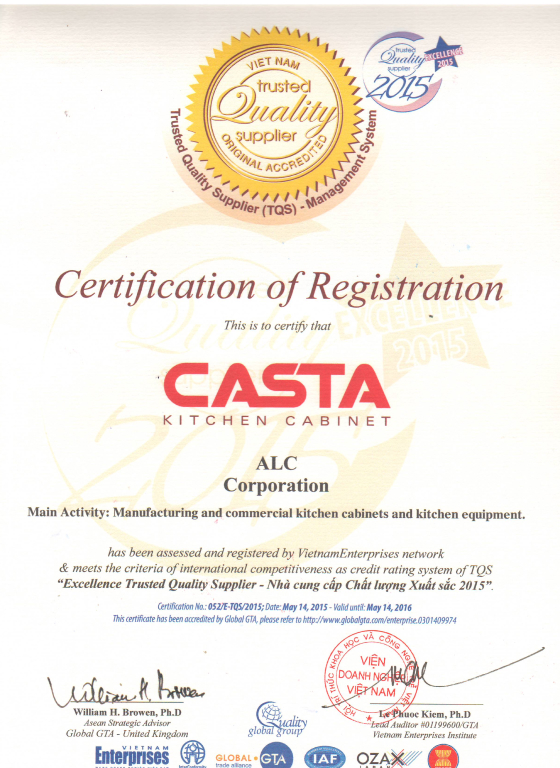
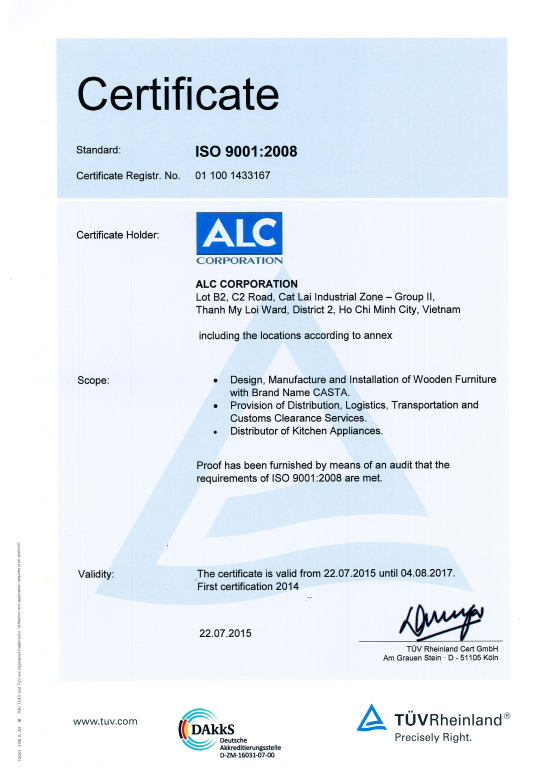
Founded in 2002, Casta is a Vietnam-based manufacturer specializing in kitchen cabinets, vanities, and custom furniture, with over two decades in the industry. The company operates two factories spanning more than 100,000 m², using European machinery from brands including SCM, Homag, and Cefla, with manufacturing automation reaching roughly 90%.
Learn more: Sourcing Cabinets and Furniture from Vietnam: Your Ultimate Guide
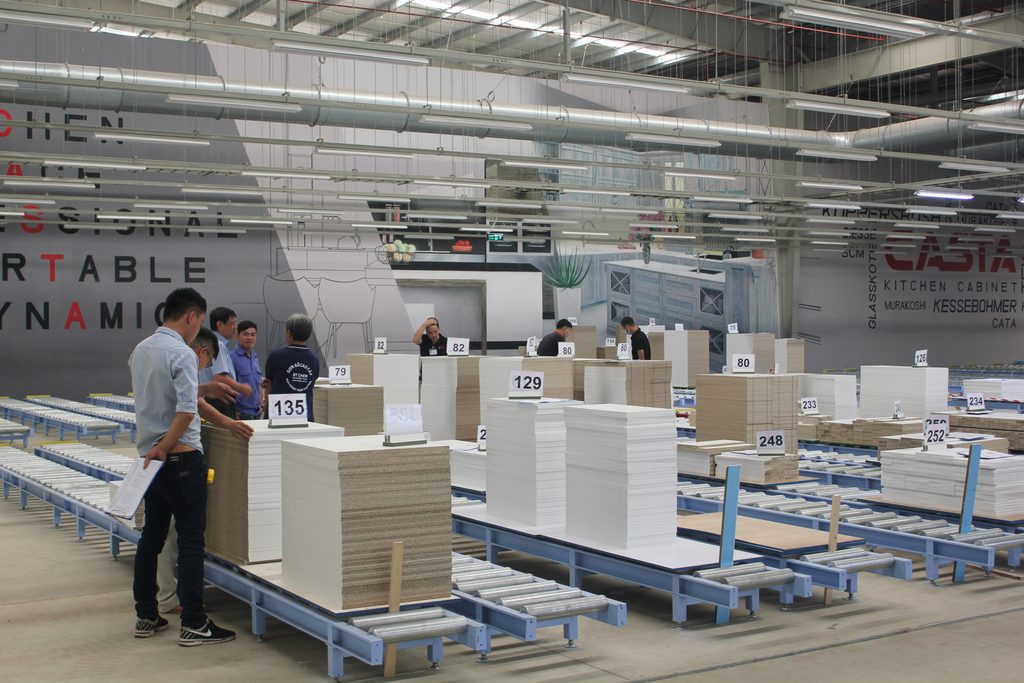
Casta offers both RTA (flat-pack) and fully assembled options, allowing buyers to choose the loading approach that best fits their container efficiency and labor needs. Production capacity of up to 200 containers per month supports large-volume bulk orders, and over 80% of production is exported, primarily to the U.S., with a dedicated logistics team managing port-to-door delivery and container planning.
Learn more: Logistics & Import: Streamlining the Shipping and Customs Process
Sales and service offices in California, Texas, and New York give wholesalers a direct point of contact to request an actual loading plan for their specific order rather than relying on general estimates. Standard lead time runs 45–60 days from shop drawing approval.
Real container capacity depends on the specific product mix being ordered—the most reliable next step is requesting an actual loading calculation rather than working from general online estimates, including the planning ranges discussed throughout this guide.
A Worked Example: Why Product Mix Changes Everything
It helps to walk through a concrete scenario to see why cabinets per container varies so much between two orders that might look similar on paper. Consider two wholesalers both ordering roughly $50,000 worth of cabinets for a 40ft container.
The first orders a standardized run of base cabinets in a single finish and a narrow range of widths, shipped RTA. Because the sizing is consistent and the flat-pack panels nest efficiently against each other, this order fills the container close to its practical maximum, with relatively little wasted void space between units.
The second wholesaler orders a mixed batch—base cabinets, tall pantry units, and a handful of oddly-sized specialty configurations—shipped fully assembled. Even at a similar total dollar value, this order fits meaningfully fewer cabinets per container, both because assembled units carry more wasted interior volume and because the mixed sizes don't nest together as efficiently as a standardized run would.
The practical lesson: two orders of similar value can have very different freight costs per unit once cabinets per container is factored in, which is exactly why a dollar-value estimate alone is a poor substitute for an actual loading calculation from the manufacturer, no matter how similar two purchase orders might look on a spreadsheet.
Common Mistakes When Estimating Container Capacity
A few patterns show up often enough among first-time bulk buyers that they're worth flagging directly, since avoiding them saves real money on freight.
Assuming a 40ft container holds exactly twice as much as a 20ft. As covered earlier, the relationship isn't linear—a 40ft offers proportionally more usable volume than a straight doubling would suggest, which means underestimating a 40ft's actual cabinets per container capacity is a common planning error.
Applying a generic online estimate to a specific order. General capacity ranges are useful for early budgeting, but they aren't a substitute for a loading plan calculated against actual cabinet dimensions and style mix. A generic number that assumes standardized RTA packaging will overstate capacity for a mixed, assembled order.
Choosing RTA vs. assembled based on unit price alone. The decision affects cabinets per container so significantly that it changes the entire freight math, not just a line item on the invoice. Skipping this comparison before requesting a formal quote often means comparing two quotes that aren't actually apples-to-apples.
Learn more: What are knock down cabinets?
Not asking about partial container options for smaller orders. Forcing a smaller order into a full container commitment, or accepting an inefficient near-empty container, both waste money compared to exploring LCL or consolidation options with the supplier upfront.
Practical Ways to Improve Loading Efficiency
Beyond the RTA-versus-assembled decision, a few other levers affect cabinets per container meaningfully, and they're worth discussing directly with a manufacturer before finalizing an order.
Standardizing on fewer finishes and configurations within a single container helps loading efficiency more than most buyers expect. Every unique size or finish variation introduces a small amount of additional void space, since perfectly uniform units nest together more tightly than a varied mix. A wholesaler with flexibility on style selection can sometimes meaningfully increase cabinets per container simply by consolidating around a narrower set of SKUs for a given shipment.
Learn more: Material & Finish Innovations: Elevating Cabinet Design and Durability
Packaging design also plays a bigger role than it might seem. Manufacturers who engineer flat-pack cartons specifically around efficient nesting—rather than using generic, oversized packaging—can meaningfully improve cabinets per container without changing the underlying product at all. This is worth asking about directly, since packaging engineering varies a lot between suppliers even when the cabinets themselves are similar.
It's also worth discussing crate or pallet strategy for any fully assembled portion of an order. Palletizing multiple smaller assembled units together, rather than shipping each in an individual oversized crate, can recover some of the space efficiency that assembled cabinets otherwise lose compared to RTA—though it rarely closes the gap entirely.
Finally, timing matters more than buyers sometimes realize. Consolidating what would otherwise be two separate partial-container shipments into a single full container, even if it means waiting a few extra weeks for a second order to be ready, often improves the effective cabinets per container economics enough to justify the wait—worth modeling out before defaulting to two smaller shipments purely for speed rather than cost efficiency.
FAQ
How many kitchen cabinets fit in a 40ft container?
How is cabinet packing calculated for shipping?
Does flat-pack (RTA) increase container capacity?
What container size do I need for a bulk order?
Is it cheaper to ship RTA or fully assembled cabinets?
Can I combine multiple cabinet styles in one container shipment?
Conclusion
Cabinets per container isn't a fixed number—it depends on cabinet size, packaging method, and whether cabinets are shipped RTA or fully assembled. RTA packaging is generally the biggest lever a wholesaler has for improving container efficiency and lowering per-unit freight cost, and the 40ft container remains the most common and cost-efficient choice for most bulk orders, with the 20ft option reserved for smaller or more cautious first shipments rather than serving as the default for serious volume.
The most reliable way to budget accurately is requesting an actual loading plan from the manufacturer for your specific order, rather than relying on general estimates that don't reflect your actual cabinet mix. Casta Cabinetry, with both RTA and assembled options and a dedicated logistics team, can provide a real loading calculation to help plan your next bulk order.
Ready to get a clear picture of freight cost per unit? Contact Casta Cabinetry's team to request a container loading estimate for your specific product mix and order size.





FSC Certified Cabinets: Why It Matters for Green Building Pr...
For a developer working on a certified green building project, FSC certified cabinets aren’t just a sustainability...
09/18/2026 | David Nguyen
Lead Time for Wholesale Cabinet Orders: From Factory to Deli...
For a developer or wholesaler working against a construction or renovation deadline, cabinet lead times aren’t a n...
09/16/2026 | David Nguyen

Cabinet Import Duties & Tariffs: What US Buyers Pay When...
For a U.S. wholesaler or importer, uncertainty around tariffs on imported cabinets is often the single biggest barrier t...
09/14/2026 | David Nguyen

FOB vs CIF: Shipping Terms Every Cabinet Importer Should Kno...
For a first-time importer, the shipping term on a quote can matter as much as the unit price. Understanding FOB vs CIF c...
09/12/2026 | David Nguyen
FSC Certified Cabinets: Why It Matters for Green Building Pr...
For a developer working on a certified green building project, FSC certified cabinets aren’t just a sustainability...
09/18/2026 | David Nguyen
Lead Time for Wholesale Cabinet Orders: From Factory to Deli...
For a developer or wholesaler working against a construction or renovation deadline, cabinet lead times aren’t a n...
09/16/2026 | David Nguyen
Cabinet Import Duties & Tariffs: What US Buyers Pay When...
For a U.S. wholesaler or importer, uncertainty around tariffs on imported cabinets is often the single biggest barrier t...
09/14/2026 | David Nguyen
FOB vs CIF: Shipping Terms Every Cabinet Importer Should Kno...
For a first-time importer, the shipping term on a quote can matter as much as the unit price. Understanding FOB vs CIF c...
09/12/2026 | David Nguyen
Contact us
Casta is always ready to listen and answer all customers' questions