EN
For a developer working on a certified green building project, FSC certified cabinets aren't just a sustainability nice-to-have — they're often a documented requirement tied directly to points on a LEED project scorecard. Certification only counts toward LEED credits under specific conditions, and a supplier's general claim of "FSC certified" isn't automatically enough documentation on its own to satisfy a review team.
This guide is written for developers and project teams sourcing cabinetry for LEED or other green-building-certified projects, who need to understand what actually qualifies before specifying a supplier. It covers what FSC certification means for cabinets specifically, how it connects to LEED credits, how to verify a supplier's certification is real and usable for submittals, and what the cost trade-off actually looks like in practice.
What FSC Certification Actually Means for Cabinets
The Forest Stewardship Council (FSC) is an independent, nonprofit organization that certifies responsible forest management through a voluntary, third-party verified program. Understanding this foundation matters before specifying FSC certified cabinets for any project claiming sustainability credentials.
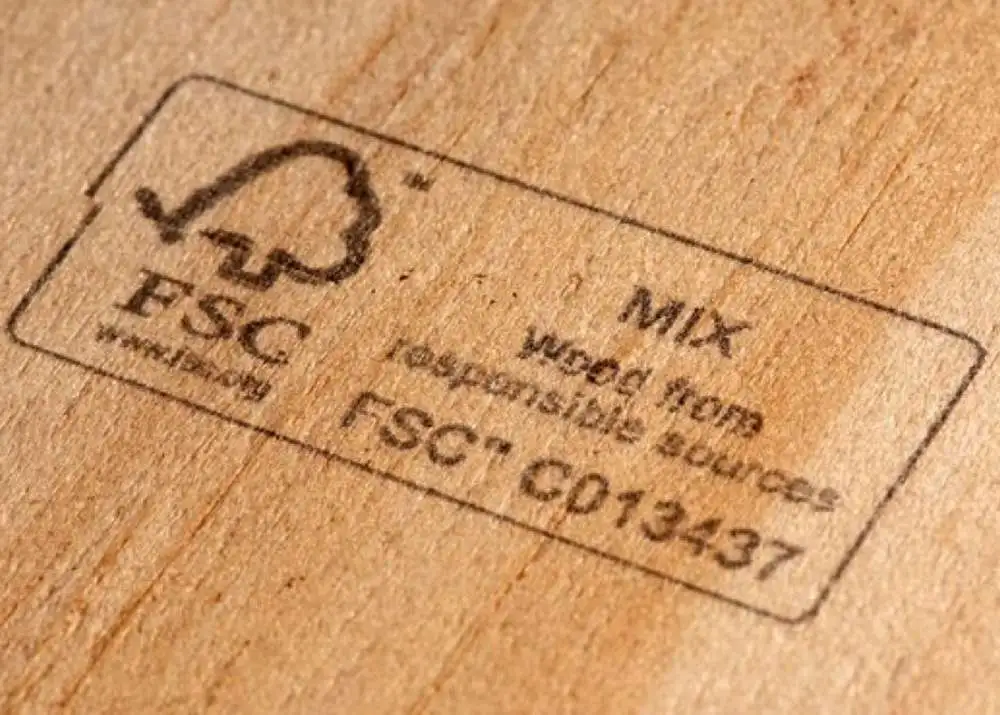
For a cabinet to genuinely carry FSC credit, the chain matters from forest to finished product. FSC-accredited certification bodies evaluate forests against FSC Forest Management standards, and the wood then has to move through a documented Chain of Custody (CoC) all the way to the finished cabinet.

Chain of Custody is the detail that matters most for buyers, since FSC Chain of Custody certification is what's actually required of a supplier for the material to count toward LEED submittals. A distributor selling wood that originated as FSC-certified but lacks its own CoC certification cannot legally supply that material as FSC-eligible for a LEED project. The practical takeaway: "FSC certified" as a general marketing phrase and "FSC Chain of Custody certified supplier with documentation" are not the same thing — only the second one is usable for a real green building submittal.
Do FSC Certified Cabinets Help With LEED Points?
Yes — certified wood is explicitly recognized in the current LEED framework. As of a January 2026 determination, USGBC formally aligned LEED v5 with three major chain-of-custody standards — FSC, SFI, and PEFC — allowing wood sourced under any of these systems to count toward LEED points.
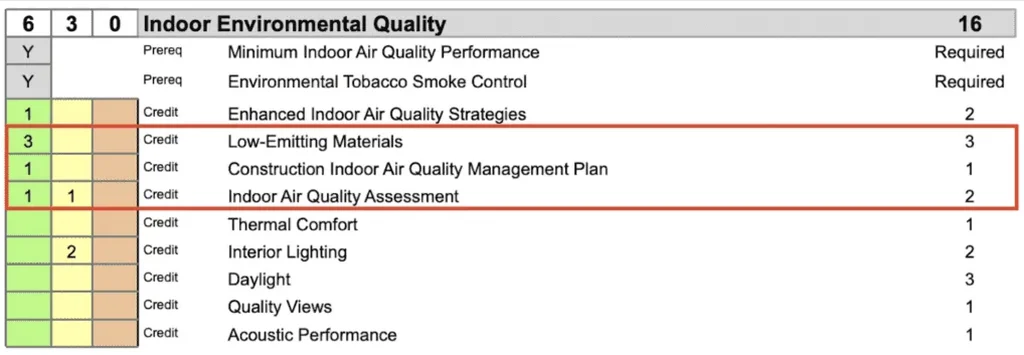
In LEED v5, certified wood is rewarded specifically under two primary credits — MRc4 Building Product Selection & Procurement and MRpc181 Multi-Attribute Structure, Enclosure, Hardscape, and Other Building Materials — and wood overall can contribute up to 22 points in LEED v5 BD+C and up to 30 points in LEED v5 ID+C. This has roughly doubled the point contribution available compared to prior LEED versions, which signals how much more weight sustainably sourced wood, including FSC certified cabinets, now carries in the current scoring framework.
This builds on a long history in earlier LEED versions. Under LEED v4, certified wood applied to the Building Product Disclosure & Optimization: Sourcing of Raw Materials credit, and FSC-certified wood has consistently been one of the most frequently specified green building materials in the industry.
An important documentation nuance is worth knowing before specifying: on past LEED credit structures, wood products purchased for a project sometimes only needed to meet a percentage-by-cost threshold, rather than every single unit being certified, to count toward a credit. The exact mechanics depend on which LEED version and credit path a project is pursuing, so this is worth confirming with the project's LEED consultant rather than assuming a blanket rule applies to every order of FSC certified cabinets.
This distinction has real budget implications for a project team. A project pursuing a percentage-based threshold might strategically specify FSC certified cabinets for a portion of the total cabinet order while using standard material elsewhere, and still clear the credit requirement — a materially different sourcing strategy than a credit path requiring full certification across every unit. Confirming which structure applies before finalizing a bid or budget avoids either over-purchasing certified material unnecessarily or under-purchasing it and missing the credit threshold entirely.
How to Verify a Supplier's FSC Certification
Verifying FSC certified cabinets claims requires more than a general statement. Ask directly for the supplier's FSC Chain of Custody certificate — this is the specific document that matters for LEED submittals, not just a general statement of using "FSC wood" or "sustainable materials."
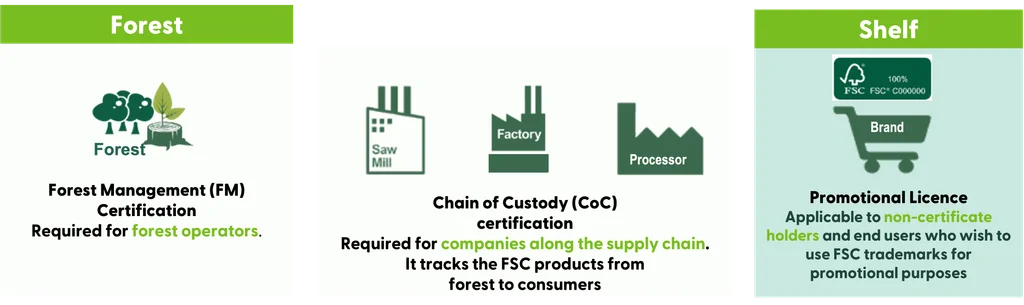
Confirm the certificate is active and current, since FSC CoC certification requires ongoing compliance, not a one-time approval. Request supporting documentation tied to the actual order — invoices or material declaration sheets showing the FSC claim, chain-of-custody number, and relevant material value — since LEED submittals for certified wood typically require this level of documentation, not just a supplier's word.
Be cautious of "greenwashing" language. General marketing terms like "eco-friendly" or "sustainably sourced" are not the same as a documented, third-party verified FSC Chain of Custody certificate, and the burden of proof for LEED submittals rests on standardized, verifiable documentation. For a large project, it's worth looping in a LEED consultant or the project's sustainability lead early to confirm exactly what documentation format a specific credit path requires before finalizing any supplier agreement.
It's also worth verifying a supplier's certificate directly against the FSC's own public database rather than relying solely on a document the supplier provides. FSC maintains a searchable registry of active Chain of Custody certificate holders, and cross-referencing a supplier's certificate number against that public record is a fast, independent way to confirm the certification is genuinely active rather than expired, suspended, or fabricated. This extra step takes only a few minutes but adds a meaningful layer of protection for a project with real submittal exposure riding on the accuracy of that documentation.
Learn more: Cabinet Certification
What to Confirm Before Specifying FSC Cabinets for a LEED Project
Before committing to a supplier of FSC certified cabinets for a LEED-targeted project, confirm the following:
- Which LEED credit path the project is pursuing, and what specific documentation that credit requires for wood products.
- Whether the supplier holds an active FSC Chain of Custody certificate, not just access to FSC-sourced material.
- Whether invoices and material declarations can be provided showing the FSC claim and chain-of-custody number for the specific order.
- Whether the project's LEED consultant needs to review documentation before the order is finalized, to avoid a submittal issue discovered late in the process.
Are FSC Certified Cabinets More Expensive?
This is a fair and common question for any sustainable wood cabinets developer weighing budget against sustainability goals. FSC Chain of Custody certification itself doesn't inherently make wood more expensive — the certification is a documentation and traceability requirement layered onto existing sourcing, not a fundamentally different raw material.
That said, in practice, a modest premium is common, since maintaining Chain of Custody certification carries real administrative and auditing costs for a manufacturer, and FSC-certified forest sources can carry a supply premium in some regions depending on availability. The premium tends to be more pronounced for smaller or one-off orders than for manufacturers with an established, high-volume FSC supply chain already built into their standard operations, where the certification cost gets spread across a much larger production base rather than loaded onto a single small order.
Green Building Cabinet Materials Beyond FSC
While FSC certification is the most widely recognized chain-of-custody standard for green building cabinet materials, it's not the only one that now counts toward LEED points. SFI and PEFC, the two other standards formally recognized under LEED v5, work on similar chain-of-custody principles, though each has differences in governance structure and regional forest coverage.
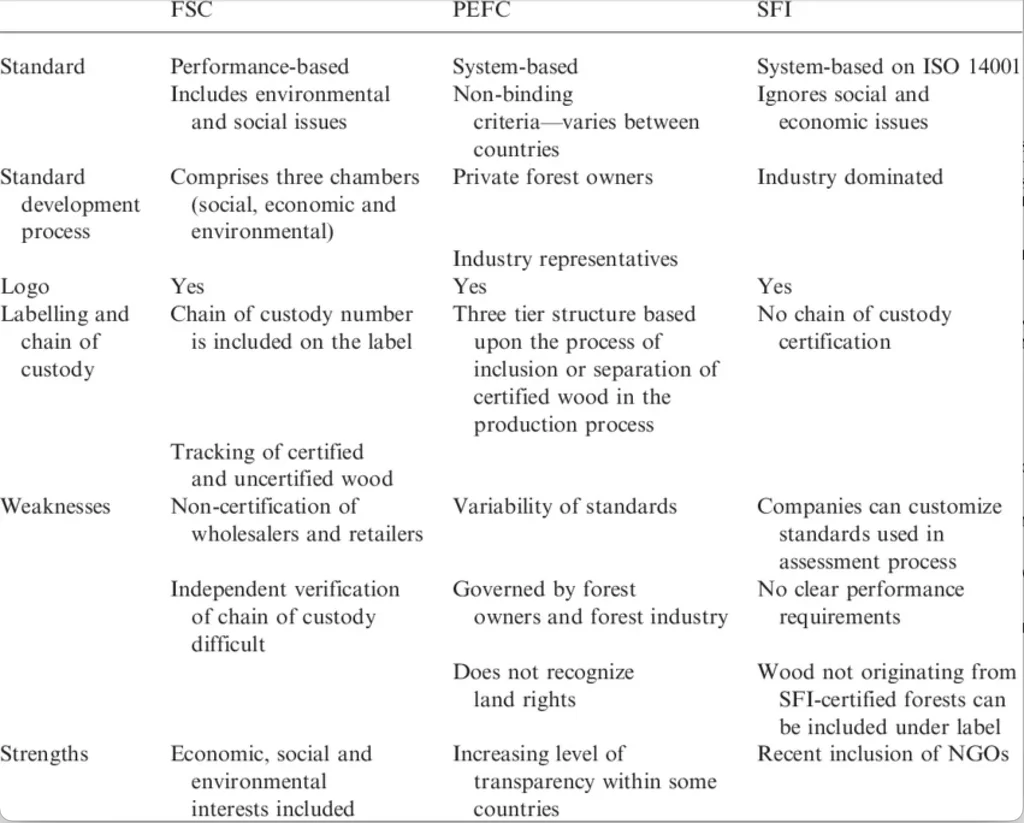
For a buyer or brand evaluating suppliers, it's worth asking which chain-of-custody standard a manufacturer holds rather than assuming FSC is the only credential worth requesting, since a supplier certified under SFI or PEFC may be an equally valid fit for a project's LEED credit path depending on which standard the project team has confirmed as acceptable.
Learn more: Types of kitchen cabinets materials
Supplier Spotlight: Casta Cabinetry
As a practical reference point for how FSC certified cabinets sourcing actually works with a real manufacturer, it's worth looking at how Casta Cabinetry approaches material certification for developers.
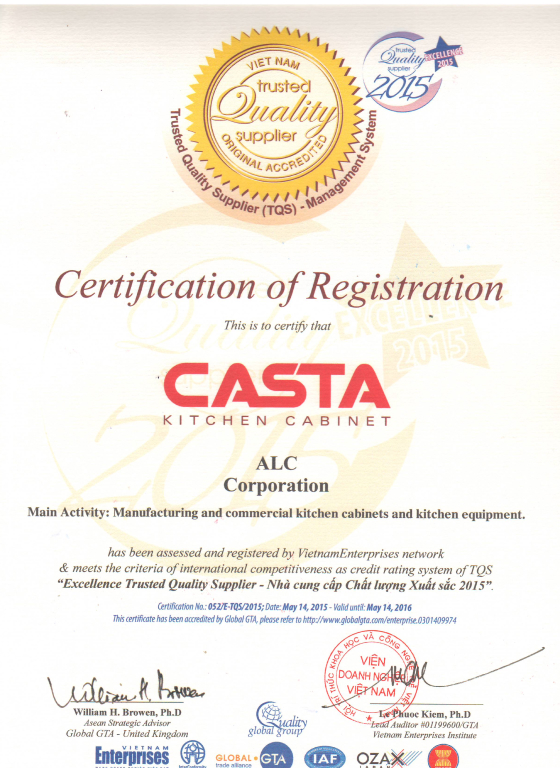
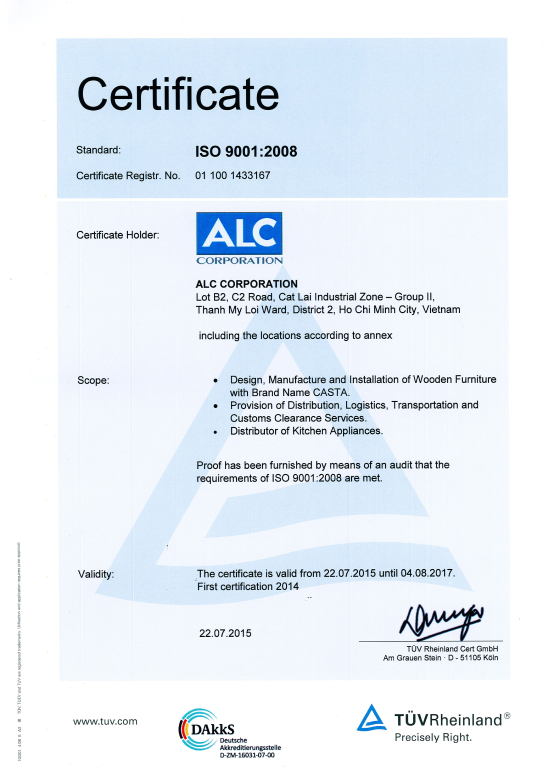
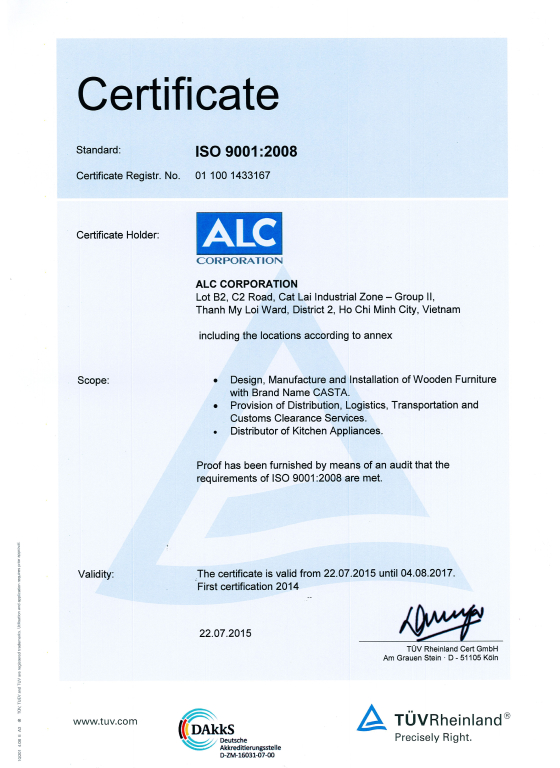
Founded in 2002, Casta is a Vietnam-based manufacturer specializing in kitchen cabinets, vanities, and custom furniture, with over two decades in the industry. Materials are sourced to meet global standards including European E1, JIS, CARB, and FSC certifications, alongside BSI and BSCI certifications, and the company follows TCVN ISO 9001:2015 quality management standards.
Learn more: Sourcing Cabinets and Furniture from Vietnam: Your Ultimate Guide
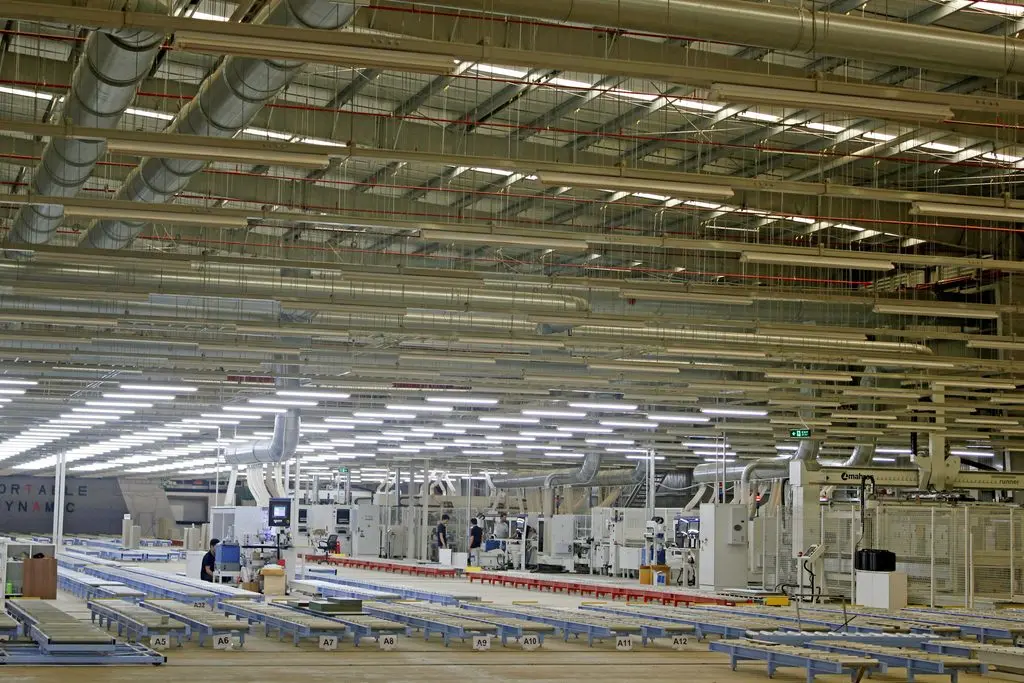
The company operates two factories spanning more than 100,000 m², using European machinery from brands including SCM, Homag, and Cefla. Over 80% of production is exported, primarily to the U.S., supported by sales and service offices in California, Texas, and New York, giving developers a direct point of contact for certification documentation before finalizing a project contract. Casta also offers samples until clients are fully satisfied with design, materials, and finish before full production begins.
Learn more: What is Carb Compliance
For any LEED-targeted project, developers should request Casta's current, active FSC Chain of Custody documentation directly and confirm it against their project's specific credit requirements — general certification claims should always be backed by order-specific paperwork before being relied on for a submittal.
Why Sustainability Certification Matters Beyond LEED Points
While LEED credits are often the immediate driver for specifying FSC certified cabinets, it's worth stepping back to understand why this certification matters on its own terms, independent of any specific scorecard.
Global deforestation and habitat loss remain significant pressures on forest ecosystems, and certified wood programs like FSC exist specifically to create market demand for responsibly managed forestry as a counterweight to unmanaged or illegal logging practices. Industry estimates suggest only around 10% of the world's forests currently carry any form of credible certification, which puts the broader market context around FSC certified cabinets in perspective — every certified order represents demand signal for a still-small segment of global timber supply.
For a green building cabinet materials specifier, this context matters beyond the immediate project and its scorecard. A development firm building a genuine sustainability track record — not just checking a LEED box on a single project — benefits from treating FSC certified cabinets as a standing sourcing policy rather than a one-off requirement triggered only when a specific credit is being pursued. This kind of consistent sourcing practice also simplifies future projects, since a supplier relationship built around verified FSC documentation doesn't need to be re-established from scratch on every new job that comes along.
Common Mistakes When Specifying FSC Certified Cabinets
A few recurring issues show up often enough in green building projects that they're worth flagging directly, since catching them early avoids a costly submittal problem later.
Assuming a supplier's general sustainability claims cover FSC requirements. A manufacturer that emphasizes "responsibly sourced" or "eco-conscious" materials in its marketing isn't automatically FSC Chain of Custody certified in the way a project submittal actually requires. These are frequently two entirely separate things, and only the specific, documented FSC certification satisfies a LEED submittal requirement.
Confirming certification too late in the process. Requesting FSC Chain of Custody documentation after cabinets have already been ordered, or worse, after they've arrived on-site, creates real risk if the paperwork turns out to be incomplete or the supplier's certification has lapsed since the relationship began. Confirming this during the RFQ or specification stage, before any commitment is made, is far cheaper than discovering a documentation gap during a LEED submittal review.
Treating percentage-based credit rules as universal. As covered earlier, some LEED credit paths historically allowed a percentage-by-cost threshold for certified wood rather than requiring every single unit to be certified across the entire order. Assuming this rule applies without confirming it against the specific credit path and LEED version a project is pursuing can lead to either over-specifying (unnecessary cost) or under-specifying (a failed submittal) FSC certified cabinets for the project.
Not accounting for finished-cabinet versus raw-panel certification scope. Some suppliers hold Chain of Custody certification for raw panel material but not necessarily extended through to the finished, fabricated cabinet. Confirming exactly where in the supply chain a supplier's certification applies — the panel, the finished good, or both — avoids a mismatch between what a project needs and what a supplier can actually document.
Building an Ongoing FSC Supply Relationship
For a brand or contractor working on multiple green building projects over time, treating FSC certified cabinets sourcing as a recurring relationship rather than a one-time transaction pays off in both efficiency and risk reduction.
A supplier vetted once for FSC Chain of Custody documentation, and confirmed as reliable across a first project, becomes a much faster path to compliant sourcing on the next job. Rather than re-verifying certification status and documentation format from scratch on every new project, an established relationship with a manufacturer of fsc certified cabinet manufacturers standing lets a buyer move directly to order-specific paperwork, since the baseline certification relationship is already confirmed and doesn't need to be rebuilt each time.
It's still worth periodically reconfirming certification status even within an established relationship, since FSC Chain of Custody certification requires ongoing compliance and can lapse or change between projects over time. A brief check before each major order — confirming the certificate is still active and the chain-of-custody number matches current documentation — protects against relying on outdated status from a prior project or an earlier point in the relationship.
This is particularly relevant for developers or contractors building a consistent green building portfolio over multiple years, where FSC certification kitchen cabinets sourcing becomes less about satisfying a single project's LEED requirements and more about establishing a durable, repeatable sourcing standard across an entire pipeline of work. A manufacturer capable of supporting that kind of ongoing relationship, with consistent documentation practices across every order and every project phase, offers more long-term value than a one-off vendor selected purely because a single project needed FSC-certified material for a single credit.
FAQ
What does FSC certification mean for cabinets?
Do FSC certified cabinets help with LEED points?
How can I verify a supplier's FSC certification?
Are FSC cabinets more expensive?
What's the difference between FSC certified material and FSC Chain of Custody certification?
Which LEED credits recognize FSC-certified wood products?
Conclusion
FSC certification for cabinets is only as useful as the documentation behind it — a supplier's Chain of Custody certificate and order-specific paperwork are what actually make certified wood usable toward LEED credits, not a general marketing claim. LEED continues to formally recognize FSC-certified wood, with the framework recently expanded alongside SFI and PEFC under LEED v5, making this an increasingly relevant sourcing consideration for green building projects of every scale.
Casta Cabinetry, with FSC-aligned material sourcing and direct U.S.-based points of contact, is a starting point for a documented certification conversation before specifying cabinets for a LEED-targeted project.
Ready to source FSC certified cabinets for your next project? Contact Casta Cabinetry's team to request FSC Chain of Custody documentation and discuss material sourcing for your specific project needs.





How Many Kitchen Cabinets Fit in a 20ft/40ft Container?...
For a wholesaler pricing out a bulk order, cabinets per container is the number that turns a quote into an actual budget...
09/20/2026 | David Nguyen
Lead Time for Wholesale Cabinet Orders: From Factory to Deli...
For a developer or wholesaler working against a construction or renovation deadline, cabinet lead times aren’t a n...
09/16/2026 | David Nguyen

Cabinet Import Duties & Tariffs: What US Buyers Pay When...
For a U.S. wholesaler or importer, uncertainty around tariffs on imported cabinets is often the single biggest barrier t...
09/14/2026 | David Nguyen

FOB vs CIF: Shipping Terms Every Cabinet Importer Should Kno...
For a first-time importer, the shipping term on a quote can matter as much as the unit price. Understanding FOB vs CIF c...
09/12/2026 | David Nguyen
How Many Kitchen Cabinets Fit in a 20ft/40ft Container?...
For a wholesaler pricing out a bulk order, cabinets per container is the number that turns a quote into an actual budget...
09/20/2026 | David Nguyen
Lead Time for Wholesale Cabinet Orders: From Factory to Deli...
For a developer or wholesaler working against a construction or renovation deadline, cabinet lead times aren’t a n...
09/16/2026 | David Nguyen
Cabinet Import Duties & Tariffs: What US Buyers Pay When...
For a U.S. wholesaler or importer, uncertainty around tariffs on imported cabinets is often the single biggest barrier t...
09/14/2026 | David Nguyen
FOB vs CIF: Shipping Terms Every Cabinet Importer Should Kno...
For a first-time importer, the shipping term on a quote can matter as much as the unit price. Understanding FOB vs CIF c...
09/12/2026 | David Nguyen
Contact us
Casta is always ready to listen and answer all customers' questions