


 EN
EN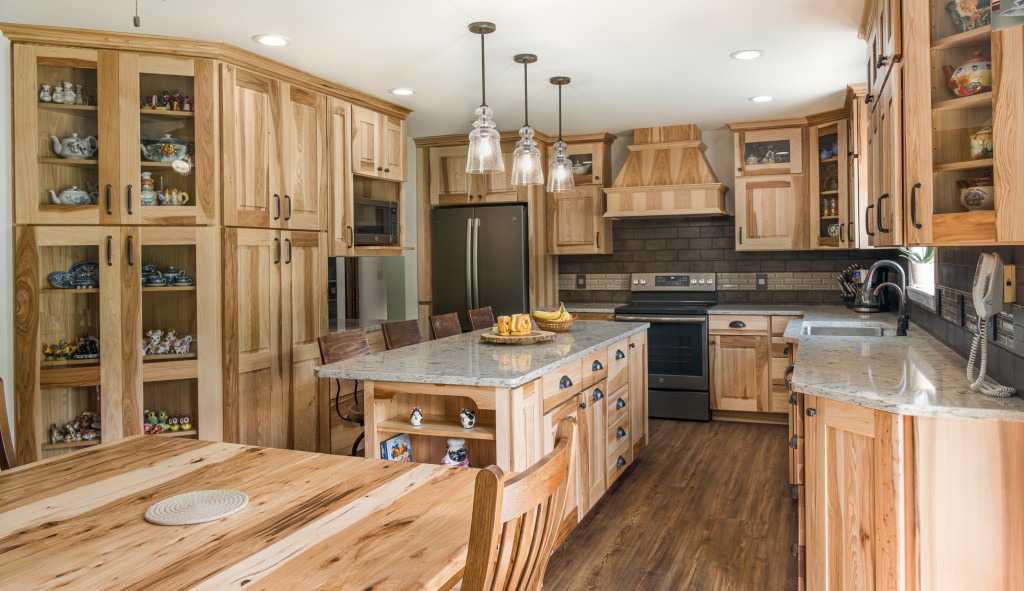
Durable kitchen cabinets start with the right material choice, not the prettiest door style. Material selection drives warranty claims, customer satisfaction, and long-term maintenance costs across residential and commercial projects alike. The honest answer to "what's most durable" depends on application, budget, construction method, and environment — not simply whether a cabinet is solid wood or engineered wood. Casta Cabinetry, a trusted Vietnam-based manufacturer, builds with certified industrial wood products specifically for the U.S. market, and this guide draws on that manufacturing experience throughout.
What Makes Wood Durable for Kitchen Cabinets?
Durability isn't one property — it's several working together. Any material used to build durable kitchen cabinets needs to perform well across all of the following, not just one. Manufacturers who only optimize for one factor, like hardness, often end up with cabinets that look tough on a spec sheet but fail in a different way — through poor moisture handling or weak screw retention.
Learn more: Material & Finish Innovations: Elevating Cabinet Design and Durability
Moisture Resistance: Kitchens are humid, splash-prone environments, and wood that absorbs moisture swells, warps, or delaminates over time. This is usually the single biggest predictor of whether a cabinet lasts a decade or fails in year two.
Dimensional Stability: Wood naturally expands and contracts with humidity changes. Materials with better dimensional stability keep doors and drawers aligned through seasonal swings instead of sticking or gapping.
Strength and Load Capacity: Cabinets carry real weight — dishes, cookware, small appliances — and the box material needs enough structural strength to hold that load on shelves and in drawers for years without sagging.
Screw-Holding Ability: Hinges and drawer slides are only as strong as the material holding their screws. Weak screw-holding leads to loose hardware and sagging doors, one of the most common complaints in low-quality durable kitchen cabinets claims.
Surface Finish Performance: How well a material accepts and retains a finish affects both appearance and protection — a poor finish bond lets moisture and stains penetrate the wood underneath.
Resistance to Warping and Cracking: Temperature and humidity swings stress wood fibers. Species and engineered products with better stability resist the warping and cracking that ruin a cabinet's fit over time.
Long-Term Durability: Ultimately, all of the above factors combine into one practical question: will these cabinets still look and function correctly in 10 or 15 years of daily use?
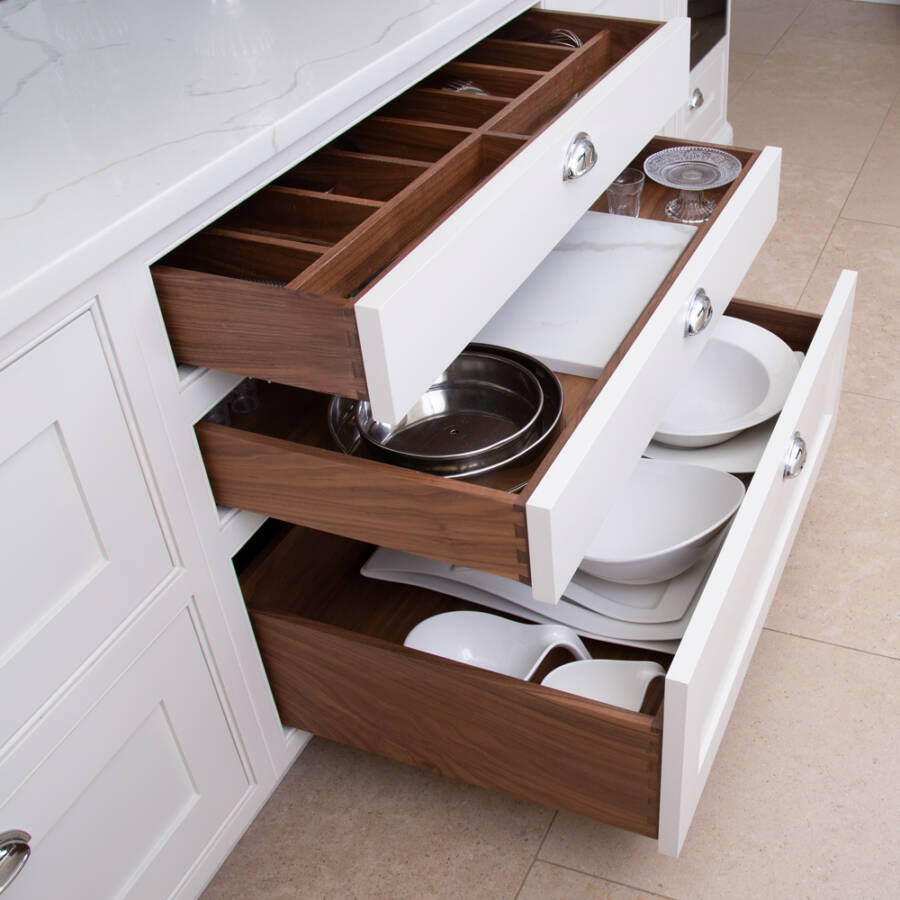
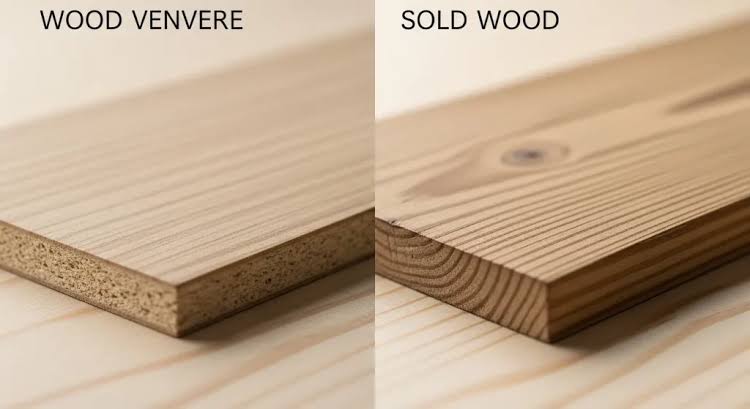
Solid Wood vs. Engineered Wood: Which Is Better?
Solid Wood
Advantages: Natural beauty and grain character that engineered products can't fully replicate, a long realistic lifespan when properly finished and maintained, and genuine repairability — solid wood can be sanded, refinished, or repaired in ways laminate and veneer surfaces cannot. For buyers building truly durable kitchen cabinets meant to last generations, solid wood's repairability is often the deciding factor.
Limitations: Solid wood expands and contracts with humidity more than engineered alternatives, which can affect fit over time in large panels. It also carries a higher material cost and more natural variability from board to board, which matters for brands trying to keep a consistent look across a large order.
Learn more: Wood finish kitchen cabinets
Engineered Wood
Advantages: Better dimensional stability than solid lumber, since manufactured layers counteract each other's movement. Consistent quality panel to panel, excellent manufacturing performance for CNC production, and meaningfully better cost efficiency at volume.
Limitations: Quality varies significantly by manufacturer — a well-made panel and a poorly made one can look identical until they're a year into daily use. Engineered wood also requires certified materials to guarantee performance and emissions safety, which is why documentation matters as much as the product itself when specifying durable kitchen cabinets for a project.
The Most Durable Wood Species for Kitchen Cabinets
1. Maple
Durability Rating: Hard maple scores 1,450 on the Janka hardness scale, a widely used industry measure of a wood's resistance to denting and wear — well above the 1,290 benchmark set by red oak.
Advantages: Fine, tight grain, excellent screw-holding ability, and a smooth surface that takes paint and stain finishes evenly.
Learn more: Painted kitchen cabinets
Best Applications: Painted cabinetry, contemporary kitchens, and any project where a clean, consistent surface matters more than dramatic grain pattern.
Cost Range: Mid-to-upper range among domestic hardwoods, generally priced below walnut and cherry but above oak in most markets. Maple remains one of the most requested species for durable kitchen cabinets in contemporary and transitional projects.
2. White Oak
Strength: White oak rates 1,360 on the Janka scale, making it one of the more dent-resistant domestic hardwoods used in cabinetry.
Moisture Resistance: White oak's closed grain structure gives it naturally better moisture resistance than red oak, which is part of why it's historically been used in exterior and marine applications.
Popular Styles: Rift-sawn and quarter-sawn white oak are especially popular in modern and transitional kitchens for their tight, linear grain pattern.
Commercial Applications: Frequently specified for hospitality and multifamily projects where both durability and a warm, natural aesthetic are priorities, making white oak a common choice among architects specifying durable kitchen cabinets at scale.
Learn more: The Ultimate Guide to Modern Design Kitchen Cabinets
3. Hickory
Exceptional Hardness: Hickory is one of the hardest domestic cabinet woods available, generally rated around 1,820 on the Janka scale — noticeably harder than oak or maple.
Best for High-Traffic Kitchens: That hardness makes hickory an excellent choice for busy family kitchens, rental properties, and other high-wear environments.
Pros & Cons: Exceptional durability and a distinctive, rustic grain pattern, but the same hardness that resists dents also makes hickory harder to machine, which can add cost to custom manufacturing. Contractors building durable kitchen cabinets for rental properties or large families often consider that trade-off worth it.
4. Cherry
Premium Appearance: Cherry offers a rich, warm tone and fine, smooth grain that has made it a staple of traditional and luxury cabinetry for generations.
Aging Characteristics: Cherry darkens and deepens in color with UV light exposure over time, a natural aging process many buyers specifically choose the wood for.
Luxury Cabinet Projects: With a Janka rating around 950, cherry is softer than maple or oak, so it's better suited to lower-traffic, higher-end applications than to heavy commercial use. Designers still specify cherry for durable kitchen cabinets in formal dining and lower-traffic butler's pantries where its appearance matters more than raw hardness.
5. Walnut
High-End Cabinetry: Walnut is a go-to species for premium, modern kitchens thanks to its deep chocolate-brown color and dramatic grain.
Durability: At roughly 1,010 on the Janka scale, walnut is moderately hard — not as dent-resistant as maple or hickory, but stable and long-lasting when properly finished.
Design Appeal: Walnut's natural variation and rich tone make it one of the most requested species for statement kitchen islands and luxury cabinet fronts, even when the rest of the kitchen uses more cost-effective materials for durable kitchen cabinets elsewhere in the space.
Learn more: Kitchen island styles
6. Birch
Affordable Durability: Birch offers solid hardness — yellow birch rates around 1,260 on the Janka scale — at a lower cost than maple or oak.
Paint Performance: Birch's tight, even grain takes paint finishes cleanly, making it a popular substrate choice for painted cabinet lines.
Manufacturing Benefits: Birch plywood in particular is widely used for cabinet boxes because it combines strength, screw-holding ability, and cost efficiency — a common backbone material behind budget-conscious durable kitchen cabinets programs.
7. Ash
Impact Resistance: Ash is known for exceptional shock resistance, historically used for tool handles and sports equipment precisely because it resists cracking under repeated impact.
Grain Characteristics: Ash has a pronounced, straight grain pattern similar to oak, giving it strong visual texture for buyers who want that look without oak's cost.
Suitable Applications: A solid, practical choice for durable kitchen cabinets in busy households, though supply has tightened in recent years due to the emerald ash borer beetle affecting North American ash populations.
Why High-Quality Engineered Wood Is Often the Better Choice
1. Plywood
Strength-to-Weight Ratio: Cross-laminated layers give plywood excellent strength relative to its weight, often outperforming solid lumber of the same thickness in resistance to warping.
Moisture Performance: Quality plywood, particularly with moisture-resistant adhesives, handles humidity swings better than particleboard and comparably to many solid woods.
Screw Holding: Plywood's layered construction holds screws significantly better than particleboard, which matters directly for hinge and drawer slide longevity.
Ideal Uses: The standard choice for cabinet box construction across nearly every tier of durable kitchen cabinets, from entry-level to luxury custom work.
2. MDF
Smooth Surface for Painted Cabinets: MDF's fine, uniform composition creates an exceptionally smooth surface, which is why it's the industry standard substrate for painted doors and panels.
Stability: MDF resists warping better than solid wood panels of comparable size, since it has no grain direction to expand or contract unevenly.
Manufacturing Precision: MDF machines cleanly with CNC equipment, producing crisp edges and profiles that are harder to achieve consistently in solid wood, which is why so many painted durable kitchen cabinets lines default to it.
3. Particleboard
When It Is Appropriate: Particleboard has a legitimate place in cabinetry — as a low-cost core material for components that don't bear heavy load or direct moisture exposure.
Common Misconceptions: Many buyers assume all particleboard is low quality, but there's a meaningful difference between low-density, low-grade board and moisture-resistant, industrial-grade particleboard manufactured to a real density and emissions standard.
Quality Differences Between Low-Grade and Premium Industrial Wood: Premium industrial particleboard uses higher resin content and tighter density control, giving it noticeably better screw-holding and moisture resistance than the bargain board found in low-cost furniture — a gap that shows up quickly in cheaply built durable kitchen cabinets versus properly specified ones.
Learn more: Difference between mdf and mfc vs plywood vs hdf
How Contractors and Cabinet Brands Should Choose Cabinet Materials
Matching material to application is the fastest way to avoid overpaying on one end or under-building on the other. The goal for any project is the same: durable kitchen cabinets that fit the budget, the traffic level, and the environment they'll actually live in.
Residential Projects: Match material to the household — hickory or maple for high-traffic family kitchens, cherry or walnut for lower-traffic luxury spaces.
Multifamily Housing: Prioritize certified engineered wood for consistency across dozens or hundreds of identical units, where uniform quality control matters more than species variation. A single inconsistent batch of durable kitchen cabinets across 200 units is a far bigger problem than the same issue in one home.
Learn more: Best Multifamily cabinet manufacturers
Hospitality: Moisture-resistant plywood construction is essential given the heavier daily use and cleaning cycles hotel and restaurant kitchens see.
Commercial Buildings: Durability and code compliance (fire rating, emissions certification) typically outweigh aesthetic considerations.
Luxury Custom Kitchens: Solid hardwood species like walnut, white oak, and cherry remain the standard where budget supports it and appearance is a primary driver.
Learn more: What are custom cabinets?
Private Label Cabinet Brands: Certified engineered wood offers the manufacturing consistency needed to protect a brand's reputation across every order, regardless of which factory or production run it came from. Brands sourcing durable kitchen cabinets for a private-label program should treat material certification as a non-negotiable line item, not an optional upgrade.
How Casta Cabinetry Builds Durable Kitchen Cabinets
High-Quality Industrial Wood
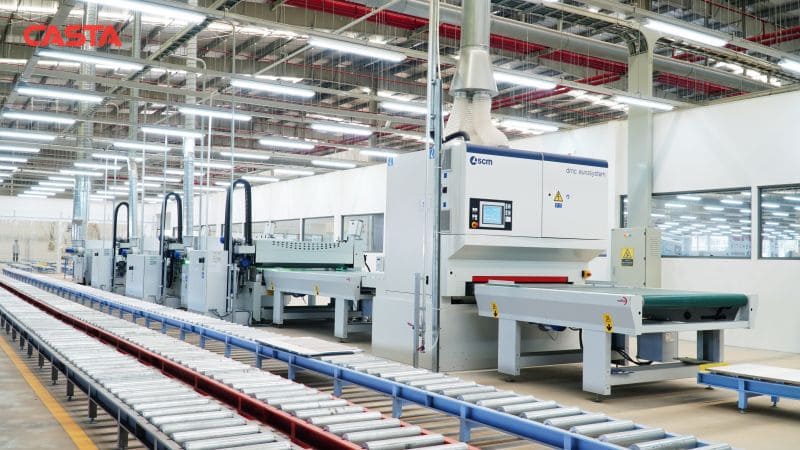
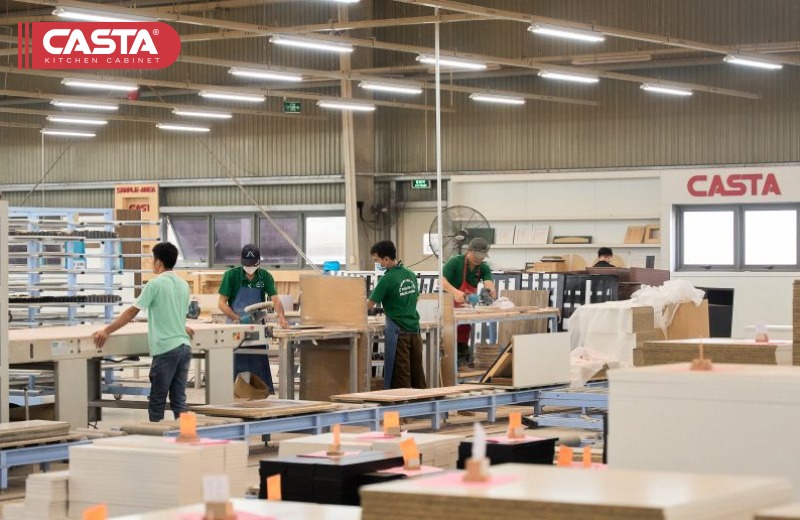
Casta Cabinetry manufactures durable kitchen cabinets using carefully selected industrial wood materials, advanced CNC production, and multi-stage quality control — every cabinet is checked for dimensions, construction quality, surface finish, hardware installation, and packaging before it ships.
Certifications Worth Checking on Any Supplier
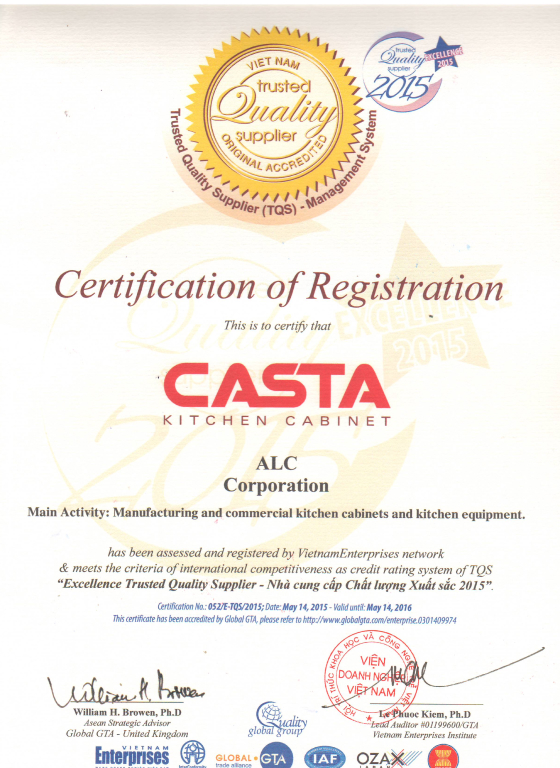
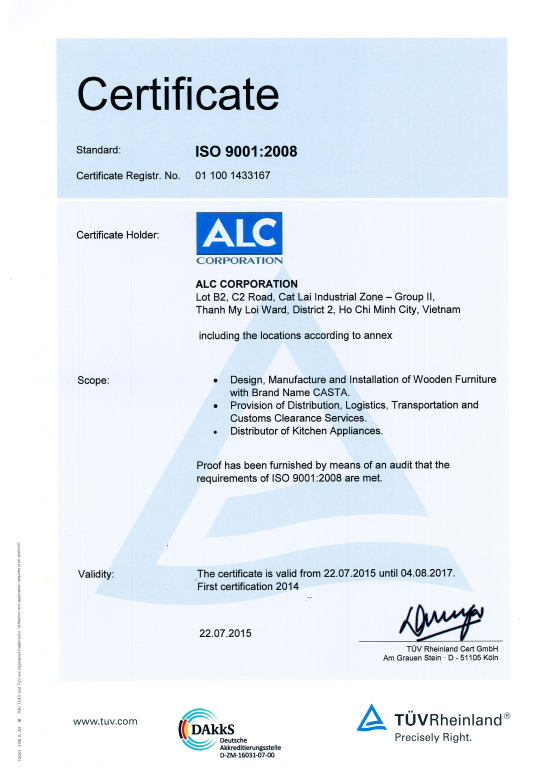
European E1 confirms low formaldehyde emissions in engineered wood panels. CARB Compliance meets California's formaldehyde standards, effectively mandatory for composite wood sold in the US JIS Certification reflects Japanese manufacturing standards. FSC Certification confirms responsibly sourced wood.
These certifications matter because they replace a sales claim with independently verified documentation. For any buyer specifying durable kitchen cabinets at volume, requesting this paperwork upfront — from Casta or any other manufacturer — is one of the simplest ways to filter out weaker suppliers before a container ever ships.
Display image Alt text: quality control inspection process for sustainable kitchen cabinets at Casta Cabinetry
Learn more: Casta’s outstanding international projects
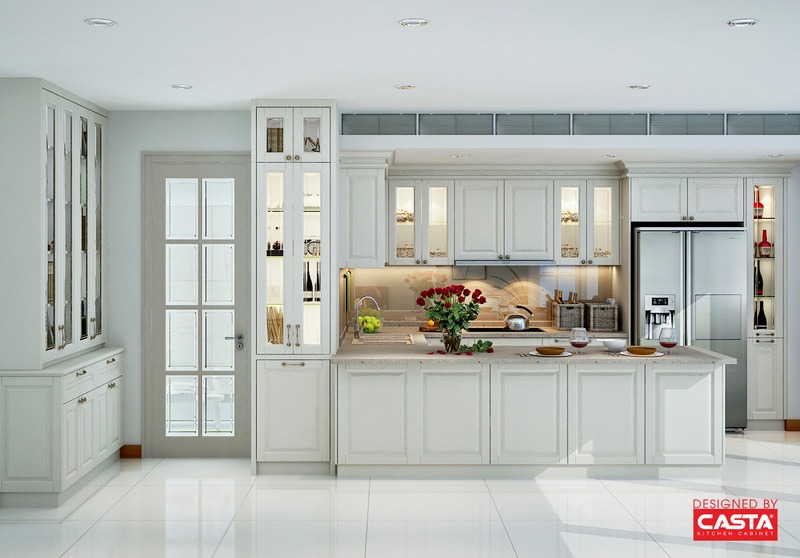
Best Cabinet Material Recommendations by Project Type
The table below is a quick reference, but the reasoning behind each recommendation matters just as much as the recommendation itself — the right material for sustainable kitchen cabinets always depends on budget, traffic level, and how the finished product will actually be used.
| Project Type | Recommended Material | Why |
| Entry-Level Residential | High-quality MDF + plywood | Cost-effective and durable |
| Mid-Range Homes | Plywood and hardwood doors | Excellent value |
| Luxury Homes | Walnut, White Oak, Cherry | Premium appearance |
| Multifamily Projects | Certified industrial wood | Consistency and scalability |
| Hospitality | Moisture-resistant plywood | Heavy-duty performance |
| OEM Cabinet Brands | Certified engineered wood | Manufacturing consistency |
Entry-Level Residential: A plywood box paired with an MDF door gives budget-conscious homeowners real durability without the cost of hardwood — the MDF door takes paint cleanly, and the plywood box resists the swelling that undermines particleboard-only construction in a starter kitchen.
Mid-Range Homes: Stepping up to solid hardwood doors over a plywood box is usually the highest-value upgrade available, since it improves both appearance and screw-holding strength without the premium price of a fully custom build.
Luxury Homes: Walnut, white oak, and cherry each bring a distinct look, so the choice here is often driven by design goals as much as durability — all three perform well when properly finished and maintained in a lower-traffic, well-ventilated kitchen.
Multifamily Projects: Certified industrial wood keeps hundreds of units consistent in both appearance and performance, which matters more here than in a single-family home, where a batch-to-batch color variance would be far more noticeable and costly to fix across an entire building.
Hospitality: Commercial kitchens see heavier daily traffic, more frequent cleaning cycles, and higher humidity than a residential kitchen, so moisture-resistant plywood construction isn't optional — it's the baseline needed to avoid early failure under near-constant use.
OEM Cabinet Brands: Brands building a private-label line need every unit from every production run to match, which is why certified engineered wood — not solid lumber with natural variation — is usually the safer manufacturing choice for sustainable kitchen cabinets sold under a consistent brand promise.
Learn more: Kitchen cabinet buying guide
Common Mistakes When Selecting Cabinet Wood
Even experienced buyers make avoidable mistakes when specifying durable kitchen cabinets, and most of them trace back to a shortcut taken early in the process.
Choosing Based Only on Price: The cheapest material per square foot often costs more over a cabinet's lifespan through warranty claims and early replacement.
Ignoring Moisture Resistance: A beautiful finish means little if the substrate underneath swells the first time a sink leaks.
Overlooking Material Certifications: Skipping certification checks leaves buyers unable to verify emissions safety or sourcing claims after the fact.
Assuming Solid Wood Is Always Better: Solid wood isn't automatically superior — high-quality engineered wood often outperforms low-grade solid lumber on dimensional stability alone, a distinction that matters when comparing quotes for durable kitchen cabinets across different manufacturers.
Choosing Low-Grade Engineered Wood: Not all plywood, MDF, or particleboard is equal — density, resin quality, and certification vary widely between manufacturers.
Frequently Asked Questions
What is the most durable wood for kitchen cabinets?
Is plywood stronger than solid wood?
Is MDF good for kitchen cabinets?
Which cabinet wood resists moisture best?
What certifications should cabinet materials have?
Why do professional cabinet manufacturers use engineered wood?
What materials does Casta Cabinetry use?
Conclusion
Both solid wood and high-quality engineered wood each have a legitimate place in building durable kitchen cabinets — the right choice depends on material quality, engineering, construction method, and certification, not simply which wood species sounds most premium. A well-made engineered panel from a certified factory will consistently outperform a poorly sourced piece of solid lumber, and the reverse is just as true when the roles are switched.
The practical takeaway for contractors and cabinet brands is to stop treating "solid wood" and "durable" as synonyms. Ask for hardness data, moisture testing, and certification documents before comparing price, and the actual best material for a given project usually becomes obvious.
Casta Cabinetry is a trusted Vietnam-based manufacturer that combines high-quality industrial wood, internationally recognized certifications — European E1, JIS, CARB, FSC, BSI, and BSCI — and advanced manufacturing processes to deliver durable kitchen cabinets for contractors, developers, distributors, and cabinet brands serving the U.S. market.
Contact Casta Cabinetry to request material samples or discuss your next project.
Whether the goal is a single luxury renovation or a multi-hundred-unit multifamily order, the same principle applies: verify the material, verify the certification, and let those two things — not marketing copy or brand reputation alone — decide what actually goes into the box.





Private Label Cabinet Branding: Custom Packaging & Label...
Putting your name on a cabinet line is one of the fastest ways for a retailer or brand to build margin and customer loya...
09/24/2026 | David Nguyen

Cabinet Quality Control Process: How Bulk Orders Are Inspect...
For a wholesaler buying from overseas, the biggest fear usually isn’t price. It’s opening a container weeks ...
09/22/2026 | David Nguyen
How Many Kitchen Cabinets Fit in a 20ft/40ft Container?...
For a wholesaler pricing out a bulk order, cabinets per container is the number that turns a quote into an actual budget...
09/20/2026 | David Nguyen

FSC Certified Cabinets: Why It Matters for Green Building Pr...
For a developer working on a certified green building project, FSC certified cabinets aren’t just a sustainability...
09/18/2026 | David Nguyen
Private Label Cabinet Branding: Custom Packaging & Label...
Putting your name on a cabinet line is one of the fastest ways for a retailer or brand to build margin and customer loya...
09/24/2026 | David Nguyen
Cabinet Quality Control Process: How Bulk Orders Are Inspect...
For a wholesaler buying from overseas, the biggest fear usually isn’t price. It’s opening a container weeks ...
09/22/2026 | David Nguyen
How Many Kitchen Cabinets Fit in a 20ft/40ft Container?...
For a wholesaler pricing out a bulk order, cabinets per container is the number that turns a quote into an actual budget...
09/20/2026 | David Nguyen
FSC Certified Cabinets: Why It Matters for Green Building Pr...
For a developer working on a certified green building project, FSC certified cabinets aren’t just a sustainability...
09/18/2026 | David Nguyen
Contact us
Casta is always ready to listen and answer all customers' questions