


 EN
EN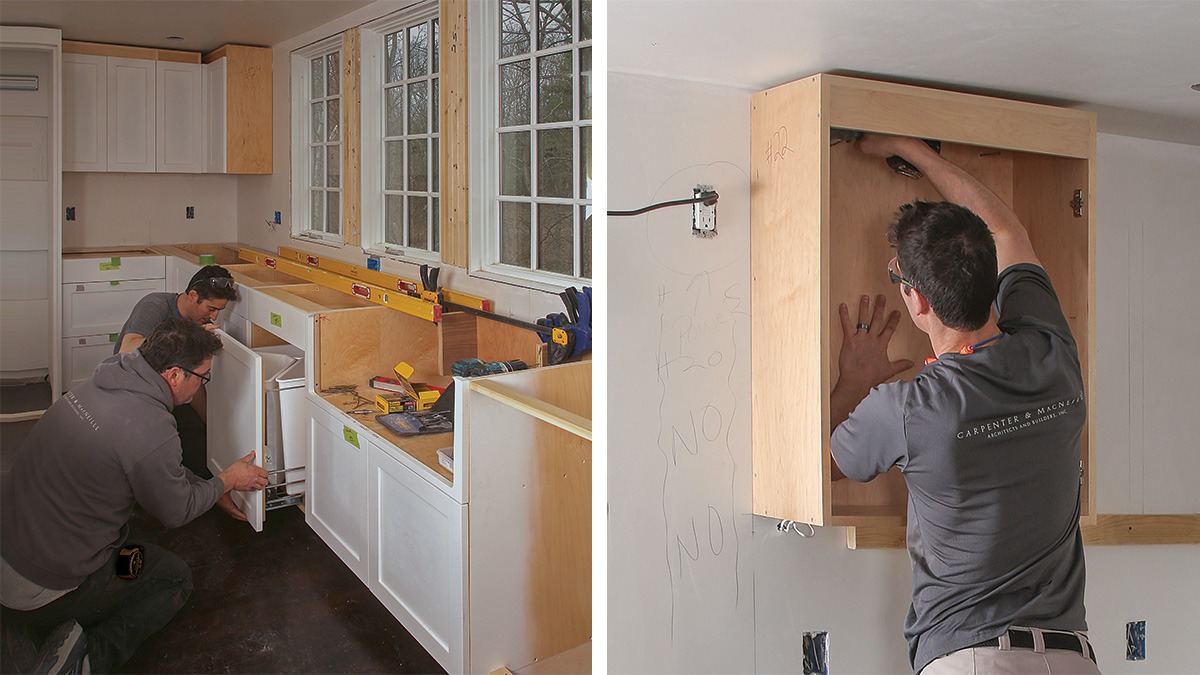
Frameless kitchen cabinet construction, often called "European-style," is one of the most requested cabinet formats in North America right now — yet many buyers can't clearly explain what actually makes it different from framed. This guide is for contractors specifying cabinet types and cabinet or furniture brands deciding whether to add a frameless line. The core distinction is simple: frameless kitchen cabinet construction skips the face frame that traditional framed cabinets rely on for structure.
What Is Frameless Cabinet Construction?
Frameless kitchen cabinet construction is a cabinet box built without a face frame, with doors and drawers attaching directly to the cabinet sides instead. It's often called "European-style" or "European construction" because it originated in European cabinetmaking and has since been widely adopted across North America.
The method traces back to post-World War II Europe, when timber shortages pushed manufacturers toward efficient, standardized panel construction rather than the solid-wood face frames common in earlier cabinetry. That efficiency-driven origin is part of why frameless kitchen cabinet construction pairs so naturally with modern CNC manufacturing today — the standardized 32mm hardware system that grew out of that era is still the backbone of how frameless cabinets are engineered.
Because there's no frame to carry structural load, the cabinet box itself becomes the structure — which means thicker panel material and precise joinery aren't optional details, they're what keeps the box square and rigid.
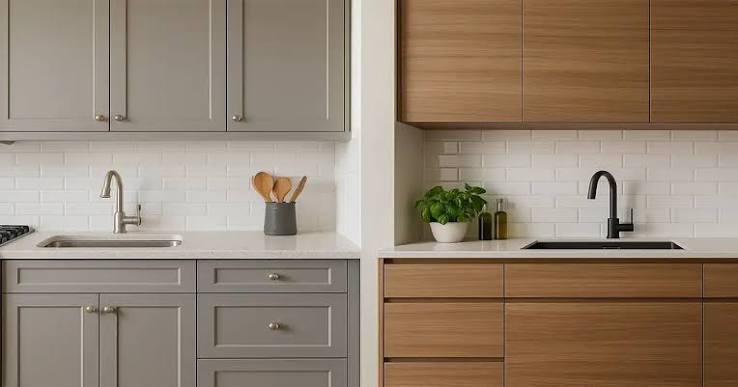
Frameless vs. Framed Construction: 6 Key Differences
Frameless vs. Framed: At a Glance
| Frameless (European-Style) | Framed (Traditional) |
| No face frame; box is structural | Face frame adds structural support |
| More usable interior storage | Slightly less interior access |
| Requires specific hinge/hardware types | More hardware flexibility |
| Higher manufacturing precision required | More forgiving tolerances |
| Modern, streamlined look | Traditional, transitional look |
1. Structural Design
In frameless kitchen cabinet construction, the box itself is the structure — doors mount directly to the cabinet sides using concealed hinges. In framed construction, a solid wood face frame, typically about 1.5 inches wide, adds structural support and creates the visible border around each opening that most buyers picture when they think "traditional cabinet."
This single difference cascades into nearly every other distinction on this list — storage, hardware, manufacturing precision, and cost all trace back to whether that frame exists or not. It's worth understanding this as the root cause rather than treating each of the six differences as unrelated: a manufacturer that fully understands frameless kitchen cabinet construction as a structural system, not just a stylistic choice, is far more likely to get the other five details right consistently.
2. Storage Capacity
Frameless kitchen cabinet construction typically offers meaningfully more usable interior space, since there's no frame narrowing the opening. Industry estimates generally put the difference at roughly 10–15% more accessible interior storage compared to framed cabinets of the same exterior dimensions, with drawers in particular gaining up to 1.5 inches of extra width per opening.
Learn more: What are standard cabinet sizes
That difference matters more in smaller kitchens, condos, and multifamily units where every inch of storage counts, and it's also why brands marketing storage-forward product lines lean heavily on frameless kitchen cabinet construction in their messaging. On a typical base cabinet with drawers, that gain can translate into roughly an extra inch to an inch and a half of usable width per drawer — enough to fit a full sheet pan or a stand mixer that would otherwise catch on a face frame opening.
Learn more: Base cabinet dimensions
It's worth noting the gain isn't uniform across every cabinet type. Wall cabinets without drawers see little to no storage difference between frameless and framed construction, since there's no moving part passing through a narrower opening. The real gain concentrates in base cabinets and tall cabinets with drawers or roll-out trays, which is where most of the "10-15% more storage" figure actually comes from.
3. Hardware Requirements
Frameless kitchen cabinet construction generally requires specific hinge types — typically full-overlay cup hinges from manufacturers like Blum or Hettich — engineered for mounting directly to the cabinet side rather than to a frame.
Learn more: Types of cabinet hinges
This makes hardware compatibility a bigger consideration than buyers often expect, particularly when sourcing replacement parts years later or trying to match an existing line. Precision tolerance matters here too: hardware has to align correctly on its own, since there's no frame to compensate for minor gaps the way there is in framed construction.
Most frameless kitchen cabinet construction today follows what's known as the 32mm system — a standardized layout of holes spaced 32 millimeters apart along the cabinet sides, designed around European hardware and built for efficient CNC manufacturing. This standardization is a genuine advantage for buyers: it means hardware from different premium manufacturers is broadly interchangeable across a 32mm-based system, which isn't always true in framed construction where hinge placement can vary supplier to supplier.
Concealed cup hinges used in this system typically offer three-way adjustment — up-down, in-out, and side-to-side — which makes fine-tuning door alignment after installation considerably easier than with older surface-mounted hinge styles.
Learn more: Material & Finish Innovations: Elevating Cabinet Design and Durability
4. Manufacturing Precision
Because the box itself is structural in frameless kitchen cabinet construction, panel thickness and joinery accuracy matter more than they do in a framed build, where the frame absorbs some of the tolerance.
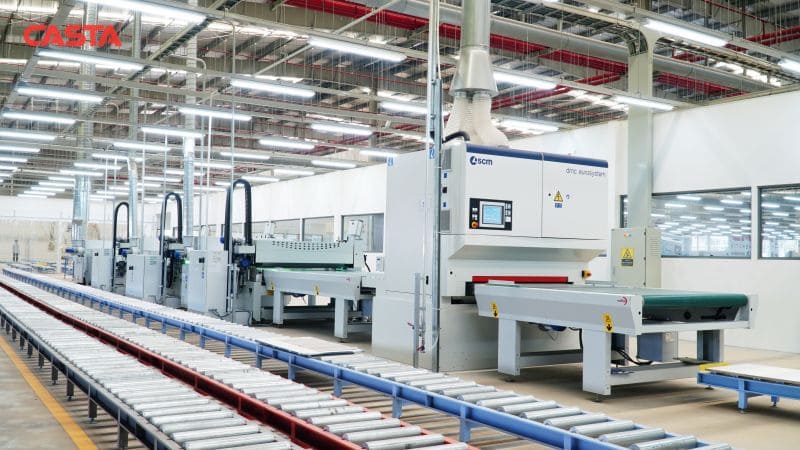
This is exactly why manufacturing tolerance becomes a bigger differentiator between suppliers specifically for frameless lines. A factory that produces excellent framed cabinets isn't automatically equipped to produce frameless kitchen cabinet construction to the same standard — the equipment, the joinery method, and the quality control checkpoints all need to be built around tighter tolerances from the start.
In practice, this shows up in a few specific places: panel squareness has to be nearly perfect since there's no frame to visually or structurally mask a slight misalignment, edge-banding has to be applied cleanly since exposed panel edges are far more visible than in a framed cabinet, and drilling for the 32mm hardware system has to be precise enough that hinges from a different production run still align correctly on a reorder.
Learn more: Why Choose Vietnam for Cabinet and Furniture Manufacturing?
5. Visual Style
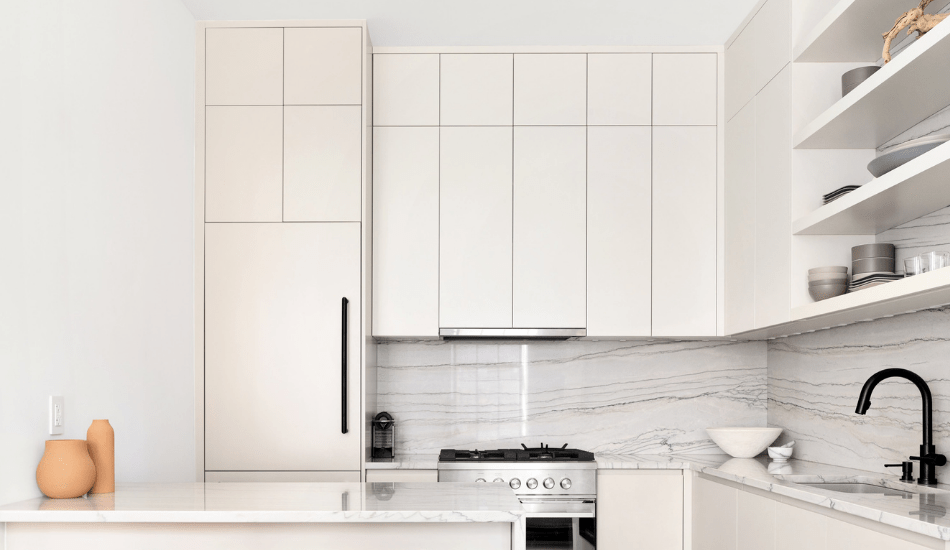
Frameless kitchen cabinet construction generally reads as more modern and streamlined, with full access to the opening and minimal visible framing. Framed cabinets tend to suit traditional or transitional design aesthetics, where the visible frame and inset or partial-overlay door options fit the overall look.
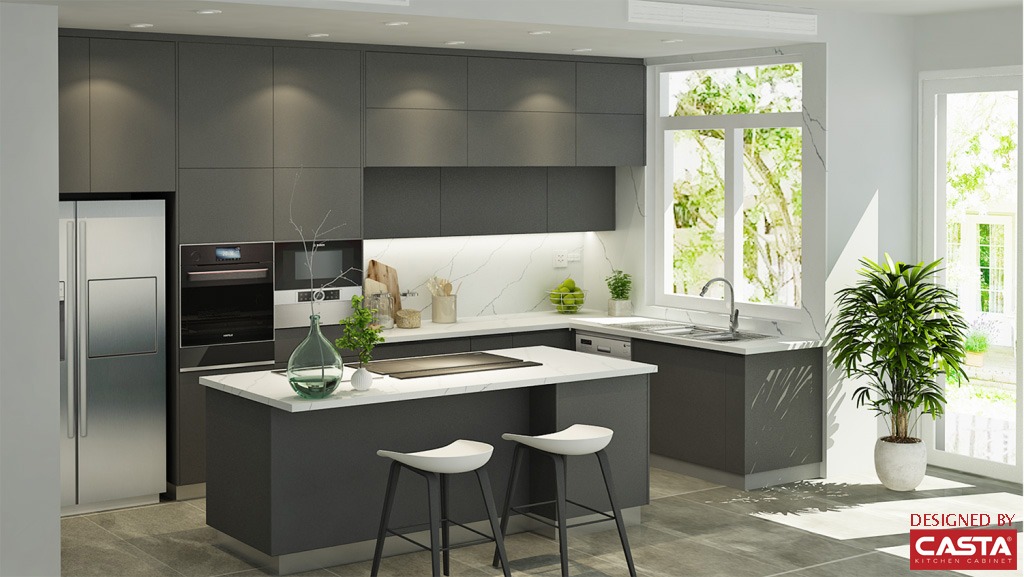
That's a large part of why frameless kitchen cabinet construction is such a common request for contemporary residential and commercial projects — the clean, uninterrupted door lines pair naturally with minimalist and modern design trends currently popular in kitchen design. Slab and flat-panel door styles in particular are almost exclusively paired with frameless construction, since a face frame tends to visually compete with that flat, uninterrupted look rather than complement it.
Learn more: The Ultimate Guide to Modern Design Kitchen Cabinets
6. Cost Considerations
Material and precision requirements affect production cost in frameless kitchen cabinet construction compared to framed builds. The gap typically shows up in three places: thicker panel stock, European hardware specification, and tighter manufacturing tolerance requirements that slow production or demand better equipment.
That said, the price gap varies significantly depending on a manufacturer's equipment and process — a factory already set up for high-volume frameless kitchen cabinet construction can often close much of that cost gap through efficiency, while a factory adapting an existing framed line will likely pass more of that cost along. Buyers comparing quotes should ask specifically what portion of any price difference comes from materials versus labor versus hardware, since that breakdown reveals a lot about how mature a supplier's frameless kitchen cabinet construction process actually is.
Learn more: Top rated cabinet manufacturers
Is Frameless Construction Right for Your Product Line?
Frameless kitchen cabinet construction is a good fit for brands targeting modern or contemporary buyers, projects that prioritize storage efficiency, and markets where European-style design is currently trending — which describes a large and growing share of the U.S. residential and multifamily market right now.
It's less ideal for buyers specifically wanting a traditional-frame aesthetic, or for sourcing from a supplier without proven frameless manufacturing experience. That second point matters more than most buyers realize: this is ultimately a manufacturing capability question as much as a design preference. Choosing frameless kitchen cabinet construction commits a buyer to a supplier's precision, not just their catalog.
There's also a hybrid option worth knowing about: some brands offer frameless kitchen cabinet construction for base cabinets, where the storage gain matters most, while using framed construction for upper cabinets where the difference is negligible. This lets a product line offer some of the aesthetic and functional benefits of frameless without committing entirely to the tighter manufacturing tolerances across an entire catalog — a useful middle ground for brands still building out frameless production capability.
Learn more: Modern cabinet manufacturers
Frameless Construction for OEM and Private-Label Cabinet Brands
For cabinet and furniture brands building a private-label program, frameless kitchen cabinet construction carries a specific set of considerations beyond the general buyer questions above.
Consistency across production runs matters more. A private-label brand reselling frameless kitchen cabinet construction under its own name is effectively vouching for a factory's tolerance control on every single order, not just the sample that won the account. Confirm what quality control checkpoints exist between runs, not just at initial sampling.
Hardware sourcing needs a long-term plan. Since frameless kitchen cabinet construction depends on specific hinge and hardware systems, brands should confirm a manufacturer's ability to source consistent hardware for years into a product's life, not just for the initial launch order — customers replacing a single damaged door years later will expect compatible hardware.
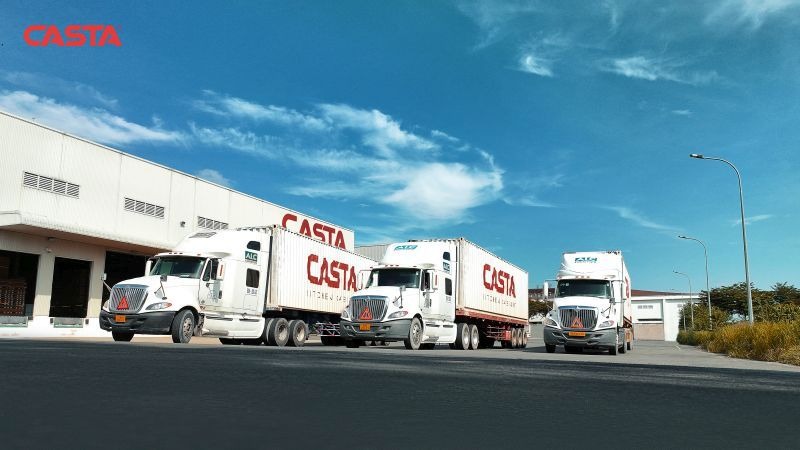
Packaging and shipping tolerances compound. Frameless kitchen cabinet construction ships with less structural buffer than a framed box, since there's no face frame absorbing minor stress during transit. Ask suppliers directly about their packaging standards for frameless lines specifically, rather than assuming standard cabinet packaging is sufficient.
Brands that get these three details right before launching a frameless kitchen cabinet construction line typically avoid the most common private-label headaches: inconsistent batches, discontinued hardware, and transit damage that shows up as a warranty claim months after a project ships.
Learn more: Success Stories: US Companies Thriving with Vietnamese Cabinet and Furniture Manufacturers
What to Ask a Supplier Before Sourcing Frameless Cabinets
A short set of questions filters out suppliers who aren't actually equipped for frameless kitchen cabinet construction at scale:
- What panel thickness do you use for frameless boxes?
- What hinge and hardware system do you manufacture for?
- What manufacturing tolerance do you hold for frameless construction specifically?
- Can you provide samples showing frameless joinery and finish quality?
- Do you have experience producing frameless lines at scale, not just as one-off samples?
A supplier confident in their frameless kitchen cabinet construction capability should answer all five without hesitation, ideally backed by actual samples rather than a catalog photo.
Learn more: Kitchen cabinet buying guide
A Real-World Example: How Casta Cabinetry Approaches Frameless Construction
Casta Cabinetry is a Vietnam-based manufacturer with more than 20 years of experience, using European-grade machinery across its production facility. Here's how that translates into the considerations above for frameless kitchen cabinet construction specifically.
Manufacturing precision: European-grade machinery built for the tighter tolerances frameless kitchen cabinet construction demands, rather than equipment adapted from a framed-focused production line. This distinction shows up directly in how consistently doors align across a full kitchen run.
Material quality: Engineered wood and plywood options selected for the structural demands of a frame-free box, where the panel itself has to carry weight that a face frame would otherwise share. Panel thickness and core density are treated as structural specifications, not just cost inputs.
Hardware compatibility: Standardized hinge and mounting systems suited to frameless configurations, reducing the compatibility headaches that show up later when a buyer needs replacement parts years after the original order shipped.
Customization: Configurations refined with the client until the design and function both fit the project, rather than forcing every order into a fixed catalog spec — a meaningful difference for brands that need frameless kitchen cabinet construction tailored to a specific private-label program.
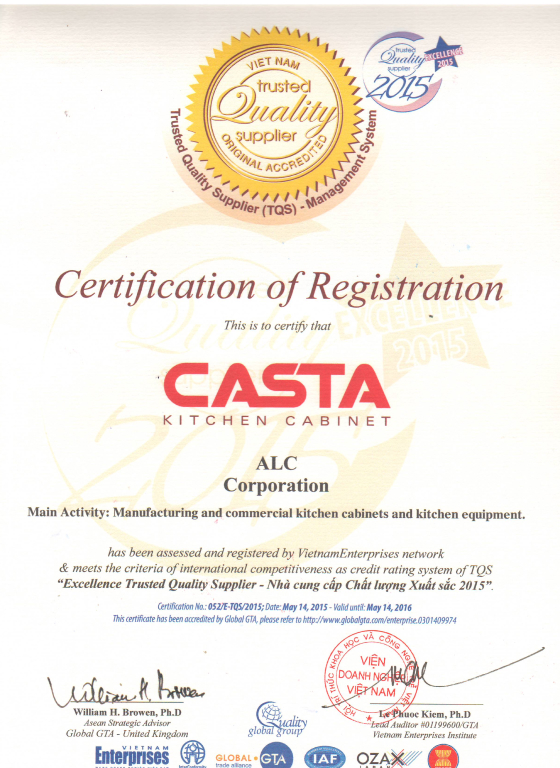
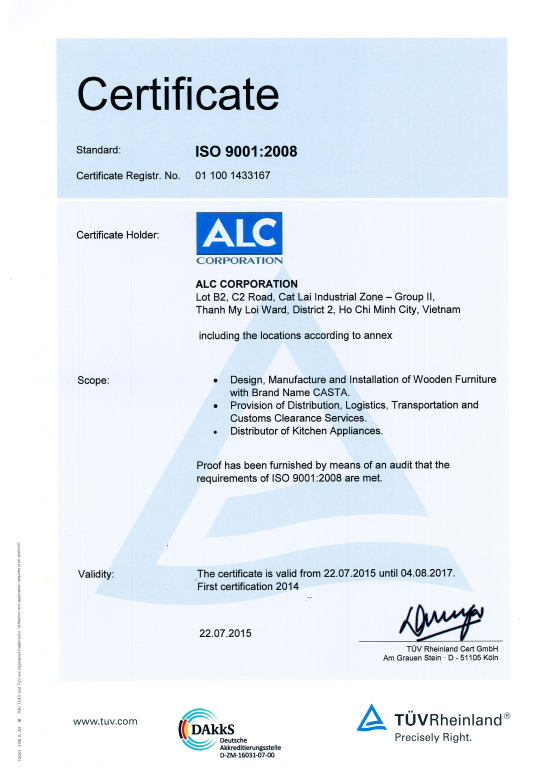
Compliance: Certification confirming wood materials meet health and safety standards, the same documentation buyers should expect from any manufacturer of frameless kitchen cabinet construction selling into the U.S. market.
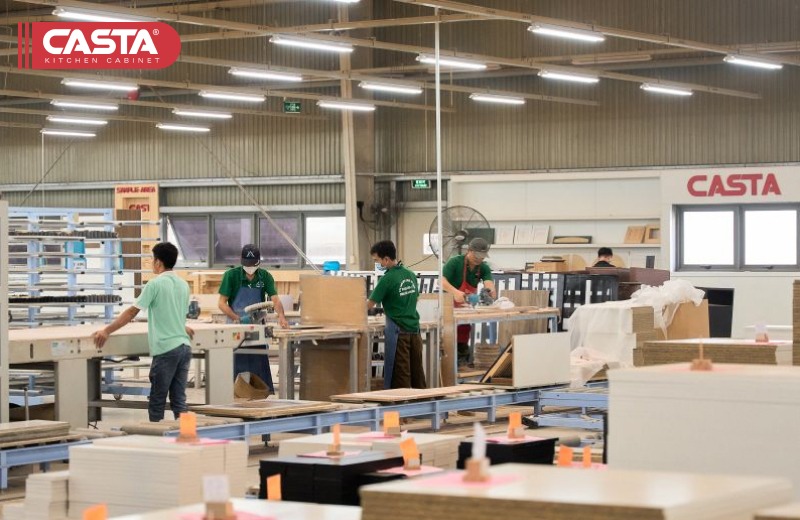
Frameless kitchen cabinet construction rewards manufacturers who take precision seriously — that's the real differentiator between suppliers, more than the construction style itself. Two factories can both claim to build frameless, and only one of them can actually hold the tolerance that style demands at volume. The gap between those two factories rarely shows up on a first sample; it shows up on the fifth container, the tenth reorder, or the replacement part requested three years after installation — which is exactly why the questions in this guide matter more than a glossy catalog page ever will.
Learn more: Casta’s outstanding international projects
Common Questions Buyers Should Resolve Before Ordering
Beyond the supplier questions above, a few practical points are worth confirming before placing a first order of frameless kitchen cabinet construction.
Confirm the exact hinge brand and model being used. Mismatched hardware between an initial order and a reorder years later can create visible inconsistency, and not every supplier tracks hardware specifications closely enough to guarantee an exact match on a future order.
Confirm edge-banding material and adhesive quality. The exposed panel edges in frameless kitchen cabinet construction see more wear and moisture exposure than the edges hidden by a face frame in traditional construction, so a weak adhesive bond here shows up as peeling edge-banding within a few years — one of the most common complaints in lower-quality frameless product lines.
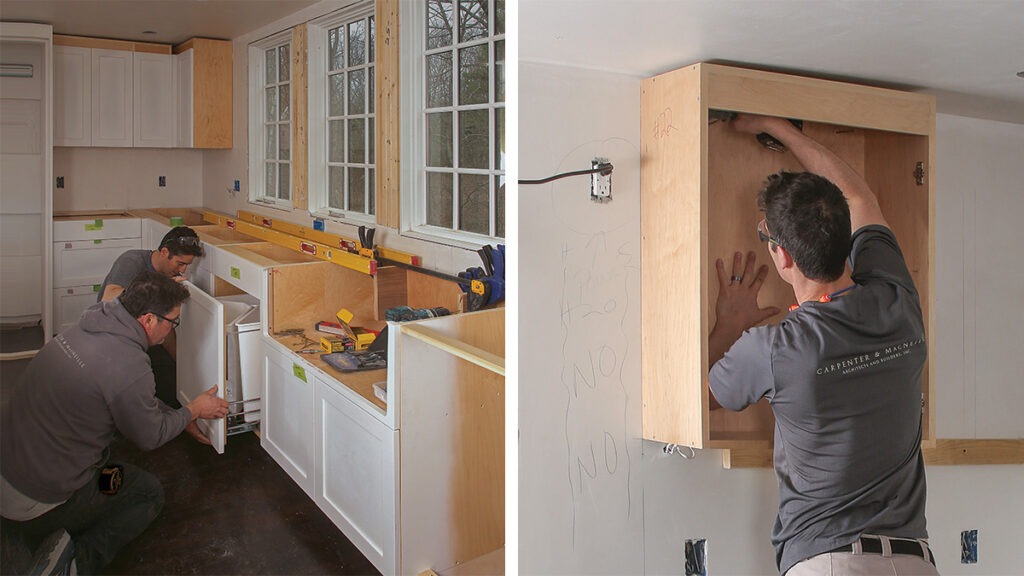
Confirm installation tolerance expectations with your install crew. Frameless kitchen cabinet construction is less forgiving of an out-of-level wall than framed construction, which can absorb minor irregularities through the frame itself. Crews used to installing framed cabinets sometimes underestimate how much more careful shimming and leveling frameless installation actually requires.
Confirm reorder lead times, not just initial order lead times. A supplier's first frameless kitchen cabinet construction order might ship on schedule while a smaller reorder for replacement parts gets deprioritized months later — ask specifically how reorders are handled before committing to a supplier long term.
Learn more: Finding and Partnering with Vietnam Cabinet Manufacturers
Frequently Asked Questions
What is frameless kitchen cabinet construction?
Is frameless the same as European-style cabinet construction?
Are frameless cabinets more expensive than framed cabinets?
Do frameless cabinets offer more storage space?
What hardware do frameless cabinets require?
Which is more durable: frameless or framed cabinets?
Conclusion
Frameless kitchen cabinet construction trades the face frame for a structural box, gaining more storage and a modern look at the cost of requiring tighter manufacturing precision. None of the six differences above exist in isolation — storage, hardware, manufacturing tolerance, style, and cost all trace back to that single structural choice, which is why it's worth understanding as one connected system rather than six separate features.
The real deciding factor for buyers isn't just style preference — it's whether a given supplier can actually manufacture frameless kitchen cabinet construction to a consistent standard, order after order, sample after sample, year after year. A beautiful first sample proves far less than a fifth reorder that still matches the first.
Casta Cabinetry offers precision frameless kitchen cabinet construction and certified materials for North American cabinet brands and contractors who need a manufacturing partner capable of holding that standard at scale.
Contact our team to request frameless cabinet samples or discuss your product line.
Whether the next step is a single sample door or a full production line evaluation, the questions worth asking stay the same: can this supplier hold tolerance, source hardware reliably, and repeat that performance on order fifty the same way they did on order one — that consistency, more than any single spec sheet, is what actually defines a dependable partner.





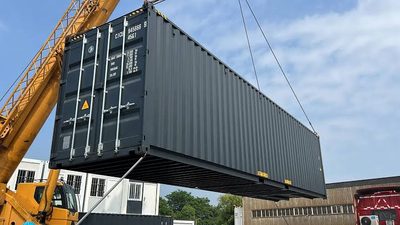
How Many Kitchen Cabinets Fit in a 20ft/40ft Container?...
For a wholesaler pricing out a bulk order, cabinets per container is the number that turns a quote into an actual budget...
09/20/2026 | David Nguyen

FSC Certified Cabinets: Why It Matters for Green Building Pr...
For a developer working on a certified green building project, FSC certified cabinets aren’t just a sustainability...
09/18/2026 | David Nguyen
Lead Time for Wholesale Cabinet Orders: From Factory to Deli...
For a developer or wholesaler working against a construction or renovation deadline, cabinet lead times aren’t a n...
09/16/2026 | David Nguyen

Cabinet Import Duties & Tariffs: What US Buyers Pay When...
For a U.S. wholesaler or importer, uncertainty around tariffs on imported cabinets is often the single biggest barrier t...
09/14/2026 | David Nguyen
How Many Kitchen Cabinets Fit in a 20ft/40ft Container?...
For a wholesaler pricing out a bulk order, cabinets per container is the number that turns a quote into an actual budget...
09/20/2026 | David Nguyen
FSC Certified Cabinets: Why It Matters for Green Building Pr...
For a developer working on a certified green building project, FSC certified cabinets aren’t just a sustainability...
09/18/2026 | David Nguyen
Lead Time for Wholesale Cabinet Orders: From Factory to Deli...
For a developer or wholesaler working against a construction or renovation deadline, cabinet lead times aren’t a n...
09/16/2026 | David Nguyen
Cabinet Import Duties & Tariffs: What US Buyers Pay When...
For a U.S. wholesaler or importer, uncertainty around tariffs on imported cabinets is often the single biggest barrier t...
09/14/2026 | David Nguyen
Contact us
Casta is always ready to listen and answer all customers' questions