


 EN
EN
Eco friendly kitchen cabinets get used loosely in marketing, so this guide breaks down what the label should actually mean, backed by the standards that matter — CARB Phase 2, TSCA Title VI, and FSC certification. Demand for genuine sustainability keeps growing while regulations get stricter, so a vague "green" claim doesn't hold up the way it used to. It's built for contractors specifying materials, dealers vetting suppliers, and brands that need real answers rather than a green label.
Why This Matters More Now
Demand for eco friendly kitchen cabinets isn't a niche preference anymore — it's shaped by three converging forces that make sourcing decisions harder to fudge than they used to be.
Growing homeowner demand. Buyers increasingly ask direct questions about material sourcing and indoor air quality before signing off on a kitchen renovation, not after.
Stricter regulation. CARB Phase 2 and TSCA Title VI aren't optional guidelines — they're enforceable emissions standards for composite wood products sold in the U.S., and non-compliant shipments can be held at customs or pulled from sale.
Downstream accountability. Contractors and cabinet brands increasingly need to back up sustainability claims to their own customers, which means the documentation has to actually exist somewhere up the supply chain, not just at the point of sale.
Together, these three shifts are why eco friendly kitchen cabinets now require real paperwork rather than a marketing paragraph — the buyers asking the questions have gotten more specific, and the regulations backing those questions have gotten stricter.
What "Eco-Friendly" Actually Means for Kitchen Cabinets
In plain terms, eco friendly kitchen cabinets are made from responsibly sourced materials, manufactured with low environmental impact, and safe for indoor air quality once installed. That's a meaningful bar — not a logo on a website.
It's also worth treating "eco-friendly" as a spectrum rather than a yes/no label. Some cabinets check one or two boxes on this list; genuinely sustainable eco friendly kitchen cabinets check most or all seven. The seven criteria below are the actual checklist to use when comparing suppliers, rather than taking a marketing claim at face value. Buyers who skip straight to price comparison without running this checklist first tend to end up comparing incomparable products — one genuinely certified, one simply labeled.
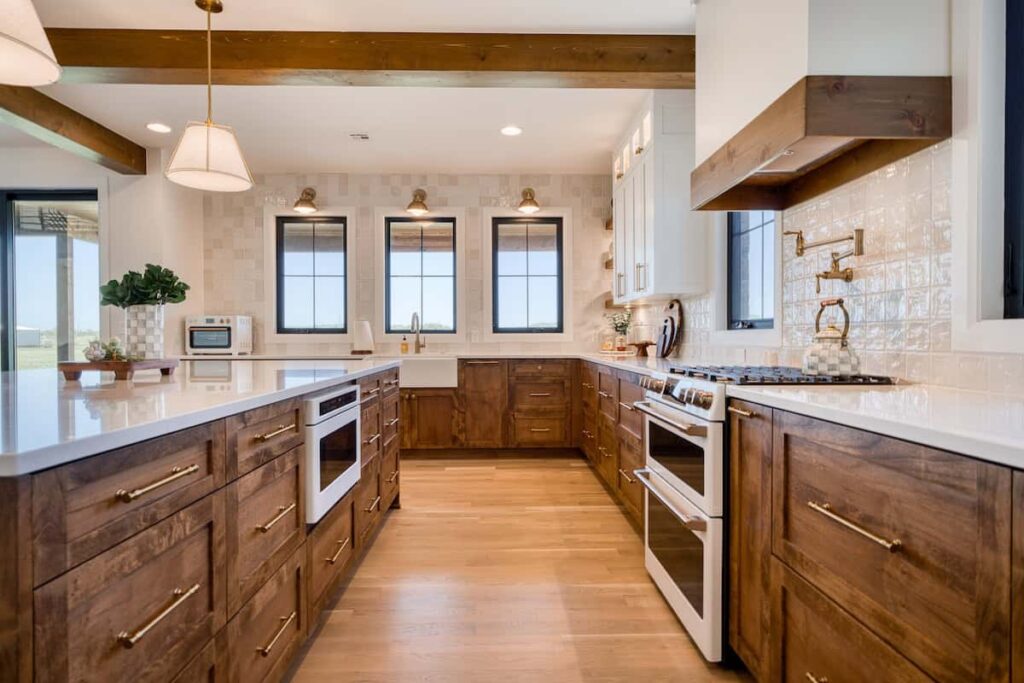
7 Criteria That Define Eco-Friendly Kitchen Cabinets
1. Sustainably Sourced Wood
"Sustainably sourced" requires two things in practice: responsible forestry practices at the point of harvest, and a traceable supply chain from forest to finished product. Without both, a sourcing claim is just a claim.
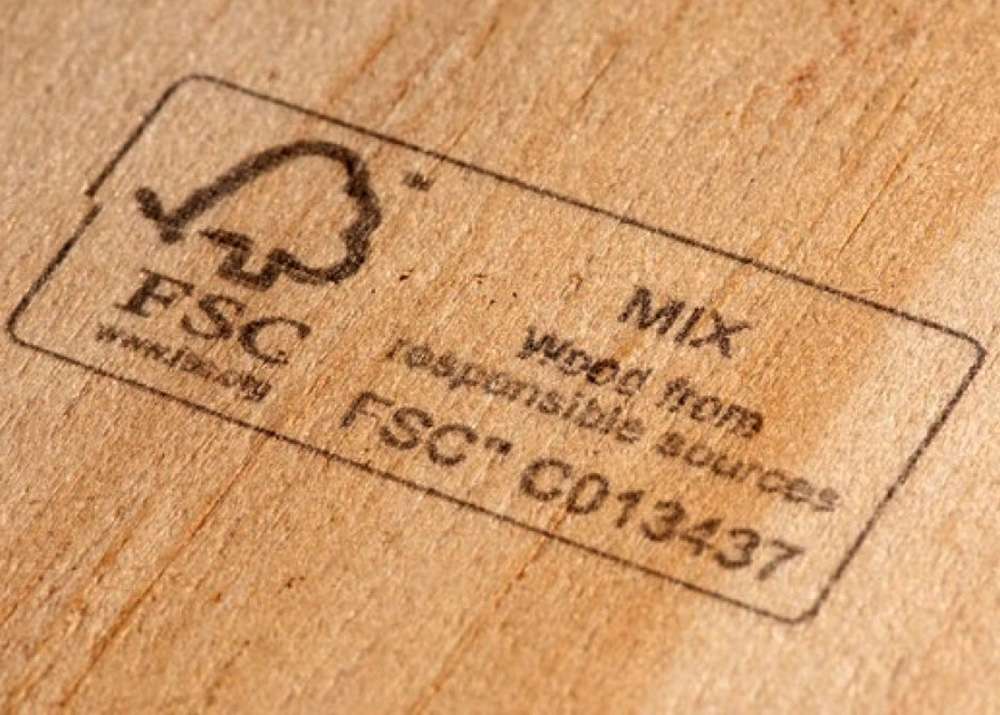
FSC (Forest Stewardship Council) certification is the most recognized standard here. FSC Chain of Custody certification verifies that certified material is tracked and documented at every stage of production and distribution, from the forest through manufacturing to the finished cabinet. The FSC label is recognized by roughly half of consumers globally, and more than 6,000 companies in the indoor furniture sector alone hold FSC certification worldwide — this isn't a niche standard.
Sourcing matters beyond the environmental angle too: verified supply chains tend to be more stable, which protects material availability and pricing for buyers placing large or recurring orders of eco friendly kitchen cabinets. A supplier that can't trace its own supply chain is also a supplier that can't reliably guarantee consistent material quality order to order — the two issues tend to travel together.
Red flag: any supplier who can't produce documentation showing where their wood actually comes from. A verbal assurance isn't traceability, and neither is a general statement like "we only use quality materials" without a certificate number attached to it.
Learn more: Why Choose Vietnam for Cabinet and Furniture Manufacturing?
2. Low-VOC and Formaldehyde-Free Materials
This is arguably the most overlooked criterion in eco friendly kitchen cabinets, because buyers focus on where wood comes from and skip what happens to indoor air quality after installation.
CARB Phase 2 and TSCA Title VI are the two standards that actually govern this. Both set formaldehyde emission limits specifically for hardwood plywood, particleboard, and medium-density fiberboard — the composite materials most commonly used in cabinet boxes and doors. The EPA classifies formaldehyde as a substance that can cause eye, nose, and throat irritation, wheezing, and — with prolonged exposure — has been linked to cancer risk. MDF, notably, is generally recognized as the highest formaldehyde-emitting pressed wood product when built with standard urea-formaldehyde resins, which is exactly why emissions-compliant resin systems matter.
What to actually ask for: emissions testing documentation from an approved third-party certifier, not a verbal claim that a product is "low-VOC." Genuinely low-emission eco friendly kitchen cabinets should have paperwork behind that claim, not just a sticker. It's also worth understanding that indoor formaldehyde concentration depends on more than the material alone — installed quantity and room ventilation both affect real-world exposure, which is why certified low-emission materials matter even more in smaller, less-ventilated kitchens.
Learn more: Formaldehyde free cabinets
3. Recycled or Engineered Wood Content
There's a real difference between virgin wood, engineered wood built from recycled or reclaimed fiber, and salvaged reclaimed lumber — and each has a different sustainability profile.
Engineered wood options like plywood and MDF can meaningfully reduce raw timber demand while maintaining strong structural performance, which is part of why they're a legitimate component of eco friendly kitchen cabinets rather than a compromise.
Learn more: Difference between mdf and mfc vs plywood vs hdf
Where the line gets blurry: not all "engineered" wood is automatically eco-friendly. The binding agents and adhesives used to manufacture the panel matter just as much as the wood fiber itself — a recycled-content panel bonded with a high-emission resin doesn't actually solve the sustainability problem, it just relocates it. Buyers evaluating eco friendly kitchen cabinets should ask about resin type specifically, not just whether the panel contains recycled fiber.
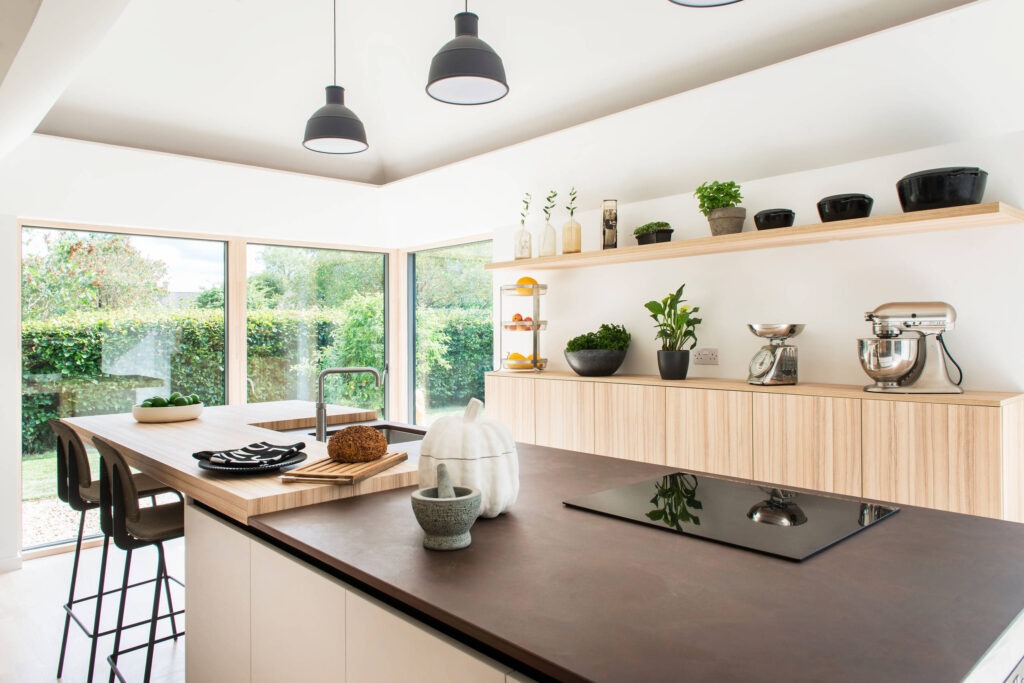
4. Water-Based and Low-Emission Finishes
Finish choice affects both the environment and indoor air quality after a cabinet is installed, not just during manufacturing.
Solvent-based paints and lacquers release VOCs during curing and, to a lesser degree, for some time afterward. Water-based finishes generally emit significantly fewer VOCs during application and cure, making them the better choice for eco friendly kitchen cabinets destined for enclosed residential spaces.
Buyers should ask two specific questions: what's the curing process for this finish, and what's the VOC content per finish type being quoted? Both numbers should be available on request — if they're not, that's worth treating as a gap in the supplier's actual documentation, not just an oversight. It's also worth asking how long a finish needs to fully cure before a cabinet is considered safe for normal use, since off-gassing can continue at a lower level even after a finish feels dry to the touch.
Learn more: Material & Finish Innovations: Elevating Cabinet Design and Durability
5. Energy-Efficient and Responsible Manufacturing
On the factory side, this criterion looks like waste reduction programs, water recycling systems, and efficient machinery that reduces energy use per unit produced.
Manufacturing process matters just as much as the raw material itself — a cabinet built from perfectly sustainable wood, manufactured in a facility with high waste and energy use, only tells half the sustainability story.
This is also the hardest criterion for buyers to verify from the outside. Factory audits, transparent production data, and a manufacturer willing to walk a buyer through their actual process (not just a brochure) are the practical ways to check this before committing to a supplier of eco friendly kitchen cabinets at volume. A short factory visit, even a virtual one, tends to reveal more about real manufacturing practices than any sustainability page on a website ever will.
Learn more: Finding and Partnering with Vietnam Cabinet Manufacturers
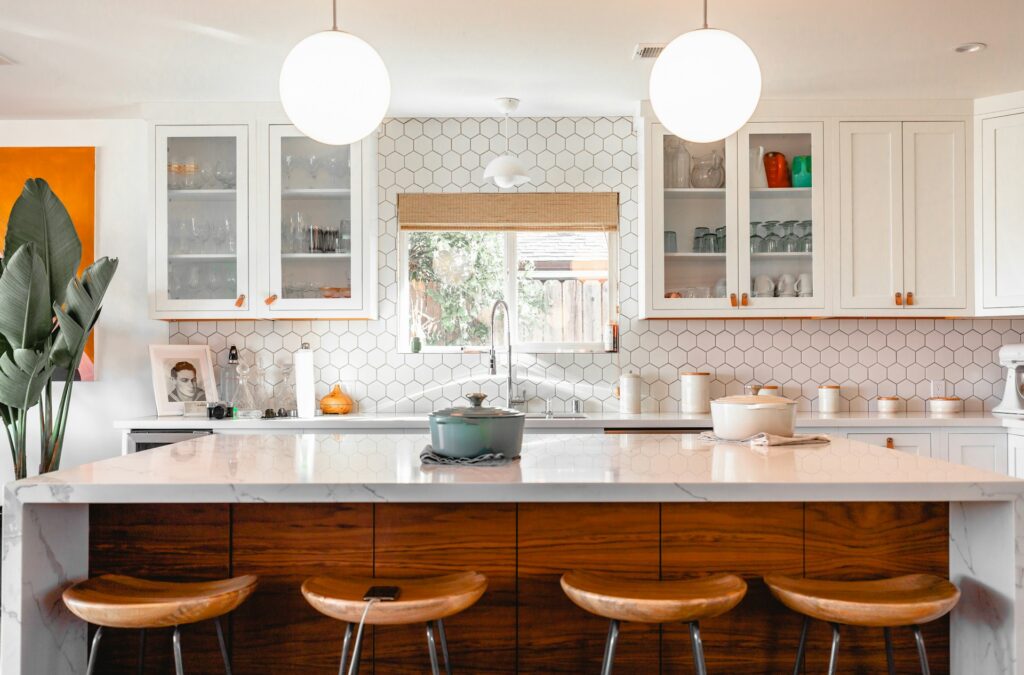
6. Durability and Product Lifespan
This is the sustainability angle that's easiest to miss: a cabinet that lasts 20 years has a meaningfully smaller lifetime environmental footprint than one replaced every five years, even if the shorter-lived cabinet used slightly more sustainable materials on paper. It's a simple math problem that gets overlooked constantly when eco friendly kitchen cabinets are marketed purely on material origin rather than expected service life.
Cheap, low-durability cabinets marketed as "eco" can actually be less sustainable in practice once replacement cycles are factored in — the manufacturing impact, shipping footprint, and landfill waste of a cabinet built to fail early adds up fast. Buyers comparing quotes for eco friendly kitchen cabinets should ask about expected service life alongside material origin, since the two numbers together tell a more complete sustainability story than either one alone.
This connects directly back to construction quality: joinery, hardware, and material grade all determine whether eco friendly kitchen cabinets actually deliver on the sustainability promise over their real-world lifespan, not just at the point of sale. A cabinet with a five-year warranty and an "eco" label is making two claims that don't quite line up with each other.
Learn more: Top rated cabinet manufacturers
7. Third-Party Certifications
Certifications matter more than marketing claims for one simple reason: independent verification versus a self-reported statement carry very different weight.
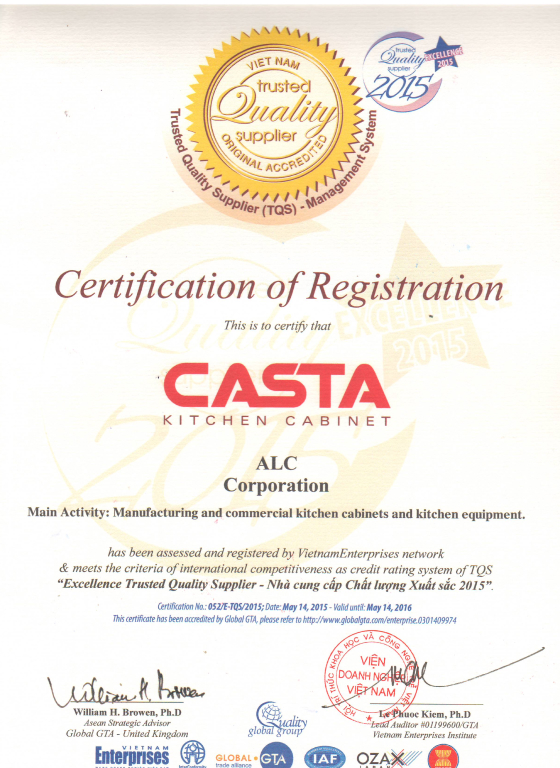
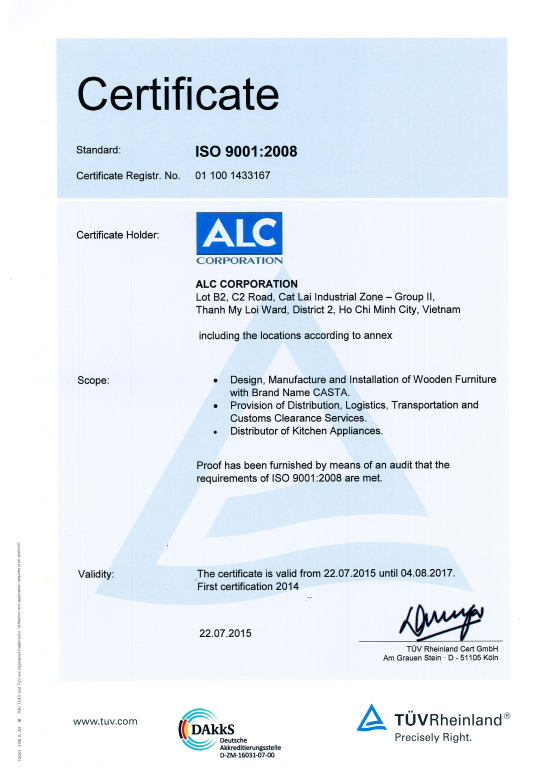
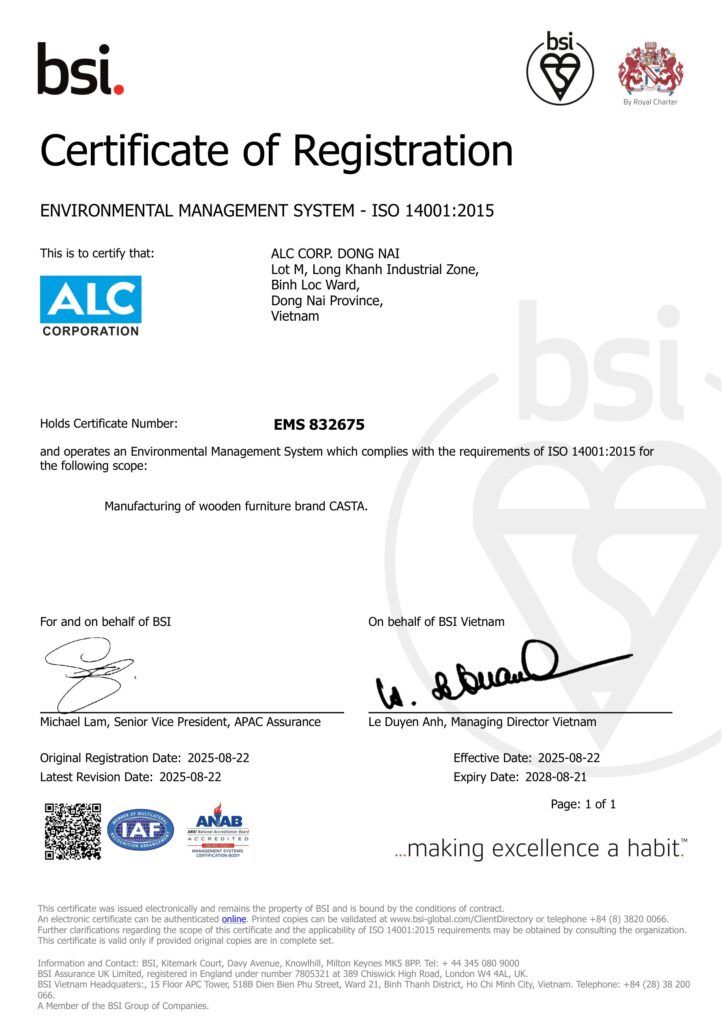
Certifications worth looking for include FSC for sourcing, CARB Phase 2 for emissions, ISO environmental management standards for process, and BSCI/BSI for social and environmental compliance across the supply chain.
Learn more: Cabinet certification
A legitimate supplier of eco friendly kitchen cabinets should be able to hand over actual documentation on request — certificates, test reports, audit summaries — not just logos displayed on a website with no backing paperwork available. If a certification logo appears on a product page but the supplier can't produce the certificate number or issuing body when asked, treat that as equivalent to no certification at all.
Marketing Claim vs. What to Actually Verify
Vague sustainability language shows up constantly in cabinet marketing. Here's how to translate common claims into the documentation that should back them up before trusting any supplier of eco friendly kitchen cabinets.
| Marketing Claim | What It Should Mean | What to Ask For |
| "Sustainably sourced wood" | Traceable, responsibly harvested material | FSC Chain of Custody certificate |
| "Low-VOC" | Formaldehyde emissions below regulated limits | CARB Phase 2 / TSCA Title VI test report |
| "Eco-friendly finish" | Water-based, low-emission coating | VOC content data per finish type |
| "Made from recycled materials" | Verified recycled or reclaimed fiber content | Material composition documentation |
| "Green manufacturing" | Waste reduction, energy efficiency in production | Factory audit or transparency report |
A supplier that can match each claim to a document on this list is offering real eco friendly kitchen cabinets. A supplier who can only offer the claim itself is offering marketing copy.
Learn more: Kitchen cabinet buying guide
How to Verify a Supplier's Eco-Friendly Claims
Ask for documentation, not just a sustainability statement. Certificates, emissions test reports, and sourcing records should all be available, and a supplier confident in their claims will usually provide them without much delay. A slow or evasive response to a straightforward documentation request is itself useful information about how seriously a supplier takes the eco friendly kitchen cabinets label they're using.
Request samples and check finish quality, emissions labeling, and general material transparency firsthand rather than relying entirely on a spec sheet. A physical sample can reveal finish quality issues that never show up in a photo or a technical data sheet.
Watch for vague language — terms like "eco-conscious" or "green materials" that aren't backed by anything specific. That phrasing is a marketing choice, not a sustainability claim you can actually verify, and it's worth pressing further whenever it appears without a certification reference attached.
A short checklist helps when comparing suppliers of eco friendly kitchen cabinets side by side: sourcing documentation, emissions certification, finish VOC data, manufacturing transparency, and warranty terms that reflect confidence in long-term durability. Run every candidate supplier through the same five checks, and the comparison becomes far more objective than reading marketing pages side by side.
Learn more: Success Stories: US Companies Thriving with Vietnamese Cabinet and Furniture Manufacturers
A Real-World Example: How Casta Cabinetry Approaches Sustainability
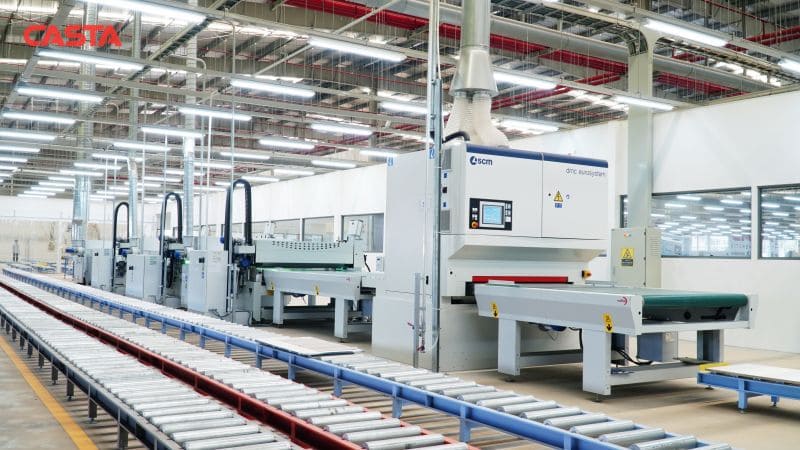
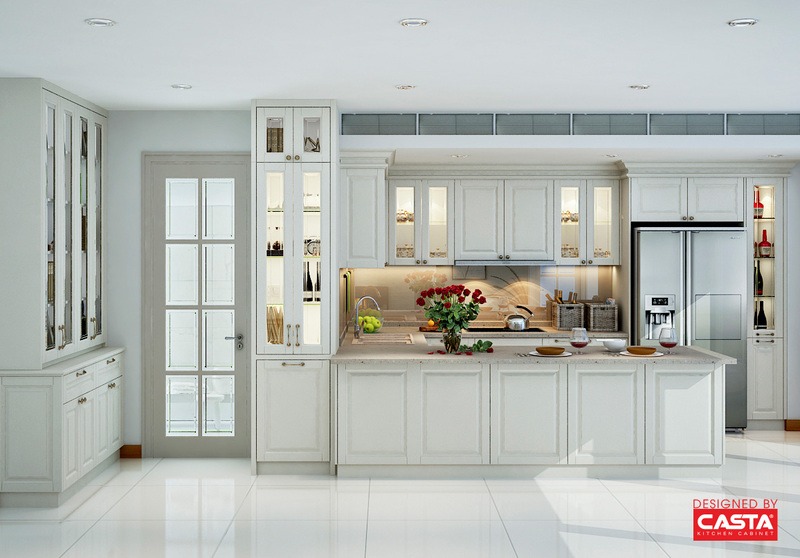
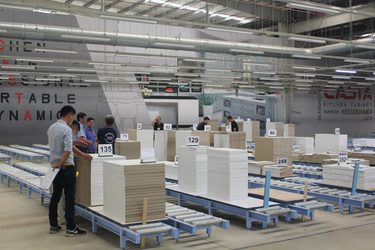
Casta Cabinetry is a Vietnam-based manufacturer with more than 20 years of experience, using European-grade machinery across its production facility. Here's how that lines up against the criteria above — not as a claim that Casta checks every box for every buyer, but as an example of what "eco-friendly" should actually look like when a supplier is asked to prove it.
Sourcing: Wood materials backed by certification confirming responsible sourcing and health and safety standards, rather than a verbal assurance alone. This is the same FSC-style documentation buyers should expect from any manufacturer claiming to produce eco friendly kitchen cabinets.
Materials and finishes: Engineered wood and plywood options selected for durability, paired with finish options suited to North American health and compliance expectations for eco friendly kitchen cabinets sold into the U.S. market. Finish selection is treated as a compliance decision, not just an aesthetic one.
Manufacturing: Precision, European-grade machinery supporting consistent, lower-waste production compared to manual-heavy manufacturing processes. Automated cutting and finishing reduce material waste per unit, which is part of the manufacturing-side sustainability story that's easy to overlook.
Durability: Construction built to hold up over time, which directly reduces the replacement cycle that undercuts sustainability claims on paper-thin "eco" marketing. A cabinet built to last two decades does more for its lifetime footprint than any single material choice.
Customization and support: Designs refined with the client until they're satisfied, with documentation and support provided upfront rather than only on request after a problem shows up. That upfront transparency is ultimately what separates a genuine supplier of eco friendly kitchen cabinets from one relying on marketing language alone.
Learn more: Casta’s ideal cabinets catalog
What This Means for Contractors and Cabinet Brands
For contractors, being able to back up a material claim with actual documentation protects against liability if a client later asks questions about indoor air quality or sourcing. Specifying eco friendly kitchen cabinets without the paperwork to back the term up leaves that liability sitting with the contractor, not the manufacturer.
For cabinet and furniture brands building private-label programs, the same documentation is what lets a brand make its own sustainability claims to its own customers without exposure. A brand reselling eco friendly kitchen cabinets under its own name is effectively vouching for a supplier's paperwork, so that paperwork needs to actually exist and hold up to scrutiny.
Neither group benefits from vague "eco" language on a spec sheet — both need paperwork that holds up if it's ever checked. Treat every claim about eco friendly kitchen cabinets the same way you'd treat any other technical specification: verify it before it becomes part of your own promise to a client, and keep copies of the documentation on file rather than trusting it will still be available if a question comes up years later.
Learn more: Top 10 cabinet manufacturers
Conclusion
Eco friendly kitchen cabinets are a combination of sourcing, materials, finishes, manufacturing, durability, and third-party verification — not any single feature on its own. A cabinet with an FSC label but no emissions documentation only tells part of the story, and the reverse is just as true. Buyers who understand this rarely get fooled by a single certification logo standing in for the full picture.
The real test for any supplier claiming to offer eco friendly kitchen cabinets is whether they can back that claim up with documentation, not marketing language. That test is simple to apply — ask for the certificate, the test report, or the audit summary, and see what comes back. A supplier with nothing to hide will have an answer ready.
Casta Cabinetry offers certified, health-conscious materials and durable construction for North American distributors, contractors, and cabinet brands who need exactly that kind of proof behind their sourcing, not just a claim on a product page.
Contact our team to request documentation, samples, or a conversation about your next project.
For contractors and brands alike, the questions worth asking are always the same: where did this come from, what does it emit, and how long will it actually last. Suppliers with real, documented answers to all three of those questions are worth the extra conversation it takes to get them
FAQ
What makes a kitchen cabinet eco-friendly?
Are MDF or particleboard cabinets eco-friendly?
What certifications should I look for in sustainable kitchen cabinets?
Are eco-friendly kitchen cabinets more expensive?
How do I verify a manufacturer's sustainability claims?
What's the difference between eco-friendly and low-VOC cabinets?





How Many Kitchen Cabinets Fit in a 20ft/40ft Container?...
For a wholesaler pricing out a bulk order, cabinets per container is the number that turns a quote into an actual budget...
09/20/2026 | David Nguyen

FSC Certified Cabinets: Why It Matters for Green Building Pr...
For a developer working on a certified green building project, FSC certified cabinets aren’t just a sustainability...
09/18/2026 | David Nguyen
Lead Time for Wholesale Cabinet Orders: From Factory to Deli...
For a developer or wholesaler working against a construction or renovation deadline, cabinet lead times aren’t a n...
09/16/2026 | David Nguyen

Cabinet Import Duties & Tariffs: What US Buyers Pay When...
For a U.S. wholesaler or importer, uncertainty around tariffs on imported cabinets is often the single biggest barrier t...
09/14/2026 | David Nguyen
How Many Kitchen Cabinets Fit in a 20ft/40ft Container?...
For a wholesaler pricing out a bulk order, cabinets per container is the number that turns a quote into an actual budget...
09/20/2026 | David Nguyen
FSC Certified Cabinets: Why It Matters for Green Building Pr...
For a developer working on a certified green building project, FSC certified cabinets aren’t just a sustainability...
09/18/2026 | David Nguyen
Lead Time for Wholesale Cabinet Orders: From Factory to Deli...
For a developer or wholesaler working against a construction or renovation deadline, cabinet lead times aren’t a n...
09/16/2026 | David Nguyen
Cabinet Import Duties & Tariffs: What US Buyers Pay When...
For a U.S. wholesaler or importer, uncertainty around tariffs on imported cabinets is often the single biggest barrier t...
09/14/2026 | David Nguyen
Contact us
Casta is always ready to listen and answer all customers' questions