


 EN
EN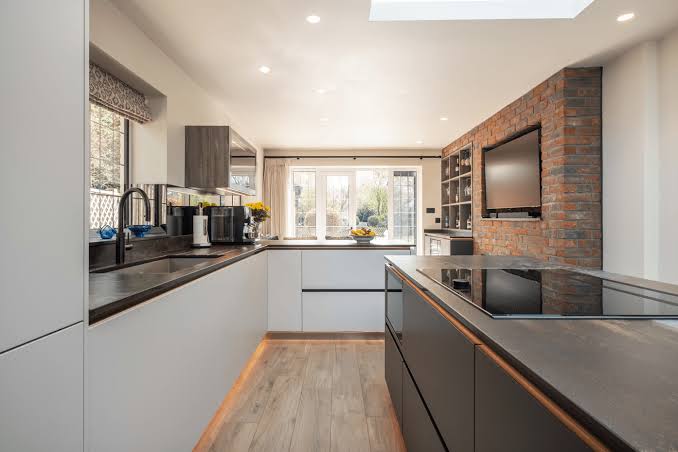
Galley kitchens present a sourcing challenge that most standard layouts do not. This guide breaks down what makes galley kitchen cabinets unique, then walks through seven criteria for finding a manufacturing partner who can actually deliver on that precision.
It's written for cabinet brands, contractors, and companies looking to source or expand a galley-kitchen product line for the North American market. The core challenge is straightforward to state but harder to solve: galley kitchens demand precision, since tight parallel-wall layouts leave little room for sizing errors, which means supplier accuracy matters more here than it does in a typical open-concept kitchen.
What Makes Galley Kitchen Cabinets Different
A galley kitchen is defined by its narrow, parallel-wall layout—usually two facing runs of cabinets with a walkway between them and limited floor space on either side. That basic geometry changes almost everything about how galley kitchen cabinets need to be specified and built.
Standard cabinet depth and clearance rules don't always apply cleanly in this layout. A 24-inch base cabinet depth that works fine in an open kitchen can eat into walkway clearance that's already tight in a galley footprint, which is why manufacturers serving this category often need to offer narrower-than-standard depth options as a baseline, not a special request.
Learn more: What are standard cabinet sizes
Common design priorities in galley kitchen cabinets include maximizing vertical storage since floor space is limited, minimizing walkway obstruction through careful hardware and door swing choices, and optimizing corner and end-of-run units where the two cabinet runs terminate. This layout shows up constantly in smaller homes, apartments, condos, and commercial or rental units, which makes it a genuinely relevant niche for brands targeting dense urban markets rather than a rare edge case.
Learn more: Corner cabinet dimensions
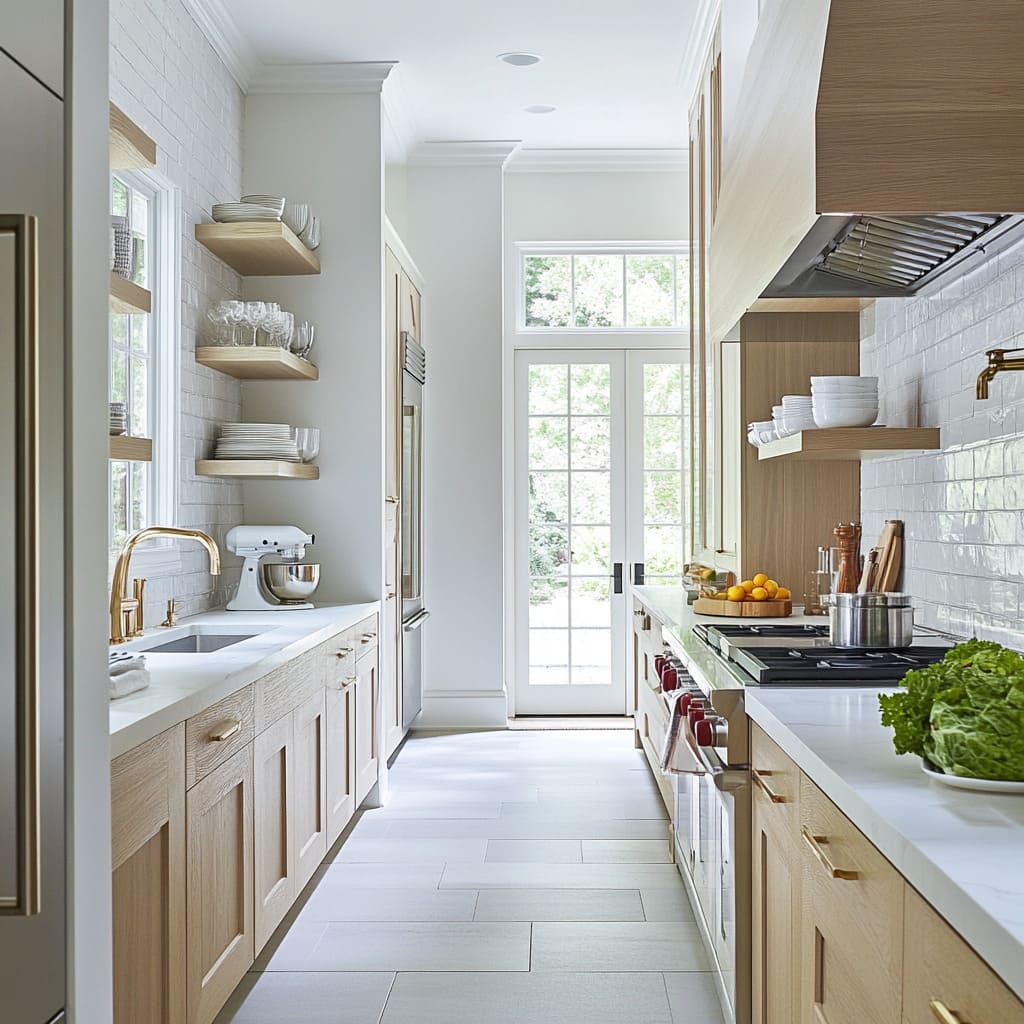
3 Design Considerations Unique to Galley Kitchens
Before getting into supplier criteria, it's worth understanding the three design factors that separate galley kitchen cabinets from a standard specification process.
1. Clearance and Depth Precision
Even small dimensional errors cause real problems in a narrow walkway. A half-inch discrepancy that would go unnoticed in an open kitchen can turn a functional galley walkway into a genuinely cramped one, or worse, one that doesn't meet code minimum clearance in a rental or commercial unit.
This is why manufacturing tolerances being tight and consistent, order after order, matters more for galley kitchen cabinets than for almost any other layout. A supplier with excellent finish quality but loose dimensional consistency is a worse fit here than a supplier with tighter tolerances and a more basic finish catalog.
2. Storage-Optimized Configurations
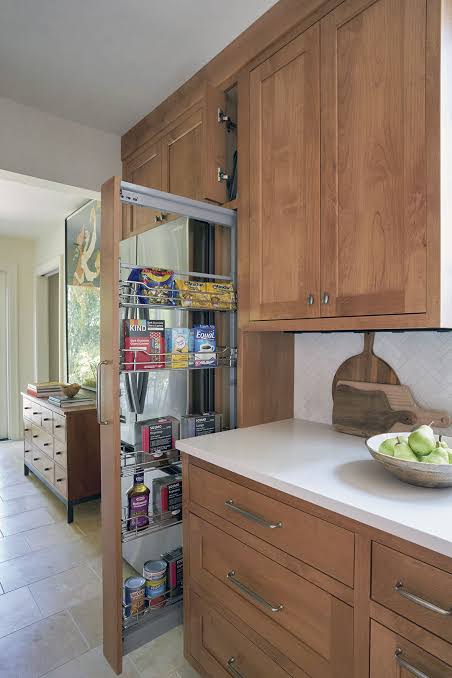
Limited floor space in a galley layout drives strong demand for tall units, pull-out storage, and other vertical solutions that compensate for what the footprint can't provide horizontally. A supplier's ability to customize configurations matters more here than it does in open-layout kitchens, where a wider range of standard sizes can usually be made to work.
3. Corner and End-Panel Solutions
Galley layouts often need more end panels and finished sides than L-shaped or U-shaped kitchens, simply because both cabinet runs typically terminate in visible, finished ends rather than tucking into a corner. This adds complexity and cost that not every supplier handles well—some catalog-only manufacturers simply don't offer enough finished-end options to execute a galley layout cleanly.
Learn more: Blind corner base cabinet dimensions
7 Criteria for Choosing a Galley Kitchen Cabinet Supplier
With the design considerations established, here's what actually separates a supplier capable of executing galley kitchen cabinets well from one that isn't.
1. Manufacturing Precision and Tolerances
Dimensional accuracy matters more for galley layouts than almost any other kitchen style, given how little margin for error a narrow walkway leaves. When evaluating a potential supplier, ask directly what tolerance level they manufacture to and how consistent that tolerance is across batches—a supplier that can hit a tight tolerance on a single sample but drifts on a full production run isn't solving the actual problem.
2. Customization and Configuration Flexibility
A supplier needs the ability to produce tall units, narrow-depth cabinets, and custom corner solutions to properly serve galley kitchen cabinet demand. A rigid, catalog-only supplier will struggle here, since galley-specific configurations often fall outside standard size charts entirely.
Learn more: What are custom cabinets?
3. Material Quality and Construction
Material choice for galley kitchen cabinets depends heavily on the application. Whether you're retrofitting a marine vessel, a camper van or RV, or installing a high-performance compact kitchen at home, the main enemies are the same: moisture, constant vibration, changing temperatures, and general wear-and-tear in a tight space. Here are the core materials recognized in the industry for durability in these demanding conditions.
Marine-Grade Plywood (BS 1088). If you want the look and feel of real wood, this material is the gold standard for durable galley kitchen cabinets. Unlike standard plywood, marine-grade ply is engineered with high-quality, knot-free hardwood veneers bonded together using fully waterproof WBP (Weather and Boil-Proof) glue. It won't delaminate, warp, or rot when exposed to heavy moisture or a minor plumbing leak, and it carries an excellent strength-to-weight ratio. It's best suited for boat galleys and high-end camper van builds.
High-Density Polyethylene (HDPE) / King StarBoard®. HDPE is a marine-grade plastic polymer sheet that essentially lasts forever in a galley application. It's completely waterproof, chemically inert, and UV-resistant, and it will never rot, swell, splinter, or delaminate. Maintenance is close to zero—it can be hosed down directly. The trade-offs are weight, higher cost, and the fact that it can't be glued; it has to be mechanically fastened or heat-welded instead.
Extruded Aluminum (80/20) Framing. This material is often used for the structural skeleton of mobile galleys, paired with lightweight insert panels rather than as a standalone surface material. It offers maximum structural integrity for minimal weight, and it handles vibration and off-road flexing without cracking or warping—a genuine advantage for galley kitchen cabinets in RVs and marine applications.
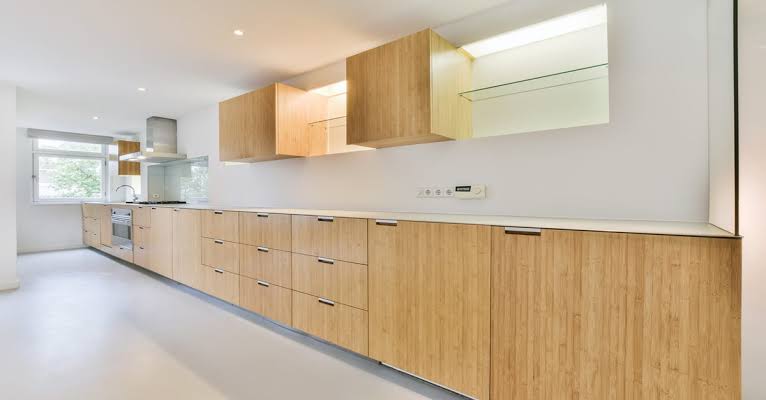
Bamboo Plywood. An eco-friendly, highly durable alternative to traditional hardwoods. Bamboo is naturally dense and stable, and high-quality multi-ply bamboo uses cross-banded layers that resist the expansion and contraction caused by drastic temperature fluctuations—a relevant concern for galley kitchen cabinets exposed to more temperature swings than a standard home kitchen.
Learn more: the difference between mdf and MFC vs plywood vs HSF
Best Facing and Surface Materials
Even the best core material needs a protective skin to withstand daily use, and the facing material is often what determines how a galley kitchen actually looks and feels day to day.
High-Pressure Laminate (HPL). A dense, multi-layer surface bonded under heat and pressure, HPL resists scratches, moisture, and heat far better than standard veneer finishes. It's a common choice for galley kitchen cabinets in rental units and commercial applications where durability needs to outlast a standard residential warranty.
Learn more: What are laminate cabinets
Melamine. A resin-infused surface bonded to a substrate core, melamine offers strong scratch and stain resistance at a lower cost than HPL, though it's generally less impact-resistant. It's a practical mid-tier choice for galley kitchen cabinets where budget matters but bare particleboard or MDF surfaces aren't durable enough on their own.
Learn more: What is melamine cabinets
Marine Vinyl and Wrapped Finishes. Flexible vinyl wraps, often heat-formed over an MDF or HDPE substrate, provide a seamless, waterproof surface with no exposed seams for moisture to penetrate. This finish shows up frequently in boat and RV galley kitchen cabinets, specifically because of that seamless waterproofing.
Solid Surface and Quartz Composite. Typically reserved for countertops rather than cabinet faces, but worth mentioning since galley layouts often specify matching solid-surface material across both cabinet fronts and counters for a unified, easy-to-clean look in a small footprint.
4. Production Capacity and Scalability
A supplier's ability to support a growing product line matters more than whether they can fill a single one-time order. Brands planning to scale a galley-specific SKU line need a manufacturing partner that can keep pace as demand grows, rather than one that's only set up to handle a modest first order.
5. Certifications and Compliance
Look for CARB Phase 2, TSCA Title VI, FSC, and ISO certifications when evaluating a galley kitchen cabinets supplier. Documentation matters more here than it might for a smaller operation, since brands reselling under their own name are effectively vouching for the manufacturer's compliance to their own customers.
Learn more: Formaldehyde-free cabinets
6. Lead Times and Consistency
Consistent lead times matter more for a specialized product line with less buffer inventory than a mainstream one. Ask specifically about production scheduling and batch consistency—a supplier that hits a fast lead time once but can't repeat it reliably creates more risk for a galley kitchen cabinets program than a supplier with a longer but dependable timeline.
7. Design and Engineering Support
Whether a supplier offers 3D renderings, technical drawings, or configuration assistance speeds up development meaningfully for a brand launching or expanding a galley kitchen line. Given how much of galley kitchen cabinet design comes down to precise configuration rather than off-the-shelf sizing, engineering support isn't a nice-to-have here—it's close to a requirement.
Stylish Galley Cabinet Design Ideas
Beyond the technical criteria, it's worth knowing what's currently trending in galley kitchen cabinet design, since brands sourcing a new line need to know what buyers are actually asking for.
Modern Handleless Cabinets. Flat-panel slab doors with integrated finger pulls or J-pull profiles, typically in matte white, taupe, charcoal, or natural wood finishes. This approach creates a sleek, uninterrupted look that visually widens a narrow galley kitchen—a genuinely functional benefit in this layout, not just an aesthetic one.
Learn more: Handleless Kitchen Cabinets Guide
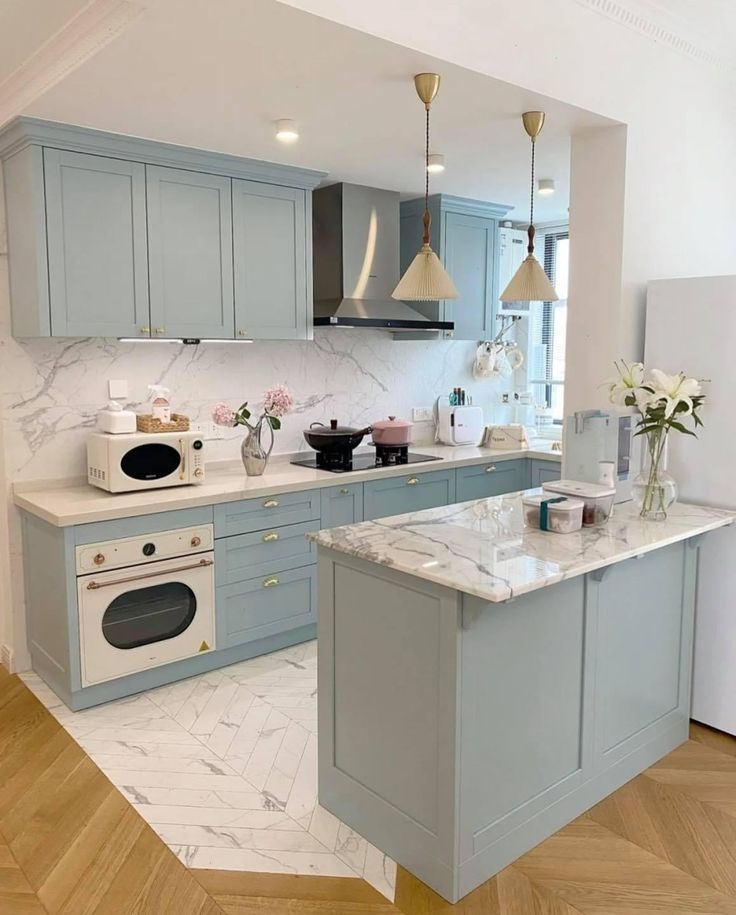
Shaker Cabinets with a Contemporary Twist. Slim-frame Shaker doors painted in soft white, sage green, navy, or greige, paired with brushed brass or matte black hardware. This offers a timeless look for galley kitchen cabinets that works well in both traditional and modern homes.
Learn more: What are shaker-style cabinets
Two-Tone Cabinet Design. A popular combination pairs white or light oak upper cabinets with navy, forest green, charcoal, or black lower cabinets. This adds visual interest to galley kitchen cabinets while keeping the overall space feeling open rather than boxed in.
Learn more: Mixed-color kitchen cabinets
Floor-to-Ceiling Storage. Maximizing every inch with tall pantry cabinets, appliance garages, pull-out pantry organizers, and built-in spice storage. Vertical storage in galley kitchen cabinets reduces clutter and increases usable space without expanding the footprint.
Open Shelving on One Side. Rather than upper cabinets on both walls, some galley layouts install floating wood shelves on one side while keeping full-height cabinetry on the opposite wall. This balances storage capacity with a lighter, more open feel in a tight space.
Learn more: Open-shelves cabinet
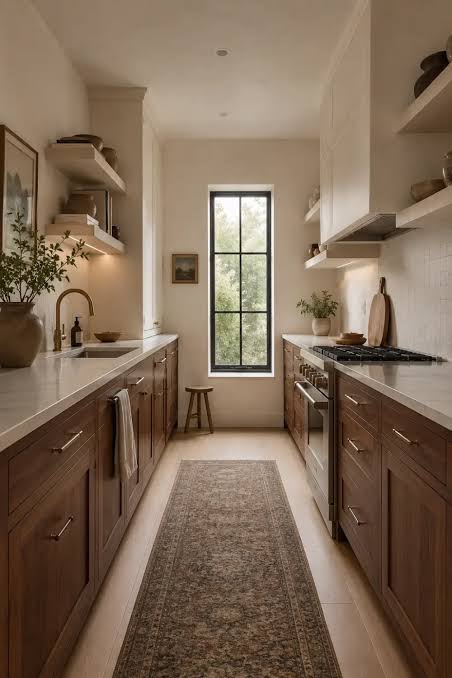
Warm Wood Scandinavian Style. White oak or birch galley kitchen cabinets paired with white quartz countertops, minimal hardware, black fixtures, and soft LED under-cabinet lighting. The natural wood adds warmth without overwhelming a narrow layout visually.
Learn more: Warm kitchen cabinet colors
Dark Luxury Look. For galley kitchens with good natural light, deep navy or charcoal cabinetry paired with white marble-look quartz countertops, brass hardware, and glass-front display cabinets for contrast. Darker galley kitchen cabinets can read as sophisticated rather than cramped when balanced with lighter surfaces and adequate lighting.
Learn more: Black painted cabinets
Questions to Ask a Potential Galley Cabinet Supplier
Before committing to a manufacturing partner for galley kitchen cabinets, run through this list:
- Can you manufacture non-standard depths and tall storage units?
- What's your typical tolerance range on cabinet dimensions?
- Do you offer additional end panels and finished sides?
- Can you support a growing order volume as our line scales?
- What certifications and documentation can you provide?
- Do you offer design support for custom configurations?
A supplier that can answer all six of these clearly, with documentation rather than general reassurance, is generally well positioned to execute a galley kitchen cabinets program reliably.
Learn more: What is flat-pack cabinet?
A Real-World Example: How Casta Cabinetry Supports Galley Kitchen Projects
As a practical reference point against the seven criteria above, it's worth looking at how Casta Cabinetry approaches galley kitchen cabinet projects specifically.
Casta Cabinetry is a Vietnam-based manufacturer with more than 20 years of experience, using European-grade machinery across its production facility. Here's how the company addresses each of the criteria covered in this guide.
Learn more: Sourcing Cabinets and Furniture from Vietnam: Your Ultimate Guide
Precision manufacturing. European-grade machinery supports tight, consistent tolerances across large production runs—the exact capability galley kitchen cabinets demand given how little dimensional margin the layout allows.
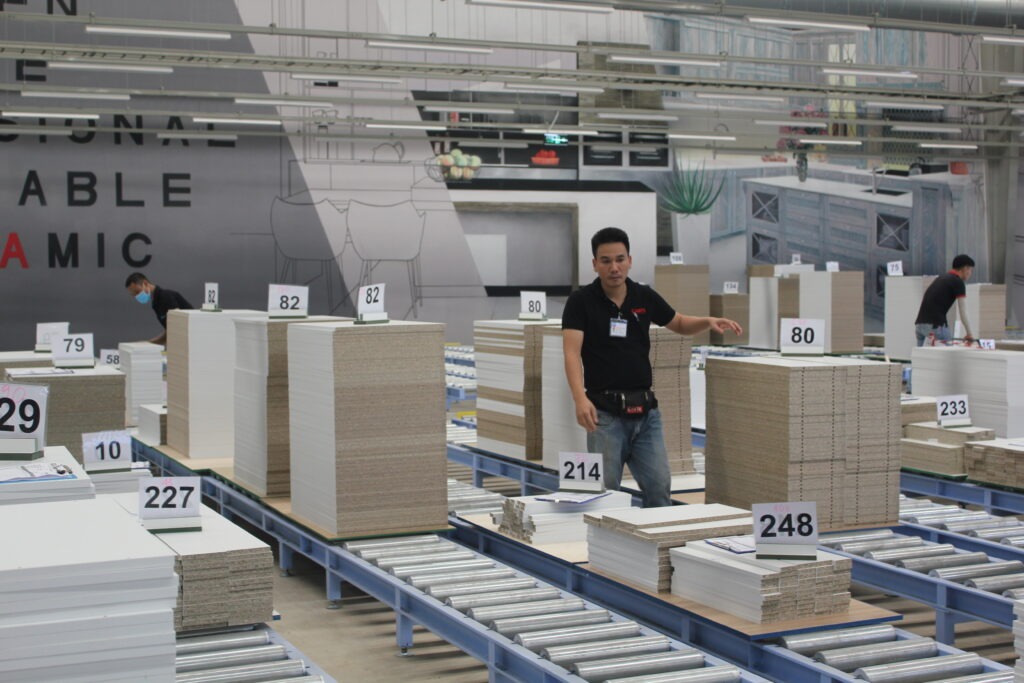
Configuration flexibility. Custom sizing and storage solutions are developed directly with the client until the design actually fits the layout, rather than forcing a galley project into a standard catalog size.
Materials and construction. Engineered wood and plywood options are built for daily durability, addressing the same moisture and wear concerns that matter across marine, RV, and residential galley kitchen cabinet applications.
Capacity to scale. A large production facility supports both an initial order and long-term growth as a galley kitchen cabinet product line expands, rather than only being set up for a modest first run.
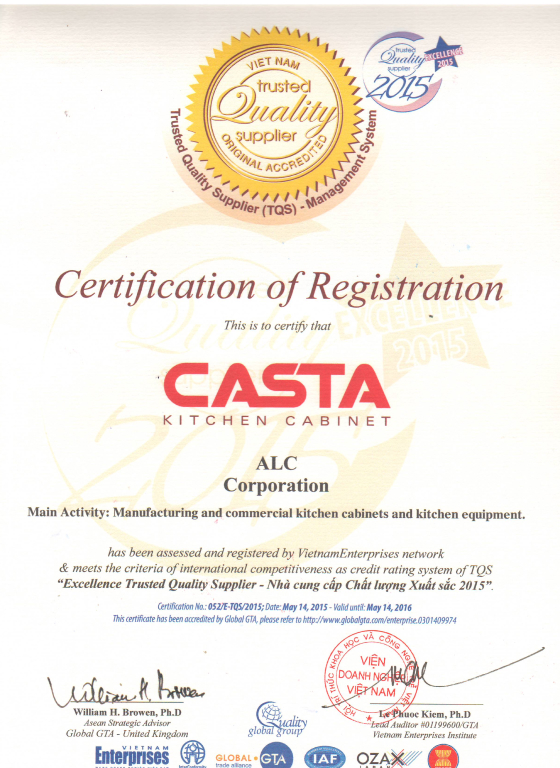
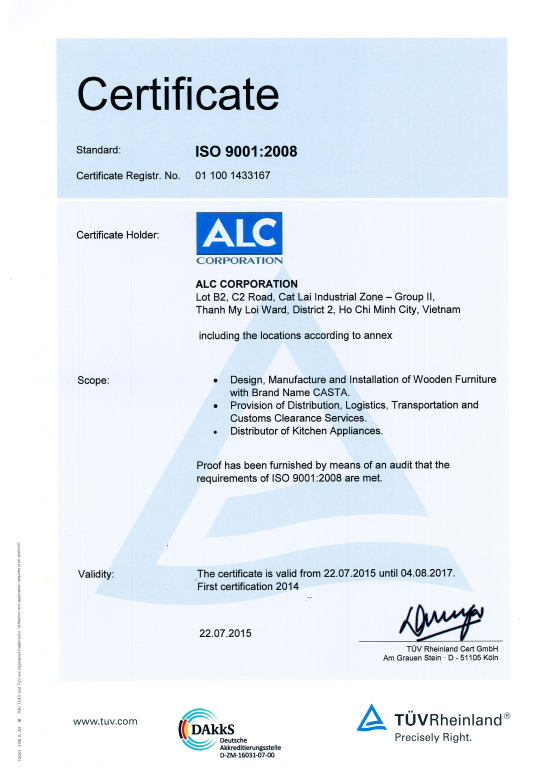
Certifications. Documentation confirms wood materials meet health and safety standards, which matters directly for brands reselling galley kitchen cabinets under their name to end customers.
Learn more: What is BSCI certification
Design support. Casta works directly with brands on configuration and layout before production begins, which shortens the development cycle for a new galley kitchen cabinets line considerably.
Galley kitchens don't need a fundamentally different or "special" supplier—they need one that takes precision and configuration flexibility seriously, which matters for any layout, not just this one. It's simply that galley layouts expose the gap between suppliers who take those things seriously and suppliers who don't more quickly than a forgiving, open-concept kitchen would.
Learn more: Success Stories: US Companies Thriving with Vietnamese Cabinet and Furniture Manufacturers
Putting the Criteria Into Practice
For a brand evaluating multiple suppliers side by side, it helps to treat the seven criteria above as a checklist rather than a general impression. Request a written tolerance specification, not just a verbal assurance, and ask for it in the same units and format across every supplier being compared—some manufacturers quote tolerance differently, which makes an apples-to-apples comparison harder than it should be.
It's also worth requesting a physical sample of a narrow-depth or tall unit specifically, rather than a standard-width cabinet sample. A supplier's flagship sample kitchen rarely represents the exact configuration challenges a galley kitchen cabinet line will actually need in production, so testing the harder case upfront avoids surprises later in the relationship.
Finally, ask how the supplier handles a batch that falls outside tolerance. Every manufacturer occasionally produces an out-of-spec unit—what matters is whether there's a clear process for catching it before it ships and a clear remedy if it doesn't get caught in time. A supplier without a clear answer to this question is telling you something important about how galley kitchen cabinet quality is actually managed on their floor, regardless of what the marketing materials say.
Learn more: Cabinet certification
FAQ
What cabinets work best for a galley kitchen?
How do I find a manufacturer that can customize cabinets for narrow kitchen layouts?
What's the difference between sourcing cabinets for galleys vs. standard kitchens?
How much lead time should I expect for a custom galley cabinet order?
Can I private-label galley kitchen cabinets from an overseas manufacturer?
Conclusion
Galley kitchens demand precision, configuration flexibility, and consistency more than most layouts, which makes the sourcing process for galley kitchen cabinets meaningfully different from a standard kitchen project. The right supplier isn't necessarily the cheapest one—it's the one that can execute tight tolerances reliably, order after order, without the quality drifting once volume scales up.
Casta Cabinetry, with precision manufacturing, configuration flexibility, and certified materials, is one manufacturing partner worth evaluating for North American cabinet brands and contractors building or expanding a galley kitchen cabinets line.
Ready to discuss your line of galley kitchen products? Contact the team at Casta Cabinetry to discuss your project or request samples.






How Many Kitchen Cabinets Fit in a 20ft/40ft Container?...
For a wholesaler pricing out a bulk order, cabinets per container is the number that turns a quote into an actual budget...
09/20/2026 | David Nguyen

FSC Certified Cabinets: Why It Matters for Green Building Pr...
For a developer working on a certified green building project, FSC certified cabinets aren’t just a sustainability...
09/18/2026 | David Nguyen
Lead Time for Wholesale Cabinet Orders: From Factory to Deli...
For a developer or wholesaler working against a construction or renovation deadline, cabinet lead times aren’t a n...
09/16/2026 | David Nguyen

Cabinet Import Duties & Tariffs: What US Buyers Pay When...
For a U.S. wholesaler or importer, uncertainty around tariffs on imported cabinets is often the single biggest barrier t...
09/14/2026 | David Nguyen
How Many Kitchen Cabinets Fit in a 20ft/40ft Container?...
For a wholesaler pricing out a bulk order, cabinets per container is the number that turns a quote into an actual budget...
09/20/2026 | David Nguyen
FSC Certified Cabinets: Why It Matters for Green Building Pr...
For a developer working on a certified green building project, FSC certified cabinets aren’t just a sustainability...
09/18/2026 | David Nguyen
Lead Time for Wholesale Cabinet Orders: From Factory to Deli...
For a developer or wholesaler working against a construction or renovation deadline, cabinet lead times aren’t a n...
09/16/2026 | David Nguyen
Cabinet Import Duties & Tariffs: What US Buyers Pay When...
For a U.S. wholesaler or importer, uncertainty around tariffs on imported cabinets is often the single biggest barrier t...
09/14/2026 | David Nguyen
Contact us
Casta is always ready to listen and answer all customers' questions