


 EN
EN
For most new wholesalers, MOQ is the first real filter on bulk order cabinets—before pricing, before certifications, before anything else gets discussed. This one number decides whether a supplier conversation is even worth having.
The problem is that MOQ isn't standardized across the industry, so buyers waste time chasing quotes from suppliers who were never going to work for their order size. This guide walks through what's actually driving MOQ behind the scenes, how it plays out differently across cabinet types, and how a smaller or first-time buyer can realistically work around it.
Why Cabinet Manufacturers Set a Minimum in the First Place
MOQ isn't arbitrary. It exists because certain costs don't scale down: factory setup time, material batch minimums, and container shipping efficiency all favor larger runs over small ones. A manufacturer running a production line for 50 units incurs nearly the same setup cost as running it for 500—the difference just gets spread more thinly across a bulk order cabinets run than a tiny one.
This is also why MOQ looks completely different from supplier to supplier. A domestic stocking distributor and an overseas factory-direct manufacturer are solving very different cost problems, which means comparing their minimum order quantity kitchen cabinets thresholds directly often isn't apples-to-apples.
A domestic distributor already holds inventory, so their effective MOQ is often driven more by order-processing overhead than by production economics—a small order still costs them time to pick, pack, and ship, even though the cabinets themselves were already built. An overseas factory-direct manufacturer, by contrast, is usually calculating MOQ around production batch efficiency and container fill rate, since a partially-filled container or an underutilized production run genuinely costs more per unit to produce. Understanding which of these two cost structures a given supplier is working from helps explain why their bulk order cabinets minimum lands where it does, rather than treating the number as arbitrary.
The Real Reason "What's Your MOQ?" Doesn't Have One Answer
Some suppliers count MOQ in units, others in container volume, others in total order value—and these aren't interchangeable when comparing bulk order cabinets quotes. Container-based thinking, common with overseas manufacturers, means a buyer can technically hit a unit count and still fall short of what makes a shipment cost-efficient to run.
Then there's the product category itself. Stock cabinets tend to carry the lowest MOQ since they're already standardized, semi-custom sits in the middle, and fully custom or private-label work usually carries the highest threshold, since tooling and setup costs get spread across the whole run.
Learn more: What are custom cabinets?
The practical takeaway: never assume a "typical" MOQ number applies to bulk order cabinets across the board. The only reliable number is the one a specific supplier gives for a specific product mix—general industry figures are a starting point for expectations, not a number to plan a budget around.
Where This Leaves Smaller and First-Time Buyers
Reality check: many large factory-direct manufacturers are built around scale, and a small order simply doesn't pencil out at their standard pricing for bulk order cabinets. That doesn't mean smaller orders are impossible—it means the trade-off shifts.
Local distributors, stocking wholesalers, or a small order cabinet supplier with an explicit starter or trial program tend to be more workable at lower volume than a large factory-direct operation built for scale.
The cost of going smaller is usually reflected in per-unit price. The batch efficiency that makes wholesale cabinet minimum order pricing work doesn't kick in below a certain volume, so a below-MOQ order—if accepted at all—often comes at a premium compared to a standard bulk order cabinets rate.
Learn more: How much is custom cabinetry
One detail worth knowing early: mixing styles, finishes, or configurations within a single order is often allowed, and can be the difference between hitting a threshold and not—but only if the supplier calculates MOQ at the total-order level rather than per SKU. This is worth confirming directly, since it varies significantly by manufacturer.
What Actually Happens When an Order Falls Short
It's not always a flat rejection when a bulk order cabinets request comes in under threshold. In practice, buyers tend to run into one of a few outcomes: the supplier declines outright, accepts at a higher unit price, suggests folding the order into a future production run, or points the buyer toward a distributor carrying smaller lots.
This is worth asking before requesting a full quote, not after. Finding out mid-process wastes both sides' time and can quietly kill a promising supplier relationship before it starts—a five-minute MOQ conversation upfront is far cheaper than a week spent building specs around a bulk order cabinets supplier who was never going to accept the order size.
RTA vs. Fully Assembled: A Detail That Changes the Math
Flat-pack, or RTA, cabinets take up meaningfully less container space than fully assembled units, which means fewer physical pieces are needed to fill the same shipping volume. This makes MOQ for RTA cabinets meaningfully different from the threshold on an equivalent fully assembled order.
Learn more: What are RTA cabinets?
For a buyer trying to hit a container-based MOQ, choosing RTA over assembled—or vice versa—can be the lever that makes a first order of bulk order cabinets workable at all. It's worth factoring in early, since it can reshape the entire order plan before a single quote gets requested.
Bulk RTA cabinet orders in particular tend to have a lower effective threshold in unit terms simply because more units fit in the same shipping space—worth keeping in mind for a buyer trying to hit a container-based minimum without over-ordering.
Learn more: Top 10 RTA cabinet supplier and manufacturers
The trade-off runs the other direction too, though, and it's worth being explicit about it. A buyer who genuinely needs fully assembled units—because their crew doesn't have spare assembly capacity, or a project timeline has no room for on-site assembly labor—shouldn't switch to RTA purely to hit an MOQ more easily. The savings on the minimum-order side can get eaten up quickly by unplanned assembly labor cost once the cabinets actually arrive on a job site, which defeats the purpose of optimizing for MOQ in the first place.
Building a Realistic First-Order Strategy
Start the MOQ conversation before spec work, not after. There's little point designing a full product line around a supplier who was never going to accept the order size for bulk order cabinets in the first place.
A smaller trial or sample order, even at a higher per-unit cost, is often the smartest way to validate quality before committing to a full MOQ run. Consolidating styles and finishes into one order tends to clear volume thresholds more efficiently than spreading a small budget across many SKUs.
Coming in with a real forecast—based on expected resale volume, not a guess—makes the cabinet quantity calculation and the resulting MOQ conversation with any supplier faster and more productive. A supplier can usually tell within minutes whether a forecast-backed number is realistic for their production setup, which saves both sides from a drawn-out back-and-forth.
A Short Checklist Before You Request a Quote
Before requesting a full quote on bulk order cabinets, run through these questions with any potential supplier:
- How is MOQ calculated—by unit, container, or order value?
- Is it per style/SKU, or across the whole order?
- Can styles and finishes be mixed to reach it?
- What's the actual path if an order comes in under MOQ—workaround or hard decline?
- Does MOQ shift between RTA and fully assembled?
- Is there a separate, lower threshold for a first sample or trial order?
A supplier who answers these clearly and specifically, rather than pointing to a generic published number, is generally easier to work with for bulk order cabinets at any volume.
Supplier Spotlight: Casta Cabinetry
As a practical reference point for how MOQ actually gets handled in practice, it's worth looking at how Casta Cabinetry approaches bulk order cabinets for wholesale buyers.
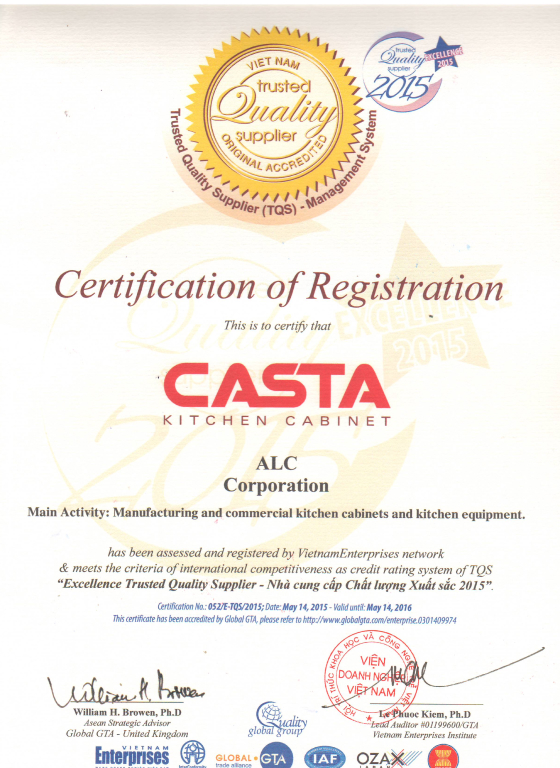
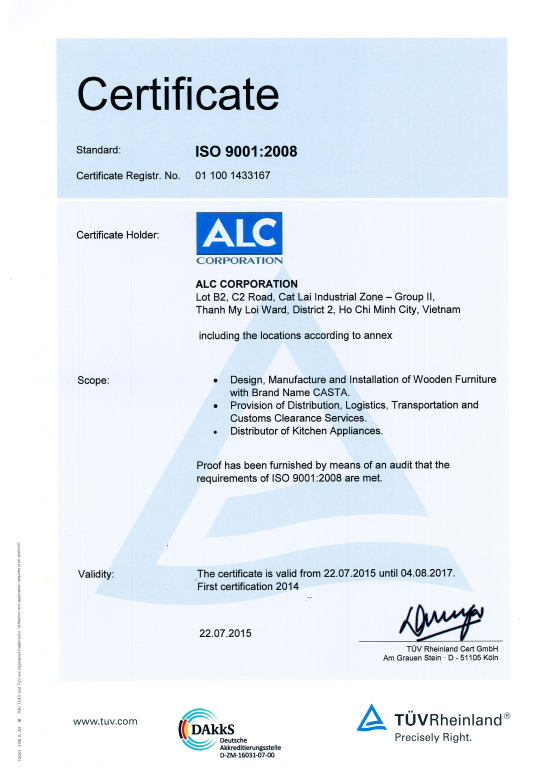
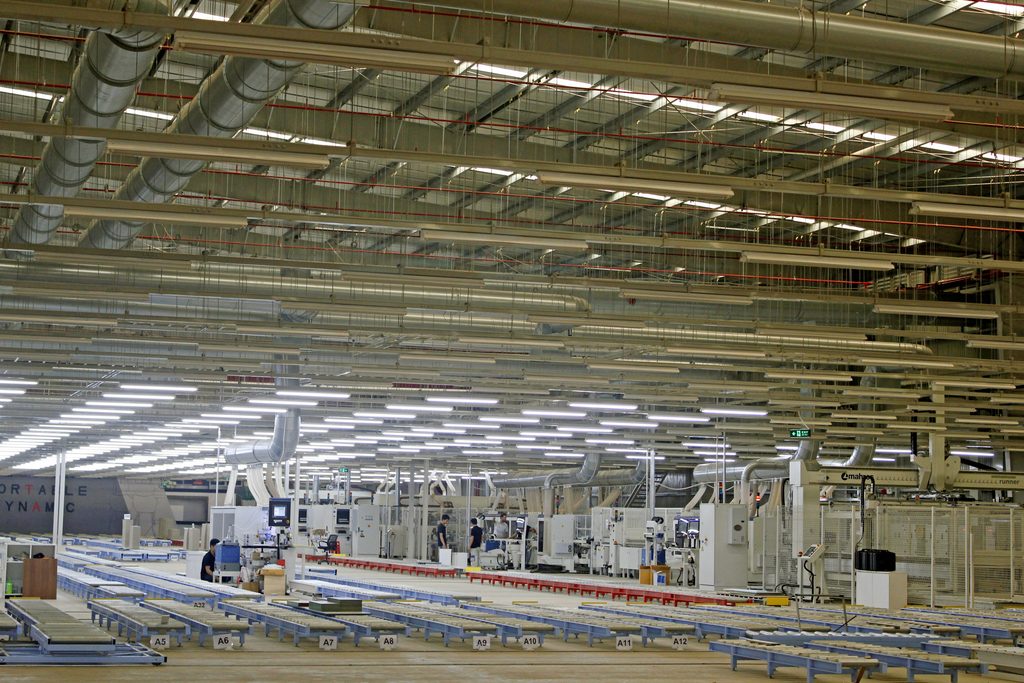
Founded in 2002, Casta is a Vietnam-based manufacturer specializing in kitchen cabinets, vanities, and custom furniture, with over two decades in the industry. The company operates two factories spanning more than 100,000 m², using European machinery from brands including SCM, Homag, and Cefla, with manufacturing automation reaching roughly 90%.
Learn more: Sourcing Cabinets and Furniture from Vietnam: Your Ultimate Guide
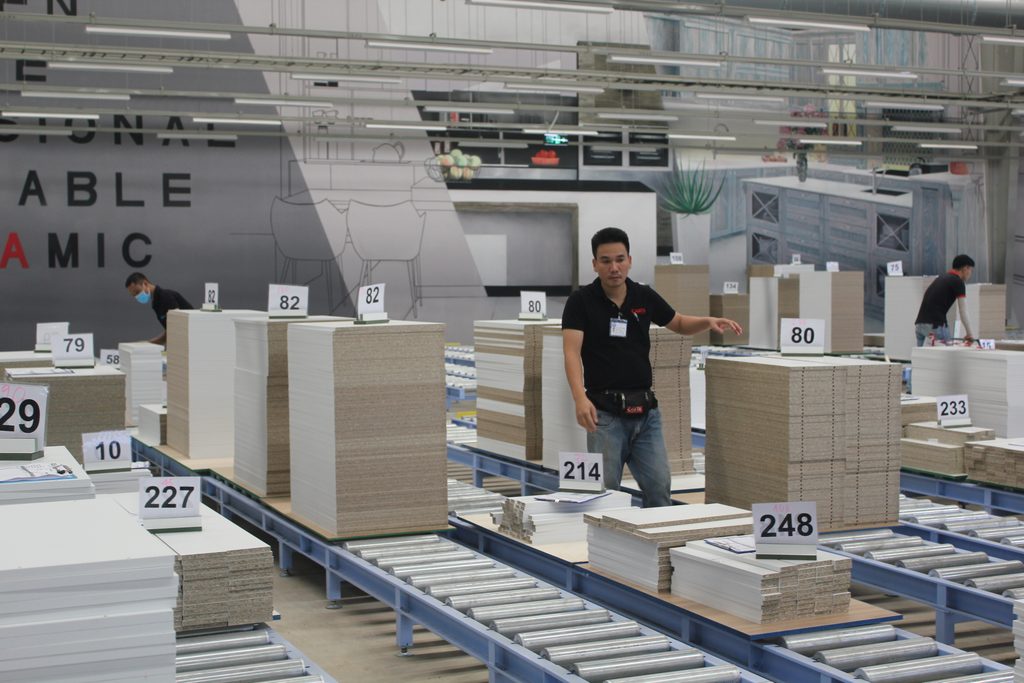
Production capacity runs up to 200 containers per month, supporting both large-volume and more moderate wholesale orders. Casta offers both RTA (flat-pack) and fully assembled options—exactly the kind of flexibility that changes how a container-based MOQ plays out for a given bulk order cabinets request.
The standard process starts with discovery and consultation, followed by shop drawings and a transparent quotation—the point where MOQ and pricing structure get clarified for a buyer's specific product mix, rather than quoted as a flat published number. Casta also offers samples until clients are fully satisfied with design, materials, and finish before a full production run begins, with a standard lead time of 45–60 days from shop drawing approval.
Over 80% of production is exported, primarily to the U.S., supported by sales and service offices in California, Texas, and New York, making it easier for a new wholesaler to get a direct, specific answer before committing to anything.
Exact MOQ for bulk order cabinets depends on product mix, style, and order structure—a direct conversation with the sales team will always give a more useful answer than a general published number.
How to Approach Cabinet Quantity Calculation
Getting the cabinet quantity calculation right before approaching a supplier saves real time on both sides, and it's a step that's easy to underestimate when a buyer is eager to get a quote moving.
Start with the actual floor plan or unit count driving the order—a multi-family development, a flip portfolio, or an initial retail stocking order all produce very different quantity profiles even at similar dollar values. A developer building 40 units needs a very different cabinet quantity calculation than a dealer stocking a showroom with sample configurations across a dozen styles.
Break the calculation down by cabinet type and configuration, not just a single total unit count. Base cabinets, wall cabinets, tall units, and specialty configurations like corner or blind-corner units each have different per-unit costs and different space requirements in a container, which means a single blended number can undersell or oversell how close an order actually sits to a supplier's threshold.
Learn more: Corner cabinet dimensions
It's also worth building in a reasonable buffer rather than calculating to the exact minimum. Real-world projects run into changes—a unit gets reconfigured, a finish gets swapped, a client requests an upgrade—and an order calculated to the precise edge of MOQ leaves no room to absorb that kind of change without a second round of negotiation.
Negotiating MOQ as a Repeat or Growing Buyer
MOQ terms aren't always fixed once a buyer has an established relationship with a supplier, and it's worth understanding how that flexibility tends to develop over time for bulk order cabinets specifically.
A first order is usually evaluated on its own, since the supplier has no track record to go on yet. Once a buyer has placed a few orders reliably—on time, at agreed volumes, without repeated disputes—many manufacturers become more willing to flex on MOQ for smaller follow-up orders, treating the relationship's overall volume rather than each individual order in isolation.
This is worth raising directly rather than assuming it will happen automatically. Asking a supplier upfront whether MOQ terms can loosen for a buyer building a recurring pipeline of bulk order cabinets—rather than placing a single one-off order—often opens a more productive conversation about long-term pricing structure than negotiating each order from scratch.
It's also reasonable to ask whether a growing forecast, even without a formal purchase commitment, can influence current MOQ terms. Some manufacturers will extend more flexible terms to a buyer who can demonstrate a credible growth trajectory, since it represents a future volume relationship worth investing in now rather than treating every order as a standalone transaction.
Common MOQ Mistakes New Wholesalers Make
A few patterns show up often enough among first-time buyers of bulk order cabinets that they're worth naming directly, since avoiding them upfront saves both time and money.
Designing a full product line before confirming MOQ. Investing weeks into finishes, configurations, and a complete spec before asking a supplier whether the resulting order even clears their minimum is one of the most common and avoidable mistakes in this process. The MOQ conversation should happen in the first call, not after a spec package is already finished.
Assuming a published MOQ number is the actual number. Marketing pages and general FAQ sections often list a simplified figure that doesn't reflect how a specific product mix, finish selection, or RTA-versus-assembled choice will actually calculate against a real bulk order cabinets threshold. Treat any published number as a starting point for a conversation, not a final answer.
Not asking about per-SKU versus total-order MOQ calculation. This distinction can be the difference between an order that clears a threshold easily and one that falls short in every individual style, even though the combined total would have worked. It's a simple question that's frequently skipped in early supplier conversations.
Optimizing purely for the lowest MOQ rather than the best overall fit. A supplier with a very low minimum isn't automatically the right choice if their construction quality, certifications, or lead time don't match the buyer's actual needs. MOQ is one input into a sourcing decision, not the only one—the lowest bulk order cabinets minimum available is worth little if the resulting product doesn't hold up.
Learn more: Types of kitchen cabinets materials
FAQ
What is the minimum order quantity for wholesale cabinets?
Can I order cabinets in small quantities as a new wholesaler?
Can I mix cabinet styles to reach the MOQ?
What happens if my order is below the MOQ?
Is MOQ different for RTA vs. fully assembled cabinets?
Do manufacturers offer a lower MOQ for first-time or trial orders?
Conclusion
MOQ isn't one fixed number for bulk order cabinets—it's a function of how a supplier calculates cost efficiency, and it shifts based on product category, container logistics, and whether styles can be combined into a single order. For a new wholesaler, the smartest first move is having the MOQ conversation before investing time in specs or full quotes that may never have been workable at their order size.
Casta Cabinetry, with flexible RTA and assembled options and a consultation-first process, is one option worth a direct conversation to get a clear MOQ answer for a specific product mix.
Ready to get a straight answer on MOQ for your next order? Contact Casta Cabinetry's team to discuss order volume before you commit to anything.





How Many Kitchen Cabinets Fit in a 20ft/40ft Container?...
For a wholesaler pricing out a bulk order, cabinets per container is the number that turns a quote into an actual budget...
09/20/2026 | David Nguyen

FSC Certified Cabinets: Why It Matters for Green Building Pr...
For a developer working on a certified green building project, FSC certified cabinets aren’t just a sustainability...
09/18/2026 | David Nguyen
Lead Time for Wholesale Cabinet Orders: From Factory to Deli...
For a developer or wholesaler working against a construction or renovation deadline, cabinet lead times aren’t a n...
09/16/2026 | David Nguyen

Cabinet Import Duties & Tariffs: What US Buyers Pay When...
For a U.S. wholesaler or importer, uncertainty around tariffs on imported cabinets is often the single biggest barrier t...
09/14/2026 | David Nguyen
How Many Kitchen Cabinets Fit in a 20ft/40ft Container?...
For a wholesaler pricing out a bulk order, cabinets per container is the number that turns a quote into an actual budget...
09/20/2026 | David Nguyen
FSC Certified Cabinets: Why It Matters for Green Building Pr...
For a developer working on a certified green building project, FSC certified cabinets aren’t just a sustainability...
09/18/2026 | David Nguyen
Lead Time for Wholesale Cabinet Orders: From Factory to Deli...
For a developer or wholesaler working against a construction or renovation deadline, cabinet lead times aren’t a n...
09/16/2026 | David Nguyen
Cabinet Import Duties & Tariffs: What US Buyers Pay When...
For a U.S. wholesaler or importer, uncertainty around tariffs on imported cabinets is often the single biggest barrier t...
09/14/2026 | David Nguyen
Contact us
Casta is always ready to listen and answer all customers' questions