


 EN
EN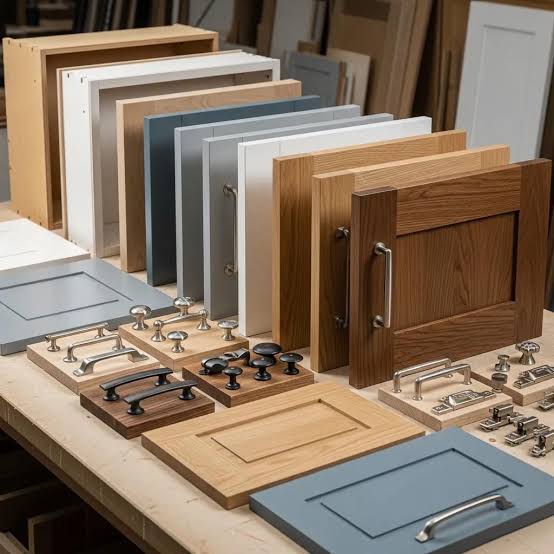
For a wholesaler or developer signing off on a large cabinet order, commercial cabinet warranty terms are one of the last things checked before a contract—and often the first thing that matters when something goes wrong months later. A bulk order multiplies the exposure if coverage is unclear, since a single ambiguous clause can affect an entire project's worth of units, not just one item that a single homeowner might have purchased.
This guide is written for wholesalers and developers evaluating warranty coverage as part of risk assessment before committing to a large or first-time supplier contract. It covers what commercial cabinet warranties typically include, how coverage differs from consumer terms, how claims actually get filed for bulk orders, and what changes when private-label products are involved in the arrangement.
Why Commercial Warranty Terms Are Different From Consumer Warranty Terms
A standard consumer cabinet warranty is written around a single homeowner buying one kitchen's worth of cabinets. Commercial and trade warranty terms need to account for volume, resale, multiple installation sites, and a business relationship rather than a one-time transaction—which is exactly why commercial cabinet warranty language reads so differently from a retail warranty card handed over at a home improvement store.
A warranty clause that works fine for one homeowner's kitchen can become genuinely unworkable at scale if it wasn't written with bulk claims, multi-site delivery, or resale in mind. For a trade or wholesale buyer, the real due diligence isn't just "is there a warranty"—it's whether this warranty's actual mechanics hold up for how the buyer is going to use it.
What Commercial Cabinet Warranties Typically Cover
A commercial cabinet warranty generally centers on manufacturing defects—issues traced to material or workmanship errors at the factory level, such as structural flaws, defective joinery, or components that fail under normal use. Finish and material issues tied to production error also fall under this coverage, as opposed to damage that happens after the product leaves the factory.
Hardware defects are typically included too—hinges, drawer slides, and other components failing due to a manufacturing fault rather than wear from use.
Learn more: Types of cabinet hinges
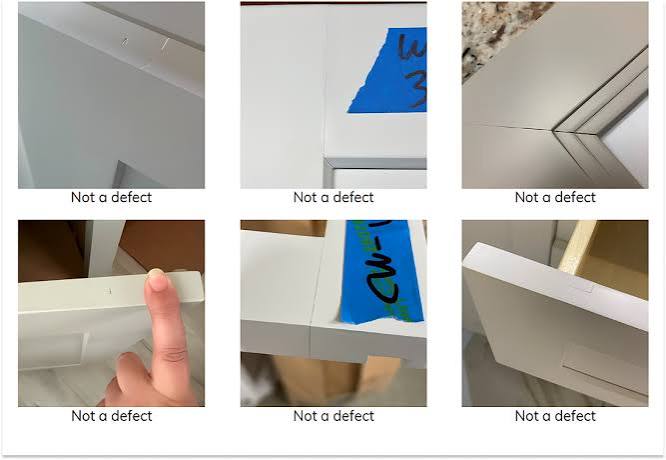
What's typically excluded across the industry matters just as much: damage from improper handling, installation error, normal wear and tear, exposure to water or chemicals beyond intended use, and damage from events like natural disasters or accidents during transport or on-site handling. Reading the exclusions list is just as important as reading what's covered, since for a bulk order, exclusions determine what a buyer is actually exposed to if something goes wrong during shipping or installation—a bigger risk at volume than for a single unit.
How Long Is the Warranty Period for Commercial Purchases?
Warranty duration varies significantly by manufacturer and is one of the specific terms that a buyer signing a large contract should never assume. Always confirm the exact period in writing before finalizing a contract, rather than relying on a general website statement about commercial cabinet warranty coverage.
Commercial or trade warranty length sometimes differs from a manufacturer's advertised consumer warranty, since bulk agreements are often negotiated as part of the broader supply contract, and terms can be structured differently for a business relationship than for individual retail sales.
It's worth specifically confirming whether the warranty period starts from the shipping date, the delivery date, or the installation date. This detail alone can meaningfully change effective coverage for a project with a long installation timeline, since a warranty that starts at shipping rather than installation effectively shrinks in practice for any project with delays.
How Claims Actually Work for a Bulk Order
Documentation matters more at scale. For a bulk order, a buyer should expect to provide clear evidence—photos, order numbers, and unit identification—for each affected item, not just a general complaint, when filing a claim under a commercial cabinet warranty and expecting a fair resolution.
Proper record-keeping from the start makes bulk claims faster, since knowing which units came from which production batch or shipment can speed up a claim significantly if an issue is traced to a specific run. What's reasonable to expect from a supplier during a claim is a documented process, a reasonable response timeframe, and clarity on whether resolution means repair, replacement, or another remedy.
It's worth asking about this process before placing an order, not after a problem arises. A supplier's claims process—or lack of one—tells a buyer a lot about how seriously they'll be supported after the sale, which is a meaningful signal when evaluating commercial cabinet warranty terms across multiple potential suppliers.
What Voids or Limits Warranty Coverage
Common exclusions across the industry include damage from natural disasters, drops or impacts during handling, and scratches or surface damage not tied to a manufacturing defect. Improper installation, use of unauthorized repair services, or missing product identification or documentation can also void coverage in many standard warranty policies.
This issue matters more for a bulk buyer coordinating installation across a job site or multiple units, since a claim can be denied not because the product was defective, but because handling or installation steps weren't properly documented or followed. The practical lesson is straightforward: keeping installation and handling documentation organized protects a buyer's ability to make a legitimate claim later under a cabinet defect warranty policy.
Is Warranty Coverage Different for Private-Label Products?
This is worth confirming explicitly for any OEM/ODM or private-label order before signing any agreement. Coverage terms, claim processes, and even who is contractually responsible for honoring the warranty—the manufacturer or the brand reselling the product—can be structured differently than for a manufacturer's own branded line.
This distinction matters for a brand building its own cabinet line: if the manufacturer's commercial cabinet warranty doesn't directly extend to end customers under a private label, the reselling brand may need its warranty terms layered on top. This is a contract detail worth resolving with legal input before launching a private-label product.
The practical move is to get private-label warranty terms spelled out explicitly in the supply agreement, rather than assuming standard terms automatically carry over to a resold, rebranded product line.
A Warranty Due Diligence Checklist Before Signing a Bulk Contract
Before signing a bulk supply contract, run through this checklist for commercial cabinet warranty terms:
- Get the exact warranty duration and start date (shipping, delivery, or installation) in writing.
- Review the full list of exclusions, not just what's covered.
- Confirm the claims process: what documentation is required, expected response time, and what resolution looks like (repair, replacement, credit).
- Ask specifically whether private-label terms differ from standard terms, if applicable.
- Clarify whether warranty terms are part of the standard supply contract or need to be negotiated separately for a large order.
Questions to Ask a Manufacturer About Commercial Warranty Coverage
Before finalizing an order, run through these questions with any potential supplier:
- What is the exact warranty period for a trade or wholesale order, and when does it start?
- What specifically is covered, and what's explicitly excluded?
- What documentation is required to file a claim on a bulk order?
- What's the typical response and resolution timeline for a warranty claim?
- Does warranty coverage differ for private-label or OEM/ODM products?
- Who is contractually responsible for honoring the warranty if I'm reselling under my own brand?
How Trade Buyer Warranty Terms Differ Across Suppliers
Not every supplier structures trade buyer warranty cabinet terms the same way, and it's worth comparing more than just the headline duration when evaluating multiple manufacturers for a bulk order.
Some suppliers offer a single, uniform commercial cabinet warranty regardless of order size, while others scale certain terms—response time commitments, on-site inspection support, or dedicated account contacts—based on order volume or the length of an ongoing relationship. A larger, recurring buyer may be able to negotiate more favorable claims handling than what's published as the standard policy, which is worth raising directly rather than assuming the published terms are fixed.
Learn more: Top 10 cabinet manufacturers
It's also worth asking whether warranty terms are documented consistently across a supplier's own sales team, since a verbal assurance from one representative that doesn't match the written contract is a red flag worth resolving before signing, not after a claim gets denied on a technicality.
Supplier Spotlight: Casta Cabinetry
As a practical reference point for how commercial cabinet warranty coverage actually works with a real manufacturer, it's worth looking at how Casta Cabinetry approaches this issue for trade and wholesale buyers.
Founded in 2002, Casta is a Vietnam-based manufacturer specializing in kitchen cabinets, vanities, and custom furniture, with over two decades in the industry. Warranty coverage is oriented around defects traced to manufacturing error—issues such as technical faults or material defects caused during production—while damage from factors like natural disasters, drops, or scratches, fall outside standard coverage, consistent with common industry practice.
Learn more: Sourcing Cabinets and Furniture from Vietnam: Your Ultimate Guide
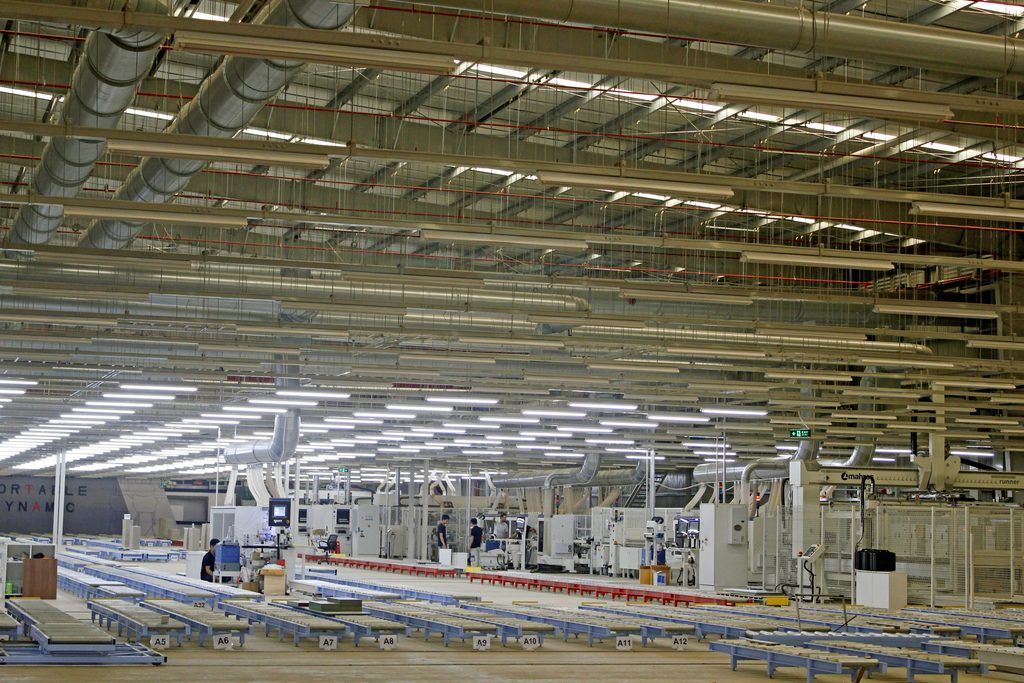
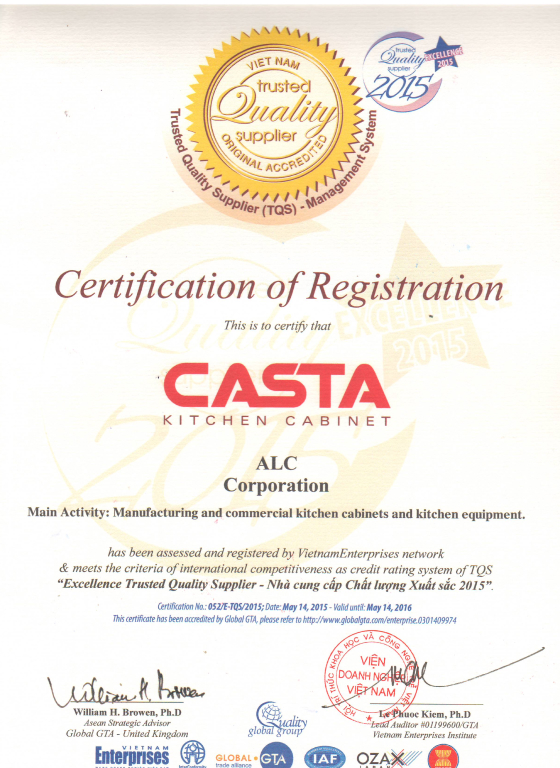
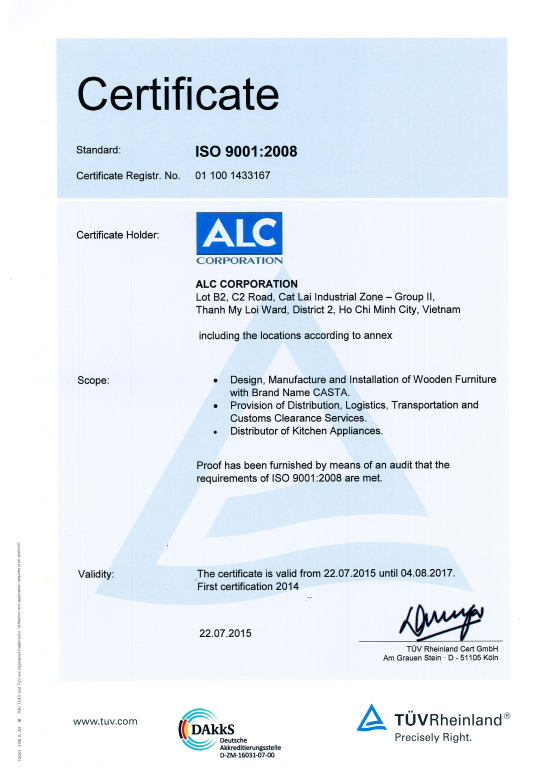
Casta's process includes a dedicated QA/QC team that inspects finish quality, dimensions, materials, hardware, and packaging against approved specifications before shipment, aimed at reducing the likelihood of defects reaching a bulk order in the first place. The company also offers samples until clients are fully satisfied with design, materials, and finish before full production begins, giving buyers a chance to verify quality standards ahead of a large commitment.
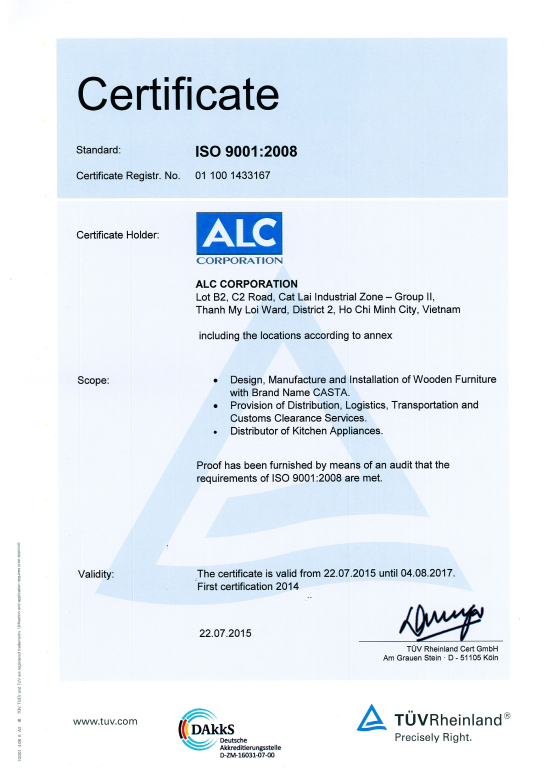
Learn more: Cabinet certification
Sales and service offices in California, Texas, and New York give trade and wholesale buyers a direct point of contact for warranty questions and claims support. Exact commercial or trade warranty duration, claim procedures, and private-label terms should be confirmed directly and included in writing as part of any bulk supply agreement—this section reflects Casta's general warranty approach is not a substitute for reviewing the specific written terms for your order.
How Warranty Terms Vary Across Product Tiers
A commercial cabinet warranty isn't always uniform across a supplier's full product line, and it's worth understanding why before assuming the same coverage applies regardless of what's being ordered.
Stock and standardized product lines often carry more straightforward, predictable warranty terms, since the manufacturing process is repeatable and well-documented across every unit produced. Semi-custom and fully custom orders can introduce more variability into a cabinet defect warranty policy, since unique configurations, one-off tooling, or non-standard materials sometimes fall into different coverage categories than a supplier's core catalog line.
Learn more: The difference of custom vs semi custom cabinets
This issue is worth raising directly for any order involving customization, private-label branding, or non-standard specifications, since a buyer assuming a supplier's general warranty page applies uniformly to a fully custom configuration may be working from an inaccurate assumption. Getting written confirmation that specifically addresses the actual product mix being ordered—not just a general policy statement—closes this gap before it becomes a problem.
Common Disputes in Bulk Warranty Claims
A few recurring disagreement patterns show up often enough in bulk cabinet warranty claims that they're worth understanding in advance, since anticipating them helps a buyer document proactively rather than reactively.
Disputes over cause of damage. The most common point of disagreement is whether a defect originated at the factory or occurred during shipping, handling, or installation. A supplier's commercial cabinet warranty typically covers only the former, which makes clear photo documentation at the point of delivery—before any unpacking or installation work begins—one of the most valuable habits a bulk buyer can build.
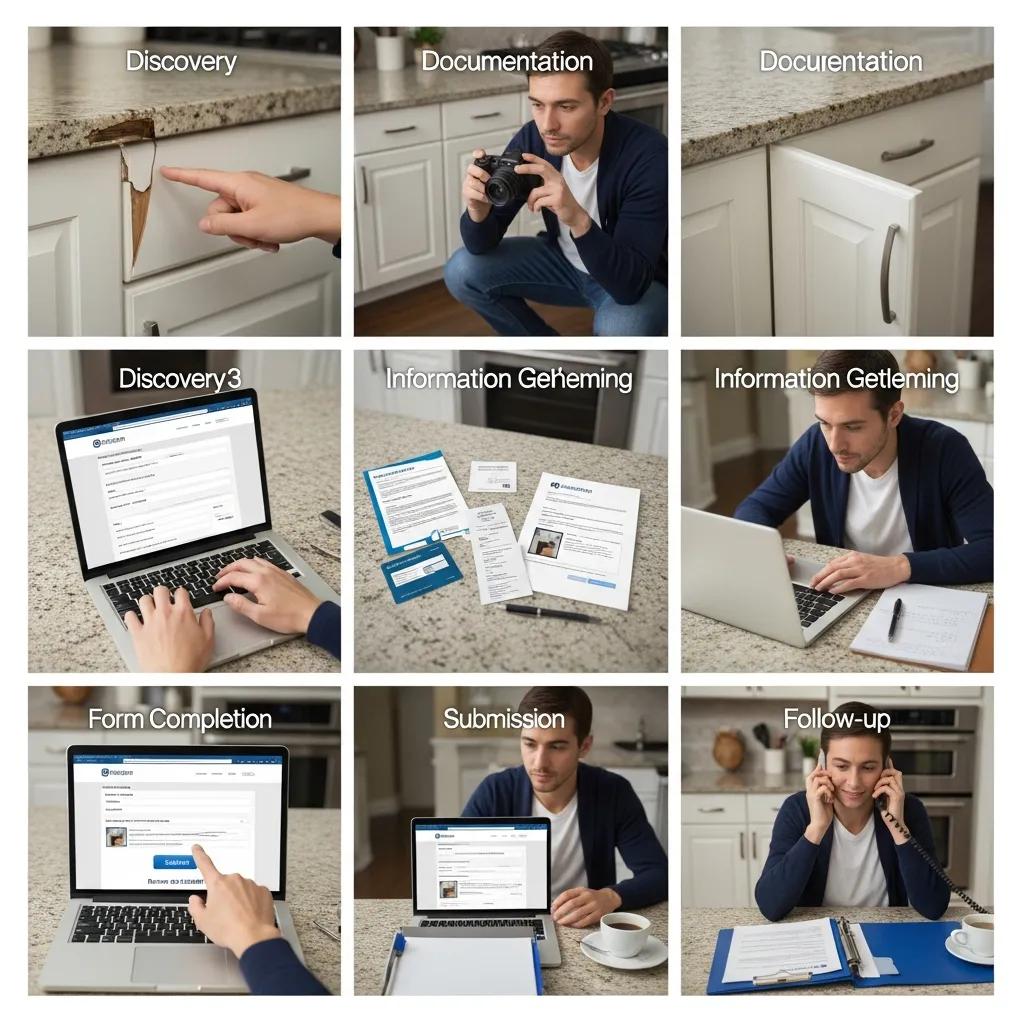
Disagreement over remedy. Even when a defect is clearly covered, buyer and supplier don't always agree on what resolution should look like—full replacement, partial credit, or an on-site repair. Clarifying this upfront, as part of the initial discussion about the warranty claim for the bulk cabinet order before the order ships, avoids a second negotiation under the pressure of an active dispute.
Timing disputes arise over when a defect was discovered versus when it should have been discovered. Some warranty terms include a requirement to report defects within a specific window after delivery. A bulk buyer who delays unpacking or inspecting a portion of a large order risks running past that window even for a genuine manufacturing defect, which is why prompt, systematic inspection of a bulk shipment matters beyond just catching problems early—it also protects the buyer's standing under the warranty's own timing terms.
Disputes over batch versus isolated defects. When multiple units from the same production run show a similar issue, buyers and suppliers sometimes disagree on whether it reflects a systemic manufacturing problem or a series of unrelated incidents. Keeping records tied to production batch or shipment, as covered earlier, gives a buyer much stronger footing in this specific kind of dispute than treating each affected unit as an isolated case.
Disagreement over who bears cost during an active dispute. While a claim is under review, a project timeline often can't simply pause, which raises the question of who covers replacement or interim costs if the defective units need to be swapped before the warranty determination is finalized. Some suppliers offer expedited replacement while a claim is still being reviewed, treating a clear-cut case as presumptively covered; others require full resolution before shipping any replacement stock. Clarifying this specific scenario upfront—not just the eventual outcome of a claim—matters for any buyer working against a hard installation deadline, since a technically correct warranty resolution that arrives too late to help still creates a real project problem.
FAQ
What does the warranty cover for wholesale or trade orders?
How long is the warranty period for commercial purchases?
How do I file a warranty claim for a bulk order?
Is warranty coverage different for private label products?
What voids a cabinet warranty on a commercial order?
Who is responsible for warranty claims on a private-label product line?
Conclusion
Commercial cabinet warranties generally cover manufacturing defects while excluding handling damage, natural disasters, and normal wear—but the specific duration, claims process, and private-label terms vary by supplier and should never be assumed. For a wholesaler or developer, warranty due diligence before signing is far cheaper than discovering coverage gaps after a bulk order ships and a dispute is already underway.
Casta Cabinetry, with a defect-focused warranty approach backed by a dedicated QA/QC process, is a starting point for a direct conversation to confirm exact commercial terms in writing before committing to a large order.
Ready to confirm warranty terms for your next order? Contact Casta Cabinetry's team to request written commercial warranty terms and discuss coverage details for your specific bulk order and product mix.






Private Label Cabinet Branding: Custom Packaging & Label...
Putting your name on a cabinet line is one of the fastest ways for a retailer or brand to build margin and customer loya...
09/24/2026 | David Nguyen

Cabinet Quality Control Process: How Bulk Orders Are Inspect...
For a wholesaler buying from overseas, the biggest fear usually isn’t price. It’s opening a container weeks ...
09/22/2026 | David Nguyen

How Many Kitchen Cabinets Fit in a 20ft/40ft Container?...
For a wholesaler pricing out a bulk order, cabinets per container is the number that turns a quote into an actual budget...
09/20/2026 | David Nguyen

FSC Certified Cabinets: Why It Matters for Green Building Pr...
For a developer working on a certified green building project, FSC certified cabinets aren’t just a sustainability...
09/18/2026 | David Nguyen
Private Label Cabinet Branding: Custom Packaging & Label...
Putting your name on a cabinet line is one of the fastest ways for a retailer or brand to build margin and customer loya...
09/24/2026 | David Nguyen
Cabinet Quality Control Process: How Bulk Orders Are Inspect...
For a wholesaler buying from overseas, the biggest fear usually isn’t price. It’s opening a container weeks ...
09/22/2026 | David Nguyen
How Many Kitchen Cabinets Fit in a 20ft/40ft Container?...
For a wholesaler pricing out a bulk order, cabinets per container is the number that turns a quote into an actual budget...
09/20/2026 | David Nguyen
FSC Certified Cabinets: Why It Matters for Green Building Pr...
For a developer working on a certified green building project, FSC certified cabinets aren’t just a sustainability...
09/18/2026 | David Nguyen
Contact us
Casta is always ready to listen and answer all customers' questions