


 EN
EN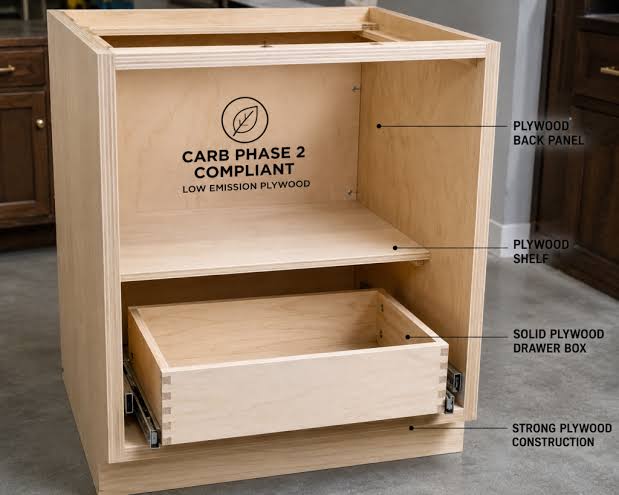
For a developer or contractor working in a state with strict emissions regulation, CARB 2-compliant cabinets aren't a nice-to-have—they're a legal compliance requirement that can affect whether a project passes inspection or closes on schedule. The name "CARB Phase 2" is still widely used in the industry, but the actual regulatory landscape has shifted since the standard was first introduced, and a supplier citing it today should be able to explain how that maps to current federal requirements rather than repeating an outdated label from memory.
This guide is written for developers, contractors, and cabinet buyers who need to verify compliance before signing a contract for a project of meaningful scale. It covers what the standard actually regulates how the federal rule now overlays the original California rule, how to verify a supplier's claims, and what's actually at risk if a project uses non-compliant cabinets on a job that matters.
What CARB Phase 2 Compliance Actually Means
CARB Phase 2 compliance, also called CARB P2 or CARB2, refers to the second and strictest level of California's Airborne Toxic Control Measure, regulating how much formaldehyde composite wood products can emit. Understanding this baseline is essential before sourcing CARB 2-compliant cabinets for any project.
The regulation applies to composite wood products used in finished goods such as cabinets, doors, furniture, flooring products, moldings, and shelving, requiring these goods to be made with compliant hardwood plywood, particleboard, and medium-density fiberboard and labeled accordingly under the applicable federal standard. Formaldehyde is the specific target because it's a widely used component in the resins that bind composite wood materials, including those used in kitchen cabinets, and it's a known human carcinogen where long-term exposure can cause serious respiratory health risks.
Learn more: Types of kitchen cabinet materials
The practical effect for a buyer is straightforward: this standard exists to limit indoor air quality risk in finished spaces. It's a health and safety regulation as much as a manufacturing spec, which is exactly why CARB-compliant kitchen cabinets matter beyond simply meeting a checkbox requirement.
The Detail Most Buyers Miss: CARB Phase 2 Is Now a Federal Requirement
This detail is the part that trips up a lot of B2B buyers researching CARB 2-compliant cabinets: composite wood products were only required to be labeled as CARB ATCM Phase II compliant through March 22, 2019. After that date, composite wood products must be labeled as TSCA Title VI compliant instead.
TSCA Title VI compliance requires that all composite wood panels be TSCA Title VI compliant and that finished goods, such as cabinets or furniture containing composite wood, be produced using material from a TSCA Title VI compliant panel producer, with recordkeeping to support that chain of custody. The CARB and TSCA Title VI standards are set at essentially equivalent emission levels, and CARB Phase 2 has effectively become the U.S. national benchmark through this federal rule, not just a California-specific requirement.
Learn more: Difference between MDF and MFC vs. plywood vs. HDF
What this requirement means for a buyer verifying compliance today: A supplier should be able to speak to TSCA Title VI compliance specifically, not just an older "CARB Phase 2" label. The terms are often used interchangeably in casual conversation, but the actual current legal standard is federal, and any genuinely CARB 2-compliant cabinets sold in the U.S. today are, by definition, also TSCA Title VI compliant.
CARB Phase 2 vs. TSCA Title VI: A Direct Comparison
| CARB ATCM Phase 2 | TSCA Title VI | |
| Scope of application | California only | Nationwide (federal — all 50 states, plus imports into the U.S.) |
| Enforcing/certifying body | California Air Resources Board (CARB) | U.S. Environmental Protection Agency (EPA) |
| Third-party certifier | Must be approved by CARB | Must be recognized by EPA (can be the same certifier, if dual-approved) |
| Emission limits | Baseline standard | Set at essentially the same levels as CARB |
| Recordkeeping retention | 2 years | 3 years — more stringent than CARB |
| Affected businesses | Panel producers, fabricators, distributors, importers, retailers | Same as CARB |
| Product labeling | Panels and finished goods labeled as CARB Phase 2 compliant | Panels and finished goods labeled as TSCA Title VI compliant; a TSCA Title VI label is also accepted as satisfying CARB's labeling requirement |
| Current legal status | Superseded as the required label after March 22, 2019 | The current enforceable federal standard |
Is CARB Phase 2 Compliance Required in Every US State?
Because the emission standard is now enforced federally through TSCA Title VI, compliance applies nationwide, not only in California. While the regulation originated in California, it has become the national benchmark for CARB 2-compliant cabinets across the United States.
This issue matters for developers working outside California specifically, since it's a common misconception that this is "just a California rule" that doesn't apply elsewhere. In practice, the federal requirement means non-compliant composite wood products aren't legally allowed to be manufactured, imported, or sold anywhere in the U.S., regardless of project location or which state a building department happens to be in.
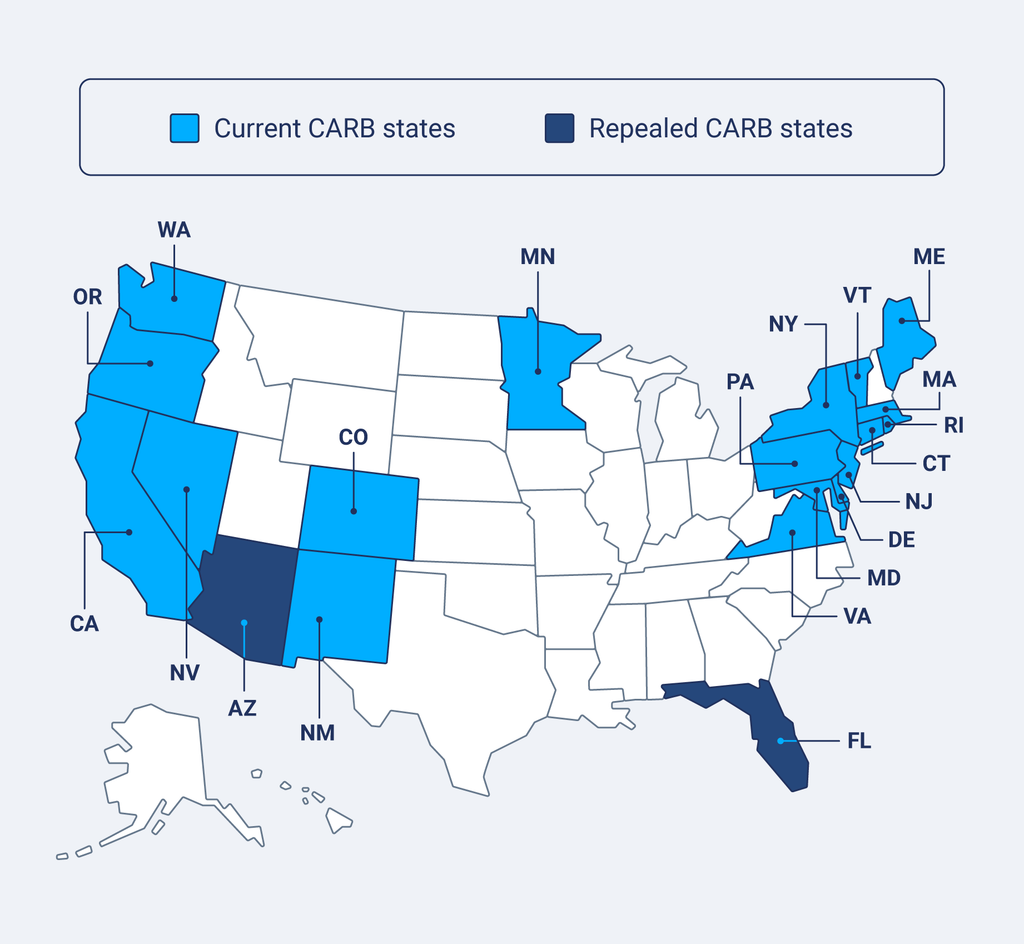
Some states or municipalities may layer additional local requirements on top of the federal baseline, so it's worth confirming with a local building department for any state-specific requirements beyond the federal standard that might apply to a particular jurisdiction.
What the Labeling Requirement Actually Looks Like
TSCA Title VI is more stringent than the original CARB rule in one specific way: it requires importers, distributors, fabricators, and retailers to have a method—such as color-coded edge marking—to identify the supplier of each compliant panel and finished good.
All finished goods must be labeled as containing Phase 2-compliant composite wood material, regardless of how much composite wood material the finished good actually contains. This labeling requirement is stricter than the federal EPA threshold, which is part of why genuinely CARB 2-compliant cabinets should carry visible, traceable documentation rather than a general assurance.
What this requirement means practically for a buyer: a genuinely compliant cabinet should have a traceable compliance label or documentation, not just a verbal claim from the seller. This is a paper trail worth asking for directly, every time, rather than assuming it exists.
How to Verify a Manufacturer Is Actually CARB/TSCA Title VI Compliant
Verifying CARB 2-compliant cabinet claims requires more than simply accepting a general statement. Ask for the specific compliance documentation, not just a general claim of "CARB compliant" or "eco-friendly materials"—a real compliance program produces actual paperwork.
Confirm whether the composite wood panels used are sourced from a certified compliant panel producer, since finished-goods compliance depends on the upstream panel source, not just the final assembly step. Look for physical labeling on panels or finished goods, or documentation covering bundled shipments where individual unit labeling isn't required.

Request third-party testing or certification records where available, since third-party verification carries more weight than a manufacturer's self-reported compliance statement. For a large project, it's reasonable to ask a supplier for compliance documentation in writing as part of the formal quote or contract, not as an afterthought after the order is placed.
What Happens If Cabinets Are Not Compliant
For a developer or contractor, using non-compliant composite wood products can create real exposure: potential project delays if compliance is checked during inspection, liability questions if a health or air-quality issue is later traced back to the materials, and reputational risk with clients or future buyers.
Because the requirement is federal, non-compliant products aren't simply a California problem to work around—the legal exposure exists regardless of project location or the specific jurisdiction a project happens to sit in. This is worth verifying before a contract is signed, not after cabinets arrive on-site, since discovering a compliance gap after installation is a far more expensive problem than catching it during supplier vetting.

A Verification Checklist for Developers and Contractors
Before committing to an order, run through this checklist for any project relying on CARB 2-compliant cabinets:
- Request compliance documentation referencing TSCA Title VI specifically, not just a general "CARB compliant" claim.
- Confirm the composite wood panel source is itself certified compliant, not only the finished cabinet.
- Check for proper labeling on delivered panels or finished goods, or documentation covering bundled/boxed shipments.
- Ask whether any third-party testing or certification backs the compliance claim.
- Get compliance terms included in the written contract or purchase agreement, with documentation to be provided at or before delivery.
Learn more: Cabinet Certification
Formaldehyde Emission Standards and Low-Emission Materials
Understanding the formaldehyde emission standard cabinets is actually held to help put the compliance conversation in context. The regulated limit isn't a vague "low emission" target—it's a specific, measurable threshold that composite wood panels must be tested against by an accredited third-party certifier before they can legally enter finished cabinets sold in the U.S.
Learn more: Formaldehyde-free cabinets
Low-emission cabinet materials generally fall into a few categories: standard TSCA Title VI compliant composite wood, which meets the baseline legal requirement, and a step above that, no-added-formaldehyde (NAF) or ultra-low-emitting formaldehyde (ULEF) resin systems, which reduce emissions further than the minimum legal threshold. Some buyers specifically request NAF or ULEF materials for projects with heightened indoor air quality sensitivity, such as healthcare facilities, schools, or high-density residential developments, even though standard compliant material already meets the legal bar.
Learn more: Non-toxic kitchen cabinets
It's worth asking a supplier directly whether NAF or ULEF options are available if a project's specifications call for emissions performance beyond the standard legal minimum, since not every manufacturer offers this tier even when their standard product line is fully compliant.
Staying Current as the Regulation Evolves
Formaldehyde emission standards for composite wood products aren't entirely static, even though the underlying emission limits have remained consistent for years. The EPA periodically proposes technical updates to testing and certification procedures under TSCA Title VI—most recently a proposal focused on aligning lab testing standards and certifier oversight, rather than changing the emission limits themselves.
These kinds of updates don't change what "CARB 2-compliant cabinets" means for a buyer in practice, but they're a reminder that compliance documentation should be reasonably current rather than years old. A supplier who can explain how their certification process aligns with the latest testing standards, rather than just citing an older document, is generally a better choice for a long-term supply relationship.
Questions to Ask a Cabinet Manufacturer About Compliance
Before finalizing an order, run through these questions with any potential supplier of CARB 2-compliant cabinets:
- Can you provide documentation confirming TSCA Title VI compliance for the composite wood materials used?
- Is your composite wood panel supplier itself certified compliant?
- How are compliant panels and finished goods labeled or identified in your supply chain?
- Has your compliance been verified by third-party testing?
- Can compliance documentation be included as part of the formal order contract?
Supplier Spotlight: Casta Cabinetry
As a practical reference point for how CARB 2-compliant cabinets sourcing actually works with a real manufacturer, it's worth looking at how Casta Cabinetry approaches material certification.
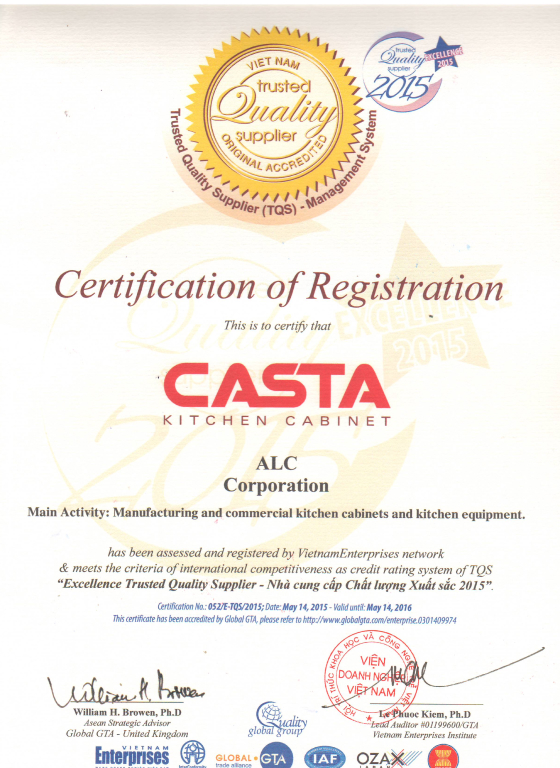
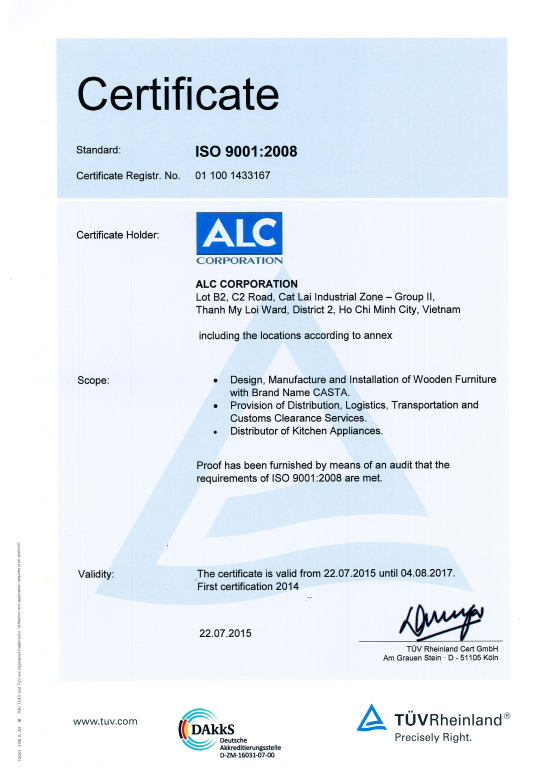
Founded in 2002, Casta is a Vietnam-based manufacturer specializing in kitchen cabinets, vanities, and custom furniture, with over two decades in the industry building a reputation for reliable material sourcing. Materials are sourced to meet global standards, including European E1, JIS, CARB, and FSC certifications, alongside BSI and BSCI certifications, and the company follows TCVN ISO 9001:2015 quality management standards.
Learn more: Sourcing Cabinets and Furniture from Vietnam: Your Ultimate Guide
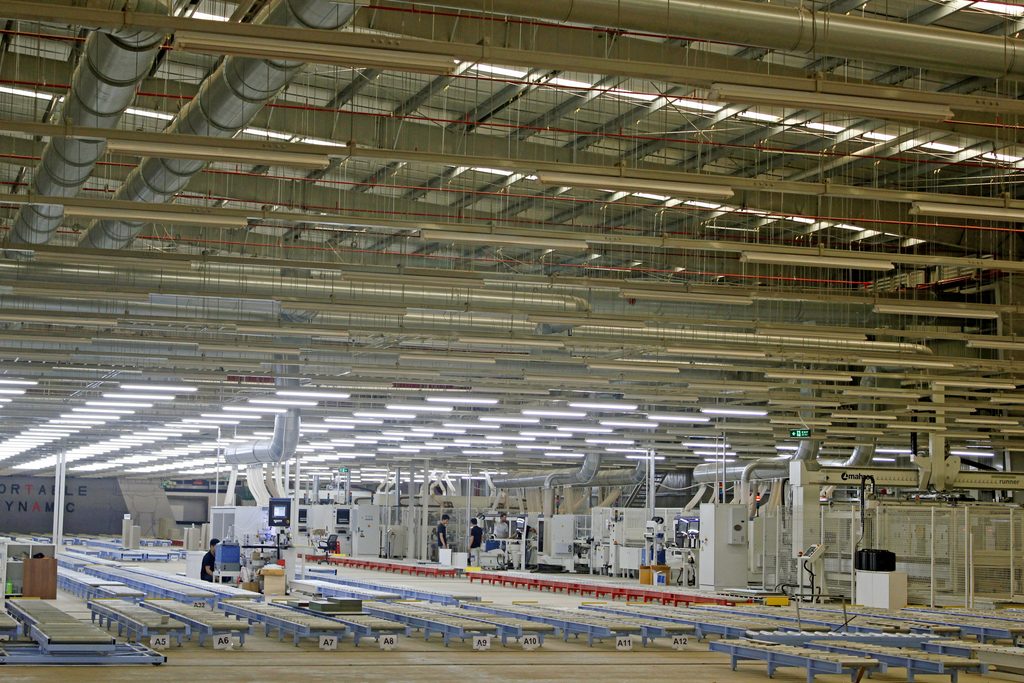
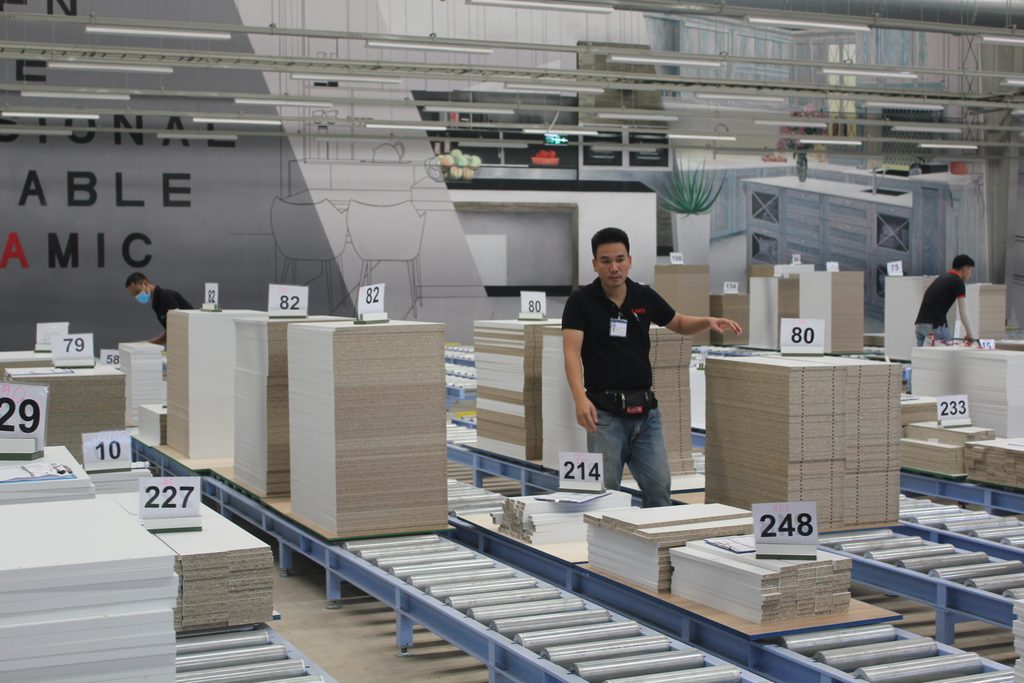
The company operates two factories spanning more than 100,000 m², using European machinery from brands including SCM, Homag, and Cefla. Over 80% of production is exported, primarily to the U.S., supported by sales and service offices in California, Texas, and New York, giving developers and contractors a direct point of contact for compliance documentation before signing a contract. Casta also offers samples until clients are fully satisfied with design, materials, and finish before full production begins.
Learn more: What is BSCI certification
Buyers should still request specific TSCA Title VI documentation directly for any order, rather than relying on a general certification claim—a serious supplier should be able to provide the information without hesitation.
Does Compliance Add Cost to a Cabinet Order?
A reasonable question for any buyer sourcing CARB 2-compliant cabinets is whether compliance itself adds meaningful cost to a project, and the honest answer is more nuanced than a simple yes or no answer would suggest.
Baseline TSCA Title VI compliance is now the legal minimum for any composite wood product sold in the U.S., which means it's already built into the cost structure of any legitimate supplier's standard product line rather than functioning as a premium add-on. A buyer isn't paying extra to get CARB 2-compliant cabinets in the ordinary course of business—a supplier who can't meet this baseline simply isn't legally allowed to sell composite wood cabinets in the U.S. market at all.
Where cost does shift is at the premium end—NAF or ULEF materials, which exceed the legal minimum, typically carry a cost premium over standard compliant composite wood, since these resin systems and the sourcing behind them are more expensive to produce. A buyer deciding between standard-compliant and premium low-emission materials should treat that decision as a genuine cost-versus-performance trade-off, rather than assuming any compliant material carries an automatic surcharge.
Due Diligence Beyond the Supplier's Word
Verifying CARB 2-compliant cabinet claims independently, rather than relying entirely on a supplier's own documentation, adds a meaningful layer of protection for a large or ongoing project.
Third-party certifiers recognized by the EPA maintain their own records of which manufacturers and panel producers hold active certification, and cross-referencing a supplier's claimed certifier against that certifier's own public information is a reasonable step for a buyer with real exposure on a project. This is a more reliable check than accepting a certificate number without confirming it against the issuing body directly.
It's also worth building periodic re-verification into an ongoing supplier relationship rather than treating a single compliance check as permanent. Certification status can lapse or change, panel sourcing can shift between orders, and a supplier's compliance posture six months ago isn't a guarantee of compliance on the next shipment. For developers and contractors managing recurring bulk orders, confirming current documentation before each major order—not just the first one—is a reasonable standard of care given the legal and reputational exposure involved on any project of meaningful scale.
FAQ
What is CARB Phase 2 compliance for cabinets?
How do I verify a manufacturer is CARB certified?
Is CARB compliance required in every US state?
What happens if cabinets are not CARB compliant?
What's the difference between CARB Phase 2 and TSCA Title VI?
Does CARB Phase 2 still apply, or has it been replaced by a different federal standard?
Conclusion
"CARB Phase 2" is still the commonly used industry term, but the actual current legal standard is enforced federally through TSCA Title VI, at emission levels equivalent to the original California rule—and it applies nationwide, not just in California. For developers and contractors, verifying CARB 2-compliant cabinets means asking for specific documentation tied to TSCA Title VI, confirming the panel source is certified, and getting compliance terms written into the contract, not accepting a general claim at face value or a verbal assurance from a sales conversation.
Casta Cabinetry, with materials sourced to meet CARB and related international standards, is a starting point for a documented compliance conversation before committing to a large project order.
Ready to verify compliance for your next project? Contact the team at Casta Cabinetry to request compliance documentation and discuss material specifications for your specific order.





Private Label Cabinet Branding: Custom Packaging & Label...
Putting your name on a cabinet line is one of the fastest ways for a retailer or brand to build margin and customer loya...
09/24/2026 | David Nguyen

Cabinet Quality Control Process: How Bulk Orders Are Inspect...
For a wholesaler buying from overseas, the biggest fear usually isn’t price. It’s opening a container weeks ...
09/22/2026 | David Nguyen

How Many Kitchen Cabinets Fit in a 20ft/40ft Container?...
For a wholesaler pricing out a bulk order, cabinets per container is the number that turns a quote into an actual budget...
09/20/2026 | David Nguyen

FSC Certified Cabinets: Why It Matters for Green Building Pr...
For a developer working on a certified green building project, FSC certified cabinets aren’t just a sustainability...
09/18/2026 | David Nguyen
Private Label Cabinet Branding: Custom Packaging & Label...
Putting your name on a cabinet line is one of the fastest ways for a retailer or brand to build margin and customer loya...
09/24/2026 | David Nguyen
Cabinet Quality Control Process: How Bulk Orders Are Inspect...
For a wholesaler buying from overseas, the biggest fear usually isn’t price. It’s opening a container weeks ...
09/22/2026 | David Nguyen
How Many Kitchen Cabinets Fit in a 20ft/40ft Container?...
For a wholesaler pricing out a bulk order, cabinets per container is the number that turns a quote into an actual budget...
09/20/2026 | David Nguyen
FSC Certified Cabinets: Why It Matters for Green Building Pr...
For a developer working on a certified green building project, FSC certified cabinets aren’t just a sustainability...
09/18/2026 | David Nguyen
Contact us
Casta is always ready to listen and answer all customers' questions