


A vague quote request is the single biggest reason it takes so long to order kitchen cabinets at the wholesale level—not because suppliers are slow, but because incomplete information forces a round of clarifying questions before a real number can be given. Price depends on so many interacting variables—dimensions, material, finish, hardware, quantity, destination—that leaving out even one turns a quote into a guess.
This guide is written for any B2B buyer preparing to order kitchen cabinets for the first time, or anyone who's been stuck in slow back-and-forth on a past request and wants to avoid it this time. It walks through why request quality changes response speed, what a supplier needs to see to price accurately, and how to actually submit that request—step by step—to get a usable number back the first time.
Why the Quality of Your Request Determines the Quality of Your Quote
A supplier can only price what's actually specified. Ambiguity forces a choice between guessing—an inaccurate quote—or asking follow-up questions, which adds days to the process before a buyer can order kitchen cabinets with confidence.
There's a second effect that's easy to miss: a complete, well-organized request signals a serious, prepared buyer, which tends to get faster attention from a sales team juggling multiple inquiries. The real goal isn't just getting a quote fast—it's getting one precise enough to actually build a budget or contract around, rather than a rough estimate that shifts significantly once the missing details get filled in.
What a Supplier Actually Needs to See
Every one of these pieces feeds directly into how a cabinet gets priced. Leaving one out doesn't just slow things down—it usually means the number that comes back isn't the number you'll actually pay once you order kitchen cabinets in full.
Quantity. A total unit count or a reasonable expected range for a first-time inquiry is needed. Whether the order ships as one batch or across multiple phases matters here too.
Product type and category. The product type comes first—whether this is stock, semi-custom, or fully custom, and whether it's RTA (flat-pack) or fully assembled. This single choice affects almost everything downstream, from lead time to per-unit cost.
Learn more: What are RTA cabinets?
Dimensions and configuration. Standard sizes, or a full cabinet schedule if the order spans multiple configurations. Door style—shaker, slab, inset—and any non-standard depth or height requirements belong here too.
Materials and construction specs. Box material (plywood, MDF, or particleboard), door and drawer front material, and any certification requirements like CARB Phase 2, FSC, or KCMA that need to be documented on the final quote.
Finish and color. Finish type—painted, laminate, thermofoil, veneer, or lacquer—specific colors or finish codes if already decided, or a general direction if that's still being finalized.
Hardware. Hinge and drawer slide preferences, and any specific brand requirements. Soft-close and full-extension are close to standard expectations now but worth confirming rather than assuming.
Learn more: Types of cabinet hinges
Timeline. A target delivery or installation date, and whether the order is tied to a hard project deadline.
Shipping and destination. Delivery location and a preferred shipping term if known—FOB, CIF, or DDP—or a request for quotes under more than one term to compare.
Customization and branding needs. Whether private-label or OEM/ODM production is involved, plus any packaging or labeling requirements for multi-unit projects.
What Actually Moves the Price
Not every detail above affects cost equally. A few tend to swing the number the most, and it's worth understanding why before a quote comes back and looks unexpectedly different from what you assumed when you set out to order kitchen cabinets.
Material grade shifts cost meaningfully on its own—plywood vs. MDF vs. particleboard—before finish is even factored in. Customization level is one of the biggest levers: stock pricing is the most predictable, while fully custom configurations require more engineering time and typically cost more per unit.
Learn more: Difference between MDF and MFC vs Plywood vs HDF
Finish type matters more than people expect—factory-applied finishes like conversion varnish or powder coat generally cost more than standard paint but perform very differently on durability, so it's rarely a straight apples-to-apples comparison. Hardware selection also plays a role, since premium hinge and slide brands add cost over generic hardware.
Learn more: What are Laminate cabinets
Order volume affects price directly too—pricing typically improves at higher volume, which is exactly why even a rough quantity range produces a far more useful quote than no number at all. Shipping term and destination round out the list: FOB, CIF, and DDP quotes will differ meaningfully from each other, and destination affects freight cost directly.
What If You Don't Have a Fixed Quantity Yet?
This is a common situation for a first inquiry, and it's not a dealbreaker. Most suppliers can still provide a price range or per-unit estimate across a few volume tiers without a final committed number for buyers still deciding how many units to order kitchen cabinets in.
This is genuinely useful at the planning stage, since it lets a buyer model different order sizes against budget before locking anything in. The honest trade-off: a quote without a fixed quantity will always be less precise than one built around a specific order—treat it as a planning tool, not a number to build a contract around.
Why Some Quotes Come Back Fast and Others Take Days
Turnaround time tracks almost directly with how complete the original request was. A fully detailed RFQ typically gets a faster response than a short inquiry that triggers multiple rounds of clarifying questions before a buyer can actually order kitchen cabinets.
Standard or stock products tend to quote quickly; fully custom specifications requiring engineering review naturally take longer, since there's real design work behind the number. The single most reliable way to speed the whole process up isn't asking for a rush—it's submitting a complete request the first time.
Learn more: The difference of custom vs semi custom cabinets
How to Actually Submit Your Request: Step by Step
This is the part most guides skip—once you know what to include, here's how to get it in front of a supplier correctly and actually order kitchen cabinets without delays.
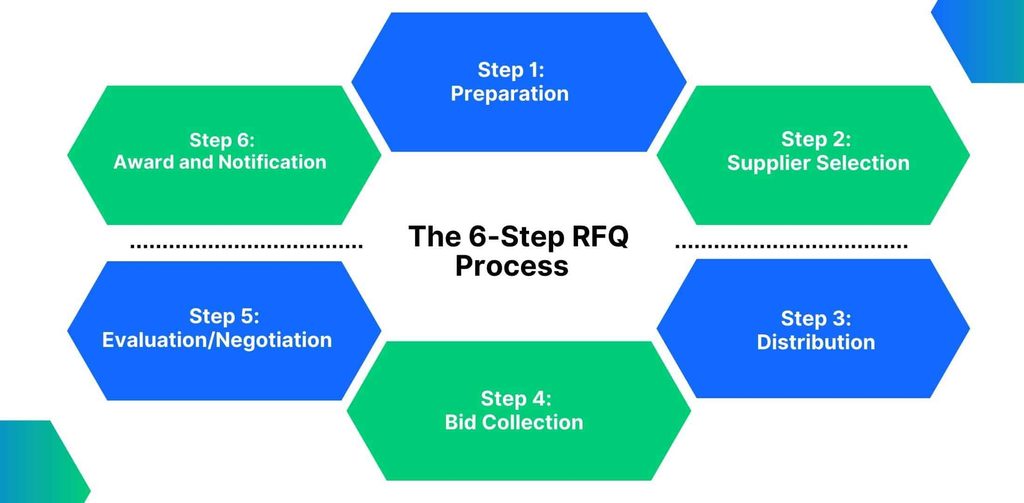
- Gather your specs first. Use the checklist below to pull together everything you have—even a partial spec is fine to start with, since a good supplier will help fill gaps.
- Go to the supplier's official quote or contact channel. For Casta Cabinetry, this means filling out the RFQ form directly on castacabinetry.com rather than sending a general inquiry through email or social media—the form is structured to capture the exact fields a quote depends on (product type, dimensions, materials, finish, hardware, quantity, timeline, and shipping destination), so nothing gets missed on the first pass.
- Fill in every field you can, and flag what's still undecided. If quantity or finish isn't locked in yet, say so explicitly rather than leaving it blank—a noted assumption is easier for a supplier to work with than a silent gap.
- Submit and expect a follow-up, not a final number immediately. For standard or stock specs, expect a fast turnaround; for custom configurations, the team may follow up with a few clarifying questions or move straight into engineering review before returning a quote.
- Use the follow-up conversation to lock in anything unresolved. This is typically where shipping term comparisons (FOB/CIF/DDP), sample requests, and MOQ questions get finalized before a formal quotation is issued.
Putting It Together: A Request You Can Prepare Before You Fill Out the Form
Rather than treating the list above as a form to fill out separately, it helps to draft it as a single, structured message first—many of these fields map directly onto what the RFQ form will ask for when you're ready to order kitchen cabinets:
"We're requesting a quote for [quantity] units of [cabinet type], in [format—RTA/assembled]. Preferred materials: [box material, door material]. Finish: [finish type and color, or 'open to recommendations']. Hardware: [preferences, or 'standard soft-close']. Target delivery: [date or timeframe] to [destination]. We'd like quotes under [FOB/CIF/DDP, or 'multiple terms for comparison']. Please let us know if you need additional specifications to provide an accurate quote."
A quick cabinet quote checklist to run through before you start filling out the form:
- Cabinet type (stock / semi-custom / fully custom)
- Format (RTA / fully assembled)
- Dimensions or full cabinet schedule
- Material specifications
- Finish and color
- Hardware preferences
- Quantity (or expected volume range)
- Target delivery timeline
- Destination and preferred shipping term
- Private-label/OEM needs, if applicable
Learn more: What are shaker-style cabinets?
Where to Order Kitchen Cabinets: Choosing the Right Channel
Once the request itself is ready, it's worth being deliberate about where to order kitchen cabinets from in the first place, since the channel affects both the RFQ process and the resulting quote structure. Domestic distributors, big-box trade programs, and factory-direct manufacturers all accept a version of the request outlined above, but they respond to it differently.
Factory-direct manufacturers, particularly those handling OEM and private-label work, tend to get the most value out of a fully detailed request, since their quoting process often includes an engineering review step that benefits directly from complete specifications upfront. A domestic distributor working from existing stock inventory may not need every field—quantity, style, and timeline often cover most of what they need to quote quickly.
Learn more: Kitchen Cabinet Manufacturer List to Consider for Your Dream Kitchen
Matching the completeness of the request to the channel is worth thinking through briefly before submitting—a factory-direct RFQ benefits from the full checklist, while a simpler request may suffice for a straightforward stock order from a local distributor.
Supplier Spotlight: Casta Cabinetry
As a practical reference point for how a complete RFQ actually moves through a real manufacturer's process, it's worth looking at how Casta Cabinetry structures its quote request system for buyers looking to order kitchen cabinets at scale.
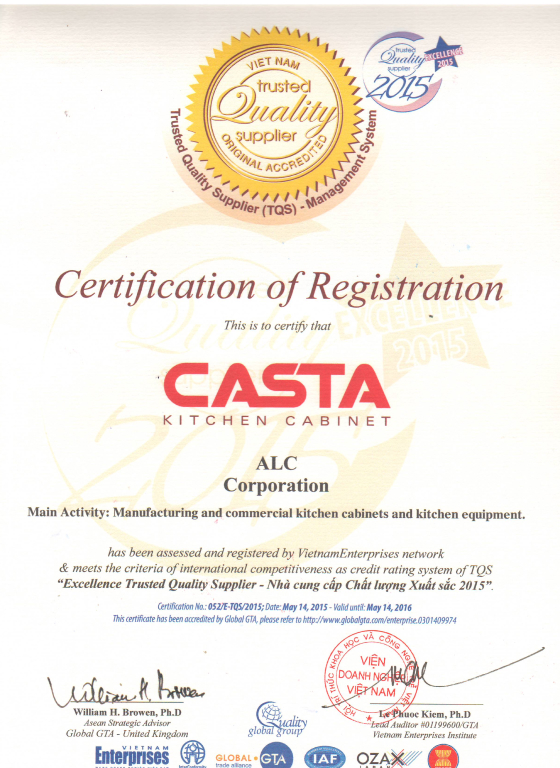
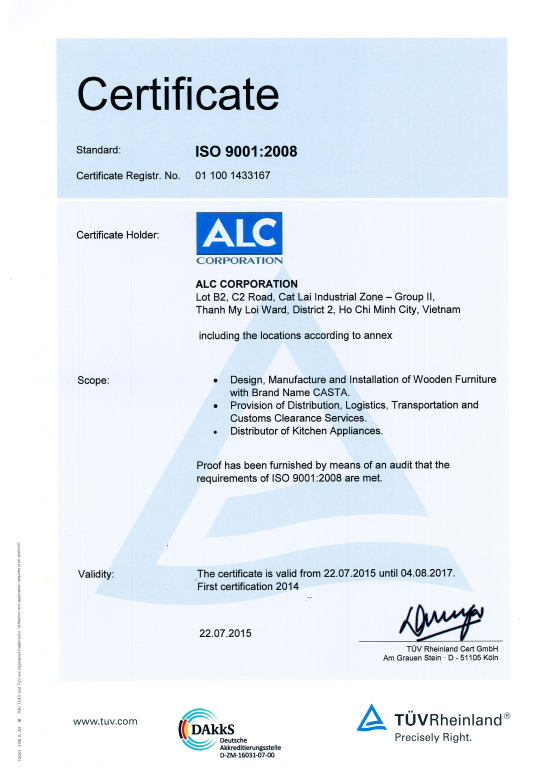
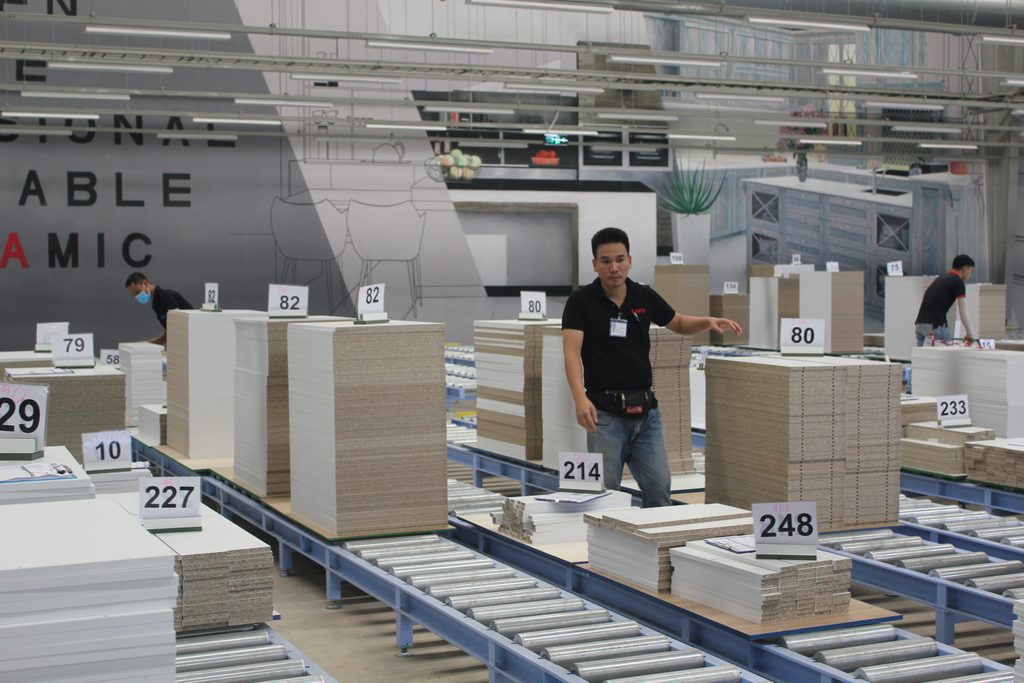
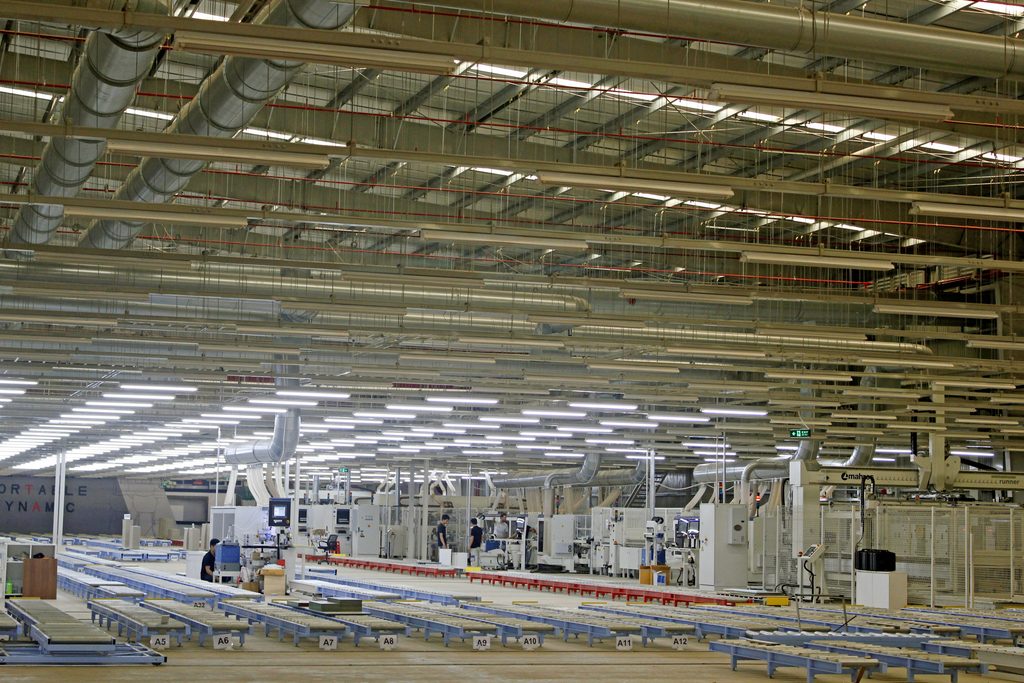
Founded in 2002, Casta is a Vietnam-based manufacturer specializing in kitchen cabinets, vanities, and custom furniture, with over two decades in the industry. The company operates two factories spanning more than 100,000 m², using European machinery from brands including SCM, Homag, and Cefla, with manufacturing automation reaching roughly 90%.
Learn more: Sourcing Cabinets and Furniture from Vietnam: Your Ultimate Guide
The ordering process starts with an RFQ form on castacabinetry.com, structured around the exact specification fields covered in this guide—the fastest way to get a request in front of the sales and engineering team. The standard process continues with discovery and consultation to understand brand, product requirements, target pricing, and material or finish preferences, followed by detailed shop drawings and a transparent quotation, including engineering review for custom specifications.
Casta offers both RTA (flat-pack) and fully assembled options, along with OEM/ODM private-label capability for brands developing their own line. Production capacity runs up to 200 containers per month, with a standard lead time of 45–60 days from shop drawing approval, and over 80% of production is exported, primarily to the U.S., supported by sales and service offices in California, Texas, and New York for direct conversations. Samples are available for verification before full production begins.
A more complete request submitted through the form leads to faster and more accurate pricing; Casta's team can also assist buyers who are still finalizing details by filling in specification gaps instead of requiring everything to be locked in upfront.
Common Mistakes That Slow Down a Quote Request
A few patterns show up often enough among buyers trying to order kitchen cabinets for the first time that they're worth naming directly, since avoiding them saves real turnaround time.
Sending a one-line inquiry and expecting a real number back is a common mistake. A message like "What's your price for kitchen cabinets?" gives a supplier nothing to price against, and the response will either be a generic range or a request for the exact information covered earlier in this guide—either way, the back-and-forth this creates is entirely avoidable.
Leaving the quantity blank instead of providing a range is a mistake. As covered earlier, an estimated range is far more useful to a supplier than no number at all. Buyers sometimes leave this field empty out of caution, assuming it locks them into a number—it doesn't, and a stated range actually produces a more useful quote.
Assuming the shipping term doesn't need to be specified upfront. Requesting a quote without mentioning FOB, CIF, or DDP often means the first quote comes back under whichever term the supplier defaults to, which may not be the term that best fits the buyer's logistics situation. Asking for multiple terms upfront, as covered earlier, avoids a second round of quoting later.
Treating the RFQ as a one-time submission rather than the start of a conversation. Even a well-prepared request usually benefits from a short follow-up exchange to confirm assumptions, especially on customization or certification requirements. Buyers who disappear after submitting the form, expecting a fully final number with no further input, often end up with a quote that needs revision anyway.
What Happens After You Receive a Quote
Once a quote comes back, the process of finalizing an order to order kitchen cabinets isn't quite finished—a few steps typically follow before production actually begins.
Most suppliers expect a round of review and clarification even on a well-prepared RFQ, particularly around any assumptions the supplier had to make to fill a gap in the original request. This is the point to confirm finish codes, verify certifications match what's needed for the buyer's own compliance requirements, and finalize the shipping term if multiple options were quoted.
Learn more: What is Carb Compliance
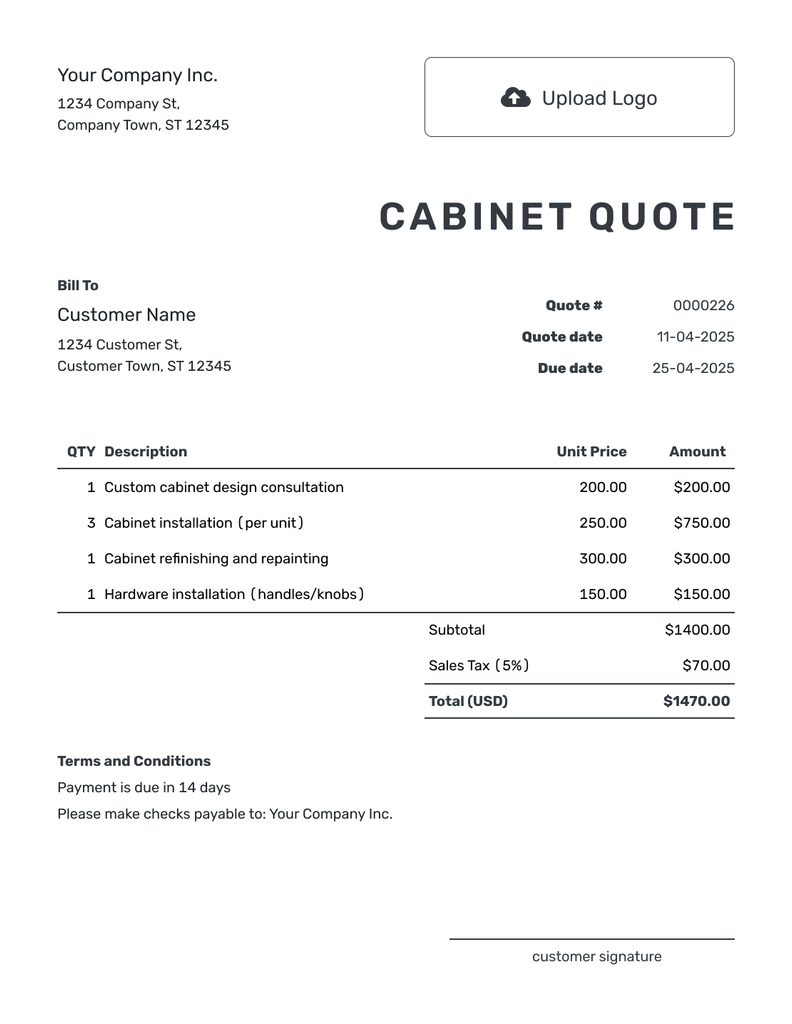
For a first-time relationship, this stage often includes discussing samples, deposit terms, and lead time expectations in more detail than the initial quote covers on its own. Treating the quote as the start of a structured conversation, rather than a final answer to accept or reject outright, tends to produce a smoother path to an order that both sides are confident in before any deposit changes hands.
It's also worth revisiting the original RFQ checklist against the quote that comes back, confirming every field submitted was actually reflected in the pricing. A quote that skips a specified certification requirement or substitutes a different hardware brand without flagging it is worth raising directly before moving forward, since it may signal miscommunication rather than a deliberate substitution.
FAQ
What information do I need to request a cabinet quote?
How do I actually submit a quote request to a cabinet manufacturer?
How long does it take to receive a wholesale cabinet quote?
Can I get a quote without a fixed quantity?
What details affect cabinet pricing the most in a quote?
Do I need a business license to request a wholesale quote?
Can I request quotes under different shipping terms to compare?
Conclusion
A complete request—covering product type, dimensions, materials, finish, hardware, quantity, timeline, and shipping details—consistently gets a faster, more accurate quote than a general inquiry, no matter which supplier receives it. The checklist and template above work as-is for a first request to order kitchen cabinets or as a starting point to adapt as specifications firm up.
Casta Cabinetry's process starts with a structured RFQ form, built to work with buyers at any stage of specification, from a rough concept to a fully detailed cabinet schedule.
Ready to get a quote? Fill out Casta Cabinetry's RFQ form with your project details, and their team will follow up with an accurate, itemized quote for your order.





How Many Kitchen Cabinets Fit in a 20ft/40ft Container?...
For a wholesaler pricing out a bulk order, cabinets per container is the number that turns a quote into an actual budget...
09/20/2026 | David Nguyen

FSC Certified Cabinets: Why It Matters for Green Building Pr...
For a developer working on a certified green building project, FSC certified cabinets aren’t just a sustainability...
09/18/2026 | David Nguyen
Lead Time for Wholesale Cabinet Orders: From Factory to Deli...
For a developer or wholesaler working against a construction or renovation deadline, cabinet lead times aren’t a n...
09/16/2026 | David Nguyen

Cabinet Import Duties & Tariffs: What US Buyers Pay When...
For a U.S. wholesaler or importer, uncertainty around tariffs on imported cabinets is often the single biggest barrier t...
09/14/2026 | David Nguyen
How Many Kitchen Cabinets Fit in a 20ft/40ft Container?...
For a wholesaler pricing out a bulk order, cabinets per container is the number that turns a quote into an actual budget...
09/20/2026 | David Nguyen
FSC Certified Cabinets: Why It Matters for Green Building Pr...
For a developer working on a certified green building project, FSC certified cabinets aren’t just a sustainability...
09/18/2026 | David Nguyen
Lead Time for Wholesale Cabinet Orders: From Factory to Deli...
For a developer or wholesaler working against a construction or renovation deadline, cabinet lead times aren’t a n...
09/16/2026 | David Nguyen
Cabinet Import Duties & Tariffs: What US Buyers Pay When...
For a U.S. wholesaler or importer, uncertainty around tariffs on imported cabinets is often the single biggest barrier t...
09/14/2026 | David Nguyen
Contact us
Casta is always ready to listen and answer all customers' questions