


 EN
EN
For a wholesaler placing a first international cabinet order, cabinet payment terms are where financial risk becomes real—wiring money to a factory on the other side of the world, before ever seeing the product, is a genuinely uncomfortable step for a first-time buyer. Payment terms in international trade come wrapped in unfamiliar acronyms like T/T and L/C that sound more complicated than the underlying concept actually is once broken down stage by stage.
This guide is written for wholesalers and distributors preparing for their first cross-border cabinet purchase, trying to understand what's normal before they negotiate or sign anything. It covers the payment methods manufacturers actually use, how deposits typically work, the real difference between T/T and L/C, and how to reduce risk on a first order.
What Payment Terms Do Cabinet Manufacturers Typically Accept?
The two most common payment methods in the international cabinet and furniture trade are T/T (Telegraphic Transfer) and L/C (Letter of Credit), with T/T being the more commonly used method for small-to-mid-size wholesale orders. Understanding both is the starting point for negotiating cabinet payment terms with any new supplier.
Some manufacturers also accept other methods for established relationships, but T/T and L/C remain the standard starting point for new international buyers. It's worth understanding why manufacturers rarely offer full payment on delivery for new buyers: production requires an upfront investment in materials and labor, and there's no established trust or track record yet with a first-time customer. This cuts both ways, which is precisely why structured wholesale cabinet payment terms like deposits exist in the first place.

T/T (Telegraphic Transfer) Explained
A T/T is a direct bank wire transfer, and it's the most common cabinet payment terms method for cabinet orders specifically because it's simple, quick, and doesn't require the paperwork overhead of a letter of credit.
The typical structure follows a T/T deposit cabinet order pattern: a deposit paid upfront before production begins, with the balance paid before shipment or upon presentation of shipping documents. Buyers often prefer T/T because it's straightforward, has lower bank fees than a letter of credit, and is faster to set up.
The trade-off is worth understanding clearly before agreeing to these cabinet payment terms: T/T offers less built-in protection for the buyer than an L/C, since it relies more on trust and the manufacturer's reputation than on a bank-enforced structure.
L/C (Letter of Credit) Explained
A Letter of Credit is a payment guarantee issued by the buyer's bank to the seller, promising payment once the seller meets specific, documented conditions—shipping documents, inspection certificates, and similar requirements. This structure is central to how transactions involving letters of credit for furniture imports typically work for larger or first-time orders.
An L/C offers more protection for the buyer because payment is only released once the agreed conditions are verifiably met, reducing the risk of paying for goods that don't arrive as specified. The trade-off is that L/Cs are more complex, involve more paperwork, take longer to set up, and typically carry higher bank fees than a straightforward T/T transfer.
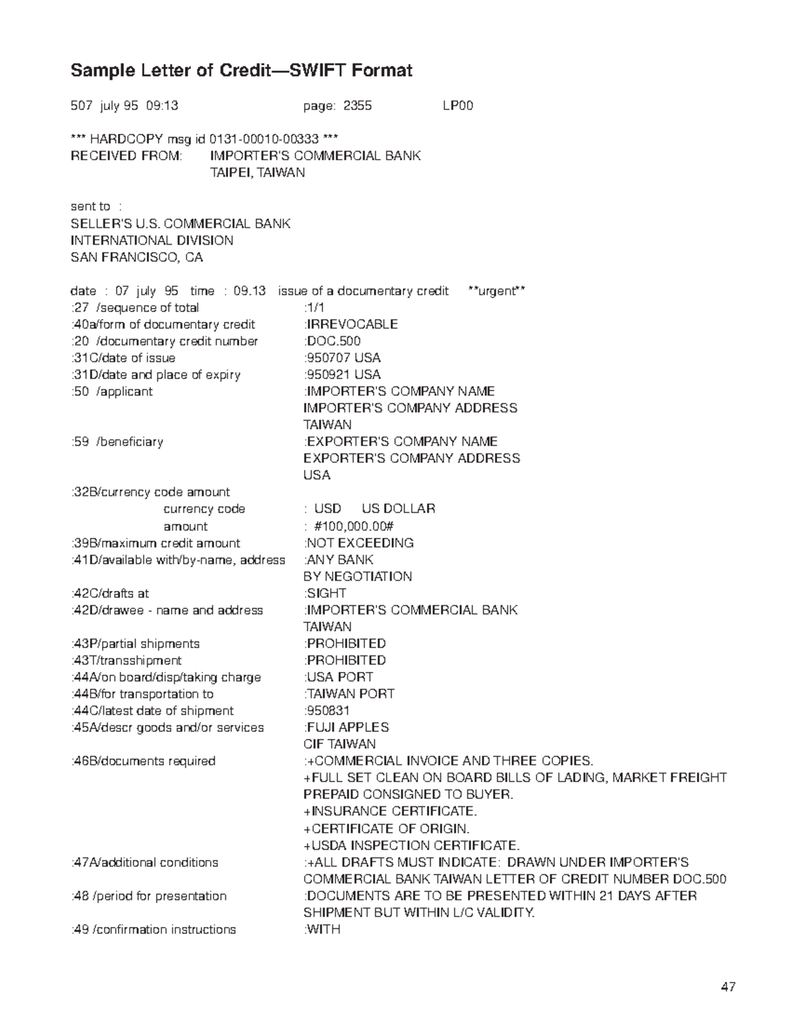
An L/C tends to make more sense for very large orders, a brand-new relationship with no track record, or when a buyer's own risk tolerance calls for the extra structure despite the added cost and complexity involved in these more formal cabinet payment terms.
T/T vs. L/C: A Direct Comparison
| T/T (Telegraphic Transfer) | L/C (Letter of Credit) | |
| Speed to set up | Fast | Slower—more documentation required |
| Cost | Lower bank fees | Higher bank fees |
| Buyer protection | Lower—relies on trust and reputation | Higher—bank-enforced conditions |
| Complexity | Simple | More complex paperwork |
| Common use case | Standard for small-to-mid wholesale orders | Larger orders or first-time relationships needing more security |
| Typical structure | Deposit + balance before/at shipment | Payment is released once documented conditions are met |
Is a Deposit Required Before Production Starts?
Yes—a deposit before production is standard practice across the industry, not a red flag specific to any one supplier. Understanding this upfront removes a lot of first-order anxiety around cabinet payment terms that catches new buyers off guard.
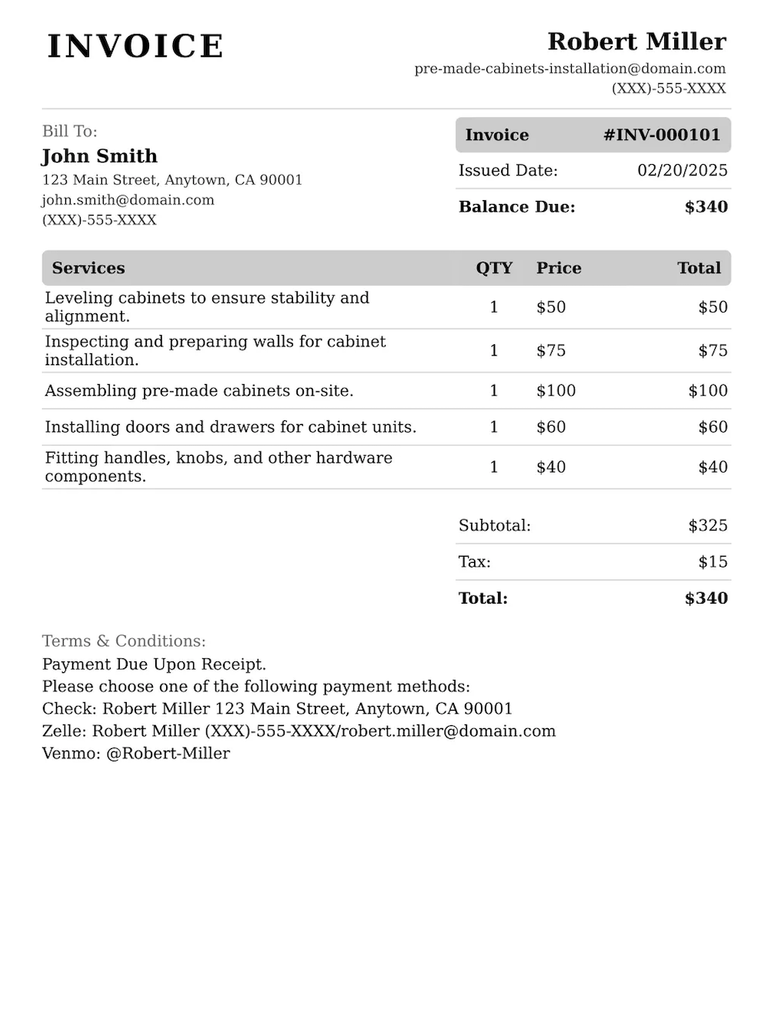
Manufacturers require these payments because production costs—materials, labor, factory time—begin accruing as soon as work starts, and the deposit protects the manufacturer from a buyer canceling mid-production. From the buyer's side, the deposit is actually paying for something concrete: it secures a production slot and confirms the order is committed, not just a quote request sitting in a queue.
How Much Deposit Is Typical for Bulk Cabinet Orders?
Deposit amounts in the cabinet and furniture trade commonly fall in the range of 30–50% of total order value, with the remaining balance due before shipment or against shipping documents. This range shows up consistently across most published wholesale cabinet payment terms and industry sourcing guides.
The exact percentage varies based on order size, product customization level, the manufacturer's own policies, and the strength of an existing relationship with the buyer. For repeat buyers with an established track record, deposit requirements sometimes become more flexible—another reason the first order is usually the most rigid in terms of cabinet payment terms and structure.
Learn more: How much is custom cabinetry
How to Reduce Payment Risk on a First International Order
A few concrete steps meaningfully reduce risk when negotiating cabinet payment terms for the first time with a new supplier:
- Request clear, written payment terms as part of the formal quote—not a verbal agreement.
- Ask for photos or video verification during production and before shipment, tied to payment milestones where possible.
- Consider a smaller trial order first to build trust before committing to full-scale deposit and balance terms on a large run.
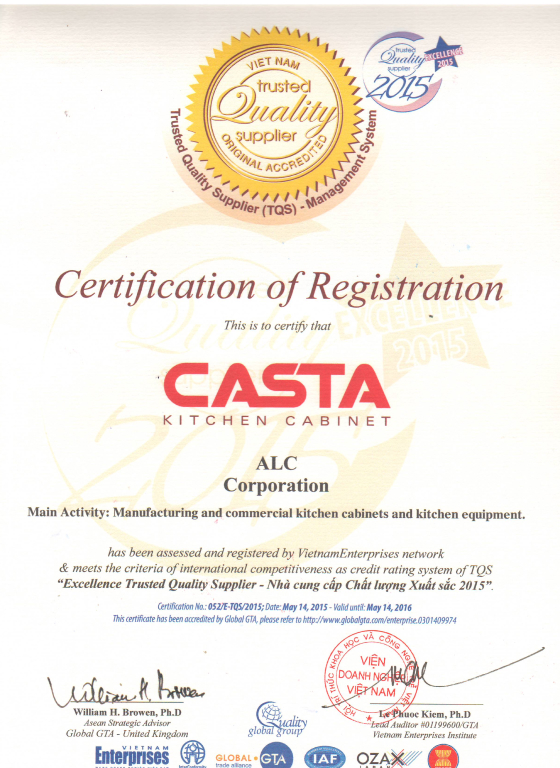
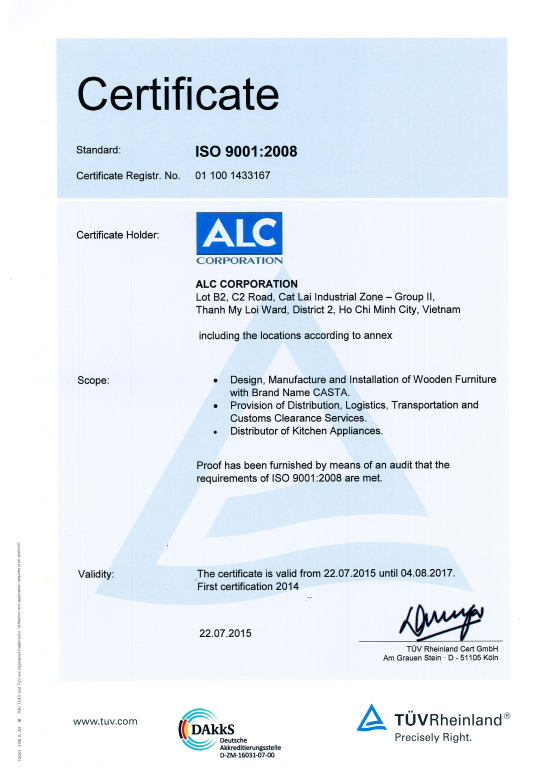
- Verify the manufacturer's business registration, certifications, and export history independently—not just what's stated in a sales conversation.
- Understand exactly what triggers each payment: deposit at order confirmation, balance at what specific milestone (before shipment, against documents, upon arrival).
Learn more: Cabinet Certification
What a Typical Payment Timeline Looks Like
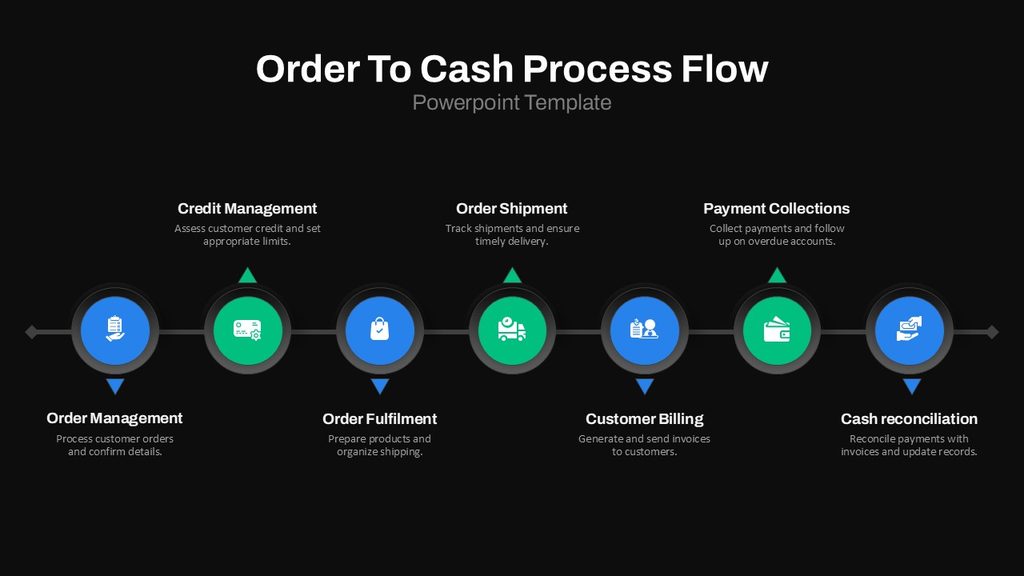
A standard sequence for cabinet payment terms on a bulk international order looks roughly like this:
- Order confirmed and shop drawings approved.
- Deposit paid—commonly 30–50% of order value—production begins.
- Production completes, and quality control inspection is performed.
- Balance payment made before shipment or against shipping documents, depending on agreed terms.
- Goods ship, with final documentation provided to the buyer for customs clearance.
Questions to Ask a Manufacturer About Payment Terms
Before finalizing any agreement, run through these questions with a potential supplier:
- What payment methods do you accept—T/T, L/C, or others?
- What deposit percentage do you require, and when is the balance due?
- Can you provide production updates or verification (photos, video) tied to payment milestones?
- What happens if there's a dispute over product quality after the deposit is paid?
- Do payment terms change for repeat orders once a relationship is established?
- Can you provide references from other U.S. buyers regarding your payment process?
International Furniture Trade Payment Beyond Cabinets
It's worth knowing that the cabinet payment terms structure described here isn't unique to cabinets specifically—it reflects standard practice across international furniture trade payments more broadly. Wooden furniture, upholstered goods, and case goods manufacturers largely follow the same T/T and L/C framework, with deposit percentages that fall in a similar range.
This is useful context for a brand or contractor sourcing a mix of cabinets and other furniture from the same region or supplier network, since the payment negotiation playbook carries over reasonably well from one product category to another, even though construction, certifications, and lead times differ significantly between them.
Supplier Spotlight: Casta Cabinetry
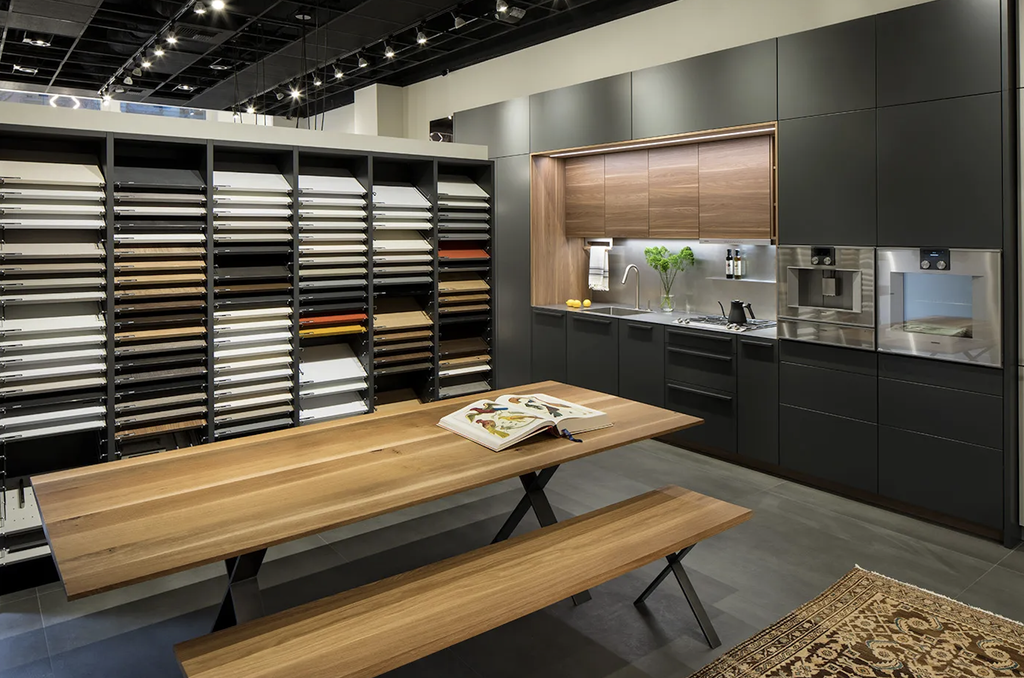
As a practical reference point for how cabinet payment terms actually work with a real manufacturer, it's worth looking at how Casta Cabinetry structures its process for new buyers.
Founded in 2002, Casta is a Vietnam-based manufacturer specializing in kitchen cabinets, vanities, and custom furniture, with over two decades in the industry. The company operates two factories spanning more than 100,000 m², using European machinery from brands including SCM, Homag, and Cefla, with manufacturing automation reaching roughly 90%.
Learn more: Sourcing Cabinets and Furniture from Vietnam: Your Ultimate Guide
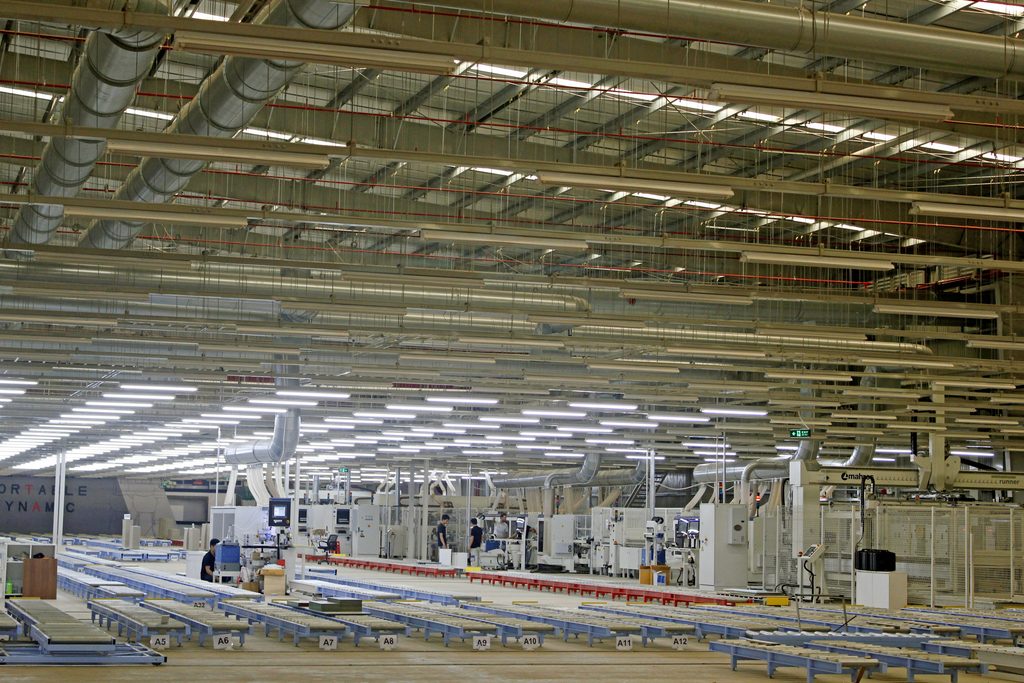
The standard process begins with discovery and consultation, followed by shop drawings and a transparent quotation—the stage where cabinet payment terms would be clearly outlined for a specific order. Casta also offers samples until clients are fully satisfied with design, materials, and finish before full production begins, giving buyers a chance to verify quality before committing to a full deposit.
Learn more: Why Choose Vietnam for Cabinet and Furniture Manufacturing?
Over 80% of production is exported, primarily to the U.S., supported by sales and service offices in California, Texas, and New York, giving new buyers a direct, local point of contact to discuss payment terms before wiring funds internationally. Production capacity runs up to 200 containers per month, with a standard lead time of 45–60 days from shop drawing approval.
Specific deposit percentages and payment structures should be confirmed directly for your order—this section describes Casta's general process, not a substitute for a written, signed agreement.
Red Flags in Cabinet Payment Terms
A few patterns are worth treating with real caution when negotiating cabinet payment terms with a new supplier, since they show up often enough in cautionary stories from experienced importers.
Demanding 100% payment upfront. Legitimate manufacturers structure deposits in the 30–50% range precisely because it balances their production risk against the buyer's risk. A supplier insisting on full payment before any production starts is asking the buyer to absorb all the risk in the transaction, which runs counter to standard wholesale cabinet payment terms across the industry.
Refusing to put payment terms in writing. A verbal agreement on deposit percentage, balance timing, and payment method offers no protection if a dispute arises later. Any legitimate supplier should be comfortable documenting cabinet payment terms clearly in a signed quote or contract before funds change hands.
Pressure to skip verification steps. A supplier discouraging photo or video verification during production, or pushing back on a buyer's request for milestone check-ins, is worth treating with suspicion. These verification steps are a normal part of managing risk in international furniture trade payment, and reluctance to accommodate them is a meaningful signal.
Payment requests to personal accounts rather than a business account. International cabinet payment terms should always route through a documented business banking relationship. A request to wire funds to an individual's personal account, rather than the manufacturer's registered business account, is one of the more serious red flags in this space and warrants stopping the transaction entirely until it's resolved.
How Payment Terms Evolve With a Long-Term Supplier Relationship
Cabinet payment terms aren't necessarily fixed once a buyer has an established track record, and it's worth understanding how that flexibility tends to develop over successive orders.
A first order is typically evaluated on its own merits, since the supplier has no history with the buyer to draw on. After several orders placed reliably—deposits paid on schedule, balances settled without dispute, no recurring quality complaints—many manufacturers become willing to adjust deposit percentages downward or extend more flexible balance timing for a proven buyer.
This is worth raising directly with a supplier once a buyer has a few successful orders behind them, rather than assuming better terms will be offered automatically. Framing the conversation around order volume and consistency—rather than simply asking for a discount on deposit percentage—tends to produce a more productive outcome, since it ties the request to something the supplier can actually evaluate and justify internally rather than a one-sided ask.
It's also reasonable to ask whether a supplier offers different cabinet payment terms structures for different order types within an ongoing relationship—for example, a lower deposit on a repeat SKU the supplier has produced before, even while a genuinely new custom configuration still carries the standard first-order terms.
Currency and Bank Fees Worth Planning For
Beyond the deposit percentage and payment method itself, a few practical details around currency and banking fees are easy to overlook when budgeting for cabinet payment terms on a first international order.
Most international cabinet transactions are quoted and settled in U.S. dollars, which removes currency conversion risk for a U.S.-based buyer in most cases. It's still worth confirming this explicitly with a supplier rather than assuming, since a quote denominated in a different currency introduces exchange rate risk between the time a deposit is paid and the balance comes due—a gap that can span weeks or months on a longer production run.
Wire transfer fees also add up in ways that are easy to underestimate on a first order. Both the sending and receiving bank typically charge a fee for an international wire, and intermediary correspondent banks along the transfer path can add additional charges that aren't always disclosed upfront. Asking a bank directly about the full fee structure for an international wire—not just the advertised sending fee—helps avoid a surprise deduction that leaves a payment short of the amount actually due under the agreed cabinet payment terms.
FAQ
What payment terms do cabinet manufacturers accept?
Is a deposit required before production starts?
What is the difference between T/T and L/C payment?
How much deposit is typical for bulk cabinet orders?
Is T/T or L/C safer for a first-time international buyer?
What should be included in a written payment agreement with a cabinet manufacturer?
Conclusion
T/T and L/C are the two standard payment methods in international cabinet trade, with T/T being faster and simpler but offering less built-in protection, and L/C offering more security at the cost of complexity and fees. A deposit before production, commonly 30–50% of order value, is standard practice, not a red flag—the real due diligence is verifying who you're sending it to and getting the agreement in writing before funds move.
For a first-time buyer, the safest approach to cabinet payment terms is a written agreement, milestone-based verification, and possibly a smaller trial order before committing to full-scale terms. Casta Cabinetry, with a consultation-first process and direct U.S.-based points of contact, is a starting point for a transparent conversation about payment terms before your first order.
Ready to discuss payment structure for your first order? Contact Casta Cabinetry's team to move forward with confidence and get cabinet payment terms clarified in writing before your order begins.






Private Label Cabinet Branding: Custom Packaging & Label...
Putting your name on a cabinet line is one of the fastest ways for a retailer or brand to build margin and customer loya...
09/24/2026 | David Nguyen

Cabinet Quality Control Process: How Bulk Orders Are Inspect...
For a wholesaler buying from overseas, the biggest fear usually isn’t price. It’s opening a container weeks ...
09/22/2026 | David Nguyen

How Many Kitchen Cabinets Fit in a 20ft/40ft Container?...
For a wholesaler pricing out a bulk order, cabinets per container is the number that turns a quote into an actual budget...
09/20/2026 | David Nguyen

FSC Certified Cabinets: Why It Matters for Green Building Pr...
For a developer working on a certified green building project, FSC certified cabinets aren’t just a sustainability...
09/18/2026 | David Nguyen
Private Label Cabinet Branding: Custom Packaging & Label...
Putting your name on a cabinet line is one of the fastest ways for a retailer or brand to build margin and customer loya...
09/24/2026 | David Nguyen
Cabinet Quality Control Process: How Bulk Orders Are Inspect...
For a wholesaler buying from overseas, the biggest fear usually isn’t price. It’s opening a container weeks ...
09/22/2026 | David Nguyen
How Many Kitchen Cabinets Fit in a 20ft/40ft Container?...
For a wholesaler pricing out a bulk order, cabinets per container is the number that turns a quote into an actual budget...
09/20/2026 | David Nguyen
FSC Certified Cabinets: Why It Matters for Green Building Pr...
For a developer working on a certified green building project, FSC certified cabinets aren’t just a sustainability...
09/18/2026 | David Nguyen
Contact us
Casta is always ready to listen and answer all customers' questions