EN
Every wholesaler and developer eventually asks the same question: if I order more, how much does each cabinet cost me? The honest answer about cabinet volume pricing is "it depends," and the details behind that answer decide how well you negotiate.
A simple discount percentage rarely tells the full story. Quantity is only one of several variables, and a bigger order can lower your unit price while raising your total risk, storage cost, and cash tied up. This guide is for wholesalers, distributors, and developers comparing suppliers. It covers why cabinet volume pricing lowers unit price and where that stops, how tiers are structured, six factors that move cost per unit beyond quantity, how mixed styles affect tiers, and how to compare quotes on a landed-cost basis.
Why Cabinet Volume Pricing Lowers Cost Per Unit
Cabinet volume pricing exists because some costs don't grow in step with the number of cabinets. Understanding where the savings in cabinet volume pricing come from tells you which of them you can actually influence, such as by consolidating styles or filling containers.
Fixed costs get spread across more units. Production setup, programming, engineering review, and order administration cost roughly the same whether a run is small or large, so larger runs carry less of that cost per cabinet.
Material purchasing becomes more efficient. Buying panels, edge banding, and hardware in larger quantities generally improves purchasing terms and reduces waste.
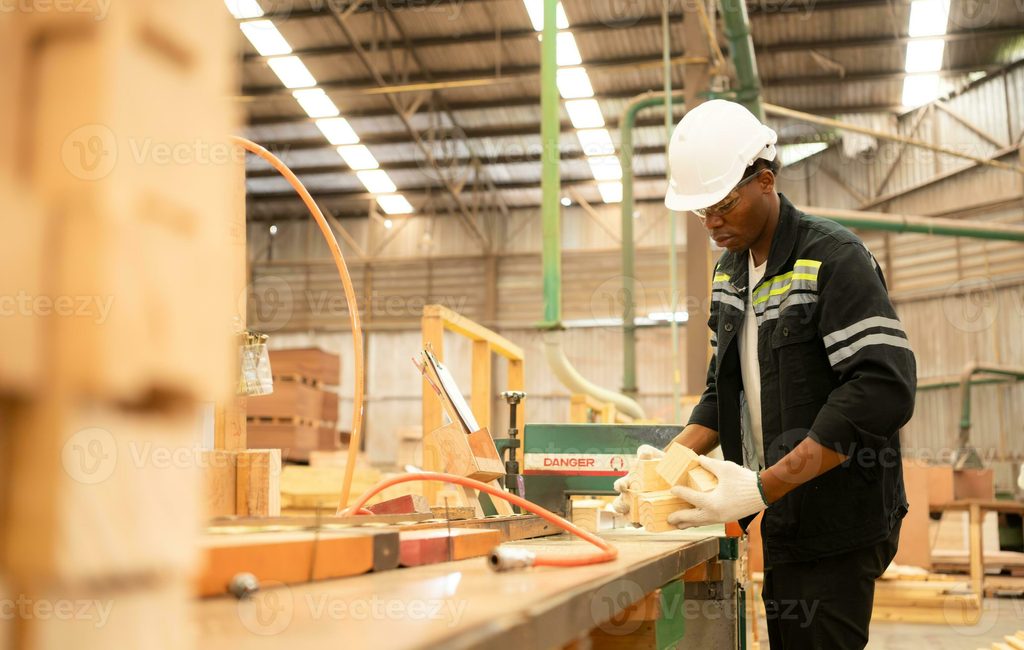
Production batching improves efficiency. Running the same style and finish together reduces changeovers on the line and supports consistent color and quality.
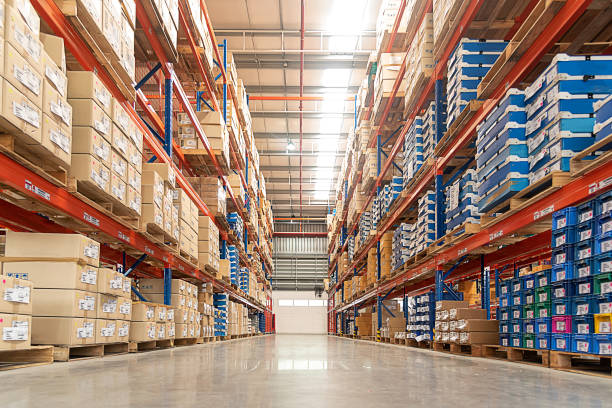
Shipping gets more efficient per unit. A well-filled container carries freight cost across more cabinets than a partially filled one. This is a big reason cost per unit on a large cabinet order falls faster for overseas, container-based programs than for local stock purchases.
Where Cabinet Volume Pricing Stops Improving
Not every cost shrinks with volume. Some costs scale in direct proportion to quantity, such as materials and labor per cabinet, so the price curve flattens after a point. Anyone expecting cabinet volume pricing to keep dropping steadily as the order grows will be disappointed. A wholesale cabinet discount by quantity is real, but it follows a curve rather than a straight line.
Container-based costs behave in steps. A shipment's freight cost is largely fixed per container, so the savings are biggest as you approach a full container and smaller beyond that. Duties, compliance documentation, and inspection costs also don't fall dramatically with order size.
Learn more: Cabinet certification
The practical takeaway: expect noticeable improvement as you move from small to mid-size orders, and diminishing returns as volume grows. The most valuable thresholds are usually container fill points rather than arbitrary unit counts.
How Cabinet Volume Pricing Tiers Are Typically Structured
Suppliers build bulk cabinet pricing tiers in several different ways, and the basis they choose changes how you should plan an order. Tiers may be published as fixed steps or negotiated individually, and many suppliers use a combination.
| Tier Basis | How It Works | Best For |
| Unit count | Price breaks at set numbers of cabinets | Simple, standardized orders |
| Container volume | Pricing tied to partial or full container loads | Overseas and factory-direct orders |
| Order value | Discounts at spend thresholds | Mixed-product orders |
| Annual or multi-phase commitment | Pricing locked against planned volume over time | Recurring or phased projects |
| Negotiated per project | Custom pricing agreed for a specific program | Large, custom, or private-label work |
It helps to ask which basis the supplier uses. A unit-count tier and a container-based tier reward different ordering behavior, and you plan differently for each. Tiered pricing for kitchen cabinets that looks generous on paper can be hard to reach if the basis doesn't match how you actually buy, and matching your order to the tier basis is the simplest way to get the most from cabinet volume pricing.
Learn more: How much is custom cabinetry
6 Factors That Drive Cost Per Unit Beyond Quantity
If cabinet volume pricing were only about quantity, comparing quotes would be easy. In practice, six other factors move the price, and two buyers ordering the same number of cabinets can end up paying very different amounts.
1. Product Type and Customization Level
Stock and standardized lines price most predictably. Semi-custom and fully custom lines add engineering and setup cost that volume only partly offsets. A large order of highly custom product can still cost more per unit than a smaller order of standard product, which is why product type sets how far cabinet volume pricing can actually go.
Learn more: The difference of custom vs semi custom cabinets
2. Style and SKU Mix
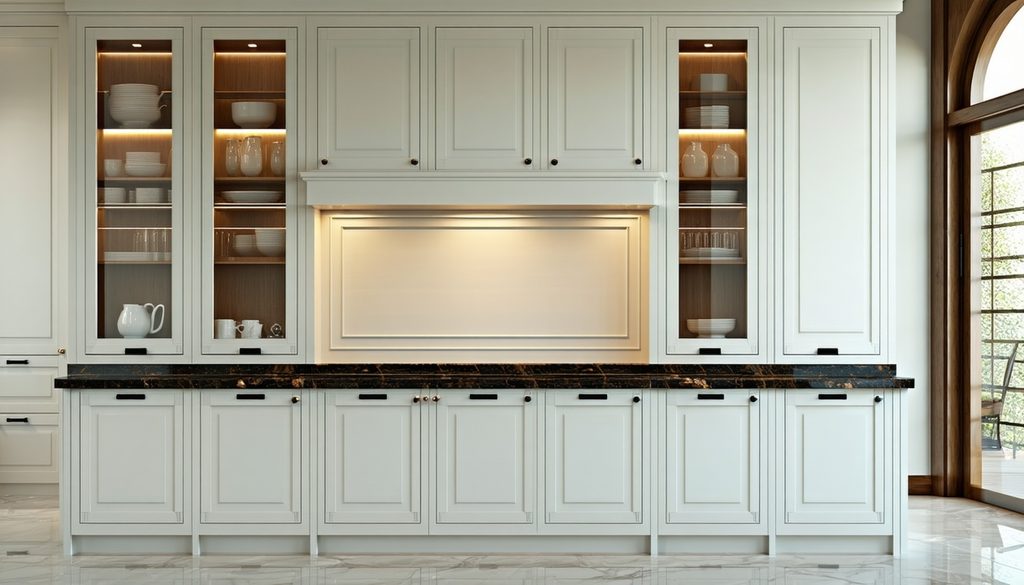
Fewer styles, finishes, and sizes in a run generally mean more efficient production. A large order spread across many SKUs often earns less benefit than one concentrated on a few. Standardizing where you can, such as shared door styles or finishes across lines, is one of the most effective ways to improve kitchen cabinet pricing and strengthen cabinet volume pricing without ordering more.
3. Materials and Finish
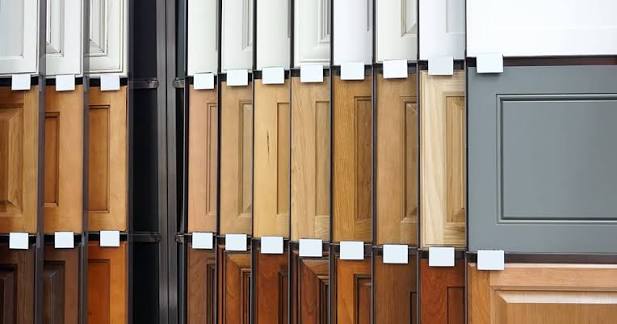
Box material grade, door construction, finish type, and hardware choice all set the baseline unit price before volume applies. Cabinet volume pricing applies to that baseline, so a premium specification stays premium at scale.
Learn more: Types of kitchen cabinets materials
4. RTA vs. Fully Assembled
Flat-pack cabinets ship more units per container, which can lower freight cost per cabinet and affect where your tier thresholds fall in cabinet volume pricing. Assembled cabinets save labor on your end but take more container space, so the comparison should include assembly cost and freight together.
Learn more: What are RTA cabinets?
5. Shipping Terms and Destination
FOB, CIF, and DDP quotes divide costs differently, so a quote can look cheaper or more expensive without the underlying economics changing. Always compare on a landed-cost basis, including freight, insurance, duties, and delivery to your location.
Learn more: Logistics & Import: Streamlining the Shipping and Customs Process

6. Commitment, Frequency, and Payment Terms
A supplier values predictability, and it shows in cabinet volume pricing. Repeat orders, planned multi-phase programs, and clear forecasts can earn better terms than a one-off purchase of the same size. Payment terms and deposit structure can also influence pricing, since they affect the supplier's cash flow and risk.
Do Mixed Styles Count Toward the Same Tier?
It depends on how the supplier defines the tier. Some count total units or total container volume across styles. Others apply minimums per style, finish, or SKU. This single definition can change the effective cabinet volume pricing you receive more than any headline discount.
Why does this change your strategy? If the tier counts the whole order, mixing styles lets you reach a threshold with several smaller lines. If it counts per style, concentrating on fewer styles may be the only way to qualify. Even when mixing is allowed, finishes and customizations often affect production efficiency, so mixed orders may price slightly differently from single-style orders.
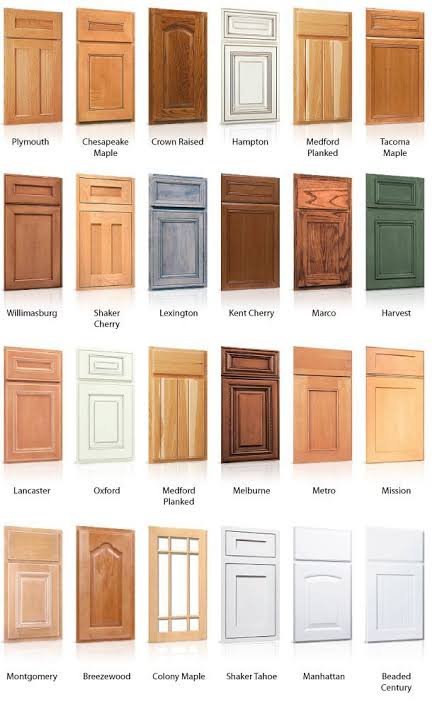
A direct question to ask before you design the order: is the tier calculated on total order, per style, or per finish? Clear answers here make cabinet volume pricing far easier to compare across suppliers.
Learn more: What are the styles of flat panel cabinet doors
How to Read a Tiered Quote
A tiered quote is easy to misread, because the headline price rarely includes everything. A few habits make a quote far more useful when you compare cabinet volume pricing across suppliers.
- Compare unit price at each tier, not just the headline. Ask for pricing at several volume levels so you can see how steeply the curve falls.
- Check what is included at each price. Packaging, labeling, documentation, and inspection can differ between quotes.
- Look at the price validity period. Ask how long a quoted price holds, and whether it is locked across phases or can change between orders.
- Ask about adjustment clauses. Material costs, freight, duties, or currency changes can affect final cost, so understand what is fixed and what can move.
- Convert everything to landed cost per unit. Add freight, duties, insurance, and delivery to the unit price before comparing suppliers.
Learn more: Kitchen cabinet buying guide
Modeling Your Own Break-Even Point
A larger order isn't always cheaper in total cost. Larger orders tie up cash, require storage, and carry demand risk if the cabinets sell slower than planned. Cabinet volume pricing gets you a lower unit price, but only a landed-cost view shows whether the whole deal is better.
A simple way to think about it: landed cost per unit equals unit price plus freight, duties, packaging, and handling, divided across the units in the order. Then add the cost of holding inventory for the time it takes to sell or install it. Pricing cabinets this way keeps a low unit price from hiding a high total cost.
Here is a simple illustration, using made-up numbers to show the logic rather than a real quote. Assume a container costs $4,000 to ship, and that a full container holds 200 cabinets while a half-full one holds 100. Shipping 100 cabinets puts 40offreightoneachunit(4,000 divided by 100). Shipping 200 puts only 20oneachunit(4,000 divided by 200). If the unit price is $300 in both cases, landed cost per unit is $340 versus $320 before duties. The larger order saves $20 per cabinet purely because the container is fuller.
That illustration also shows the limit. Going beyond one full container doesn't repeat the same freight saving, since a second container brings its own $4,000. This is why cost per unit on a large cabinet order improves most as you approach container fill points.
Compare scenarios side by side, such as a smaller order now versus a larger order with phased delivery, rather than assuming the biggest order wins. For project-based buyers, matching order size to project phases often beats pre-buying everything at once, especially if the supplier will lock pricing across phases.
Multi-Phase and Blanket Orders: Volume Pricing Without Taking All the Volume at Once
Some manufacturers can set pricing based on a planned total volume delivered in phases. That lets you qualify for better cabinet volume pricing without taking and storing everything upfront.
The benefits are clear: consistent pricing across phases, matching finishes and colors across production batches, and delivery timed to construction milestones. The trade-off is that the supplier will expect a realistic commitment and forecast, and you should understand what happens if volume falls short of plan.
Learn more: Lead Times & Supply Chain Resilience: Navigating Potential Disruptions
This structure suits developers and distributors with recurring demand, because it ties cabinet volume pricing to your actual pipeline, not to a single large purchase.
Learn more: Best multifamily cabinet manufacturers
Negotiation Tips for Cabinet Volume Pricing
Good negotiation on cabinet volume pricing is less about pushing for a bigger percentage and more about giving the supplier what makes its production efficient.
- Come with a forecast, even a range, so the supplier can match you to a realistic tier.
- Ask for pricing under two or three volume scenarios, so you can see where the biggest price breaks fall.
- Consolidate styles and finishes where it doesn't hurt your product offering.
- Be flexible on delivery timing if it helps the supplier schedule efficient production runs.
- Discuss the relationship, not only the order: repeat business and planned phases are what suppliers value most.
- Get the agreed cabinet volume pricing structure in writing, including how tiers are calculated and how long pricing is held.

A Cabinet Volume Pricing Comparison Checklist
Before choosing between suppliers, run each cabinet volume pricing quote through this checklist:
- Tier basis identified (units, container volume, order value, or commitment)
- Pricing available at several volume levels
- Mixed-style treatment confirmed (total order vs. per style or finish)
- What's included in the price confirmed (packaging, labeling, documentation, inspection)
- Price validity and lock period understood
- Adjustment terms for materials, freight, duties, or currency clarified
- Landed cost per unit calculated for each supplier and scenario
- Storage, cash flow, and demand risk considered for larger orders
Questions to Ask a Manufacturer About Cabinet Volume Pricing
The answers to these questions show quickly whether a supplier's tiers are transparent and whether its cabinet volume pricing will work for how you buy.
- How are your pricing tiers structured: by unit count, container volume, order value, or commitment?
- What order size qualifies for wholesale or trade pricing?
- Can I mix styles and finishes within a single tier, or are tiers calculated per style?
- Can you quote at two or three volume levels so I can compare?
- Is pricing locked across multiple phases, and for how long?
- What's included in the unit price, and what is billed separately?
- What can change a quoted price after I've agreed to it?
Learn more: Top 10 cabinet manufacturers

Supplier Spotlight: Casta Cabinetry
As a practical reference point for how a factory structures cabinet volume pricing, it helps to look at how Casta Cabinetry works with wholesale and project buyers.
Founded in 2002, Casta is a Vietnam-based manufacturer specializing in kitchen cabinets, vanities, and custom furniture, with over two decades in the industry. It offers factory-direct pricing, with wholesale programs that include pricing tiers based on multi-phase planning, so buyers can plan volume across project phases.
Learn more: Sourcing Cabinets and Furniture from Vietnam: Your Ultimate Guide
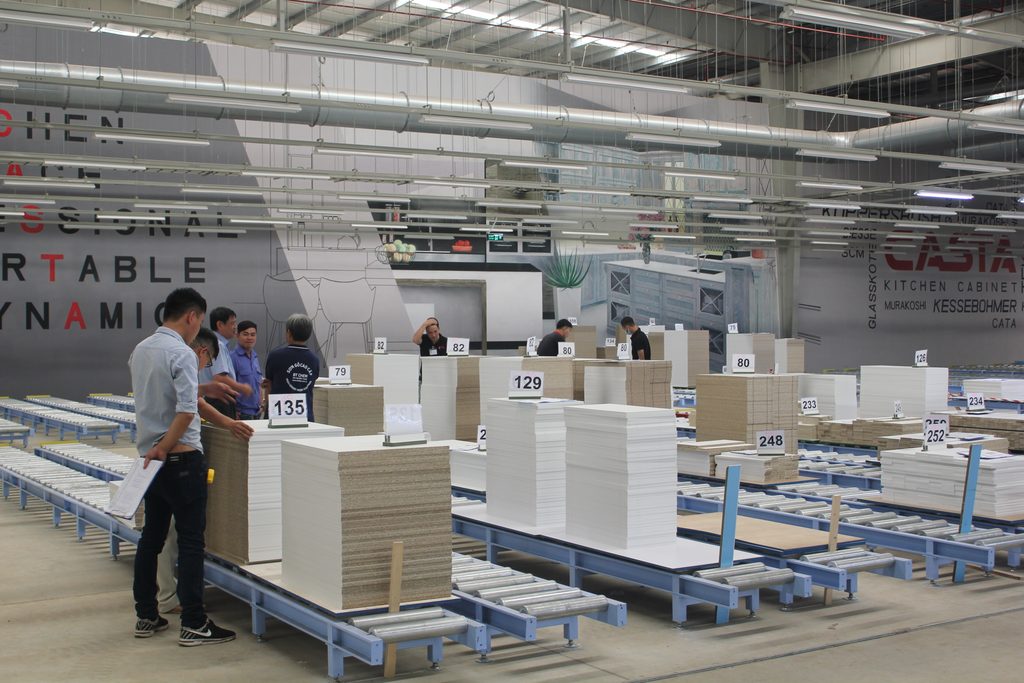
Batch manufacturing schedules support finish and color continuity across deliveries, and export-ready documentation, crating, and labeling simplify inbound logistics. Casta offers both RTA (flat pack) and fully assembled options, with shipping choices that include full and partial container loads, which gives buyers room to match order size to container economics.
Learn more: Material & Finish Innovations: Elevating Cabinet Design and Durability
It operates two factories spanning over 100,000 m², using European machinery from brands including SCM, Homag, and Cefla, with manufacturing automation reaching roughly 90% and capacity of up to 200 containers per month. The process starts with discovery and consultation, then shop drawings and a transparent quotation based on your requirements, followed by a physical sample for approval before mass production.
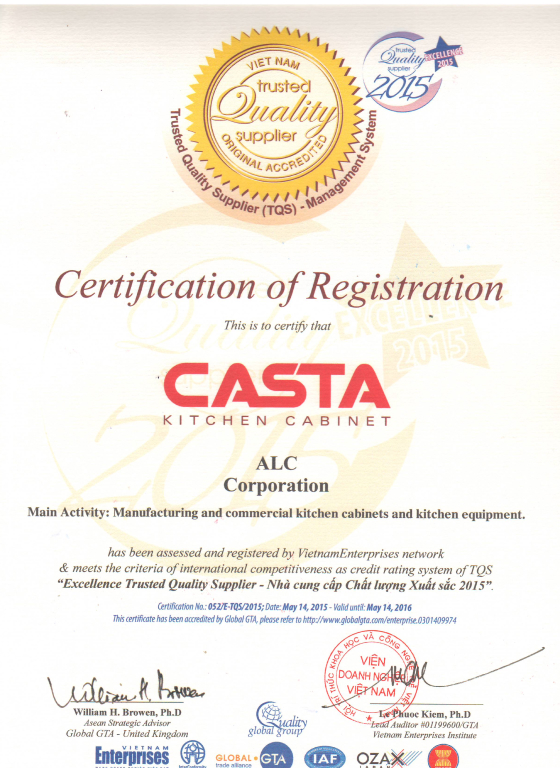
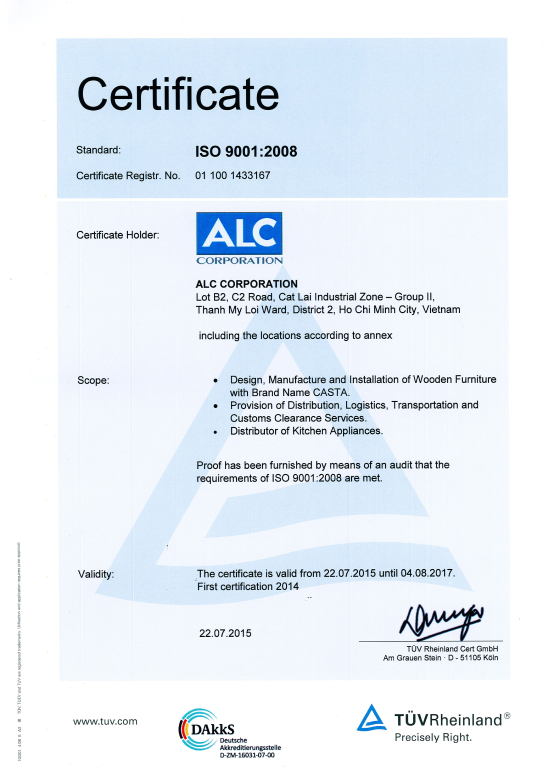
Materials are sourced to meet standards including European E1, JIS, CARB, and FSC, alongside BSI and BSCI, with TCVN ISO 9001:2015 quality management and KCMA certification. Over 80% of production is exported, primarily to the U.S., supported by sales and service offices in California, Texas, and New York.
Actual cabinet volume pricing tiers depend on product mix, specifications, shipping terms, and planned volume, so the most reliable figures come from a project-specific quotation, not a general price list.
FAQ
Does cabinet pricing decrease with larger order volumes?
What order size qualifies for wholesale pricing?
Are volume discounts available for mixed styles?
How much can I save by increasing order quantity?
Why doesn't doubling my order cut my unit price in half?
Can I get volume pricing if I take delivery in phases?
Conclusion
Cabinet volume pricing does lower cost per unit, mostly by spreading fixed costs, improving purchasing and batching, and filling containers more efficiently. The savings are steepest at the start and flatten later. Quantity is only one lever: product type, style mix, materials, format, shipping terms, and commitment all shape the price you actually pay.
The best way to compare cabinet volume pricing is to ask for quotes at several volume levels, convert them to landed cost per unit, and weigh savings against storage, cash flow, and demand risk. Casta Cabinetry, with factory-direct pricing, multi-phase pricing tiers, and flexible RTA and assembled options, is a starting point for a project-specific conversation about how your order size translates into cost.
Ready for a tiered quotation? Contact Casta Cabinetry's team with your product list and expected volume to request a quote for your next order.





Cabinet Specifications & CAD Drawings for Architects and...
Architects and designers rarely buy cabinets, but they decide a great deal about which cabinets get bought. A well-organ...
10/04/2026 | David Nguyen
Bulk Cabinet Supply for HOA & Multifamily Renovation Pro...
Renovating cabinets across dozens or hundreds of units is a different job from building new. The buildings are often occ...
10/02/2026 | David Nguyen
New Construction Cabinet Packages for Homebuilders and Devel...
On a new construction project, cabinets are rarely a one-off purchase. A construction cabinet package has to match unit ...
09/30/2026 | David Nguyen
Sample Program for Wholesale Buyers: How to Evaluate Quality...
For a cautious wholesaler, a cabinet sample is the cheapest insurance in the whole buying process. It costs a fraction o...
09/28/2026 | David Nguyen
Cabinet Specifications & CAD Drawings for Architects and...
Architects and designers rarely buy cabinets, but they decide a great deal about which cabinets get bought. A well-organ...
10/04/2026 | David Nguyen
Bulk Cabinet Supply for HOA & Multifamily Renovation Pro...
Renovating cabinets across dozens or hundreds of units is a different job from building new. The buildings are often occ...
10/02/2026 | David Nguyen
New Construction Cabinet Packages for Homebuilders and Devel...
On a new construction project, cabinets are rarely a one-off purchase. A construction cabinet package has to match unit ...
09/30/2026 | David Nguyen
Sample Program for Wholesale Buyers: How to Evaluate Quality...
For a cautious wholesaler, a cabinet sample is the cheapest insurance in the whole buying process. It costs a fraction o...
09/28/2026 | David Nguyen
Contact us
Casta is always ready to listen and answer all customers' questions