EN
For a cautious wholesaler, a cabinet sample is the cheapest insurance in the whole buying process. It costs a fraction of a container, and it tells you things no spec sheet or photo can. Yet samples get skipped or done badly: buyers either trust the brochure, or accept a sample without knowing what to inspect and later find the shipment doesn't match.
This guide is for wholesalers, distributors, and developers evaluating a new supplier and wanting proof of quality before committing to a large order. It covers the types of samples worth requesting, how the sample stage usually runs, seven things to inspect, how to test a sample beyond looking at it, how to lock the approved sample in as your quality standard, and what to expect on cost and timing.
Why the Cabinet Sample Stage Matters More Than Most Buyers Think
A cabinet sample reveals what a catalog can't: how the finish feels, how the edges are sealed, how the drawer runs, and whether the color matches your expectation under real light.
It also shows how the supplier works. Clear communication, careful packing, and a prompt response to feedback during sampling are good predictors of how a bulk order will go.
The risk it removes is asymmetric. A kitchen cabinet sample costs a small amount, while discovering a problem after a container ships can cost freight, delay, and a difficult claim. The mindset shift worth making: treat the sample as the first quality test of the supplier, not a formality before the real order.
Types of Cabinet Samples and What Each One Tells You
Not every cabinet sample answers the same question. Choosing the right type saves time, because each one verifies something different.
Finish and Color Samples
Small swatches or panels for judging color, sheen, and texture before choosing a finish. A finish sample before bulk order approval is best for early selection, especially when comparing several colors or custom matches. The limitation: a swatch can't show how a finish behaves on edges, corners, and profiles.
Learn more: Material & Finish Innovations: Elevating Cabinet Design and Durability
Door Samples
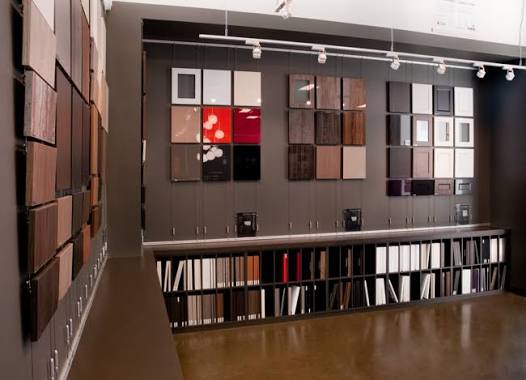
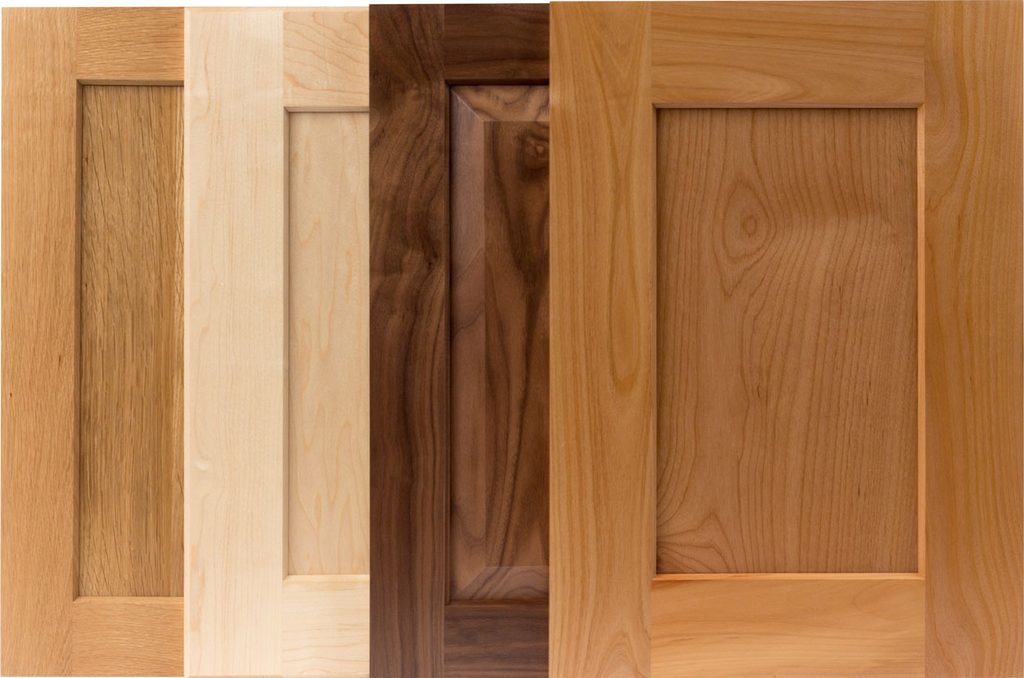
A finished door in your chosen style and finish, showing profile, paint or laminate quality, and edge detail. A door sample is best for evaluating the part customers see and touch most. The limitation: a door alone says little about box construction or hardware. Many showrooms also use a cabinet door sample display, such as a wall of small doors or a sample board, to help buyers compare profiles side by side. A display is useful for browsing, but ask for the actual finished door in your chosen finish before judging quality.
Construction or Corner Samples
A cut-away or corner section showing panel thickness, joinery, edge banding, and back panel. This type is best for judging structure, which is usually the hidden difference between suppliers.
Learn more: Difference between mdf and mfc vs plywood vs hdf
Drawer and Hardware Samples
A drawer box with slides and hinges, so you can test movement, soft-close action, and fit. These are best for judging the components most likely to generate complaints after installation.
Full Cabinet or Pre-Production Samples
A complete cabinet built to your specification, often made after the design is finalized and before mass production starts. It's best for confirming that the finished product, not just its parts, meets your standard.
Digital Samples and Mockups
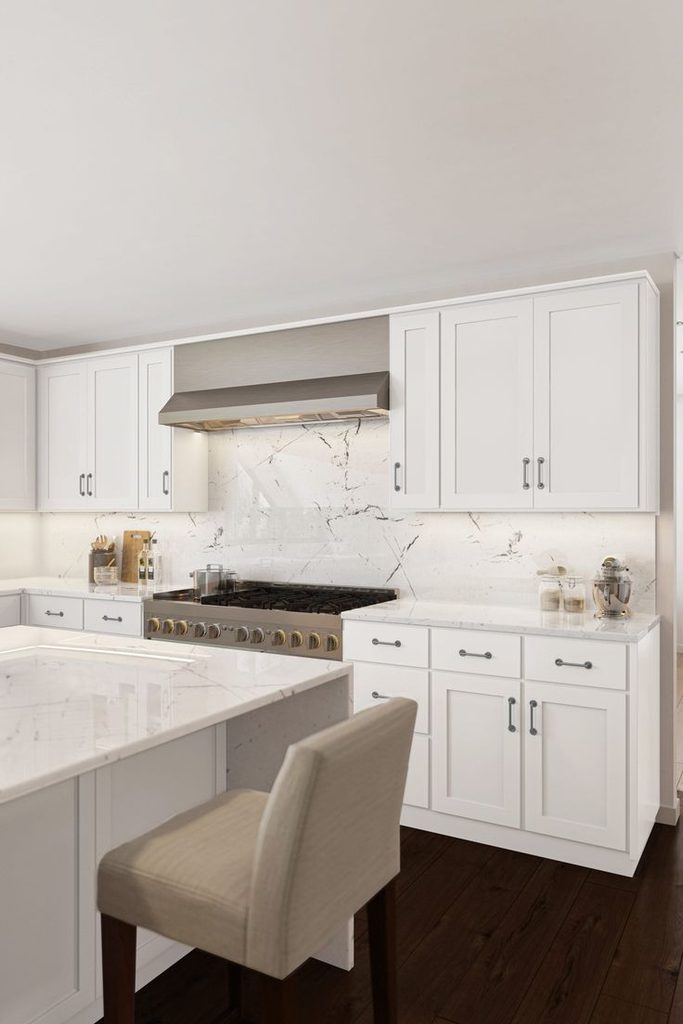
Digitally matched finishes, renders, and packaging mockups for early approval and online previews. They're useful for saving time, but never a substitute for a physical cabinet sample before a bulk order.
How the Cabinet Sample Stage Usually Runs
Most suppliers follow a similar path, though the details vary. Knowing the sequence helps you plan, and it shows where to push for clarity. Many suppliers now let buyers request cabinet samples online through a form on their website, which usually starts the sequence below.
- Request and specification: share your product type, style, finish, and any special requirements. When you request cabinet samples wholesale, it also helps to state your business type and expected volume.
- Quotation and price alignment: agree on pricing before sample work begins, so the sample reflects the real offer.
- Sample build and shipment: the supplier produces the sample and ships it to you.
- Your evaluation: inspect, test, and document the results.
- Feedback and revision: request changes if needed, and review a revised sample.
- Approval: sign off on a sample that becomes the reference standard.
- Pre-production sample (if applicable): confirm that the first units from the actual production line match the approved sample.
If you also ask for a kitchen cabinet proposal sample, meaning an example of the written proposal that accompanies a quote, check that it names the specification, finish, hardware, and packaging that the physical sample demonstrates. A proposal and a sample that disagree are a warning to resolve before approval.
7 Things to Inspect in a Cabinet Sample
Once the cabinet sample arrives, resist the urge to glance at it and approve. These seven checks cover most of what goes wrong later.
1. Finish Quality
Look for even coverage, consistent sheen, and a smooth surface without orange peel, drips, dust specks, or thin spots. Check corners, edges, and profile details, where finishes tend to wear first.
2. Color Accuracy
View the sample under the lighting where it will be used, not only under showroom or office light. Compare it side by side with your reference color or an existing product, and ask how color consistency is controlled across production batches.
3. Edges and Edge Banding
Examine how well the banding is bonded, whether the seams are tight, and whether edges are sealed against moisture. Poor edge treatment is one of the earliest signs of a cabinet that will swell or peel in humid conditions.
4. Construction, Joinery, and Materials
Confirm panel material and thickness against your specification, and check how the box is joined, how the back panel is secured, and whether shelves feel solid. Ask for documentation for materials and compliance claims, such as TSCA Title VI and CARB, FSC, and KCMA, and check that the sample matches what the paperwork describes.
Learn more: What is carb compliance
5. Dimensions and Squareness
Measure the sample against your drawings, and check that doors and drawers are square and gaps are even. Small dimensional errors multiply across a large order and are hard to fix once cabinets are installed.
6. Hardware Function
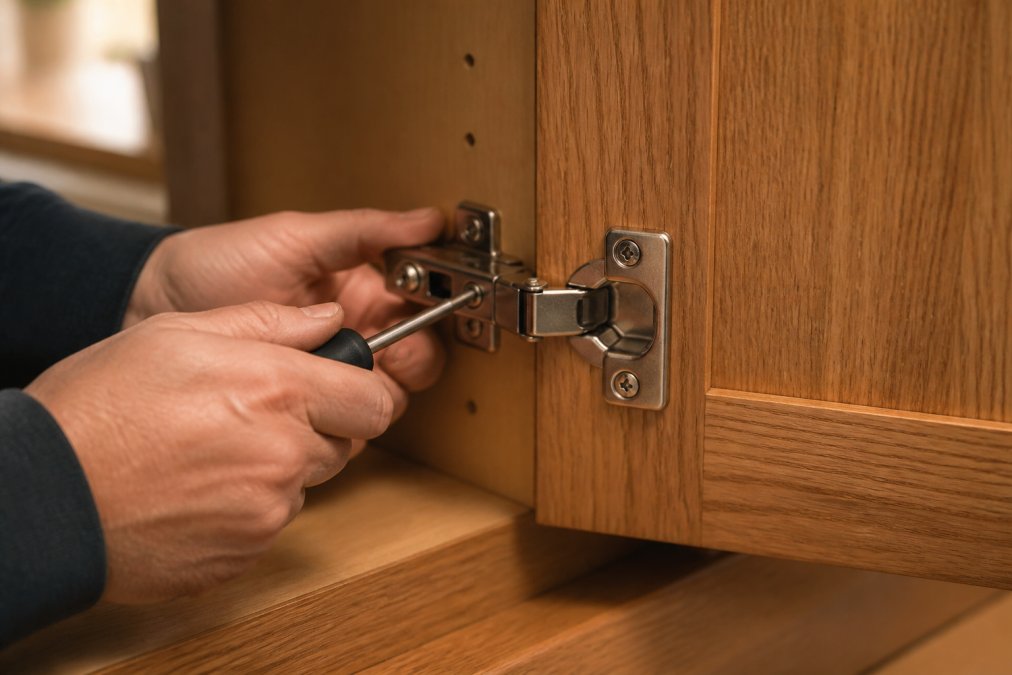
Open and close doors and drawers repeatedly, check soft-close action, and look for binding, rattling, or uneven reveals. Confirm that hardware brand and type match your specification, not just a similar-looking substitute.
Learn more: Types of cabinet hinges
7. Packaging and Labeling of the Sample Shipment
Inspect how the sample arrived: protection, cartons, labeling, and any damage in transit. If the sample was packed carelessly, expect the same attention to detail on the bulk shipment.
Learn more: ISTA Package Testing Standards
Testing a Cabinet Sample Beyond Looking at It
Looking is only half the evaluation. A few simple tests turn a cabinet sample into real evidence, and most of them take minutes.
- Handle it like a customer would: feel the finish, open and close every moving part, and load a shelf with realistic weight.
- Check how it cleans: test a small hidden area with common household cleaners to see how the finish responds.
- Try a light scratch and wear test on a hidden area to compare surface hardness against your reference product.
- Check moisture sensitivity on a hidden edge, carefully, to see how well it resists water exposure.
- Compare against a benchmark: put the sample next to a product you already sell or a competitor's, and judge relative quality.
- Get a second opinion: ask your sales or installation team to evaluate it, since they notice different issues than a purchasing manager.
- Record everything with photos and notes, so feedback to the supplier is specific and can be tracked.
From Approved Cabinet Sample to Quality Standard
Once you approve a sample, it becomes the benchmark the bulk order is measured against. This only works if the approval is clear and documented.
- Put the approval in writing, with photos, the specification, and any agreed tolerances for color, dimensions, and finish.
- Keep one approved sample on your side and ask the supplier to retain a matching one, so any later dispute has a physical reference.
- Ask for a pre-production sample before mass production starts, and compare it with the approved sample before releasing the full order.
- Link the sample to the purchase agreement, so the contract refers to the approved standard rather than a general description.
Holding a matching approved sample on both sides is a small step with large consequences. When a shipment arrives and someone questions the color or finish, there is a physical object to compare against, not two different memories.
Costs and Timing: What to Plan For in a Cabinet Sample Program
Policies vary widely. Some suppliers provide samples free of charge, some charge for them, and some credit the sample cost against a later order. A free cabinet sample program can be a good sign of confidence, but it's worth confirming what is actually free, since a color swatch and a full pre-production cabinet are very different items. Shipping is often a separate consideration.
Timing depends on whether the sample is an existing item or built to order, whether finishes need to be matched, and how many revision rounds you need. Build the sample stage into your project timeline, including time for evaluation and at least one revision, so sampling doesn't become the reason a project is late.
Learn more: Lead Times & Supply Chain Resilience: Navigating Potential Disruptions
Ask upfront what the sample costs, who pays shipping, how long it takes, and whether the cost is credited toward your first order. Getting those four answers early prevents most disputes later.
Common Mistakes When Evaluating a Cabinet Sample
A few errors show up repeatedly, and almost all of them are avoidable:
- Approving based on a digital render or swatch alone
- Judging color under the wrong lighting
- Inspecting only the door and ignoring construction and hardware
- Giving verbal approval without documenting the standard
- Skipping the pre-production sample on a large first order
- Accepting a sample made by hand with materials the bulk order won't use
- Not asking whether the sample reflects actual production methods
The last two deserve special attention. A hand-finished showpiece can look flawless while the production line produces something different. Ask directly whether the cabinet sample reflects the materials and methods the bulk order will use.
A Cabinet Sample Evaluation Checklist
Use this checklist each time a cabinet sample arrives:
- Sample type matches what you need to verify (finish, door, construction, hardware, full cabinet)
- Finish inspected for coverage, sheen, and defects
- Color checked under real lighting and against your reference
- Edge banding and sealing examined
- Panel material, thickness, and joinery confirmed against specification
- Dimensions and squareness measured
- Hardware tested for function and brand match
- Sample packaging and labeling reviewed
- Compliance and material documentation matches the sample
- Approval documented with photos and written tolerances
- Pre-production sample planned before bulk order
Questions to Ask a Supplier About a Cabinet Sample
The answers to these questions show quickly whether a supplier treats sampling as a real quality step or a sales gesture.
- Can I request samples before placing a bulk order, and which types are available?
- Is there a cost for samples, who pays shipping, and is the cost credited toward an order?
- How long does it take to receive a sample, and how long does a revision take?
- Will the sample be produced with the same materials and methods as the bulk order?
- Can I get a pre-production sample before mass production starts?
- Will you keep a matching approved sample on file for reference?
- Can you provide digital finish samples or mockups for early review?
Learn more: Kitchen cabinet buying guide

Supplier Spotlight: Casta Cabinetry
As a practical reference point for how a cabinet sample program works in a real factory, it helps to look at how Casta Cabinetry builds sampling into its order process.
Founded in 2002, Casta is a Vietnam-based manufacturer specializing in kitchen cabinets, vanities, and custom furniture, with over two decades in the industry. Its order process includes a sample stage: after quotation and price approval comes a sample model, then a purchase order, then pre-production samples before mass production begins. A sample of the order is shipped for the buyer's verification before mass production, and Casta states it offers samples until clients are satisfied with design, materials, and finish.
Learn more: Sourcing Cabinets and Furniture from Vietnam: Your Ultimate Guide
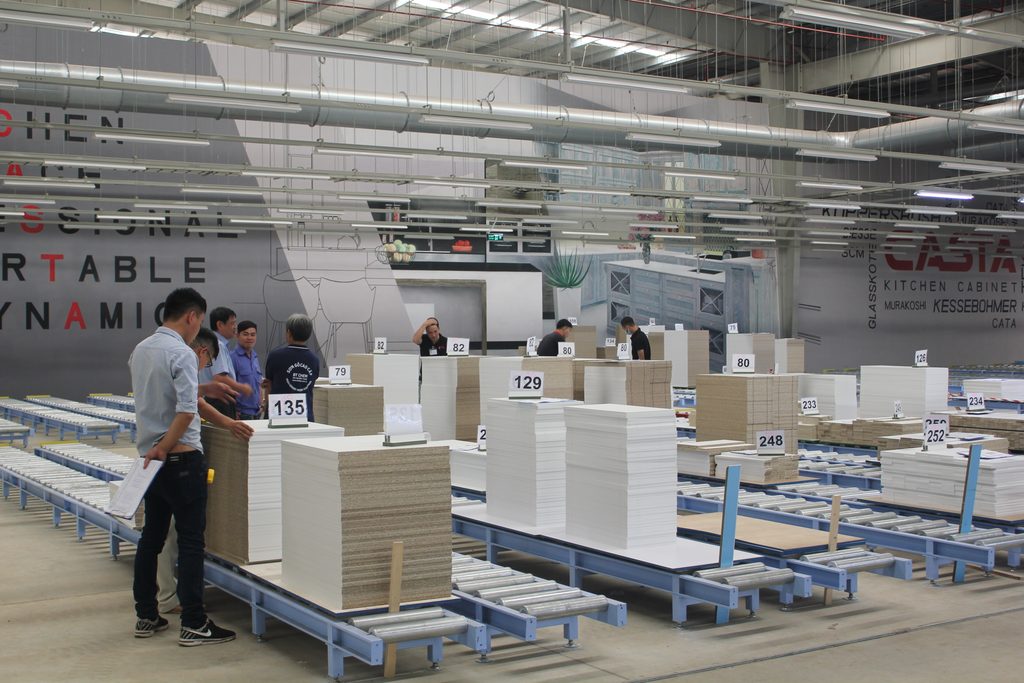
Free color samples are offered on product pages, and digitally matched finish samples and packaging mockups are available for early review, with CAD review rounds for door styles, edge profiles, and hardware layouts. Casta's website lists product samples within about 15 days on its OEM page, and describes physical prototype doors for in-person review and finish confirmation.
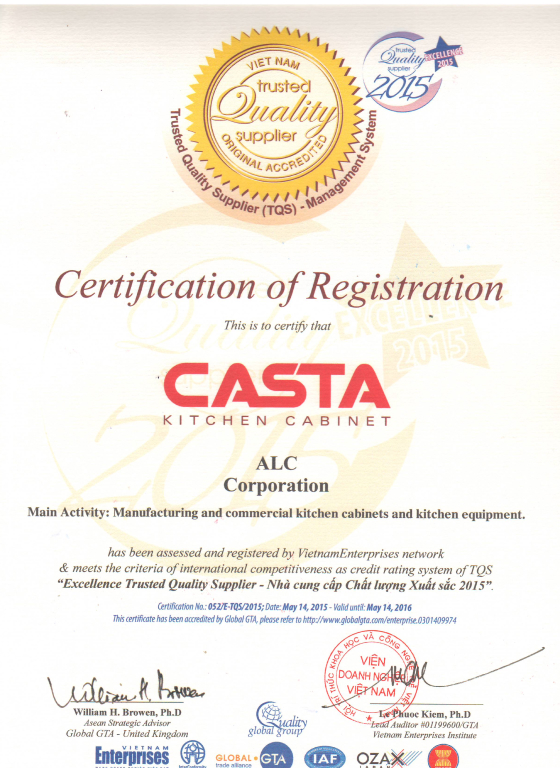
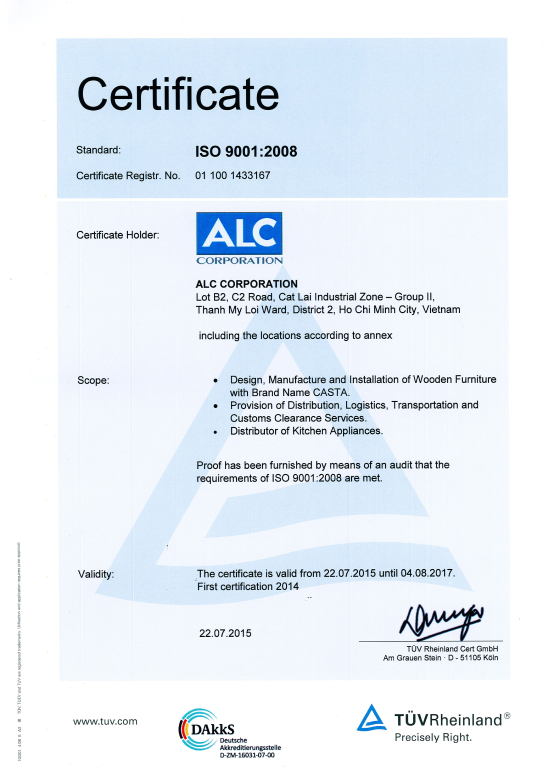
It operates two factories spanning over 100,000 m², using European machinery from brands including SCM, Homag, and Cefla, with a dedicated QA/QC team that checks finish, dimensions, materials, hardware, quantity, and packaging against approved specifications. Materials are sourced to meet standards including European E1, JIS, CARB, and FSC, alongside BSI and BSCI, with TCVN ISO 9001:2015 quality management and KCMA certification.
Learn more: Cabinet certification
Standard lead time is 45–60 days from shop drawing approval, with over 80% of production exported, primarily to the U.S., and sales and service offices in California, Texas, and New York. Sample cost, shipping responsibility, and turnaround vary by sample type and project, so confirm them directly and in writing when you request your first sample.
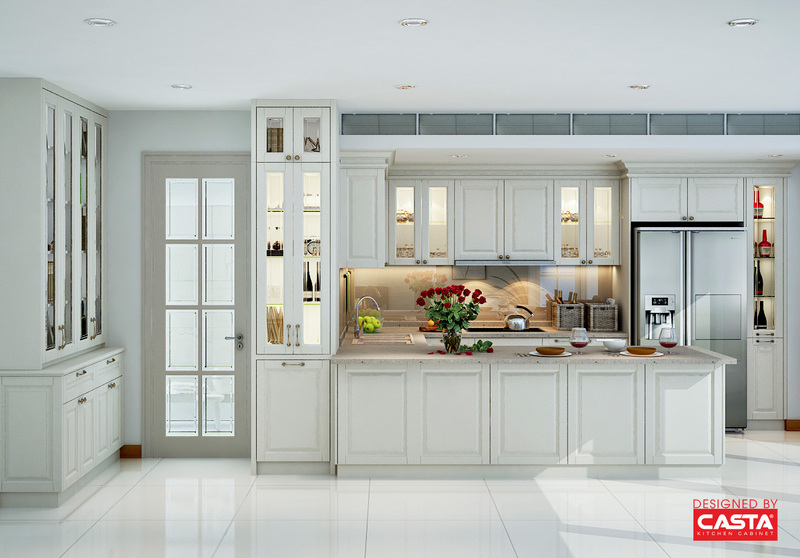
Learn more: Casta’s outstanding international projects
FAQ
Can I request door samples before placing a bulk order?
Is there a cost for wholesale sample kits?
How long does it take to receive samples?
What should I check in a cabinet sample?
What is a pre-production sample?
Can I get a custom finish matched before ordering?
Conclusion
A cabinet sample is the most affordable way to test a supplier's quality and communication before committing to a bulk order. It works best when you know which type to request and what to inspect. The strongest approach combines the right sample types, careful inspection and testing, written approval, and a pre-production sample, so the approved standard carries through to the finished order.
Casta Cabinetry, with a sample-first process, pre-production samples, and U.S.-based points of contact, is a good starting point for a quality-focused evaluation before your first bulk order.
Ready to start your evaluation? Contact Casta Cabinetry's team to request samples, share your specifications, and plan the evaluation stage for your next order.





Cabinet Specifications & CAD Drawings for Architects and...
Architects and designers rarely buy cabinets, but they decide a great deal about which cabinets get bought. A well-organ...
10/04/2026 | David Nguyen
Bulk Cabinet Supply for HOA & Multifamily Renovation Pro...
Renovating cabinets across dozens or hundreds of units is a different job from building new. The buildings are often occ...
10/02/2026 | David Nguyen

New Construction Cabinet Packages for Homebuilders and Devel...
On a new construction project, cabinets are rarely a one-off purchase. A construction cabinet package has to match unit ...
09/30/2026 | David Nguyen

Volume Pricing Tiers Explained: How Cabinet Costs Scale with...
Every wholesaler and developer eventually asks the same question: if I order more, how much does each cabinet cost me? T...
09/26/2026 | David Nguyen
Cabinet Specifications & CAD Drawings for Architects and...
Architects and designers rarely buy cabinets, but they decide a great deal about which cabinets get bought. A well-organ...
10/04/2026 | David Nguyen
Bulk Cabinet Supply for HOA & Multifamily Renovation Pro...
Renovating cabinets across dozens or hundreds of units is a different job from building new. The buildings are often occ...
10/02/2026 | David Nguyen
New Construction Cabinet Packages for Homebuilders and Devel...
On a new construction project, cabinets are rarely a one-off purchase. A construction cabinet package has to match unit ...
09/30/2026 | David Nguyen
Volume Pricing Tiers Explained: How Cabinet Costs Scale with...
Every wholesaler and developer eventually asks the same question: if I order more, how much does each cabinet cost me? T...
09/26/2026 | David Nguyen
Contact us
Casta is always ready to listen and answer all customers' questions