


 EN
EN
Cabinet research online is a mixed bag. Marketing pages, forum opinions, and genuinely independent standards all show up in the same search results, and they're not equally trustworthy. This guide breaks down where to actually find credible kitchen cabinet information—and what to treat with caution.
It's written for contractors validating a supplier's claims, cabinet dealers researching materials before a bulk order, and furniture brands doing due diligence before sourcing a new product line. The core problem most of these buyers run into is the same: most sourcing decisions require verifying claims—certifications, durability, and construction quality—not just reading opinions.
Independent Standards and Certification Bodies
The most reliable layer of kitchen cabinet information doesn't come from a brand's own website—it comes from independent bodies that test and certify against a fixed standard, regardless of who's paying for the marketing.
KCMA (Kitchen Cabinet Manufacturers Association)
- The primary certification authority for cabinet quality in North America.
- Partners with ANSI (American National Standards Institute) to test cabinets for structural load, weight capacity, and finish durability.
- A KCMA-certified seal means the line has passed standardized testing—not just a manufacturer's own claim.
CARB (California Air Resources Board)
- Regulates formaldehyde emissions from composite wood products (plywood, MDF, particleboard) sold or used in California.
- CARB Phase 2 has functioned as the de facto national benchmark for years, since most manufacturers build to it regardless of where the product ships.
- A direct health and indoor air quality standard, not a build-quality one—worth requesting documentation for before the finish or price is even discussed.
Learn more: What is carb compliance
TSCA Title VI (Toxic Substances Control Act, Title VI)
- The federal U.S. standard for formaldehyde emissions from composite wood products, enforced by the EPA.
- This standard closely aligns with CARB Phase 2 limits, but it is the mandatory nationwide requirement, not a state-level one.
- Any composite wood product sold in the U.S. is legally required to meet this standard—it's a compliance baseline, not a premium feature.
Learn more: Non-toxic kitchen cabinets
E1 (European Emissions Standard)
- The European equivalent emissions classification for formaldehyde in composite wood products.
- Commonly referenced by manufacturers that source materials internationally or export to European markets.
- Useful as a cross-reference when comparing a manufacturer's claims against a familiar U.S. standard like CARB or TSCA Title VI.
Learn more: Low VOC cabinets
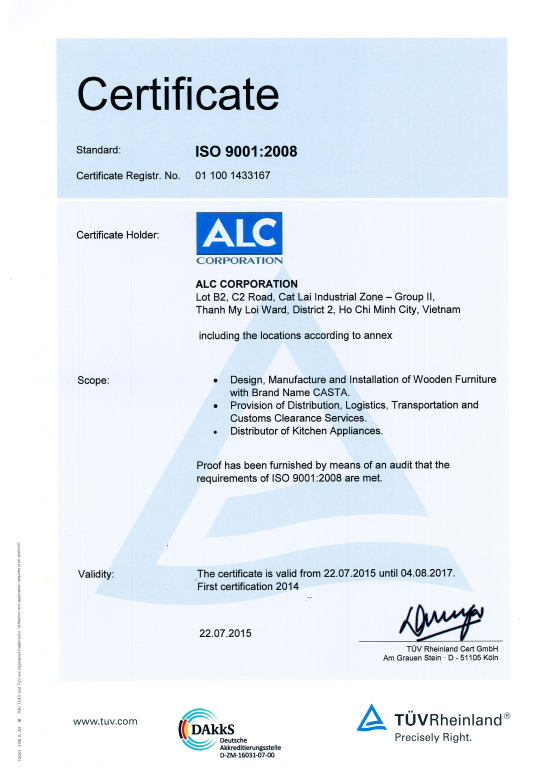
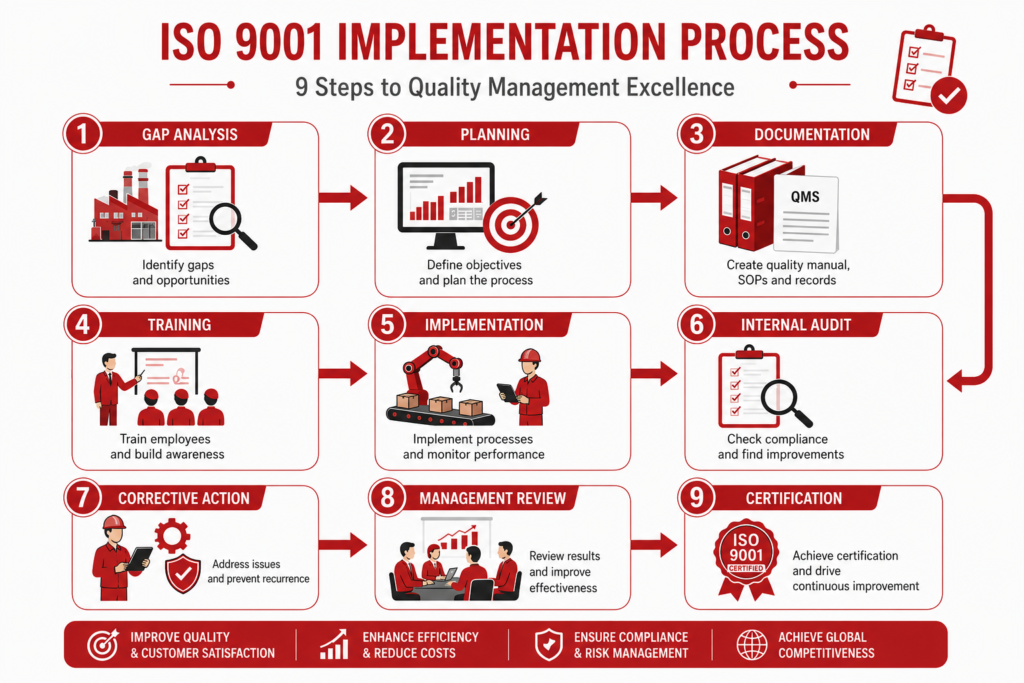
ISO 9001—Quality Management Systems
- Not a product-specific certification, but a certification of the manufacturer's quality management process itself—how consistently a factory controls inputs, production, and output across every run.
- Relevant for B2B buyers because it signals process repeatability at scale, which matters more on a bulk or ongoing order than it does on a single custom piece.
- Manufacturers often hold this certification alongside product-level certifications (like CARB or FSC) rather than replacing them; the two answer different questions: one covers the product, while the other covers the process that produces it.
Taken together, these five bodies cover the two things a buyer actually needs verified before committing to an order: is the product safe (E1, TSCA Title VI, CARB), and is the manufacturing process consistent (ISO 9001 and KCMA). Any kitchen cabinet information that skips both of these and jumps straight to finish photos is incomplete.
Learn more: Cabinet certification
It's also worth noting that these bodies don't operate in competition with each other—they cover different, complementary questions. CARB and TSCA Title VI only tell you about emissions safety; they say nothing about whether the drawer boxes are plywood or particleboard. KCMA testing covers structural performance but doesn't verify formaldehyde levels. Treating any single certification as a complete picture of quality is one of the more common mistakes buyers make when gathering kitchen cabinet information—the full picture requires checking more than one.
Red Flags to Watch For When Gathering Kitchen Cabinet Information
Some sourcing signals are worth treating with immediate skepticism, regardless of how polished the presentation is. A few patterns come up often enough to be worth naming directly.
Certification logos with no verification path. If a supplier's website displays a certification badge but provides no certificate number, no issuing body contact, and no way to independently confirm it, treat that logo as unverified marketing rather than documented kitchen cabinet information.
Reviews that read like marketing copy. Genuine user reviews tend to be specific—mentioning a particular finish, a delivery timeline, or an installation detail. Reviews that read like generic ad copy, especially clustered in a short time window, are a common sign of manufactured or incentivized feedback rather than authentic user experience.
Reluctance to provide a physical sample. A manufacturer confident in its construction quality has little reason to avoid sending a sample. Hesitation or excessive delay on this specific request is one of the more reliable warning signs in B2B cabinet sourcing.
Vague sourcing language. Phrases like "premium hardwood" or "eco-friendly materials" without a species name, a certification reference, or a specific standard behind them are marketing language dressed up as kitchen cabinet information. Ask for the specific standard or material name behind any general claim before treating it as fact.
Independent Testing and Review Organizations
Beyond formal certification bodies, a smaller set of organizations run their own independent testing rather than simply publishing brand-provided kitchen cabinet information.
Consumer Reports is a subscription-based, genuinely independent testing organization that runs lab-based stress tests on furniture and cabinet materials. It's one of the few sources not funded by the brands it reviews, which makes its findings meaningfully different from a sponsored buying guide.
Industry buying-guide publications that specifically explain construction quality markers—dovetail joinery, plywood vs. particleboard, and drawer glide types—are more useful than ones that simply list brand recommendations without explaining the reasoning behind them. The difference matters: a guide that teaches you how to evaluate a cabinet gives you reusable kitchen cabinet information you can apply to any supplier, not just the ones it happens to recommend.
Learn more: Types of joints for cabinets

Independent testing matters more than manufacturer spec sheets for one simple reason: it verifies claims rather than repeating them. A spec sheet tells you what a manufacturer says their product does; a lab test tells you what it actually did under controlled, repeatable conditions.
What to Check on Consumer and E-Commerce Platforms
Large marketplaces—Amazon, Wayfair, and Houzz—aggregate real user feedback at volume, which makes them useful for spotting recurring complaints about assembly issues, material flaws, or shipping damage that wouldn't show up in a single review.
User-uploaded photos on platforms like Houzz are particularly useful because they show cabinets in actual installed conditions, not studio lighting. A finish that looks flawless in a manufacturer's professional photography can look noticeably different when photographed in someone's actual kitchen under regular daylight.
The limitation worth keeping in mind: review volume reflects consumer sentiment, not verified structural or safety testing. A product with hundreds of five-star reviews hasn't necessarily passed a formaldehyde emissions test or a load-bearing test—it's just popular. Treat marketplace reviews as a useful signal, not a substitute for certification data.
It also helps to read reviews with a specific lens rather than skimming star ratings. Look for mentions of how a product held up after months of use, not just first-impression photos posted right after unboxing—early reviews rarely capture the durability issues that matter most for a kitchen cabinet purchase. Filtering for reviews with photos, and specifically photos taken well after installation, tends to surface more useful kitchen cabinet information than the review count alone.
Community and Professional Discussion Forums
Cabinet makers, installers, and contractors often share real-world insights on materials, brands, and pricing in trade-specific forums, surfacing a different type of kitchen cabinet information than either marketing pages or certification bodies provide.
This input often surfaces practical issues that manufacturer marketing simply won't mention: lead time slippage on a particular product line, actual warranty claim experiences, or batch-to-batch inconsistency that only becomes apparent after ordering from the same supplier more than once.
The right way to weigh this input is as anecdotal cross-checking, not as a primary source. A single frustrated forum post doesn't tell you much on its own, but a recurring complaint pattern across multiple independent threads is worth taking seriously—and worth verifying against certification bodies or documented specs where possible before it changes a sourcing decision.

A Quality Checklist to Apply to Any Source or Product
Regardless of where a piece of kitchen cabinet information comes from—a certification body, a review platform, or a forum post—it's worth running it against a consistent quality checklist rather than taking it at face value.
| Feature | High-Quality Signal | Low-Quality Signal |
| Cabinet Boxes | Plywood (moisture-resistant) | Particleboard (swells when wet) |
| Drawer Glides | Undermount, soft-close steel | Side-mount plastic or thin metal |
| Joinery | Dovetail or mortise-and-tenon | Staples, glue, or plastic brackets |
| Wood Type | Solid hardwoods or quality engineered wood | Thin veneer over low-grade MDF/particleboard |
This table is useful as a filter for any kitchen cabinet information you come across—if a glowing review or a manufacturer's marketing page doesn't mention any of the high-quality signals above, that's often more telling than what it does say.
Learn more: Types of kitchen cabinets materials
How to Separate a Real Standard from a Marketing Claim
Not everything that looks like a certification actually is one, and separating the two is one of the most useful skills in evaluating kitchen cabinet information.
Start by asking whether a certification is third-party verified—KCMA, ANSI, FSC, and CARB all fall into this category—or simply self-reported by the manufacturer with no outside body behind it. Request documentation, not just a logo on a website; a real certification should have a lookup or verification process you can check independently.
Be cautious of vague language like "premium quality" or "industry-leading durability" that isn't backed by a specific standard or test. These phrases are marketing, not kitchen-cabinet information—they carry no verifiable meaning on their own. When in doubt, cross-reference a supplier's claims against at least one independent source before relying on them for a sourcing decision.
Where This Applies to Sourcing Your Own Cabinet Line
Due diligence matters more for B2B buyers than for retail consumers, because a bad sourcing decision affects an entire product line or project, not one individual purchase. A single mis-specified batch of hardware or a mismatched finish can mean reordering an entire run—a very different consequence than a single unhappy customer returning one item.
Before committing to a supplier, verify three things: certifications, with actual documentation rather than a claim; construction specs, ideally confirmed against a physical sample rather than a spec sheet alone; and independent or third-party feedback where it's available, weighed against the caveats covered above.
Requesting physical samples remains one of the most reliable ways to verify claims that research alone can't fully confirm. No amount of kitchen cabinet information gathered online replaces holding a drawer box in your hands, testing a glide under load, or inspecting a finish under different lighting conditions.
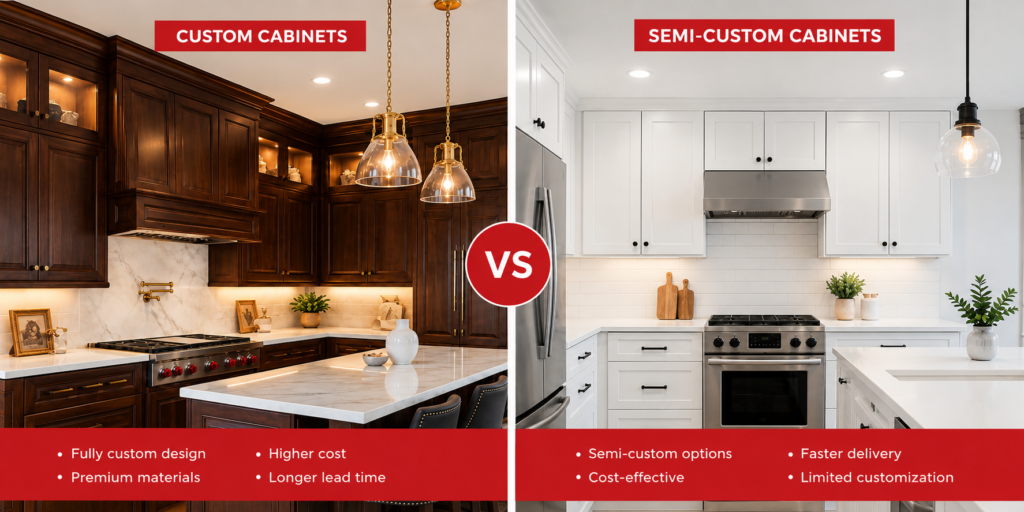
This is especially true for brands sourcing custom kitchen cabinet cost information alongside construction specs, since price and quality claims are straightforward to state on a spec sheet but harder to verify without a comparison sample in hand. A supplier quoting an unusually low price relative to competitors offering comparable certifications is worth a closer look—either the construction standard is lower than advertised, or a genuine cost advantage exists that's worth understanding before committing to volume.
Learn more: How much is custom cabinetry
Supplier Spotlight: Casta Cabinetry
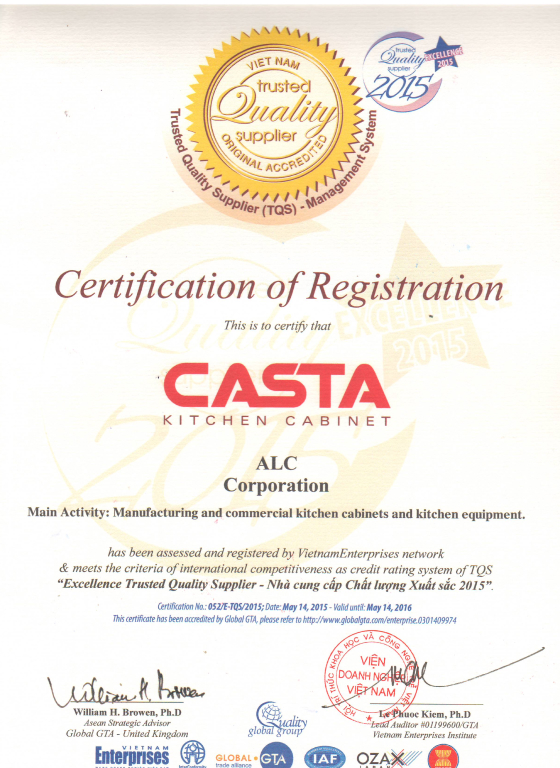
As a practical illustration of what documented, verifiable kitchen cabinet information can look like from a single supplier, it's worth looking at how Casta Cabinetry presents its own credentials.
Founded in 2002, Casta is a Vietnam-based manufacturer specializing in kitchen cabinets, vanities, and custom furniture, with over two decades in the industry. The company operates two factories spanning more than 100,000 m², using European machinery from brands including SCM, Homag, and Cefla, with manufacturing automation reaching roughly 90%.
Learn more: Sourcing Cabinets and Furniture from Vietnam: Your Ultimate Guide
Materials are sourced to meet global standards, including European E1, JIS, CARB, and FSC certifications, alongside BSI and BSCI certifications, and the facility follows TCVN ISO 9001:2015 quality management standards. Casta also holds KCMA certification—covering both the emissions and process-consistency layers of kitchen cabinet information outlined earlier in this guide.
Learn more: What is BSCI certification
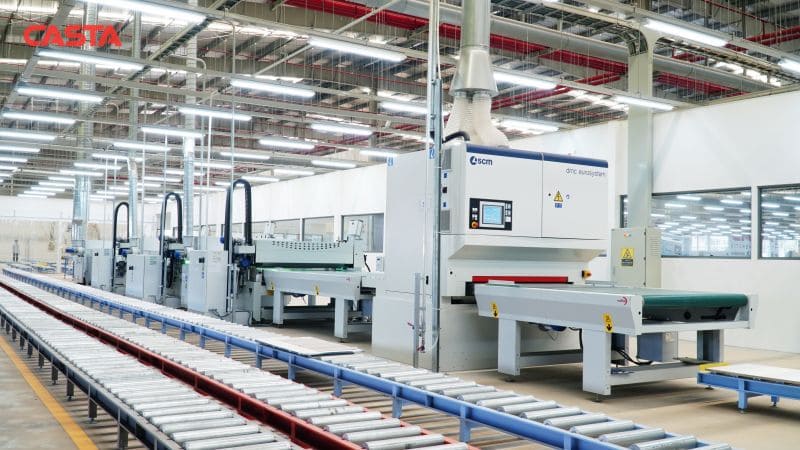
Production capacity runs up to 200 containers per month, with a standard lead time of 45–60 days from shop drawing approval. The company also offers samples until clients are fully satisfied with design, materials, and finish before production begins—supporting the kind of hands-on verification this guide recommends rather than asking buyers to take documentation at face value. Over 80% of production is exported, primarily to the U.S., supported by sales and service offices in California, Texas, and New York.
Even with certifications like these, buyers should still verify documentation directly rather than taking any single claim—including this one—at face value. That's the same standard this guide has applied to every other source covered above, and it's worth applying consistently.
Learn more: Casta’s outstanding international projects

Putting It All Together
No single source in this guide is sufficient on its own. Certification bodies verify safety and structural performance but say nothing about a buyer's actual experience with lead times or customer service. Independent testing organizations confirm durability claims but only cover the specific products they've chosen to test. Marketplace reviews and forum discussions surface real-world patterns but carry no formal verification behind them.
The most reliable approach to gathering kitchen cabinet information treats these sources as layers that check each other, rather than picking one and trusting it completely. Start with certifications and documentation to establish a baseline of safety and construction quality, cross-reference that against independent testing or trade forum discussion where available, and close the loop with a physical sample before committing to volume. That layered process is slower than reading a single glowing review or trusting a manufacturer's marketing page, but it's also the difference between kitchen cabinet information that holds up under scrutiny and information that simply sounds convincing.
FAQ
What is the most trusted certification for kitchen cabinet quality?
How can I verify a cabinet manufacturer's certifications are real?
Are online reviews a reliable way to judge cabinet quality?
What's the difference between KCMA certification and a manufacturer's own quality claims?
Where can I find reliable information before sourcing custom kitchen cabinets?
Conclusion
Reliable kitchen cabinet information comes from a mix of independent standards bodies, genuinely third-party testing, and verified documentation—not marketing pages or unverified reviews alone. The strongest approach for B2B buyers is to cross-check certifications, request documentation, and confirm with physical samples before committing to a supplier.
Casta Cabinetry, with documented certifications and a sample-first process, is one option worth evaluating using the framework laid out in this guide.
Ready to verify a supplier's claims for yourself? Contact the team at Casta Cabinetry to request certification documentation, samples, or a conversation about your sourcing needs.






How Many Kitchen Cabinets Fit in a 20ft/40ft Container?...
For a wholesaler pricing out a bulk order, cabinets per container is the number that turns a quote into an actual budget...
09/20/2026 | David Nguyen

FSC Certified Cabinets: Why It Matters for Green Building Pr...
For a developer working on a certified green building project, FSC certified cabinets aren’t just a sustainability...
09/18/2026 | David Nguyen

Lead Time for Wholesale Cabinet Orders: From Factory to Deli...
For a developer or wholesaler working against a construction or renovation deadline, cabinet lead times aren’t a n...
09/16/2026 | David Nguyen

Cabinet Import Duties & Tariffs: What US Buyers Pay When...
For a U.S. wholesaler or importer, uncertainty around tariffs on imported cabinets is often the single biggest barrier t...
09/14/2026 | David Nguyen
How Many Kitchen Cabinets Fit in a 20ft/40ft Container?...
For a wholesaler pricing out a bulk order, cabinets per container is the number that turns a quote into an actual budget...
09/20/2026 | David Nguyen
FSC Certified Cabinets: Why It Matters for Green Building Pr...
For a developer working on a certified green building project, FSC certified cabinets aren’t just a sustainability...
09/18/2026 | David Nguyen
Lead Time for Wholesale Cabinet Orders: From Factory to Deli...
For a developer or wholesaler working against a construction or renovation deadline, cabinet lead times aren’t a n...
09/16/2026 | David Nguyen
Cabinet Import Duties & Tariffs: What US Buyers Pay When...
For a U.S. wholesaler or importer, uncertainty around tariffs on imported cabinets is often the single biggest barrier t...
09/14/2026 | David Nguyen
Contact us
Casta is always ready to listen and answer all customers' questions