


 EN
EN
The cost of kitchen cabinets from local providers can swing anywhere from $100 to over $1,200 per linear foot, and that range confuses more buyers than it helps. This guide breaks down exactly what drives the cost of kitchen cabinets—by type, by size, and by hidden fees—so contractors and cabinet brands can quote with confidence.
What Determines the Cost of Kitchen Cabinets
Before comparing quotes, it helps to understand why the cost of kitchen cabinets varies so much between suppliers in the first place. Six factors do most of the work, and each one shows up again and again whenever the cost of kitchen cabinets is discussed across different markets and suppliers.
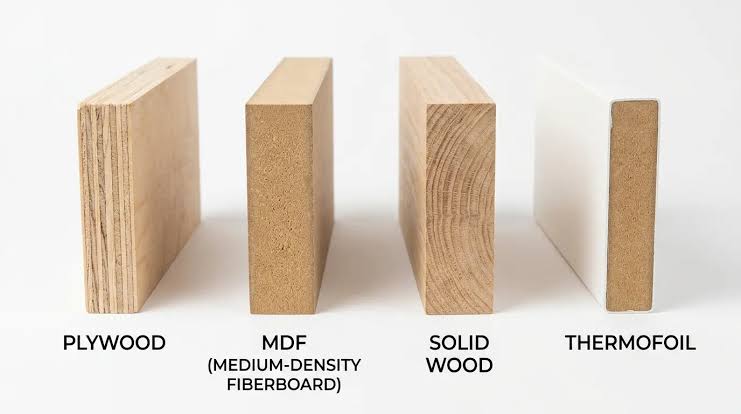
Material type. Particleboard is the cheapest core material, plywood sits in the middle, and solid wood commands the highest price. This single choice can shift the cost of kitchen cabinets by 30–50% on its own.
Learn more: Types of kitchen cabinets materials
Construction method and hardware. Dovetail joinery, soft-close hinges, and full-extension drawer slides all add labor and component cost. Cabinets built with basic butt joints and standard hinges will always come in cheaper.
Learn more: Types of joints for cabinets & Types of cabinet hinges
Cabinet type. Stock, semi-custom, and fully custom cabinets occupy three distinct price tiers, which we cover in detail below.
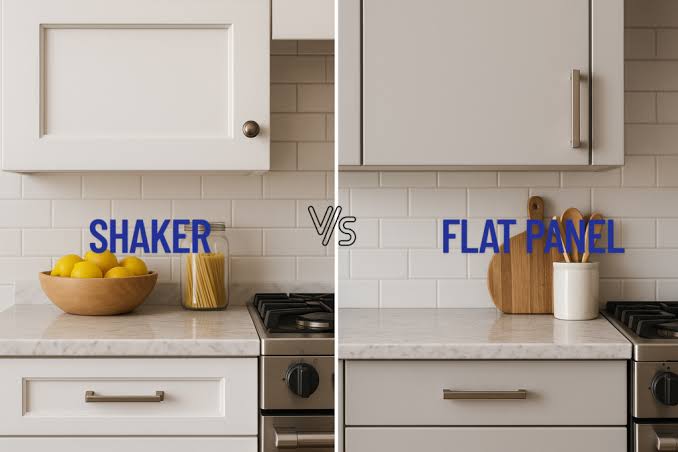
Finish and door style. A flat-panel laminate door costs far less than a five-piece shaker door finished in a hand-applied stain or paint.
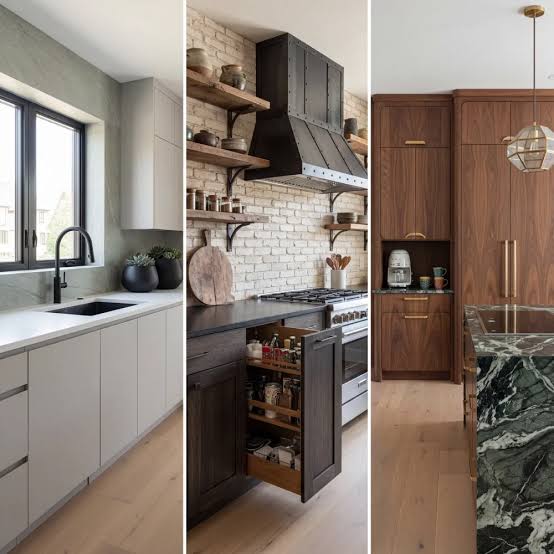
Kitchen size and layout complexity. More linear footage means more material and more labor. Islands, corner units, and specialty storage (pull-out pantries and Lazy Susans) all add cost per foot.
Installation labor and local market rates. Labor pricing varies significantly by region — coastal metro markets can run 25–50% above the national average, while Sun Belt and Midwest markets typically land 10–20% below it, according to recent contractor pricing data.
Once you stack these six variables together, two kitchens of identical size can end up costing tens of thousands of dollars apart. This is exactly why a single "average" figure for the cost of kitchen cabinets rarely tells the full story—and why itemized quotes matter more than headline numbers.
For contractors quoting multiple projects a year, the issue matters even more than it does for a one-time homeowner. A quote that only lists a per-linear-foot number, without specifying material, joinery, and finish, is effectively unusable for comparison. The cost of kitchen cabinets on paper only becomes meaningful once you know exactly which of these six variables that number is built on.
Who This Breakdown Is For
This guide is written primarily for three groups who deal with the cost of kitchen cabinets on a recurring basis rather than a one-time basis.
Contractors quoting residential or light-commercial projects need pricing benchmarks they can defend to clients and adjust confidently when a spec changes mid-project.
Dealers comparing supplier pricing need a consistent framework for evaluating whether a new supplier's numbers actually beat what they're already paying, once freight and lead time are factored in.
Cabinet and furniture brands benchmarking their price points need visibility into what the broader market—both local retail and factory-direct—is charging for comparable builds so their own positioning stays competitive.
Average Cost of Kitchen Cabinets by Type
The clearest way to understand the cost of kitchen cabinets is by tier. Each step up roughly doubles the price per linear foot compared to the tier below it, and knowing which tier a quote falls into is the fastest way to sanity-check the cost of kitchen cabinets a supplier is proposing.
1. Stock Cabinets
Stock cabinets typically run $80–$120 per linear foot for materials, or up to $100–$400 per linear foot installed, depending on the source and region. This is the most accessible entry point in the spectrum of the cost of kitchen cabinets.
What's included at this price point: standard box sizes in fixed increments, a limited palette of finishes, and standard door styles. Lead times are short — often just days — because units ship pre-assembled from existing inventory.
Learn more: What are standard cabinet sizes
Best fit for: budget-conscious renovations, rental property turnovers, quick-turnaround projects, and standard rectangular or galley kitchen layouts where custom sizing isn't necessary.
2. Semi-Custom Cabinets
Semi-custom cabinets sit in the $150–$300 per linear foot range for materials, climbing toward $650 per linear foot installed in some markets. This tier represents the largest share of the cost of the kitchen cabinets market because it's where most residential renovation projects land.
The price increase buys real flexibility: expanded size options in smaller increments, a wider range of finishes and door styles, and some layout accommodation for non-standard walls or appliances. Lead times generally run four to eight weeks.
Best fit for: most residential kitchen remodels, mid-range investment properties, and projects where the layout needs modest adjustment but full customization isn't justified.
Learn more: The difference of custom vs. semi-custom cabinets
3. Fully Custom Cabinets
Fully custom cabinets cost $500–$1,200 per linear foot, and in premium markets can exceed $1,200 per linear foot installed. This is the top of the kitchen cabinets' cost curve, reflecting made-to-measure construction from the ground up.
What drives the higher cost? Every dimension is built to the specific kitchen; design flexibility is essentially unlimited; and materials and hardware are typically premium-grade (solid hardwood, soft-close everything, and integrated lighting channels). Lead times commonly run eight to sixteen weeks.
Best fit for: high-end residential projects, unusual or irregular layouts that stock and semi-custom sizing can't accommodate, and commercial or hospitality spec projects with brand-specific design requirements.
Learn more: How much are custom cabinets?
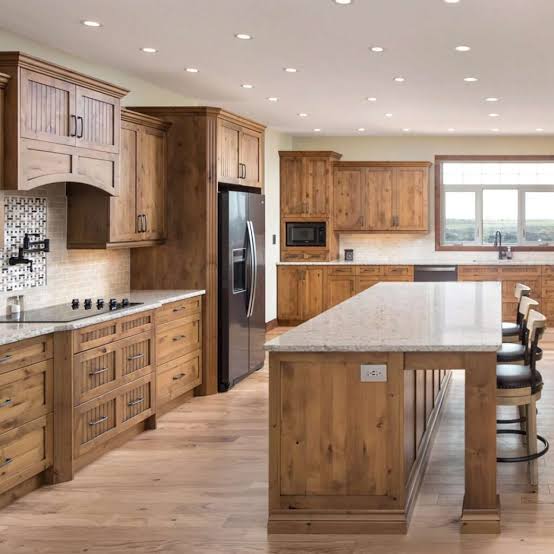
The gap between these three tiers isn't just about materials; it also reflects how kitchen cabinet costs are structured. Stock pricing is largely fixed because units are produced in bulk ahead of demand. Semi-custom pricing flexes based on a defined set of options. Custom pricing is essentially built from scratch for each order, which is why lead times stretch and why per-unit cost climbs so much faster than the material cost alone would suggest.
Average Kitchen Cabinet Cost by Kitchen Size
Total project cost is really a function of two things multiplied together: the per-linear-foot price of your chosen tier and how many linear feet your kitchen actually needs. A standard 10×10 kitchen requires roughly 20–25 linear feet of cabinetry, and larger layouts scale up quickly from there.
Small kitchen (roughly 20–25 linear feet): Stock cabinets typically total $3,000–$6,000; semi-custom runs $5,000–$12,000.
Medium kitchen (roughly 30–40 linear feet): A full-tier range spans $4,000–$13,000 for stock through semi-custom, with a national average landing near $6,500 for a fully installed 10×10-to-12×12 project.
Large kitchen (40+ linear feet, often with an island): U-shaped or L-shaped layouts with a center island and pantry storage can reach $25,000–$50,000 or more once custom-grade cabinetry is involved.
Total project costs tend to scale faster than most buyers expect, mainly because island units, upper cabinets, and specialty storage inserts all add linear footage — and therefore cost — beyond what the base floor plan suggests. This is one of the most common places where the estimated cost of kitchen cabinets and the final invoice diverge.
A useful way to sanity-check any quote is to divide the total by the actual linear footage in the plan, then compare that per-foot figure against the tier ranges above. If the resulting number for the cost of kitchen cabinets falls well outside the tier the buyer believes they're purchasing, that's usually a sign either the scope has shifted or the quote is bundling in costs—like appliances or countertops—that shouldn't be attributed to cabinetry alone.
Cabinet Installation Cost: What to Budget For
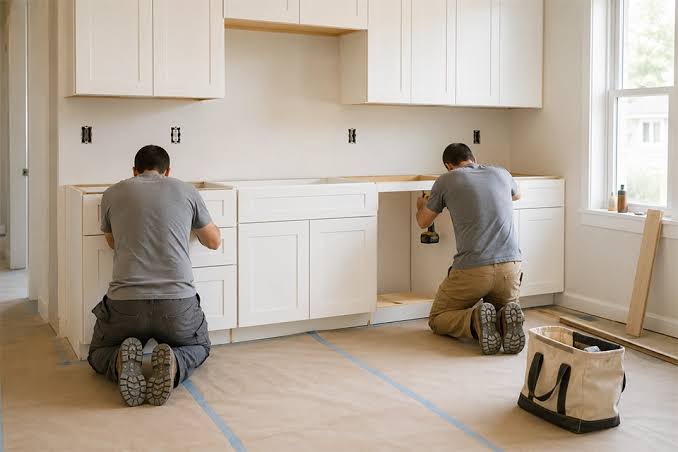
Installation is a separate line item from the cabinetry itself, and it's frequently underestimated when buyers first budget the cost of kitchen cabinets for a project. Budget $50–$90 per linear foot for a straightforward replacement in an existing kitchen with no layout changes, and $80–$150 per linear foot when the project involves layout changes, plumbing relocation, or non-standard ceiling heights.
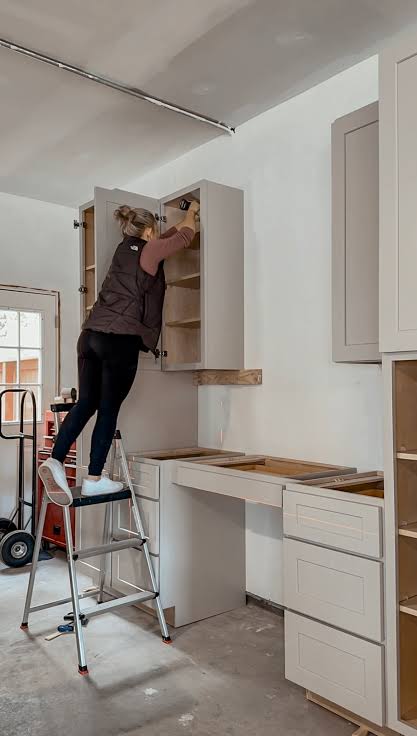
Materials and labor are combined. Installation typically accounts for 15–25% of the overall cost of kitchen cabinets, including materials and labor.
What affects installation pricing:
- Kitchen layout complexity (straight run vs. L-shaped vs. U-shaped vs. island)
- Removal and disposal of existing cabinets
- Plumbing or electrical adjustments needed to accommodate the new layout
- Ceiling height, wall condition, and whether the floor plan is changing
Common add-on costs include hauling away old cabinets, minor drywall or wall repairs once old units are removed, and reconnecting appliances that were disturbed during the swap. None of these show up in a base cabinetry quote, which is exactly why installation cost is so often underbudgeted by both contractors and homeowners planning a project around a single number.
For contractors bidding jobs, separating cabinetry cost from installation cost isn't just good practice—it's what allows a bid to hold up when a client questions the total. A client who sees the cost of kitchen cabinets broken out from labor is far less likely to push back mid-project than one who was only ever shown a single lump-sum figure.
5 Hidden Costs That Push the Final Price Higher
Even a carefully planned budget for the cost of kitchen cabinets can be thrown off by costs that only appear once the project is underway. These five categories account for the majority of the gap between an initial estimate and the final cost of kitchen cabinets on a real project.
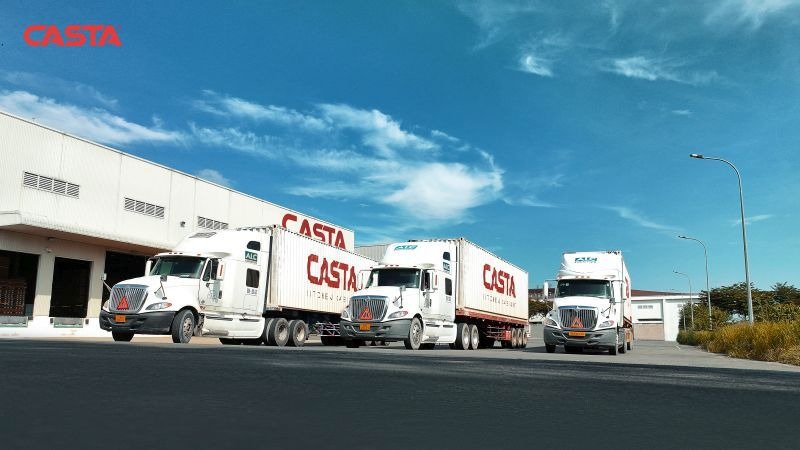
1. Freight and Delivery Fees
Shipping costs vary by distance, order size, and how well the cabinets are packaged. Poorly protected freight also raises the odds of damage in transit, which brings its own cost.
Learn more: ISTA Package Testing Standards
2. Customization and Upgrade Fees
Upgraded hardware, non-standard finishes, or sizing outside the standard increments all carry a premium — even within the semi-custom tier, where buyers sometimes assume pricing is fixed.
3. Change Orders Mid-Project
Layout or finish changes requested after production has started tend to cost significantly more than the same changes made during the planning phase, since they can require re-cutting materials or restarting a production run.
4. Damage and Replacement Costs
Freight damage or manufacturing defects add unplanned costs and can delay a project by weeks while replacement units are produced and shipped.
5. Assembly Labor (for RTA Cabinets)
Ready-to-assemble (RTA) cabinets often look cheaper on paper, but that savings can quietly shift into labor hours instead of disappearing altogether. Factor in assembly time when comparing RTA pricing against pre-assembled options.
Learn more: Top 10 RTA cabinet supplier and manufacturers
Taken together, these five hidden costs explain why the final invoice for a project so often lands higher than the initial estimate. None of them are unusual or avoidable in every case, but flagging them upfront, before a single order is placed, keeps the true cost of kitchen cabinets from becoming a surprise partway through a build.
Local Providers vs. Factory-Direct Sourcing: Comparing the Numbers
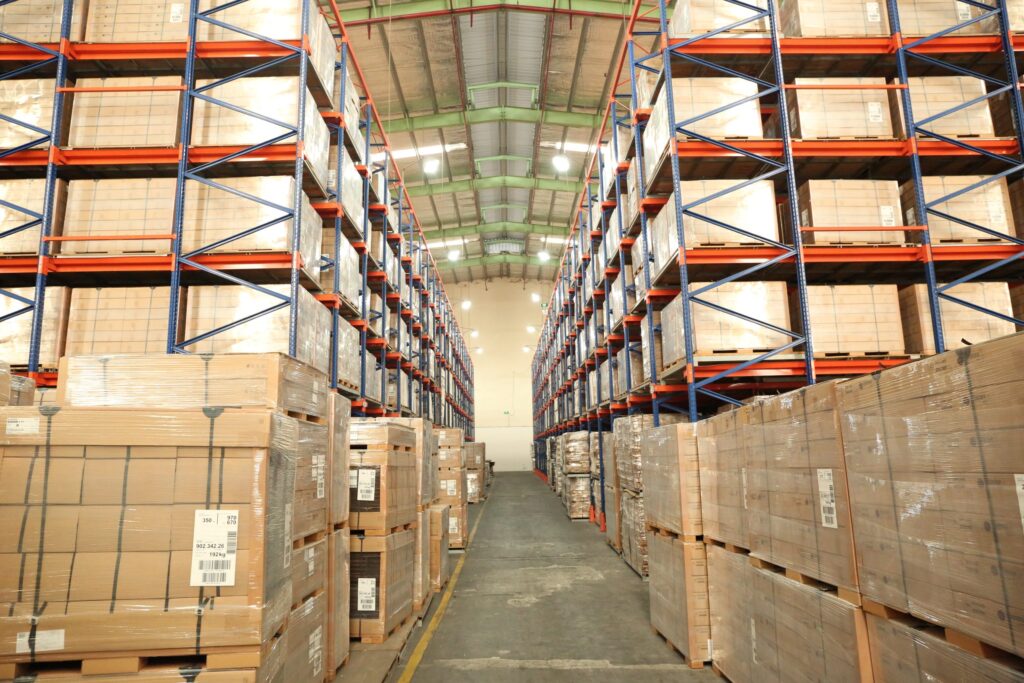
For contractors and cabinet brands sourcing at volume, the choice between a local provider and a factory-direct manufacturer materially changes the cost of kitchen cabinets per unit — often by a wider margin than buyers expect until they see the numbers side by side.
| Local Provider | Factory-Direct Manufacturer |
| Higher per-unit pricing (retail markup) | Lower per-unit pricing (factory pricing) |
| Faster local turnaround | Longer lead time, offset by bulk savings |
| Limited customization at scale | Broad OEM/ODM customization options |
| Best for small, urgent orders | Best for volume orders and long-term partnerships |
Neither model is universally "better"—a local provider makes sense for a single urgent job, while factory-direct sourcing tends to make more sense once order volume and lead-time flexibility allow for it.
For cabinet and furniture brands running a private-label or OEM program, this comparison usually needs to happen at the SKU level rather than the project level. A single-kitchen local quote and a container-scale factory-direct quote aren't measuring the same thing, so the fairest way to compare the cost of kitchen cabinets across both models is to normalize everything down to a per-unit or per-linear-foot basis, landed and ready to install, before making a sourcing decision.
Learn more: Vietnam vs China Cabinet Manufacturers: A Comparative Analysis
Regional and Market Factors Affecting the Cost of Kitchen Cabinets
Even within the same cabinet tier, the cost of kitchen cabinets shifts meaningfully by region. Coastal metro markets—the San Francisco Bay Area, New York, Boston, and Seattle among them—tend to run 25–50% above the national average for both cabinetry and installation labor, largely because of higher local labor rates and real estate costs baked into a dealer's overhead. Sun Belt and Midwest markets typically land 10–20% below the national average for the same tier of cabinet.
This regional spread matters most to dealers and contractors operating across multiple markets, since a pricing sheet built around one region's cost of kitchen cabinets can misrepresent the budget needed in another. It's also part of why factory-direct sourcing appeals to buyers spread across several regions—a single landed price is easier to plan around than a patchwork of local retail markups that shift from one metro area to the next.
How to Get an Accurate Cabinet Cost Estimate
Getting a number you can actually trust takes a bit more work than requesting a single total.
- Get itemized quotes, not just a total price. Materials, hardware, finish, freight, and installation should each be broken out as separate line items.
- Ask for a per-linear-foot breakdown so you can compare suppliers apples to apples instead of comparing bundled totals that hide different assumptions.
- Request samples before committing to a bulk or custom order, especially for finish and material quality.
- Factor in the total cost of ownership, not just the upfront quote—durability, warranty terms, and the likelihood of early replacement all affect the real cost of kitchen cabinets over time.
None of these steps take long, but skipping any one leads buyers to compare quotes that aren't actually comparable. A cheaper number on the cost of kitchen cabinets that excludes freight, hardware upgrades, or installation isn't a better deal—it's an incomplete one.
Learn more: Kitchen cabinet buying guide
A Real-World Example: How Casta Cabinetry Approaches Pricing
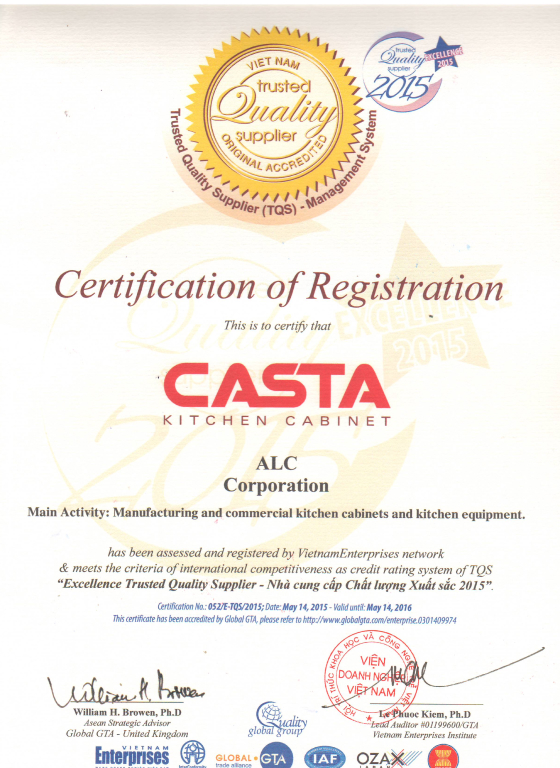
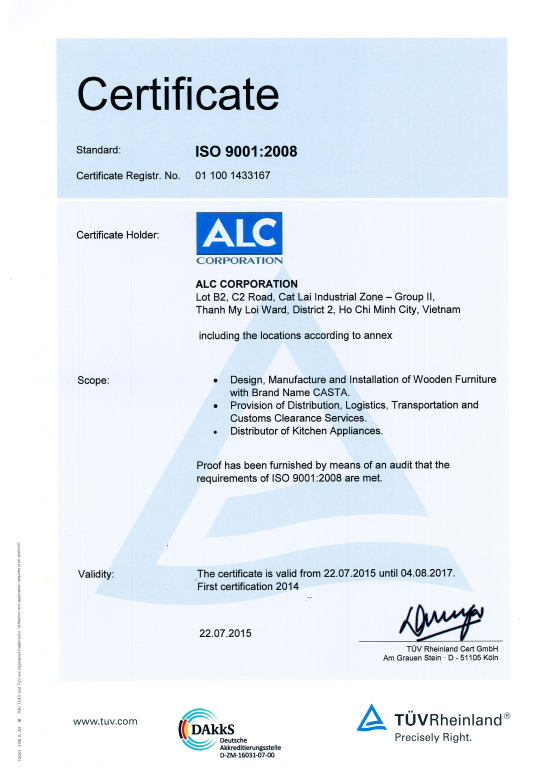
Casta Cabinetry is a Vietnam-based manufacturer with more than 20 years of experience, running European-grade machinery across its production facility to serve contractors, dealers, and cabinet brands worldwide.
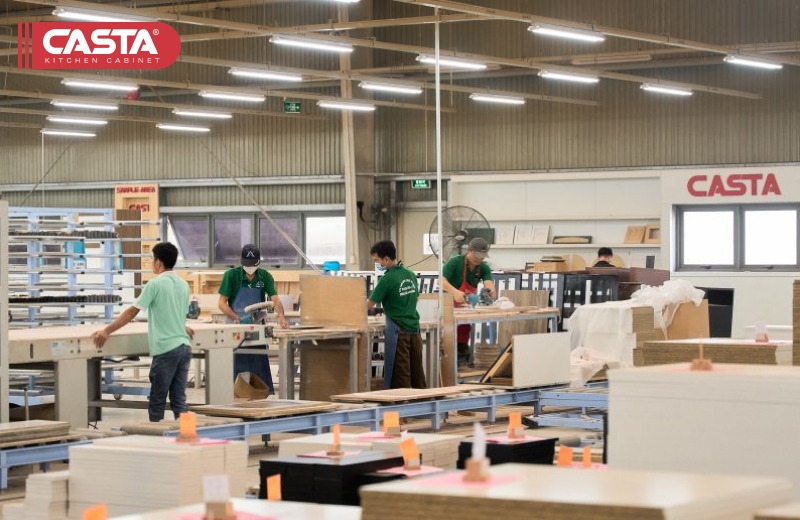
Factory-direct pricing. Manufacturing costs are passed through without the markup layered on by local retail middlemen, which directly lowers the cost of kitchen cabinets for buyers sourcing at volume.
Material quality. Engineered wood and plywood options are built for durability, which reduces long-term replacement costs — an important part of the total-cost-of-ownership picture buyers often overlook.
Customization without the custom-tier price jump. Designs are refined together with the client until they're satisfied, across a range of budgets—without forcing every customization request into the highest pricing tier.
Transparency. Itemized quotes cover materials, hardware, and freight separately, so buyers know exactly what they're paying for at each stage.
Delivery support. Consistent production scheduling helps avoid the delays and change-order costs covered earlier in this guide.
Learn more: Lead Times & Supply Chain Resilience: Navigating Potential Disruptions
The goal isn't to claim factory-direct is always the cheaper path—it's to give contractors and cabinet brands a clear way to compare local and overseas pricing on equal terms before committing to either one.
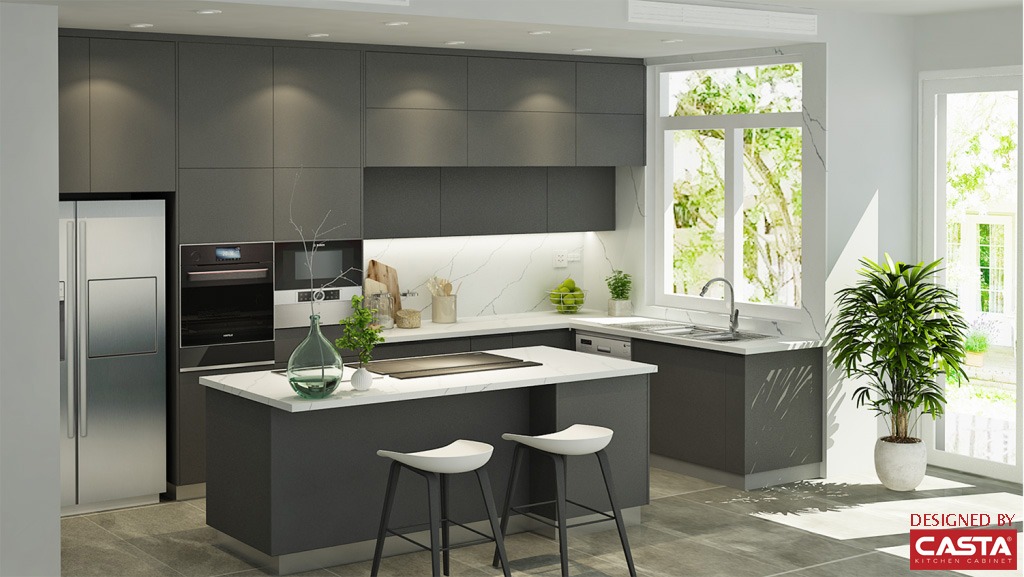
Learn more: Casta’s outstanding international projects
FAQ
What is the average cost of kitchen cabinets?
How much do custom kitchen cabinets cost compared to stock cabinets?
Why do kitchen cabinet prices vary so much between suppliers?
Is it cheaper to buy cabinets from a local provider or a manufacturer directly?
What hidden costs should I budget for beyond the cabinet price itself?
Conclusion
The cost of kitchen cabinets ultimately depends on type, material, kitchen size, and installation complexity — not a single flat number. The biggest mistake buyers make is comparing quotes without breaking down what's actually included in each one.
For North American distributors, contractors, and cabinet brands, Casta Cabinetry offers a transparent, factory-direct alternative: itemized pricing, durable engineered wood and plywood construction, and OEM/ODM customization that scales with your project volume—without the retail markup that inflates the cost of kitchen cabinets sourced locally.
Whether you're quoting a single kitchen or building a private-label catalog around a target price point, the same principle holds: understand every component behind the cost of kitchen cabinets before you commit, and compare quotes on a linear-foot, landed-cost basis rather than a single bottom-line number.
Contact our team today for a detailed quote or to discuss your project's budget.





Private Label Cabinet Branding: Custom Packaging & Label...
Putting your name on a cabinet line is one of the fastest ways for a retailer or brand to build margin and customer loya...
09/24/2026 | David Nguyen

Cabinet Quality Control Process: How Bulk Orders Are Inspect...
For a wholesaler buying from overseas, the biggest fear usually isn’t price. It’s opening a container weeks ...
09/22/2026 | David Nguyen
How Many Kitchen Cabinets Fit in a 20ft/40ft Container?...
For a wholesaler pricing out a bulk order, cabinets per container is the number that turns a quote into an actual budget...
09/20/2026 | David Nguyen

FSC Certified Cabinets: Why It Matters for Green Building Pr...
For a developer working on a certified green building project, FSC certified cabinets aren’t just a sustainability...
09/18/2026 | David Nguyen
Private Label Cabinet Branding: Custom Packaging & Label...
Putting your name on a cabinet line is one of the fastest ways for a retailer or brand to build margin and customer loya...
09/24/2026 | David Nguyen
Cabinet Quality Control Process: How Bulk Orders Are Inspect...
For a wholesaler buying from overseas, the biggest fear usually isn’t price. It’s opening a container weeks ...
09/22/2026 | David Nguyen
How Many Kitchen Cabinets Fit in a 20ft/40ft Container?...
For a wholesaler pricing out a bulk order, cabinets per container is the number that turns a quote into an actual budget...
09/20/2026 | David Nguyen
FSC Certified Cabinets: Why It Matters for Green Building Pr...
For a developer working on a certified green building project, FSC certified cabinets aren’t just a sustainability...
09/18/2026 | David Nguyen
Contact us
Casta is always ready to listen and answer all customers' questions