EN
Quotes from overseas suppliers often say a cabinet is "E1," "CARB P2," or "TSCA Title VI compliant," and it is easy to read all three as the same promise. They are not, and treating them alike is one of the quickest ways to end up with a held shipment, or with a supplier file that cannot prove compliance.
This guide is for importers and wholesalers who bring cabinets and composite wood products into the U.S. It explains what each standard is, where they overlap, what TSCA Title VI compliant actually requires, and how to check a supplier's claim before you place an order.
The Short Version
Only one of the three names is a U.S. legal requirement, so it helps to see how they relate before getting into the detail.
- TSCA Title VI is the U.S. federal formaldehyde rule for composite wood products, and it applies in every state. EPA runs the program under 15 U.S.C. 2697 and 40 CFR Part 770.
- CARB Phase 2 is California's original rule. TSCA Title VI later adopted the same emission limits, which is why the two are so often confused.
- E1 is a European emission class for wood-based panels, measured with a different test method, so it does not by itself prove that a product meets U.S. requirements.
In practice, a product is TSCA Title VI compliant when its panels are certified, its cartons are labeled, and its records are on file. That gives you one simple question for any supplier call: can you show me documents proving that the panels in this product are TSCA Title VI compliant?
The Three Standards Side by Side
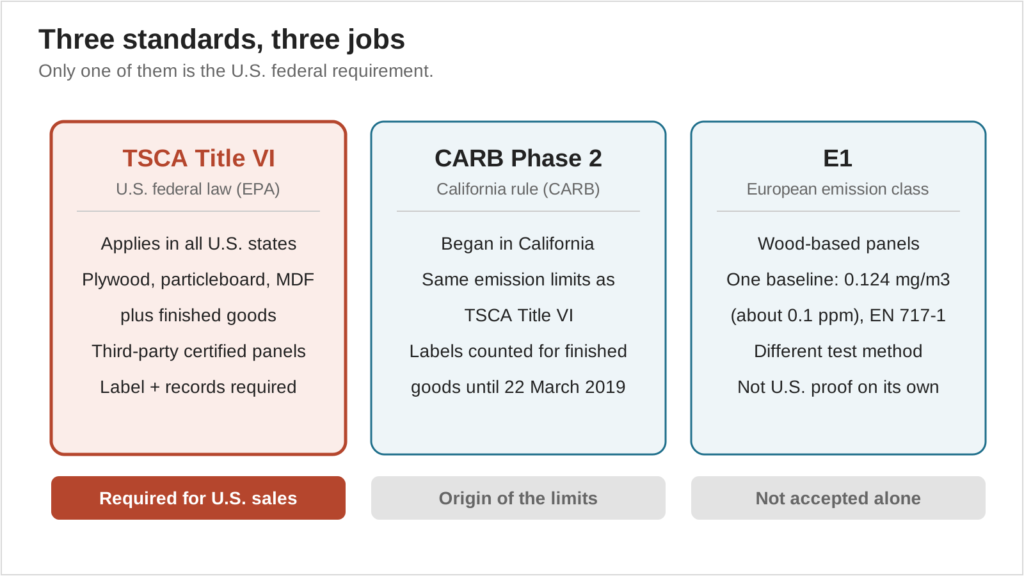
Most of the confusion comes from comparing the three on the wrong line, so the table below puts them side by side. TSCA Title VI is the federal rule in 40 CFR Part 770 that EPA enforces, CARB Phase 2 is California's earlier rule, and E1 is a European emission class that was never a U.S. requirement.
| TSCA Title VI | CARB Phase 2 | E1 | |
| Where it comes from | U.S. federal law, enforced by EPA (40 CFR Part 770) | California Air Resources Board | European emission class for wood-based panels |
| Where it applies | All U.S. states | Began in California | Europe, and widely referenced in global supply chains |
| What it covers | Hardwood plywood, particleboard, MDF, and finished goods made from them | Same panel types and finished goods | Wood-based panels |
| Emission limits | Identical to CARB Phase 2 | Set by panel type | One baseline of 0.124 mg/m³, roughly 0.1 ppm |
| Certification | Panels certified by an EPA-recognized third-party certifier | CARB-approved certifier | Per European testing and certification rules |
| Label | Finished goods labeled TSCA Title VI compliant | CARB label | European marking, not a U.S. label |
| Status for U.S. sales | Required | Accepted history, now aligned with the federal rule | Not accepted on its own |
Sources: eCFR, 40 CFR Part 770 (TSCA Title VI); California Air Resources Board, CARB and EPA standards comparison table (CARB Phase 2); Fraunhofer WKI, E1 certification (E1).
Read across the table and the three names sort themselves out. TSCA Title VI is the rule that applies in every U.S. state, and CARB Phase 2 set the same limits first in California. E1 comes from Europe, so a panel that carries only an E1 report has not yet shown that it meets the U.S. rule, however good the report looks. For a U.S. order, the question to ask is whether the panels are TSCA Title VI certified, not which of the three names appears on the quote.
Learn more: Types of Kitchen Cabinet Materials: Pros, Cons, and Best Use Cases
What "TSCA Title VI Compliant" Actually Means
When a quotation says a product is TSCA Title VI compliant for formaldehyde, as many now do, the supplier is making a claim about the composite wood inside it. The claim has four parts: the wood meets EPA's emission limits, testing and certification prove it, the finished product carries the right label, and records exist to back all of that up.
The panels are the regulated item. Hardwood plywood, particleboard, and MDF are tested at the panel producer, and the producer must be certified by a third-party certifier that EPA has recognized. That is why panels carry the producer's identification.
Finished goods must be made from compliant panels. A finished cabinet does not need its own emissions testing and certification, but the cabinet and its component parts do have to be built from compliant composite wood, and the fabricator keeps records that show it.
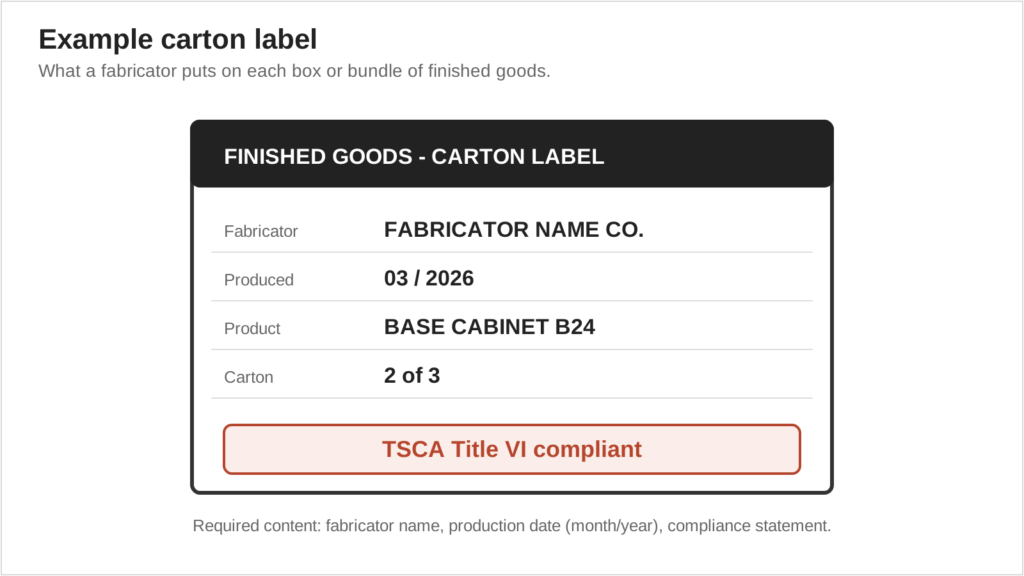
Labeling is required. The fabricator labels each finished good, or each box or bundle of them, with its name, the production date in month and year, and a statement that the goods are TSCA Title VI compliant. A stamp, tag, or sticker all work. Small items with a minimal amount of composite wood, no more than 144 square inches of largest-face surface area, are exempt.
Records are required. Importers, fabricators, distributors, and retailers keep invoices, bills of lading, or similar documents that carry the supplier's compliance statement. Importers keep them for three years, and must give EPA the producer, production date, and supplier details within 30 calendar days of a request.
Entry paperwork applies too. Since March 22, 2019, importers of regulated composite wood products, or articles that contain them, also have to follow the import certification rules for chemical substances in 19 CFR 12.118 through 12.127. The certification goes on the customs entry document or the invoice.
The phrase is also narrower than it sounds. It is not a quality mark, a durability claim, or a guarantee about every chemical in a product, and it is separate from California's Prop 65 warning requirement. What it does tell you is that all four parts above are in place, so if the panel certificate, the label, or the records are missing, the product is not TSCA Title VI compliant, whatever the brochure says.
Learn more: FSC Certified Cabinets: Why It Matters for Green Building Projects
The Emission Limits
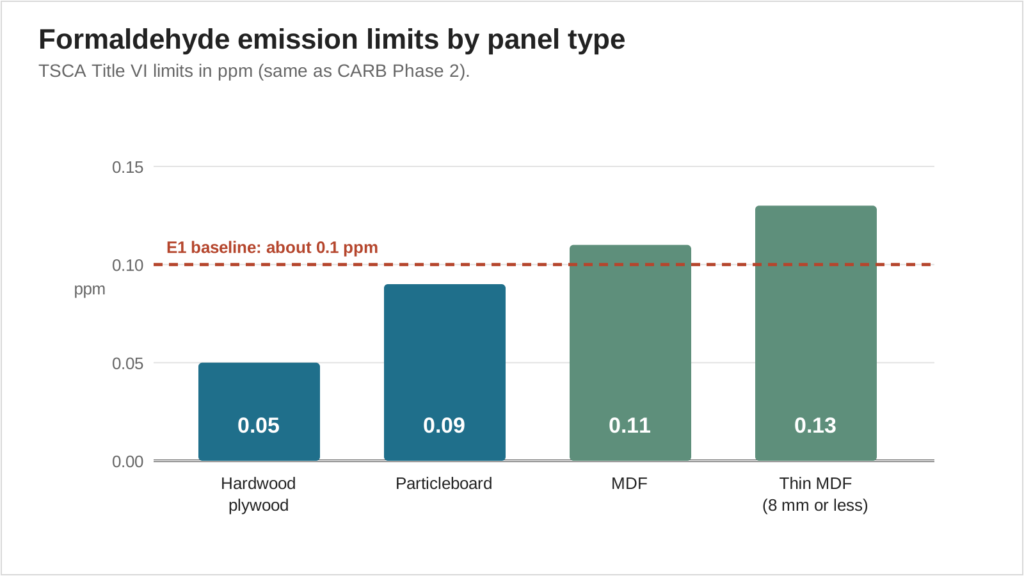
Every TSCA Title VI compliant panel has to stay under the formaldehyde limit for its type. The limits are set in 40 CFR 770.10(b), and they apply to products sold, supplied, offered for sale, manufactured, or imported on or after June 1, 2018.
| Composite Wood Product | Limit (ppm formaldehyde) |
| Hardwood plywood (veneer core or composite core) | 0.05 |
| Particleboard | 0.09 |
| Medium-density fiberboard (MDF) | 0.11 |
| Thin MDF (8 mm or less) | 0.13 |
Source: 40 CFR 770.10(b)
These limits are checked in a large test chamber using ASTM E1333-14, the method written into the EPA's formaldehyde emission standards for composite wood products. The test is run on the panels themselves, which is why every figure on a certificate describes the board and not the cabinet built from it.
Laminated products came into scope later, with March 22, 2024 as the compliance date for laminated product producers. So if any component in your order is laminated, check the current rule text before assuming it is treated like a plain panel.
CARB P2 vs TSCA Title VI
The CARB vs TSCA question comes up on almost every supplier call, and the answer is shorter than most people expect: the two rules share the same limits and differ mainly in reach, labels, and paperwork.
The limits are the same. The federal rule was written to match California's Phase 2 limits, so a TSCA Title VI compliant panel meets the same numbers as a CARB Phase 2 panel.
The legal reach is different. CARB's rule began in California, while TSCA Title VI applies across the U.S., so "we do not ship to California" is no longer a reason to set it aside.
The labels changed. CARB Phase 2 labels counted for finished goods during a transition period that ended on March 22, 2019. Since then, regulated products must carry the TSCA Title VI compliant statement, and most suppliers now label that way.
The certifiers overlap. Many third-party certifiers hold both CARB and EPA recognition, so one panel producer may carry both approvals.
The federal rule adds a paper trail. TSCA Title VI also sets labeling, recordkeeping, and entry provisions for fabricators, importers, distributors, and retailers, and this is the part buyers tend to overlook.
That is why a quote that says "CARB Phase 2" is a good sign but not the end of the check. It tells you the emission limit the panels were built to, and only the compliance paperwork shows that the whole chain is in place for the U.S.
E1 vs CARB P2
The E1 vs CARB P2 comparison is where buyers get misled most often. Both are respected standards, but they measure formaldehyde in different ways and set their limits differently.
E1 is a European class with a single baseline of 0.124 mg/m³ in a test chamber under EN 717-1, which works out to roughly 0.1 ppm. CARB P2 and TSCA Title VI limits depend on the panel type. For hardwood plywood and particleboard they sit below the E1 baseline, and for MDF they are slightly above it, so the two systems are not a simple ladder where one always beats the other.
Because the test methods and conditions differ, a result from one system is not directly interchangeable with the other. A panel can be E1-classified and still lack the third-party certification, labeling, and records that make a product TSCA Title VI compliant. The two can coexist, since TSCA Title VI compliant panels may also meet E1, but the U.S. paperwork still has to exist on its own.
That is why a quote that only says "formaldehyde compliant" tells you very little until you know which rule it names: CARB Phase 2, TSCA Title VI, or E1. Once you know, ask for the document that backs it up.
Practical tip: treat "E1 compliant" as a European marker and "TSCA Title VI compliant" as the U.S. requirement. Ask for the second one in writing, because only that one covers the U.S. rule, and do not accept the first as a substitute.
Who Is Responsible in the Supply Chain
Formaldehyde compliance runs through four hands, and each one carries a different duty under EPA's rules for regulated stakeholders. Knowing who holds which duty tells you what to ask for and who can actually prove compliance.
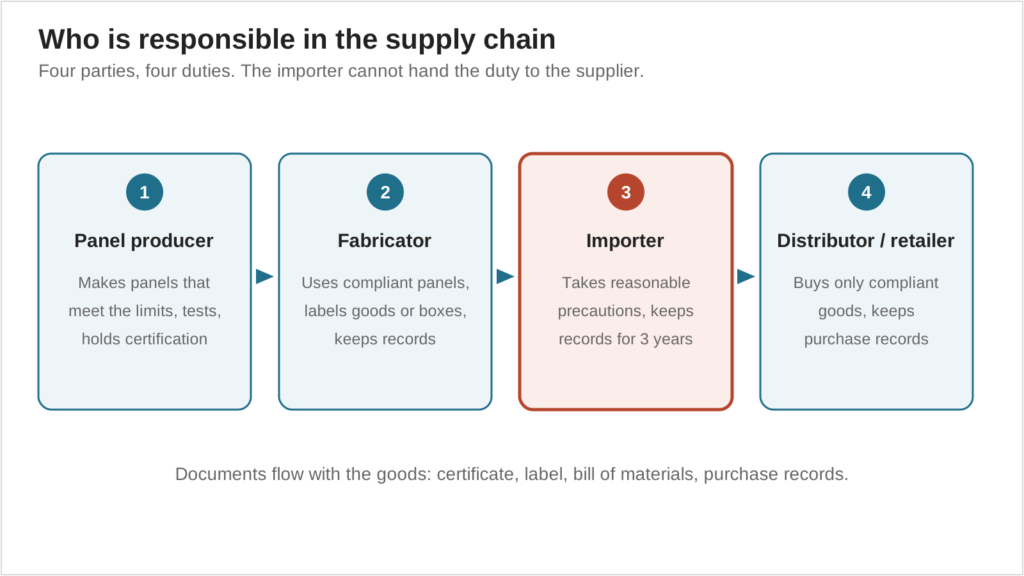
| Role | Main Responsibility |
| Panel producer | Makes panels that meet the limits, tests them, and holds third-party certification |
| Fabricator (cabinet or furniture maker) | Uses compliant panels, labels finished goods or their boxes, and keeps records |
| Importer | Takes reasonable precautions that goods are compliant, labeled, and documented, and keeps records |
| Distributor and retailer | Buys only compliant products and keeps records of purchases |
Source: EPA, Frequent Questions for Regulated Stakeholders about Implementing Formaldehyde Standards
For an importer, the table carries one hard lesson: the duty cannot be handed to the supplier. If you bring goods into the U.S., you need the documentation trail behind the label, in a form you can give to EPA within 30 days.
Learn more: CARB 2-Compliant Cabinets: What Buyers Must Verify
Documents an Importer Should Collect
A short, organized file beats a thick, vague one. Collect the documents below for each product line rather than once per supplier, since together they show a buyer, a customs broker, or EPA that a product meets the rule.
- Panel producer's third-party certification, including the certifier's identification
- Fabricator's compliance statement, confirming the panels came from certified producers
- Label samples, showing the fabricator name, production date, and compliance statement as they will appear on cartons or goods
- Bill of materials, listing panel types and sources for each product
- Production dates and batch information, so labels and records match
- Purchase and shipping records that tie each shipment to the supplier documents
- Supporting test reports, where available
- A SKU-by-SKU compliance file, kept for the period the rule requires
- Entry documentation, prepared with your customs broker, including the import certification
Of these, the bill of materials is the one people skip, and it saves the most time. When a customer asks which panel sits behind SKU 4417, the answer should take thirty seconds to find, not three days of emails with the factory.
Learn more: Cabinet Specifications & CAD Drawings for Architects and Designers
How to Verify a Supplier's Claim
A line on a website or a quotation is not proof, so verification means turning the claim into documents you can file. The seven steps below do that, and they work best in the order shown.
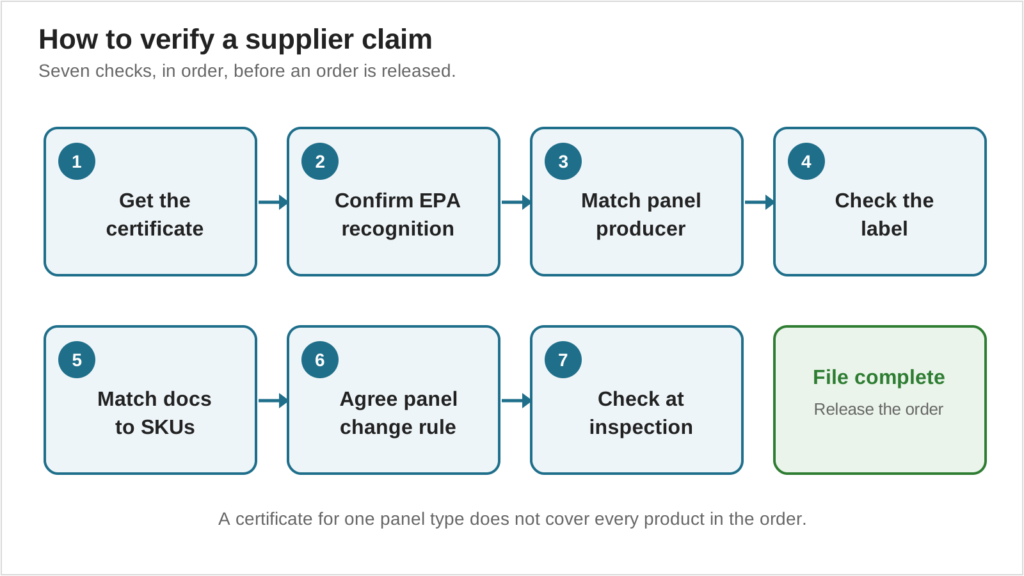
- Ask for the third-party certificate behind the panels, not just the phrase "CARB compliant" or "E1."
- Confirm the certifier is recognized by EPA, and that the certificate is current.
- Match the panel producer's name to the supplier's purchase records and the label information.
- Check the label. It should name the fabricator, show the production date, and state that the goods are TSCA Title VI compliant.
- Match documents to your SKUs. A certificate for one panel type does not cover every product in the order.
- Ask what happens if panel sources change, so you are told before production switches to a different panel producer.
- Verify during sampling and inspection. Have the sample and the pre-shipment inspection include a label and documentation check.
Step five is where most mismatches hide. Say you order 40 vanities and 60 wall cabinets, where the vanities use MDF doors on a plywood carcass and the wall cabinets use particleboard boxes. That is three panel types, so you need three certificate trails, not one, and suppliers rarely point this out on their own.
Learn more: Sample Program for Wholesale Buyers: How to Evaluate Quality Before Bulk Ordering
What Is at Stake if Goods Aren't Compliant
Compliance gaps tend to show up at the worst moment, usually after the goods have left the factory, and the consequences stack up quickly.
- Shipments can be held at entry while documentation is reviewed.
- Goods that turn out not to be TSCA Title VI compliant may be refused, re-exported, or destroyed at the importer's cost.
- Violations of the rule can lead to enforcement action.
- Retail and project customers often ask for proof that goods are TSCA Title VI compliant, so a gap can cost you a sale or a contract.
- Fixing problems after goods arrive is far more expensive than confirming documents before production.
When a supplier cannot prove its goods are TSCA Title VI compliant, the risk lands on you. A held container keeps charging for storage and delays every unit inside it, so the real cost is rarely only a penalty. With duties and freight already squeezing margins on imported cabinets, a delay on top can erase what is left.
Learn more: Cabinet Import Duties & Tariffs: What US Buyers Pay When Importing from Vietnam
Practical Sourcing Tips for Wholesalers and Importers
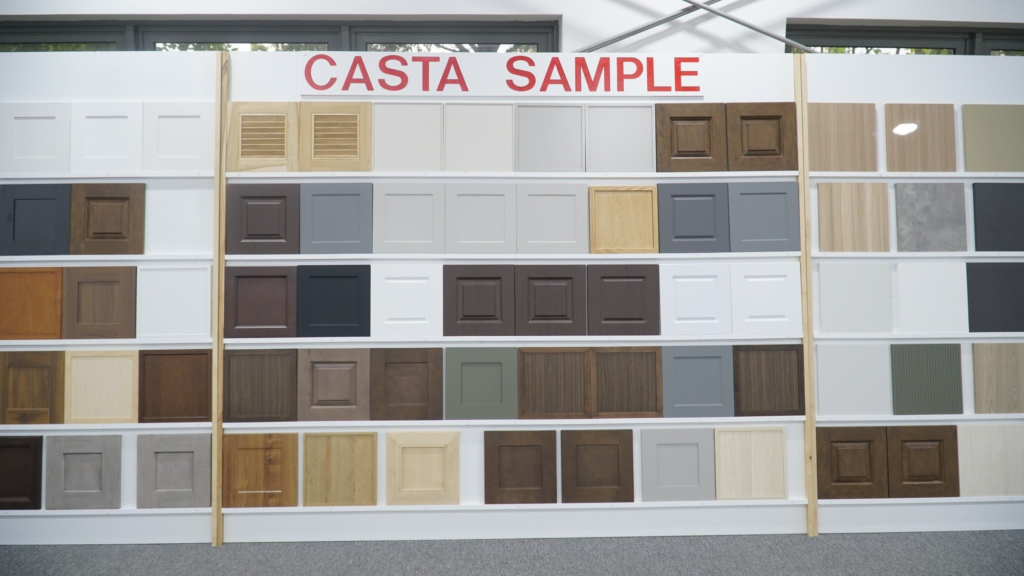
Most compliance problems are cheap to prevent early and expensive to fix late, so build the proof into the order from the start. The sample stage is the cheapest place to begin, because the factory is already showing you what it can build and a request for paperwork costs nothing yet. The habits below keep that proof attached to the order.
- Put compliance in the purchase agreement: require TSCA Title VI compliant panels, labels on cartons, and documentation delivered before shipment.
- Request documents at the quote and sample stage, not after the order is in production.
- Include label checks in your inspection. A third-party inspector can confirm that labels are present and correct.
- Build a compliance file for each product line, and update it whenever a panel supplier changes.
- Be careful with substitutions. A different panel source can change the certification trail.
- Plan for customers who ask. Retailers, developers, and green-building projects often request formaldehyde documentation.
Practical tip: add one line to every purchase order saying that any change of panel producer needs written approval before cutting starts. It costs nothing to write, and it keeps your compliance file intact instead of forcing you to rebuild it.
Learn more: Cabinet Quality Control Process: How Bulk Orders Are Inspected Before Shipping
Common Mistakes
Most of these mistakes come from reading a short claim as if it were a full answer.
- Treating E1 as proof that a product is TSCA Title VI compliant
- Taking "formaldehyde compliant" on a brochure at face value without asking which rule it names
- Accepting a website claim of "CARB compliant" instead of documents that prove the product is TSCA Title VI compliant
- Assuming finished goods are tested separately
- Overlooking carton labels
- Not keeping records, or keeping them without linking them to specific shipments
- Assuming the supplier carries all the responsibility
- Mixing up the formaldehyde rule with other requirements, such as Prop 65 warnings
The mistake with the biggest consequences is assuming that finished goods are tested separately. They are not, so a cabinet is only as compliant as the panels inside it and the paperwork that follows those panels through the supply chain.
A Formaldehyde Compliance Checklist for Importers
Use this list before you release an order to production and again before you release payment. Every line should be checked off before you treat the order as compliant on paper.
- Written confirmation that every panel in the order is TSCA Title VI compliant
- Panel producer's third-party certification obtained
- Certifier recognition and certificate validity confirmed
- Fabricator's compliance statement obtained
- Label content and placement reviewed before production
- Bill of materials matched to each SKU
- Production dates and batches recorded
- Records retained and organized by shipment
- Compliance terms written into the purchase agreement
- Label and document check included in the pre-shipment inspection
- Entry requirements, including import certification, reviewed with a customs broker
Questions to Ask a Supplier About Formaldehyde Compliance
These questions get past the sales deck, and a supplier with real documentation can answer each one quickly, with a document attached.
- Can you provide TSCA Title VI documentation for the composite wood in this product?
- Which third-party certifier covers your panel suppliers, and can you share the certificates?
- How are finished goods or cartons labeled, and can I see a label sample?
- Do you have a bill of materials showing panel types and sources for each product?
- How do you control and report changes in panel suppliers?
- What documents will you provide before shipment?
- Have your products been supplied to U.S. customers with this documentation before?
If an answer comes back vague or without a file, treat it as a no until the paperwork arrives.
Learn more: Lead Time for Wholesale Cabinet Orders: From Factory to Delivery
Supplier Spotlight: Casta Cabinetry
Founded in 2002, Casta is a Vietnam-based manufacturer of kitchen cabinets, vanities, wardrobes, and casegoods, with over two decades in the industry. As an OEM cabinet manufacturer, Casta builds to the drawings and specifications you provide.

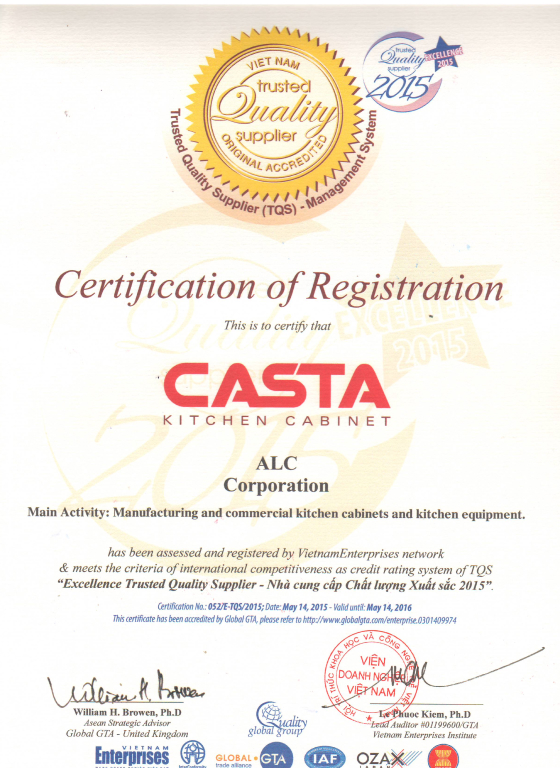
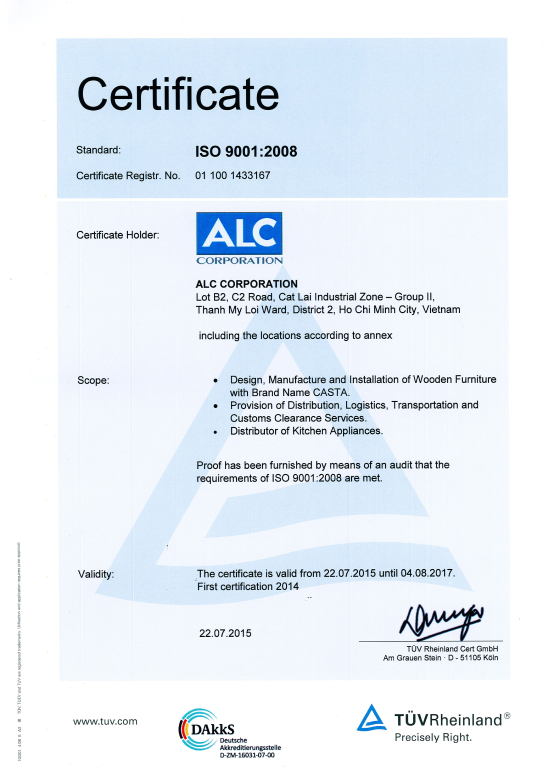
Casta sources materials to meet global standards including European E1, JIS, CARB, and FSC. Casta also holds BSI, BSCI, and KCMA certifications and runs a quality management system aligned with TCVN ISO 9001:2015. Quality control runs from supplier selection to product inspection, and a dedicated QA/QC team checks finished goods against your specification before shipment.
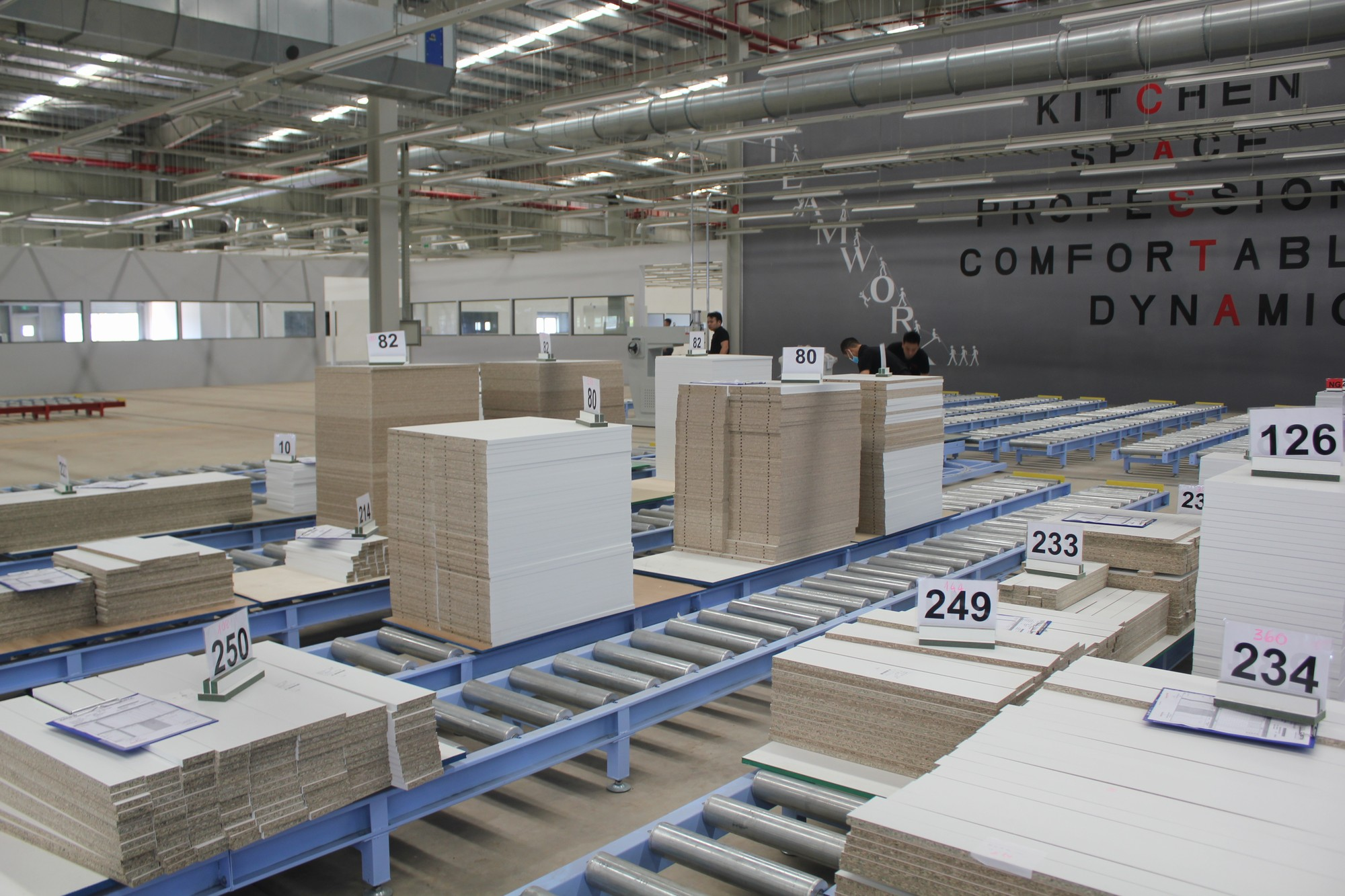
Production runs on ERP-managed lines at two factories spanning over 100,000 m², using European machinery from brands including SCM, Homag, and Cefla. The OEM process moves from shop drawings to a sample for verification and pre-production samples before mass production, and each stage is a natural point to request and review the paperwork that shows your goods are TSCA Title VI compliant. Because packages are labeled according to the drawings you provide, label and carton requirements can also be agreed at the drawing stage.
Over 80% of Casta's output is exported, mainly to the U.S. Before production starts, ask Casta's team which panel producers supply your products, then request the matching certificates and label samples so you can review the full trail together.
Learn more: Casta's outstanding international projects
Frequently Asked Questions
What does TSCA Title VI compliant for formaldehyde mean?
What is the difference between CARB P2 and TSCA Title VI?
Is E1 the same as CARB P2?
Does E1 satisfy U.S. formaldehyde requirements?
What are the formaldehyde emission limits for plywood, MDF, and particleboard?
Do finished cabinets need to be tested for formaldehyde?
What records do importers need to keep for composite wood products?
How can I verify a supplier is TSCA Title VI compliant?
Conclusion
Of the three names on a supplier's quote, TSCA Title VI is the one that carries legal weight for U.S. importers. It uses the same limits as CARB Phase 2, applies in every state, and depends on certified panels, labeled goods, and records, while E1 remains a European baseline that cannot stand in for U.S. documentation.
The safest approach is to buy only what is TSCA Title VI compliant and prove it on paper: request the certificate trail early, write compliance terms into the purchase agreement, check labels during inspection, and keep organized records for every shipment. Casta Cabinetry, with a sample-first OEM process and QA/QC checks, is a good starting point for importers who want to discuss formaldehyde documentation before placing an order.
Contact Casta Cabinetry's team to request proof that your products are TSCA Title VI compliant, along with samples and a quotation for your next import order.






Pantry & Tall Cabinet Dimensions: Heights, Depths, Widt...
Tall cabinets anchor a kitchen layout, and the pantry cabinet dimensions you choose decide whether the run lines up with...
10/24/2026 | David Nguyen

Floating (Wall-Hung) Vanities for Multifamily & Hotel P...
A floating vanity is one of the quickest ways to make a small bathroom feel lighter, and in a hotel or an apartment buil...
10/22/2026 | David Nguyen

Hotel & Hospitality Casegoods Manufacturer in Vietnam (...
A dresser looks simple on a spec sheet. Multiply it by 300 rooms, tie it to an opening date, and every small detail beco...
10/18/2026 | David Nguyen

Wardrobe & Closet Cabinet Manufacturer for Developers (...
Wardrobes get specified last on most projects, yet they cover a lot of wall, repeat in every bedroom, and show up in eve...
10/16/2026 | David Nguyen
Pantry & Tall Cabinet Dimensions: Heights, Depths, Widt...
Tall cabinets anchor a kitchen layout, and the pantry cabinet dimensions you choose decide whether the run lines up with...
10/24/2026 | David Nguyen
Floating (Wall-Hung) Vanities for Multifamily & Hotel P...
A floating vanity is one of the quickest ways to make a small bathroom feel lighter, and in a hotel or an apartment buil...
10/22/2026 | David Nguyen
Hotel & Hospitality Casegoods Manufacturer in Vietnam (...
A dresser looks simple on a spec sheet. Multiply it by 300 rooms, tie it to an opening date, and every small detail beco...
10/18/2026 | David Nguyen
Wardrobe & Closet Cabinet Manufacturer for Developers (...
Wardrobes get specified last on most projects, yet they cover a lot of wall, repeat in every bedroom, and show up in eve...
10/16/2026 | David Nguyen
Contact us
Casta is always ready to listen and answer all customers' questions