


 EN
EN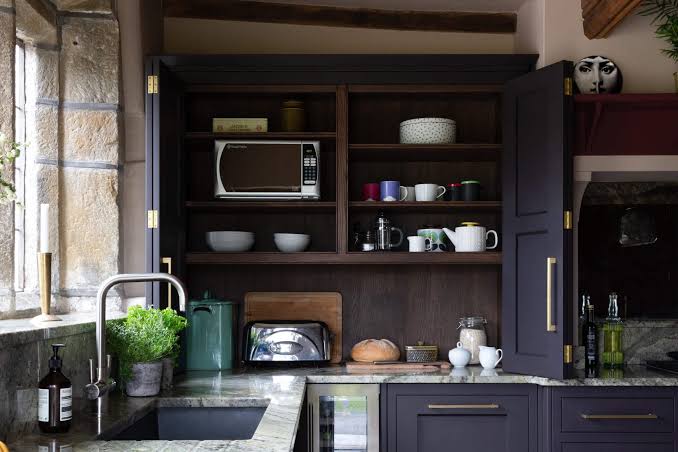
Choosing an upscale kitchen cabinet brand involves more than comparing price tags or brand recognition. "Upscale" gets thrown around loosely in cabinet marketing — a stock line with a new photo shoot can claim the label just as easily as a shop that hand-cuts dovetail joints.
This guide breaks down what actually earns that label — construction, materials, and customization depth, not just a price tag — and looks at where the leading names in upscale kitchen cabinets sit relative to each other. It's written for contractors specifying premium lines, dealers positioning a higher-end product, and cabinet or furniture brands weighing whether to resell an established name or build their own upscale collection.
What Defines Truly Upscale Kitchen Cabinets?
Before naming names, it's worth being precise about what separates upscale kitchen cabinets from a standard line, because the label gets applied inconsistently across the industry.
Construction quality. All-plywood boxes (rather than particleboard or thin MDF), true dovetail drawer joinery, and reinforced hardware mounting points are the baseline. These aren't exotic features—they're the same fundamentals that define durability at any price point, just executed with tighter tolerances and more consistent quality control.
Hardware systems. In upscale kitchen cabinets, premium soft-close hinges and full-extension drawer glides come standard, not as a paid upgrade. Brands like Blum and Hettich are common suppliers behind the scenes, and their presence (or a comparable equivalent) is a reasonable proxy for hardware quality when you're evaluating a line.
Finish quality. Multi-step lacquer application, high-gloss finishes, or hand-applied stains with visibly even, consistent coverage. Finish inconsistency—visible brush marks, uneven sheen, and orange-peel texture on lacquer—is one of the fastest ways to spot a line that's marketed as upscale but isn't built to that standard.
Customization depth. Made-to-measure sizing, extensive finish and material catalogs, and configuration flexibility that goes well beyond a standard size chart are key features. This is often the clearest line between semi-custom and true upscale products.
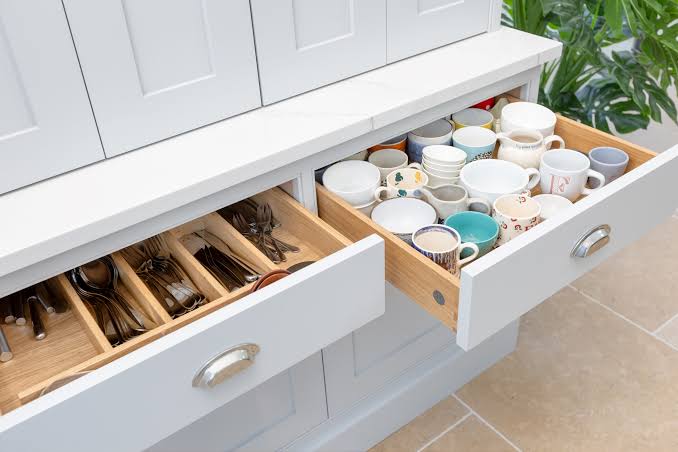
Price alone is a weak signal here. A cabinet line can be expensive without meeting these construction standards—you're sometimes paying for brand name or showroom overhead rather than build quality. Conversely, a well-built cabinet can hit this tier without carrying a luxury markup, particularly when it comes from a manufacturer that sells more directly and cuts out layers of distribution.
Box Material: The Detail Buyers Often Miss
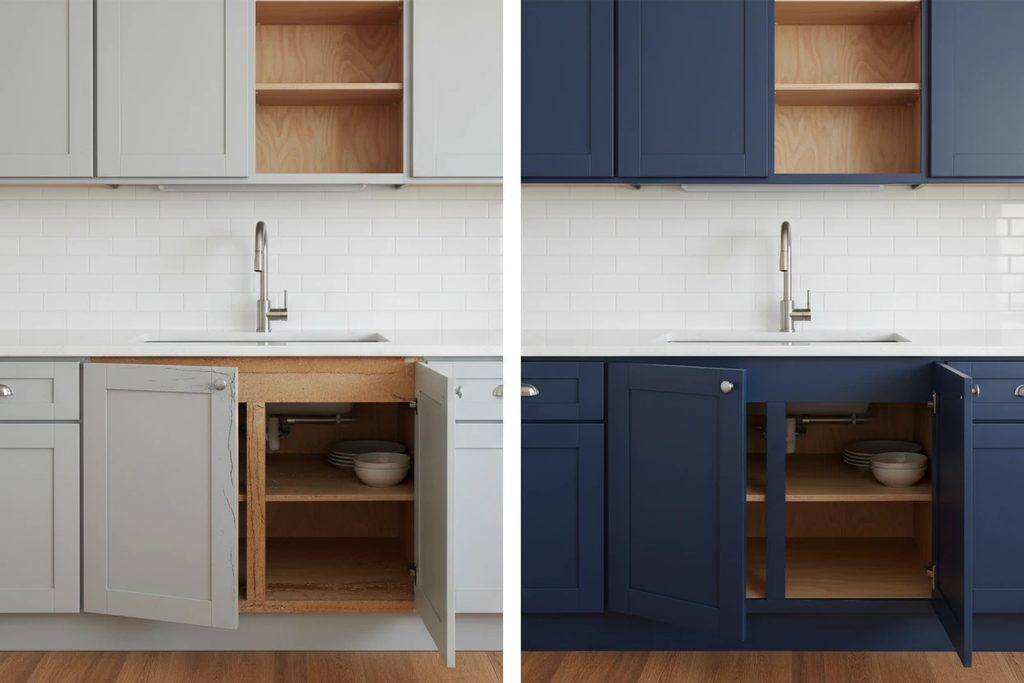
One of the fastest ways to tell whether a line of upscale kitchen cabinets actually earns the label is to look at what's behind the door—the box material itself. Particleboard boxes, even with a nice veneer wrap, tend to swell and lose screw-holding strength when exposed to moisture over time, which is a common failure point under sinks and around dishwashers. Plywood boxes hold screws more securely, resist warping better, and generally hold up longer under repeated use, which is why plywood construction shows up as a near-universal baseline across every brand referenced later in this guide.
Learn more: Types of kitchen cabinets materials
Drawer construction tells a similar story. A dovetailed solid-wood drawer box with a captured bottom panel is a different product than a stapled particleboard drawer, even if both are sitting inside cabinets that look identical from the front. For a contractor specing a project or a brand building a private-label collection, this is one of the details worth confirming directly with a manufacturer rather than assuming from marketing copy—ask for a drawer box sample, not just a photo of a finished kitchen.
Learn more: Types of joints for cabinets
Two Dominant Design Traditions in the Upscale Market
Most upscale kitchen cabinets on the market today fall into one of two design traditions, and understanding both helps when you're specifying a project or deciding what to build.
1. American Custom / Face-Frame Construction
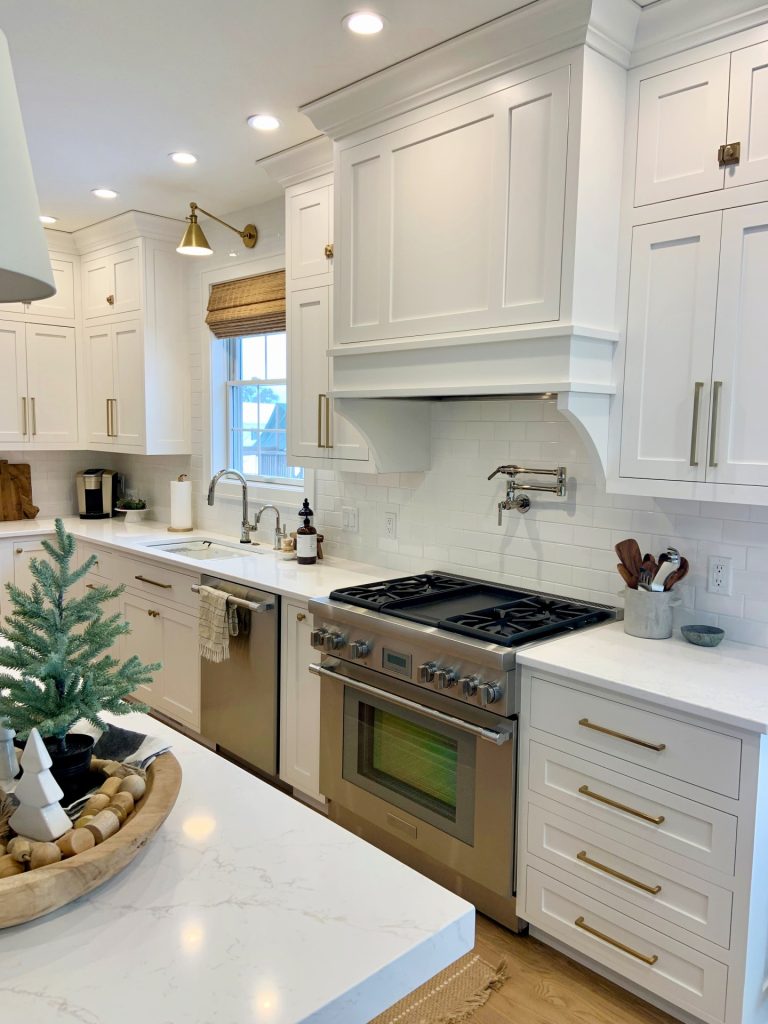
This is the traditional approach: a face frame attached to the front of the cabinet box, often paired with inset doors that sit flush within the frame rather than overlaying it. It's a construction method that rewards precise, often hand-applied finishing work.
Learn more: Inset vs overlay cabinets
- Aesthetic fit: Traditional, transitional, and Shaker-style kitchens.
- Materials: Solid hardwoods, hand-applied stains, and furniture-grade finishing techniques.
- Reference points in this category: Names like Wood-Mode, Starmark, and Rutt Handcrafted Cabinetry are frequently cited in the industry as benchmarks for this style tier—worth knowing as reference points even if you're not reselling them directly.
2. European Frameless Construction
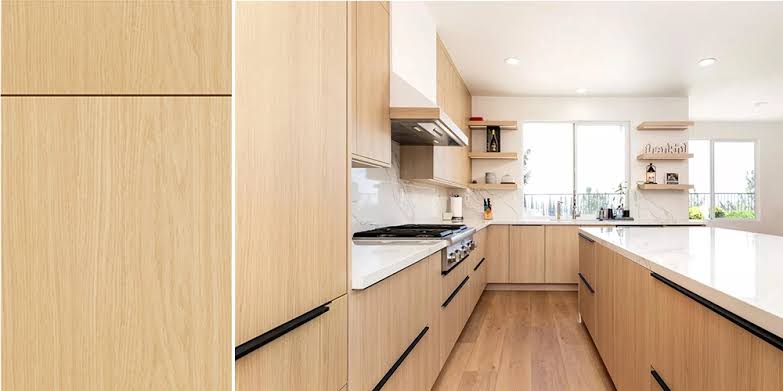
Frameless, or "full-access," construction skips the face frame entirely. The door attaches directly to the box side, which typically means more usable interior storage since there's no frame obstructing the opening. It also produces the clean, minimal look associated with contemporary European kitchens.
Learn more: Frame vs Frameless cabinets
- Aesthetic fit: Modern, minimalist, and architectural kitchens.
- Materials: High-gloss lacquers, acrylics, and handleless hardware systems (push-to-open mechanisms, integrated pulls).
- Reference points in this category: Poggenpohl, SieMatic, Scavolini, and Snaidero are commonly referenced as the benchmark tier for this style—the names that come up when a client says "I want something like a European kitchen."
Handleless systems in particular have become a defining feature of this tradition, since removing hardware from the door face is central to the frameless look.
Learn more: Handleless Kitchen Cabinets Guide
Neither tradition is objectively "more upscale" than the other—they're different aesthetic and functional philosophies, and the right one depends entirely on the kitchen and the client.
What Upscale Kitchen Cabinets Typically Cost
Pricing for upscale kitchen cabinets varies widely by construction method, material, and region, but a few general patterns hold across the market. Fully custom, hand-built lines from American face-frame shops tend to sit at the top of the price range, largely because of labor-intensive finishing and longer production timelines. European frameless lines from established names carry similarly high price points, often reflecting brand positioning and import costs as much as construction cost itself.
Semi-custom lines—including private-label collections built by manufacturers like Casta Cabinetry—typically land in a more accessible middle range while still meeting the construction standards outlined above: plywood boxes, dovetail joinery, and premium hardware as standard. For contractors and brands evaluating options, this middle tier is often where the best value-to-quality ratio in upscale kitchen cabinets actually sits, since much of the premium in the highest-priced lines goes toward brand name and distribution markup rather than additional construction quality.
It's worth asking any supplier for an itemized breakdown—materials, hardware, finish, and freight—rather than a single bundled number. That breakdown makes it much easier to compare an upscale kitchen cabinet quote from one manufacturer against another on equal terms, instead of comparing two very different scopes of work side by side.
Learn more: How much is custom cabinetry
The Semi-Custom Middle Ground
Between fully bespoke shops and standard stock lines sits semi-custom—and for most B2B buyers evaluating upscale kitchen cabinets, this is actually the most commercially relevant tier to understand.
Learn more: The difference of custom vs semi-custom cabinets
Semi-custom typically offers all-plywood construction, broad finish catalogs, and dovetail joinery—the same construction fundamentals as the higher tiers—without the lead times or price point of a fully bespoke shop. Some manufacturers in this space reference third-party construction standards (such as KCMA certification) as part of how they position quality to buyers who can't inspect a factory floor in person.
Learn more: Cabinet certification
For a contractor quoting a mid-to-high-end renovation or a brand exploring a new product line, semi-custom construction standards paired with a scalable price point and manageable lead time are often the best option—strong enough quality to be marketed as upscale kitchen cabinets, without the six-month waits and rigid minimums of a fully custom operation.
Comparison at a Glance
| Category | Construction | Aesthetic | Storage | Typical Materials |
| American Custom | Face-frame | Traditional, transitional | Standard | Solid woods, hand-applied stains |
| European Frameless | Frameless | Modern, minimalist | Generally more usable interior space | High-gloss lacquers, acrylics, glass |
| Semi-Custom | Often plywood-box, framed or frameless | Transitional to modern | Standard to above-standard | Plywood, veneer, mixed finishes |
Current Trends Shaping the Upscale Segment
A few shifts are worth tracking if you're specifying or developing upscale kitchen cabinets right now, since trend alignment affects both resale appeal and how "current" a new collection feels to buyers.
Warm wood tones are gaining ground on all-white kitchens. White oak in particular has moved from a niche choice to a mainstream one across both face-frame and frameless lines, as buyers look for warmth after nearly a decade of predominantly white and gray kitchens.
Learn more: Warm kitchen cabinet colors
Matte and textured finishes are trending alongside high-gloss lacquer. Rather than replacing gloss, matte finishes are now sitting next to it as an equally premium option—giving frameless European-style kitchens a softer look without losing the clean lines.
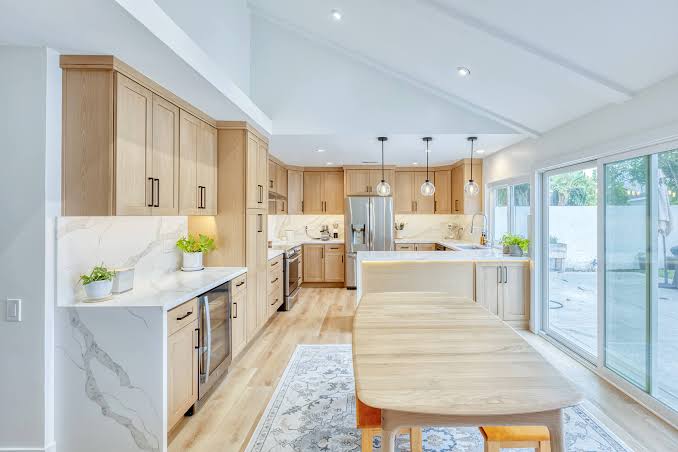
Integrated features are becoming standard, not premium add-ons. Integrated lighting, appliance garages, and hidden storage solutions used to be upsells. In the current upscale segment, buyers increasingly expect them as part of the base specification.
Brands actively deciding what to spec into a new product line must track these shifts, as building a collection around last decade's trends quickly leads to launching something that already feels dated. It's also worth watching how these trends move differently across the two design traditions covered above: Warm wood tones are showing up in both face-frame and frameless lines, while matte finishes have moved faster in the European frameless segment than in traditional American cabinetry, where painted and stained finishes still dominate.
Learn more: Kitchen cabinet trends
Should You Resell an Existing Brand or Build Your Own Upscale Line?
This is the strategic fork in the road for most cabinet and furniture brands reading this guide, and it's worth thinking through carefully before committing capital either direction.
Reselling an established brand gets you to market faster. You're leveraging existing brand recognition and a proven product, which reduces some of the risk. The tradeoff is thinner margins and no control over positioning, exclusivity, or how the product evolves—you're a distribution channel for someone else's brand equity.
Building a private-label line requires more upfront work: finding a manufacturing partner capable of matching genuine upscale construction standards, developing the collection, and building market recognition from scratch. What you get in exchange is stronger margins, full control over brand positioning, and long-term differentiation that a resale arrangement can't offer.
Which path makes sense really depends on three things: your order volume, your target price point, and whether your business model benefits more from speed to market or from long-term ownership of the product line. There's no universally correct answer—a smaller regional dealer might reasonably choose to resell, while a growth-stage brand aiming for its own retail identity usually benefits more from building.
What to Look For in an OEM/Private-Label Manufacturing Partner
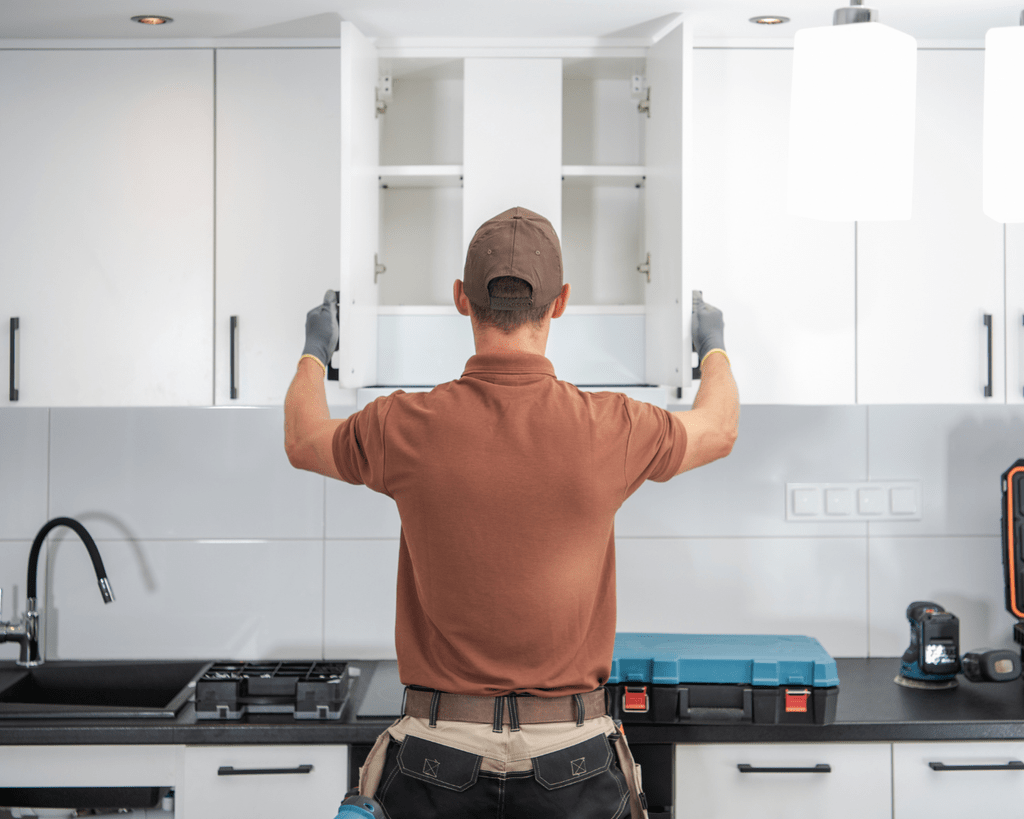
If you land on building your own line, the manufacturing partner you choose determines whether the finished product can actually be marketed and sold as upscale kitchen cabinets—or whether it falls short once it's in a showroom next to the real thing. A few things worth verifying before signing on:
- Construction standards that match the criteria above—not just a marketing claim of "premium quality," but actual specs: plywood box construction, dovetail joinery, soft-close hardware as standard.
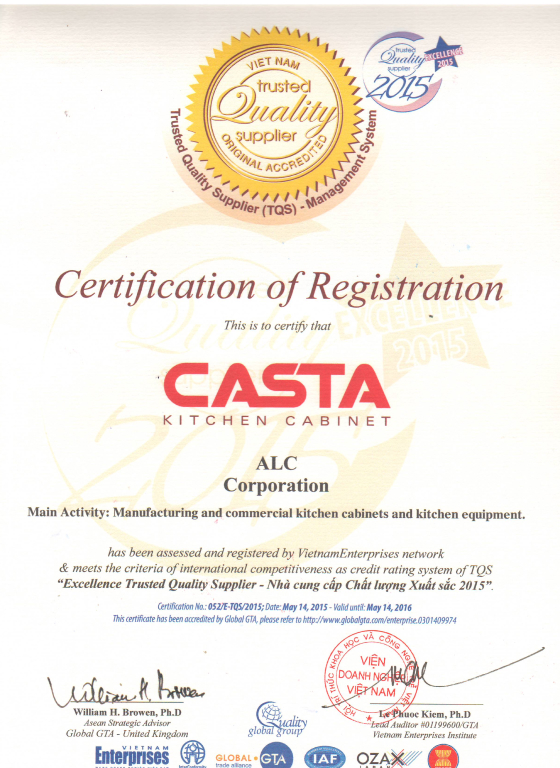
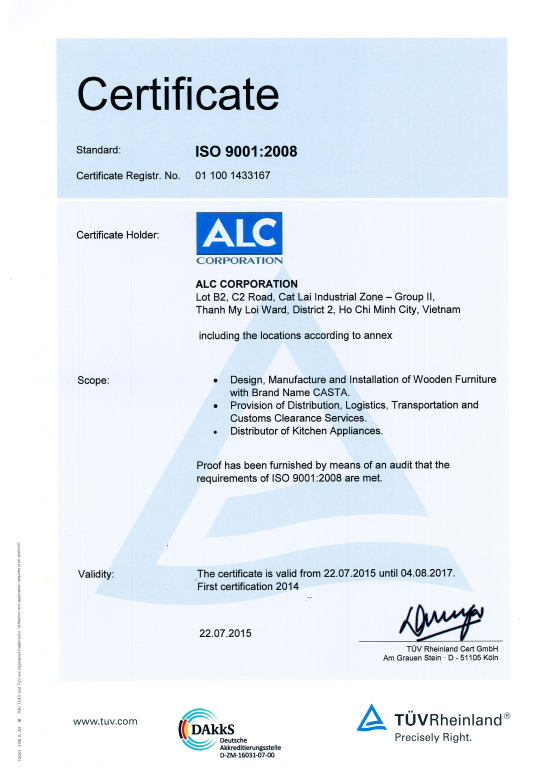
- Certifications and documentation that back up material and safety claims—KCMA, CARB, FSC, and ISO certifications are the ones buyers and end clients are most likely to ask about.
Learn more: What is carb compliance
- Design and engineering teams provide support for translating a concept into manufacturable shop drawings, as a great design idea is only as good as the factory's ability to execute it precisely.
- Sample production and QA/QC processes before a full production run, so you catch problems on a sample rather than across a container of finished cabinets.
- Scalable capacity to support a growing collection over time, not just fulfill a single one-time order.
Vetting a manufacturer against this checklist before signing a contract is far cheaper than discovering a gap after a container of upscale kitchen cabinets has already landed at your warehouse—certifications and sample QA exist precisely to catch problems before they scale.
Supplier Spotlight: Casta Cabinetry
As a reference point for what a manufacturing partner capable of supporting an upscale line can actually look like, it's worth looking at how Casta Cabinetry is set up.
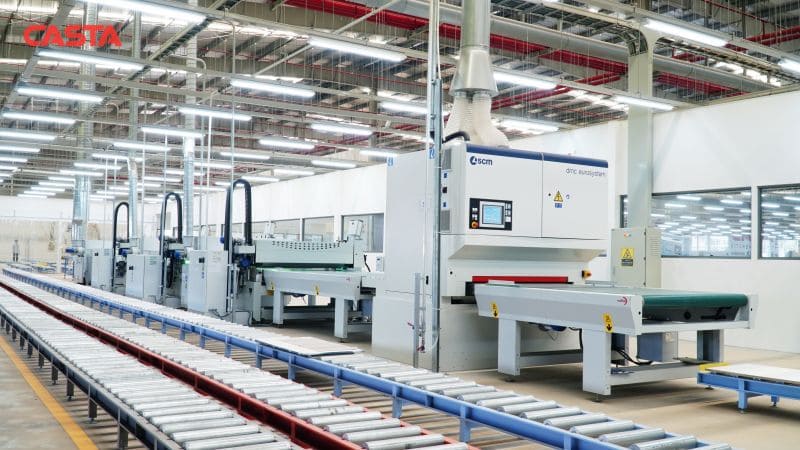
Founded in 2002, Casta is a Vietnam-based manufacturer specializing in kitchen cabinets, vanities, and custom furniture, with over two decades in the industry. The company operates two factories spanning more than 100,000 m², running European machinery from brands including SCM, Homag, and Cefla, with manufacturing automation reaching roughly 90%—a level of process consistency that's hard to match in smaller or less automated shops.
Learn more: Sourcing Cabinets and Furniture from Vietnam: Your Ultimate Guide
Materials are sourced to meet global standards, including European E1, JIS, CARB, and FSC certifications, alongside BSI and BSCI certifications, and the facility follows TCVN ISO 9001:2015 quality management standards. On the production side, CNC panel cutting holds ±0.1 mm precision, with PUR hot-melt edge sealing applied for added moisture resistance—the kind of manufacturing precision that genuine upscale construction demands, rather than just claims.
Casta offers OEM and ODM services for brands that want to develop their own product line rather than reselling existing collections and provides samples until clients are fully satisfied with design, materials, and finish before production begins. Over 80% of the company's production goes to export, primarily to the U.S., with sales and service offices in California, Texas, and New York supporting this.
This is meant as a reference point, not a claim that it's the only path to this tier—but it's a useful illustration of what to look for when evaluating any manufacturing partner for an upscale line.
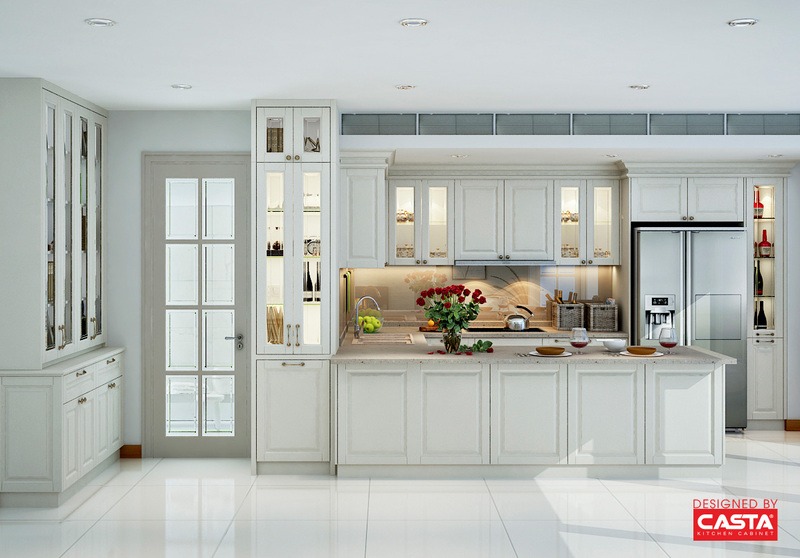
Learn more: Casta’s outstanding international projects
How to Evaluate Samples Before Committing
Whether you're a contractor vetting a supplier for a single project or a brand sourcing an entire collection of upscale kitchen cabinets, photos and spec sheets provide only a partial view. A physical sample reveals things a data sheet can't: how the finish feels under light from different angles, whether a drawer glide actually feels smooth and full-extension under load, and whether a door's edge banding is sealed cleanly enough to resist moisture over years of use, not just the first inspection.
A few things worth checking on any sample before moving forward: open and close the drawer slides several times to feel for smoothness or catching; press on the door and drawer fronts to check panel rigidity; and inspect the finish under both warm and cool lighting, since color can shift noticeably between them. Reputable manufacturers building genuine upscale kitchen cabinets expect this level of scrutiny and will typically offer samples, and revisions to those samples, until a buyer is satisfied—a supplier reluctant to provide a physical sample before a bulk order is worth treating with caution.
FAQ
What actually defines an upscale kitchen cabinet, beyond price?
What's the difference between American custom and European frameless cabinetry?
Is frameless construction more durable than framed construction?
What should a brand look for in a manufacturer to build a private-label upscale line?
Is it more profitable to resell established cabinet brands or build an in-house collection?
Conclusion
"Upscale" is ultimately defined by construction quality, material grade, and customization depth—not a brand name or a price tag alone. Whether a business resells an established name in upscale kitchen cabinets or builds its own collection comes down to volume, margin goals, and appetite for brand ownership, and both are legitimate strategies depending on where a business is positioned.
For brands leaning toward building rather than reselling, a manufacturing partner with certified materials, precision production, and OEM/ODM capability—like Casta Cabinetry—is worth evaluating as part of that process.
Ready to explore what an upscale private-label line could look like for your brand? Contact the team at Casta Cabinetry to discuss your product line, request samples, or get a quote.





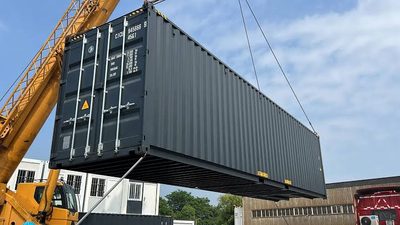
How Many Kitchen Cabinets Fit in a 20ft/40ft Container?...
For a wholesaler pricing out a bulk order, cabinets per container is the number that turns a quote into an actual budget...
09/20/2026 | David Nguyen

FSC Certified Cabinets: Why It Matters for Green Building Pr...
For a developer working on a certified green building project, FSC certified cabinets aren’t just a sustainability...
09/18/2026 | David Nguyen
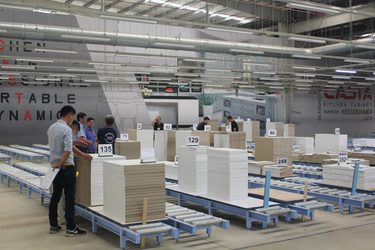
Lead Time for Wholesale Cabinet Orders: From Factory to Deli...
For a developer or wholesaler working against a construction or renovation deadline, cabinet lead times aren’t a n...
09/16/2026 | David Nguyen

Cabinet Import Duties & Tariffs: What US Buyers Pay When...
For a U.S. wholesaler or importer, uncertainty around tariffs on imported cabinets is often the single biggest barrier t...
09/14/2026 | David Nguyen
How Many Kitchen Cabinets Fit in a 20ft/40ft Container?...
For a wholesaler pricing out a bulk order, cabinets per container is the number that turns a quote into an actual budget...
09/20/2026 | David Nguyen
FSC Certified Cabinets: Why It Matters for Green Building Pr...
For a developer working on a certified green building project, FSC certified cabinets aren’t just a sustainability...
09/18/2026 | David Nguyen
Lead Time for Wholesale Cabinet Orders: From Factory to Deli...
For a developer or wholesaler working against a construction or renovation deadline, cabinet lead times aren’t a n...
09/16/2026 | David Nguyen
Cabinet Import Duties & Tariffs: What US Buyers Pay When...
For a U.S. wholesaler or importer, uncertainty around tariffs on imported cabinets is often the single biggest barrier t...
09/14/2026 | David Nguyen
Contact us
Casta is always ready to listen and answer all customers' questions