


 EN
EN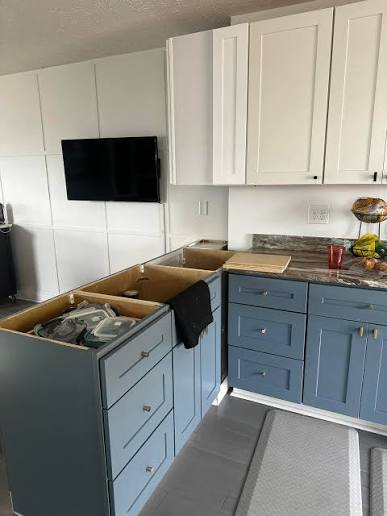
Cheap kitchen cabinets and affordable kitchen cabinets aren't the same thing, even though they get treated as interchangeable at the quoting stage. This scenario hits contractors juggling multiple job sites, dealers managing return rates, and brands protecting their reputation hardest. The real question isn't how low the price can go—it's what the total cost looks like once returns, complaints, callbacks, and reorders get factored in.
A cabinet that's cheaper upfront but fails well before its expected lifespan isn't actually cheaper once replacement, labor, and lost trust get added to the bill. Here are seven concrete reasons cheap kitchen cabinets end up costing more than they save.
1. Weak Materials Mean a Shorter Lifespan
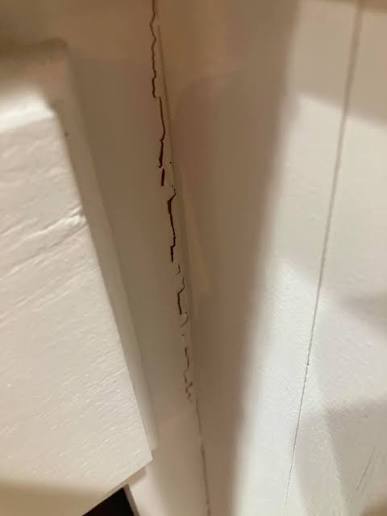
Cheap kitchen cabinets usually mean low-grade particleboard, thin veneers, and unsealed or exposed edges — the kind of construction that looks fine in a showroom and starts failing within a couple of years of real use.
Moisture, heat, and daily use break these materials down faster than most buyers expect. Swelling, delamination, and sagging shelves are the predictable result of low-density particleboard exposed to a kitchen's actual environment, not an unlucky exception.
Lifespan isn't a fixed number—it depends heavily on material grade, local humidity and climate, installation quality, and how consistently the cabinets get maintained. But cheap kitchen cabinets consistently sit at the short end of that range regardless of those other factors, because the base material simply can't absorb the same abuse as plywood or solid wood.
This shows up first in predictable places: under sinks, near dishwashers, and in humid climates—the common failure points contractors see on real job sites within the first year or two. Coastal and southern U.S. markets in particular see accelerated failure rates on low-grade particleboard cabinets, since ambient humidity alone is often enough to trigger swelling without any direct water contact at all.
And it becomes a repeat-cost problem for dealers and brands, not just a one-time issue. Every early failure of cheap kitchen cabinets is a support ticket, a complaint, or a lost repeat customer — and unlike a one-time manufacturing defect, material weakness tends to affect an entire product line consistently, which means it shows up across many customers at roughly the same point in the ownership timeline.
Learn more: Material & Finish Innovations: Elevating Cabinet Design and Durability
2. Poor Construction Leads to Early Failures
The construction method that separates cheap kitchen cabinets from durable ones is joinery: stapled or glued joints versus dovetail, dowel, or pocket-screw construction that distributes stress across a cabinet frame.
Learn more: Types of joints for cabinets
Common failure points show up fast — sagging shelves under normal load, drawers that loosen within months, and cracked cabinet boxes at the corners where staples simply can't hold under repeated stress. There's also a real weight tolerance gap: budget construction is often rated for lighter loads than what a working kitchen actually puts on shelves and drawers every single day.
Industry testing standards for well-built cabinetry call for shelves to hold roughly 15 pounds per square foot and wall cabinets to support several hundred pounds without failure—specifications that cheap kitchen cabinets frequently haven't been tested against at all.
The real-world red flag with cheap kitchen cabinets is that they often look flawless in the showroom or in photos and then fail within 1–2 years of daily use—a gap that's genuinely hard to catch during initial inspection.
Construction quality is essentially invisible at the point of sale but becomes very visible in warranty claims 12 to 24 months later, right when a contractor or dealer is least equipped to absorb the cost, since the project has typically already closed out and moved on to the next job.
3. Cheap Hardware Fails Faster Than the Cabinet Itself
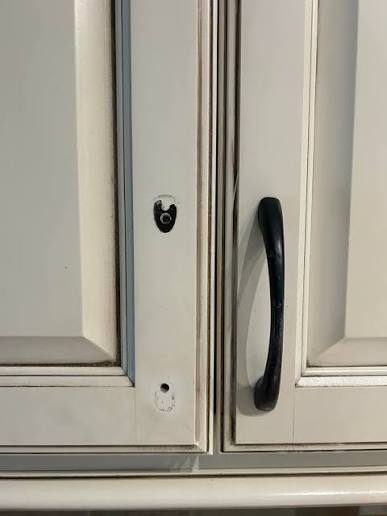
Basic hinges and drawer slides versus soft-close, full-extension hardware is one of the clearest quality signals separating cheap kitchen cabinets from properly built ones—and one of the easiest for buyers to check before committing to an order.
Learn more: Types of cabinet hinges
The cycle-rating gap is significant. Quality soft-close hinges and drawer slides are typically rated for 50,000 to 100,000-plus open-close cycles, while budget hardware is often rated for 20,000 to 30,000 cycles or carries no published rating at all. For a drawer opened several times a day, that's the difference between a decade-plus of reliable service and a hinge that starts failing within a few years.
Hardware failure creates a domino effect that makes cheap kitchen cabinets pricier to fix than the price difference ever suggested: a broken slide often means a full drawer replacement, not just a simple part swap, especially when the original hardware has been discontinued. Hardware failure is frequently the number one driver of customer complaints and callbacks, even when the cabinet box itself is still structurally sound.
Why This Risk Is Bigger for OEM and Private-Label Brands
Everything above applies to a single project. For cabinet and furniture brands sourcing cheap kitchen cabinets to resell under their name, the same seven risks multiply across every unit sold, not just one job site.
A material or hardware failure that would be a single warranty claim for a contractor becomes a pattern across hundreds or thousands of units for a brand selling at scale—and that pattern shows up in reviews, return requests, and support tickets that damage the brand's reputation directly, not the original factory's. Customers rarely trace a failure back to an upstream manufacturer; they associate it with whatever name is printed on the product, which means the brand absorbs a reputational cost the original supplier never has to face directly.
This is exactly why private-label brands should treat supplier vetting more rigorously than a single-project buyer might. A batch of cheap kitchen cabinets that slips through quality control doesn't just create one unhappy customer — it creates a documented pattern that's hard to walk back once a brand's name is already on thousands of units in the field.
Requesting full documentation, cycle-rated hardware specs, and consistent sample verification before signing a private-label agreement is worth the extra time it takes upfront, especially compared to the cost of a recall or a wave of coordinated warranty claims after launch.
Learn more: Success Stories: US Companies Thriving with Vietnamese Cabinet and Furniture Manufacturers
4. Hidden Costs Add Up Fast
The sticker price on cheap kitchen cabinets rarely reflects the total landed cost once you add up every downstream expense.
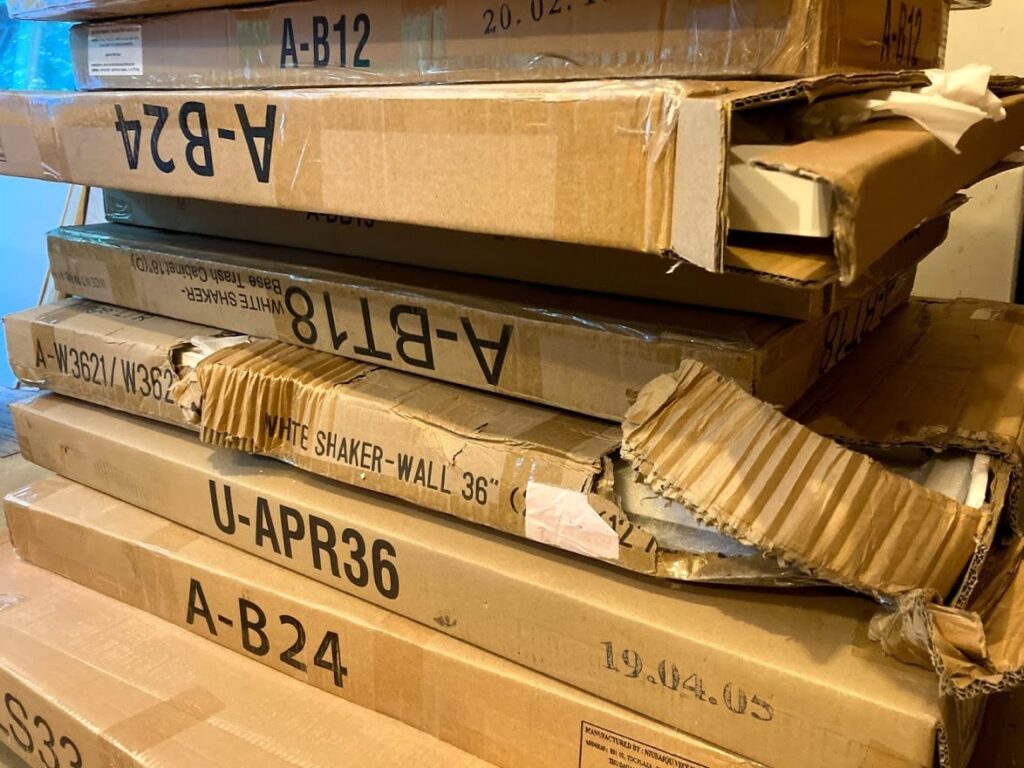
Freight damage from poor packaging is a common issue with low-cost imports cutting corners on protective materials — a damaged corner or cracked panel discovered after unboxing turns a good deal into a delay. Return and replacement rates also run measurably inconsistent quality control in higher-budget cabinet lines produces more units that don't meet specifications compared to mid-to-premium lines.
Learn more: ISTA Package Testing Standards
The labor cost of reworking or repairing poorly fitted cheap kitchen cabinets on-site is often absorbed by the contractor rather than billed back to anyone, quietly eating into the project margin. Add restocking, reordering, and shipping costs whenever a batch doesn't meet spec, and the simple sticker-price comparison buyers start with rarely survives contact with a real project.
Learn more: Logistics & Import: Streamlining the Shipping and Customs Process
A side-by-side breakdown makes the pattern obvious: sticker price versus total landed cost after freight, damage, returns, and rework almost always narrows — or erases — the upfront savings that made cheap kitchen cabinets look attractive in the first place.
5. Inconsistent Quality Creates Project Delays
Batch-to-batch variation is common with budget manufacturers, especially on finish color and panel thickness—a problem that rarely shows up until a reorder is already needed.
Learn more: Finding and Partnering with Vietnam Cabinet Manufacturers
When a reorder doesn't match the original shipment of cheap kitchen cabinets, the mismatch usually appears in one of three places: stain color that's noticeably off, dimensions that are slightly different, or hardware that's been swapped without notice. None of these are always a factory error; sometimes it's simply how loosely a lower-cost manufacturer controls its own specifications between production runs.
The real cost of such a situation shows up entirely on-site: waiting on a corrected reorder, coordinating around a delayed install, or explaining a visible mismatch to a client who was expecting a finished kitchen this week.
For contractors managing several job sites at once, one bad batch of cheap kitchen cabinets can stall more than one project simultaneously if that supplier is also handling other active jobs — a scheduling problem that compounds fast when a crew has already moved on to the next phase of work and now has to circle back.
6. Health and Compliance Risks
Formaldehyde emissions and other VOCs are common in low-grade composite wood products, which makes health and compliance one of the more serious risks tied to cheap kitchen cabinets rather than just a durability concern.
Learn more: Low VOC Cabinets – Healthier Solutions for Contractors and Cabinet Brands
This issue matters more in North America specifically because of CARB Phase 2 and TSCA Title VI compliance expectations, alongside growing buyer awareness around indoor air quality. Both standards apply directly to the composite wood—plywood, particleboard, and MDF—commonly used in cabinet boxes, and since March 2019, non-compliant composite wood products have been subject to being held at customs or pulled from sale in the U.S. market. Cheap kitchen cabinets sourced without emissions testing carry that compliance risk whether or not a buyer is aware of it at the time of purchase.
When a supplier can't provide documentation, buyers are left assuming compliance rather than actually confirming it — a gamble that gets more expensive the larger the order.
There's real reputational and liability risk for brands and dealers reselling non-compliant cheap kitchen cabinets, even unknowingly. That exposure typically falls on whoever's name is on the invoice, not the original manufacturer, which means the contractor or dealer absorbs the consequences of a supplier's shortcut they never actually agreed to.
Learn more: Formaldehyde-free cabinets
7. Weak or Nonexistent Warranty Support
A common pattern with budget suppliers of cheap kitchen cabinets: one year of coverage or less, narrow terms, and a slow or unresponsive claims process when something actually goes wrong.
What buyers are often left covering themselves include replacement units, shipping costs on returns, and labor for reinstalling anything that failed under warranty—costs that were never priced into the original "savings" from choosing cheap kitchen cabinets in the first place. On a project with a dozen or more cabinet units, even a handful of hardware failures outside a thin warranty window can erase whatever was saved on the original purchase price.
Warranty terms are one of the most overlooked line items when comparing quotes, often buried in fine print rather than stated upfront where a buyer would actually notice it before ordering.
A quick comparison angle worth using: a strong warranty typically covers structure, hardware, and finish, while budget suppliers tend to exclude at least one of those three—usually hardware, since that's where failures happen fastest. Reading the actual warranty document, not just the marketing summary, before placing an order on cheap kitchen cabinets is a five-minute step that can save months of back-and-forth later.
What "Affordable but Reliable" Actually Looks Like
The real comparison isn't cheap versus expensive — it's cheap versus value. Plenty of mid-tier cabinets deliver real durability without custom-tier pricing, and the difference from cheap kitchen cabinets usually come down to a short list of checkable details rather than the price tag alone.
Material specs—wood type, panel thickness, and finish process—should all be stated clearly on a quote, not left vague. If a quote doesn't specify panel thickness or core material, ask directly rather than assuming it matches a competing quote.
Certifications and compliance documentation—CARB, TSCA, FSC, or similar paperwork—should be available on request, not just claimed. A supplier that hesitates or delays here is showing you how the rest of the relationship will go.
Construction method—joinery type and hardware brand or cycle rating tell you more about long-term durability than any marketing description. Ask specifically for the hinge and slide brand, not just "soft-close" as a generic feature.
Warranty length and coverage—what's actually included (structure, hardware, and finish) matters more than the number of years alone. A five-year warranty that excludes hardware is weaker than a three-year warranty that covers everything.
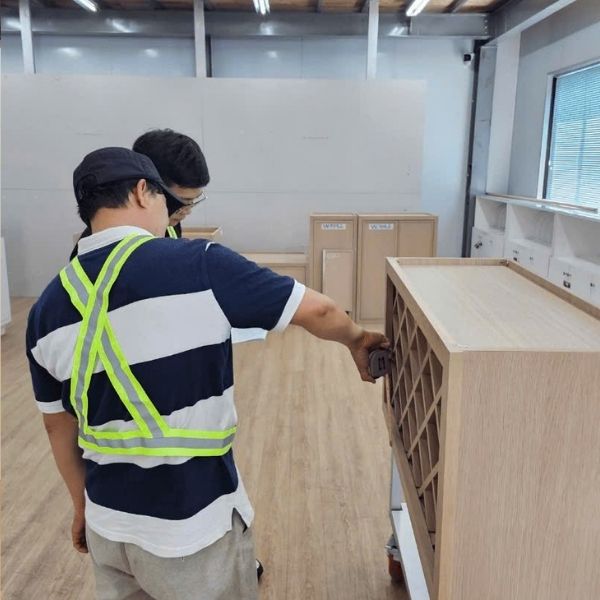
Sample availability — a physical sample before committing to a bulk order is the single fastest way to catch the gap between cheap kitchen cabinets and properly built ones, since photos and spec sheets can't reveal finish quality or joint tightness the way a hands-on sample can.
A short side-by-side checklist using these five points makes it much easier to compare two quotes that look deceptively similar on price alone — and it turns a subjective "gut feeling" comparison into something closer to an objective evaluation.
Learn more: Why Choose Vietnam for Cabinet and Furniture Manufacturing?
A Real-World Example: How Casta Cabinetry Avoids These Pitfalls
Casta Cabinetry is a Vietnam-based manufacturer with more than 20 years of experience, using European-grade machinery across its production facility. Here's how that translates into avoiding the seven risks above — the difference between cheap kitchen cabinets and a manufacturing partner built for the long term.
Materials: Engineered wood and plywood options built for durability, not just cost-cutting, addressing the material weakness that defines cheap kitchen cabinets at the low end of the market. Panel specifications are documented and consistent from order to order, rather than varying with whatever raw material happens to be cheapest that month.
Construction: Precision manufacturing with reinforced joinery methods designed to hold up under daily use, rather than the stapled construction common in budget lines.
Hardware: Soft-close hinges and full-extension slides come standard, not as an upsell—this exact hardware gap separates cheap kitchen cabinets from those built to last a decade or more.
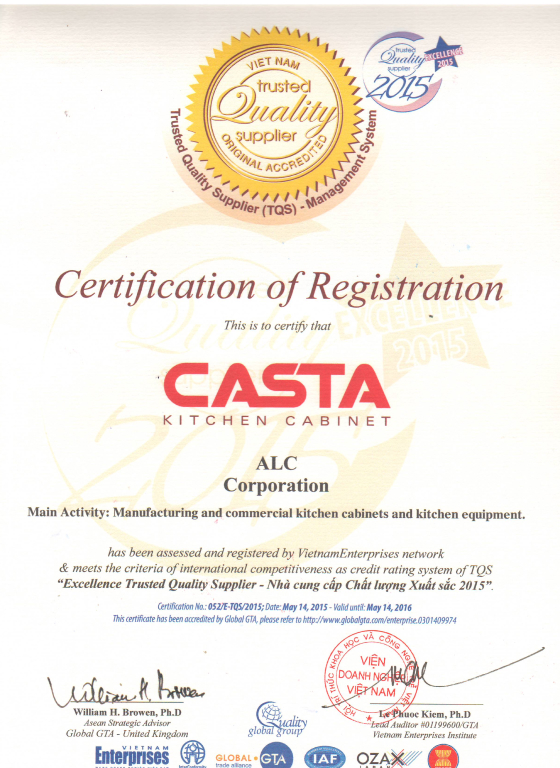
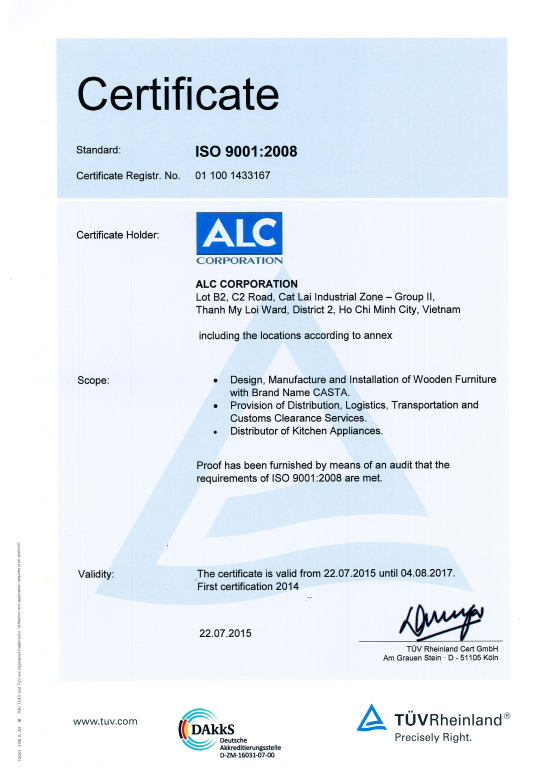
Compliance and health: Certification confirming wood materials meet health and safety standards, provided upfront rather than only on request.
Customization: Designs refined with the client until they're fully satisfied, not a rigid one-size-fits-all catalog.
Delivery support: Consistent production scheduling and export logistics built to reduce the kind of batch inconsistency and delay risk covered above.
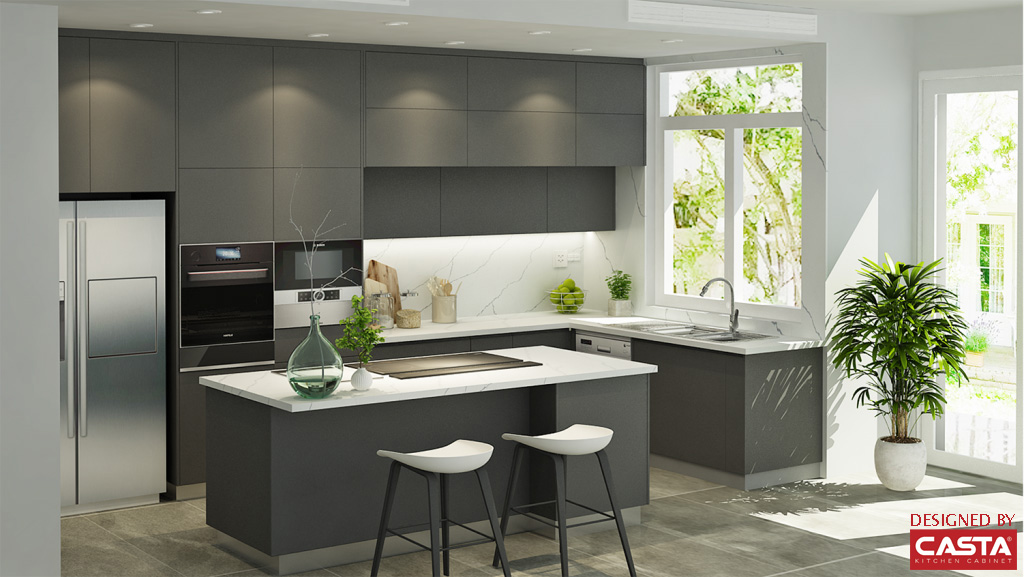
The goal isn't to say never buy affordable cabinets — it's to know exactly what's being traded off when price is the only factor being compared.
Learn more: Casta’s outstanding international projects
FAQ
Are cheap kitchen cabinets bad quality?
What's the difference between cheap and affordable kitchen cabinets?
Are cheap RTA kitchen cabinets worth it?
How can I tell if a kitchen cabinet is low quality before buying?
How long should kitchen cabinets realistically last?
What should I look for instead of just the lowest price?
Conclusion
The seven risks covered here aren't hypothetical—they show up as returns, complaints, delays, callbacks, and rework on real projects, week after week, for contractors and dealers who price as the only variable that matters. The real cost of cheap kitchen cabinets is rarely just the sticker price; it's everything that happens after the sale.
Price still matters, especially at volume—but it should be weighed against material specs, certifications, construction method, warranty coverage, and a physical sample, not treated as the only deciding factor.
Casta Cabinetry offers quality construction, certified materials, and reliable support at a competitive, factory-direct price — proof that avoiding cheap kitchen cabinets doesn't have to mean paying a steep premium for real durability.
Contact our team to request samples, get a quote, or talk through your next project.





Private Label Cabinet Branding: Custom Packaging & Label...
Putting your name on a cabinet line is one of the fastest ways for a retailer or brand to build margin and customer loya...
09/24/2026 | David Nguyen

Cabinet Quality Control Process: How Bulk Orders Are Inspect...
For a wholesaler buying from overseas, the biggest fear usually isn’t price. It’s opening a container weeks ...
09/22/2026 | David Nguyen

How Many Kitchen Cabinets Fit in a 20ft/40ft Container?...
For a wholesaler pricing out a bulk order, cabinets per container is the number that turns a quote into an actual budget...
09/20/2026 | David Nguyen

FSC Certified Cabinets: Why It Matters for Green Building Pr...
For a developer working on a certified green building project, FSC certified cabinets aren’t just a sustainability...
09/18/2026 | David Nguyen
Private Label Cabinet Branding: Custom Packaging & Label...
Putting your name on a cabinet line is one of the fastest ways for a retailer or brand to build margin and customer loya...
09/24/2026 | David Nguyen
Cabinet Quality Control Process: How Bulk Orders Are Inspect...
For a wholesaler buying from overseas, the biggest fear usually isn’t price. It’s opening a container weeks ...
09/22/2026 | David Nguyen
How Many Kitchen Cabinets Fit in a 20ft/40ft Container?...
For a wholesaler pricing out a bulk order, cabinets per container is the number that turns a quote into an actual budget...
09/20/2026 | David Nguyen
FSC Certified Cabinets: Why It Matters for Green Building Pr...
For a developer working on a certified green building project, FSC certified cabinets aren’t just a sustainability...
09/18/2026 | David Nguyen
Contact us
Casta is always ready to listen and answer all customers' questions